Help us get this right
Does this portrait look right for Sápara?
Nobody has judged this one yet. You would be the first.
Sápara Erotic
Lowland Amazon rainforest of Pastaza province, eastern Ecuador, along the Conambo, Pindoyacu and Curaray rivers, with related families across the border in Loreto, Peru.
Sápara, also written Zápara or Záparo (Zaparoan family), now spoken fluently by only a few elderly people; Amazonian Kichwa (Quechuan) and Spanish in daily use.
Shaman-led forest cosmology built around dream interpretation and spirits of the forest, with Catholic and evangelical mission influence in some communities.
One of the Zaparoan peoples, alongside the Andoa, Iquito and Arabela; the Ecuadorian communities are organized as the Sápara Nation of Ecuador (NASE).
About Sápara People
The Sápara are known for a habit that sounds minor and is not: they run their households by their dreams. Dreams get told out loud in the early morning, before anyone leaves, and what is in them shapes who hunts, who stays, which way the day goes. This is not a folkloric survival kept up for visitors. It is a working method for deciding things, and it belongs to a people living in the low rainforest of Pastaza province in eastern Ecuador, along the Conambo, Pindoyacu and Curaray rivers, with relatives scattered across the Peruvian line into Loreto. There are only a few hundred of them. Almost none still speak Sápara. The language belongs to the Zaparoan family, a small group with no demonstrated relation to the Quechuan and Jivaroan tongues around it, and it is down to a few elderly speakers, while daily life happens in Amazonian Kichwa and Spanish. The dreams outlasted the language.
They once held far more ground. Sápara country ran between the Napo and the Pastaza, and in the nineteenth century they were among the more numerous peoples of the upper Amazon. The rubber boom ended that arithmetic. Crews raided settlements for labor, epidemics traveled with the raids, and a population counted in the tens of thousands fell to a few hundred within two generations. Survivors married into Kichwa-speaking communities, and the language went with the marriages. The 1941 border war between Ecuador and Peru then drew a line through what was left, splitting families who had always moved between the rivers as a matter of course. That near-erasure is why UNESCO singled out Sápara oral heritage in 2001, and why the honor landed strangely: an award for a way of speaking that hardly anyone could still speak. What came after mattered more. The Ecuadorian Sápara reorganized, set aside the older spelling Zápara, and registered as the Sápara Nation of Ecuador in 2009. Most of their public effort since has gone into keeping oil off the territory, including blocks auctioned in 2012 over land no Sápara authority had agreed to give up, with Sápara women carrying much of that fight in Quito. In their own terms the forest, naku, is not the backdrop to that argument. It is a party to it, with intentions of its own, which is roughly what the dreams are for.
Related ethnic groups
Groups that share Sápara's homeland, region, language, or religious tradition. These are likely candidates for comparative phenotype reference.
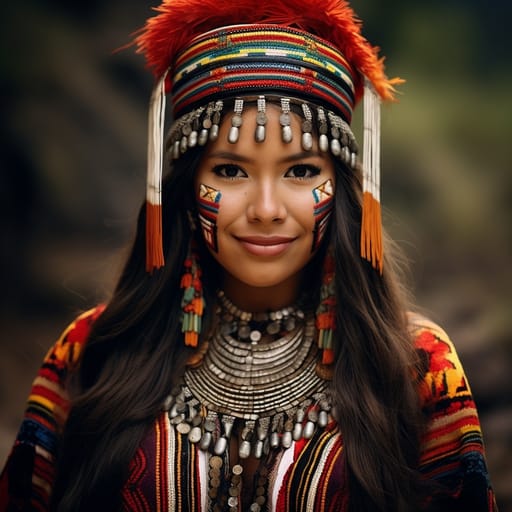
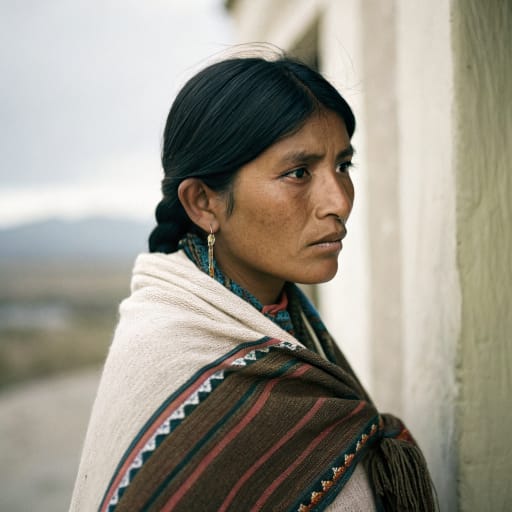
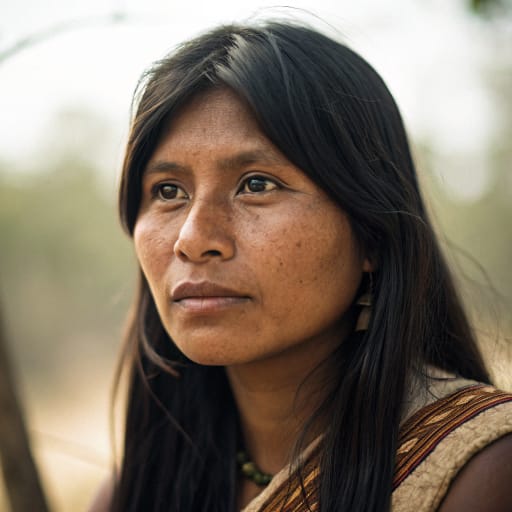
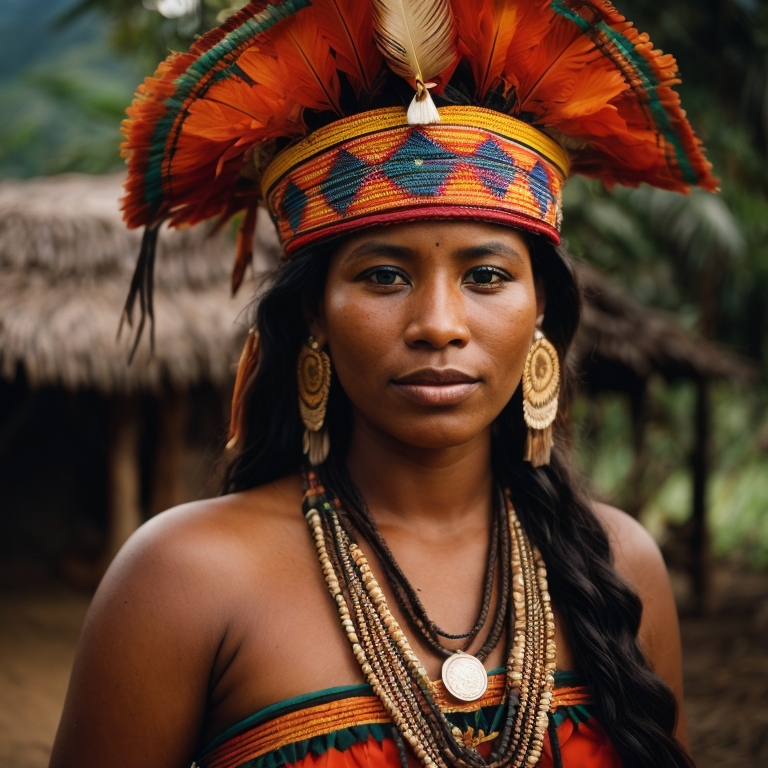
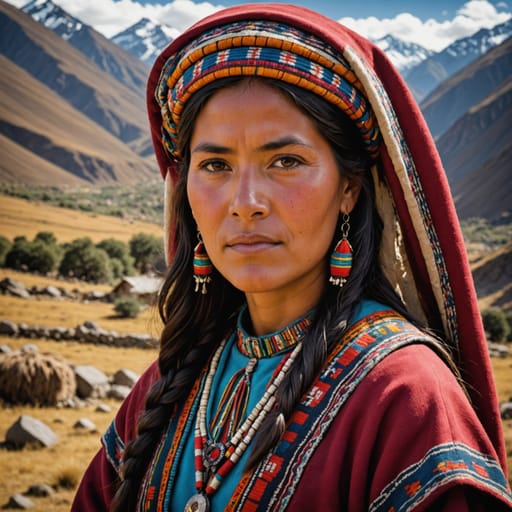
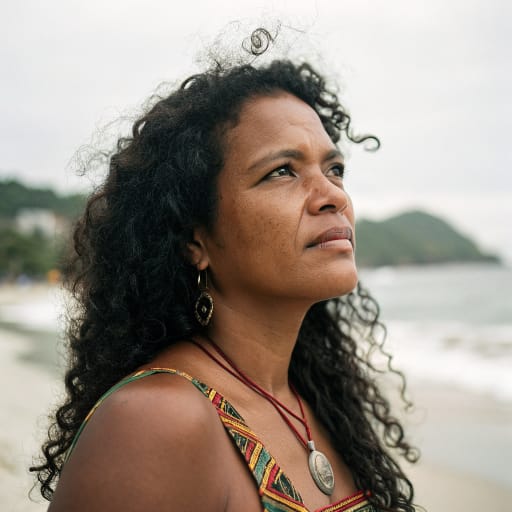
Typical Sápara Phenotypes
Reference for AI generation: hair, eyes, skin, facial structure, build
Sápara Body & Anatomy Reference
Anatomy by feature, South American Indigenous / European-Mestizo / Afro-Latino mix phenotype
Sápara Boobs & Breasts
Sápara tits and boobs run medium-to-large cup, full, high projection, the classic South American Indigenous / European-Mestizo / Afro-Latino mix bust profile. Sápara nipples and areolas show medium-brown to dark-brown areolar pigmentation against the tan-to-deep-brown skin tone, with areolar diameter typically in the 32-46mm range and forward-set positioning rather than the smaller bust profile of Andean Indigenous sub-populations. Sápara breasts trend the classic Brazilian / Latina curvy bust profile in lowland populations; smaller and shorter-set in Andean Indigenous populations, a function of the endomorph-to-mesomorph with high gluteal-femoral deposition body habitus and the mean adult female BMI 25-28. For anatomically accurate AI-generated Sápara nudes the render preserves the medium-to-large cup, full, high projection shape, 32-46mm areolas with medium-brown to dark-brown pigmentation, and the torso proportions of the South American Indigenous / European-Mestizo / Afro-Latino mix phenotype.
Sápara Ass & Hips
Sápara hips and butt usually read as full, high projection, the famous Brazilian / Latina bunda profile. The skeletal base is wide iliac crests, very full gluteal-femoral fat deposition (the hallmark Brazilian / Latina hip-to-waist ratio), the South American Indigenous / European-Mestizo / Afro-Latino mix pattern. Set against the slim narrow-hip East Asian profile, the difference is easy to see, and the hip-to-waist ratio is often what identifies Sápara women in photos.
Sápara Vagina & Pussy
Expect medium-brown to dark-brown labial pigmentation, fuller labia minora on Sápara women, in keeping with South American Indigenous / European-Mestizo / Afro-Latino mix ancestry. The pubic hair is wavy-to-curly coarse dark texture, dense distribution. Coloring should run evenly from the tan to deep-brown skin of the thighs to the labia, and Sápara nude imagery should keep the hair's wavy-to-curly coarse dark texture.
Sápara Dicks & Penis
Sápara dick and penile anatomy in adult AI generation should anchor on the regional reference data: regional mean ~13cm erect, moderate-to-above-average girth, and medium-brown shaft pigmentation. The Sápara cock profile reflects the South American Indigenous / European-Mestizo / Afro-Latino mix population's anthropometric measurements. The shaft pigmentation should track the surrounding tan to deep-brown skin tone, and the pubic hair should keep its wavy-to-curly coarse dark texture in the typical inverted-V escutcheon.
Sápara Body, Curves & Build
Sápara body type: endomorph-to-mesomorph with high gluteal-femoral deposition, with mean adult female BMI 25-28. This is the typical South American Indigenous / European-Mestizo / Afro-Latino mix build. Height range, shoulder-to-hip ratio and fat distribution all follow from it, which is what an accurate Sápara nude body should show.
Sápara Skin Tone & Hair Texture
Sápara skin tone falls in the tan to deep-brown (Fitzpatrick III-VI) band, the surface signal most often miscalibrated by generic AI nude generators. Sápara hair texture is typically straight-to-curly 1A-3C, varies widely by ancestral composition, characteristic of the South American Indigenous / European-Mestizo / Afro-Latino mix phenotype. In Sápara nude renders the skin should hold that band consistently across the body.
Explore phenotype categories
Structured taxonomy with peer-reviewed scales · 22 anatomical categories
Erotic Poses & Sex Positions
From the pose catalog: 219 named positions with reference skeletons
Frequently asked questions about Sápara people
Where is the Sápara homeland?
The Sápara homeland is Lowland Amazon rainforest of Pastaza province, eastern Ecuador, along the Conambo, Pindoyacu and Curaray rivers, with related families across the border in Loreto, Peru. in South America.
What language do Sápara people speak?
Sápara people primarily speak Sápara, also written Zápara or Záparo (Zaparoan family), now spoken fluently by only a few elderly people; Amazonian Kichwa (Quechuan) and Spanish in daily use..
What religion do Sápara people practice?
The predominant religion among Sápara people is Shaman-led forest cosmology built around dream interpretation and spirits of the forest, with Catholic and evangelical mission influence in some communities..






Make your own Sápara images
Five a day, free, no credits to buy. The studio starts from this group's phenotype data, so you can set body type, pose and style and keep the traits accurate.
Start with Sápara