No portrait yet
Taruma Erotic
Historically the lower Rio Negro near present-day Manaus, Brazil; later the upper Essequibo River in southern Guyana, where descendants live within Wai-Wai and Wapishana communities
Taruma (language isolate), nearly extinct; descendants mostly speak Wapishana (Arawakan), Wai-Wai (Cariban) or English (Germanic)
Historically indigenous shamanic beliefs; descendants largely Christian
No recorded branches; survivors merged into Wai-Wai and Wapishana communities of the Guiana interior
About Taruma People
The Taruma are defined above all by something they never lost, even as nearly everything else was taken: a language unrelated to any of its neighbors. Taruma is classed as an isolate. It stands apart from the Arawakan and Cariban languages around it, and scholars have yet to find it a family that holds up. That separateness runs through the people's whole history. It is a history of movement and contact, and of survival by a very thin margin.
European travelers in the seventeenth century placed the Taruma near the mouth of the Rio Negro, close to where Manaus stands today. That put them in the path of Portuguese slave raids and mission settlements. Over the following century the survivors moved north, away from the river trade, into the forested headwaters of the Essequibo in what is now southern Guyana. There they lived in small villages near the Wai-Wai, the Wapishana and other peoples of the Guiana interior. Marriage and trade across language lines were ordinary in that world. Explorers and ethnographers who reached the upper Essequibo wrote down short word lists and brief notes, which later became nearly all that outsiders knew of them.
The twentieth century almost finished what the Rio Negro had started. Epidemics cut the Taruma down to a handful of families, and outside observers listed them as extinct. The survivors did not simply disappear, though. They married into Wai-Wai and Wapishana communities, and their children grew up speaking those languages. For decades Taruma existed in print mostly as a vocabulary.
That changed in the 2000s, when linguists working in southern Guyana reported a few elderly people living among the Wapishana who could still speak it. The find did not reverse the language's decline, but it corrected the record. The Taruma have living descendants and, within recent memory, living speakers. Those descendants live much as their neighbors do. They farm cassava, hunt and fish along forest rivers, and belong to the Christian churches that missionaries spread through the region during the twentieth century.
Many Taruma customs went unrecorded, so what stands out is less any single practice than the fact that they are still here. A language with no known relatives was carried hundreds of kilometers over more than three centuries by a group that was repeatedly written off, and it has not quite gone silent.
Related ethnic groups
Groups that share Taruma's homeland, region, language, or religious tradition. These are likely candidates for comparative phenotype reference.
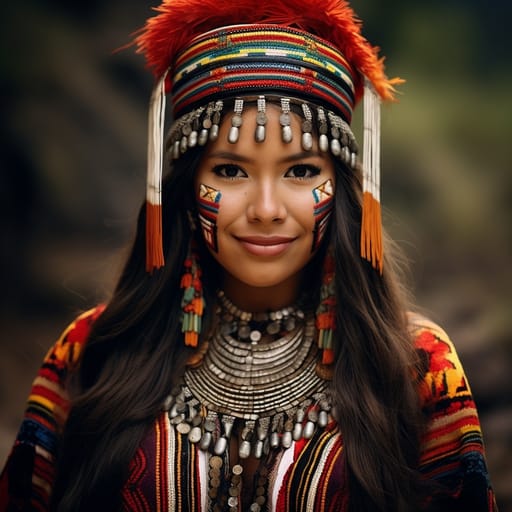
Quechua
same region (South America)
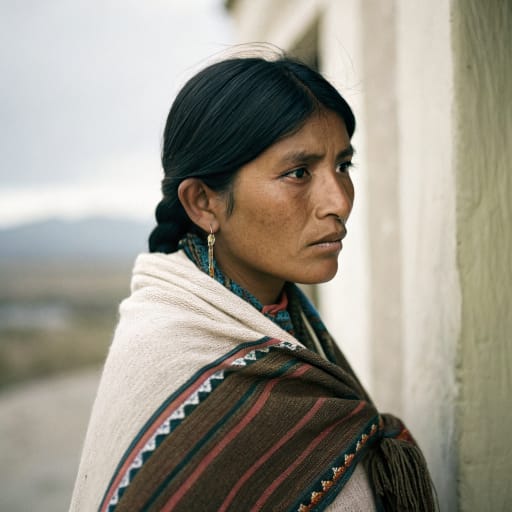
Aymara
same region (South America)
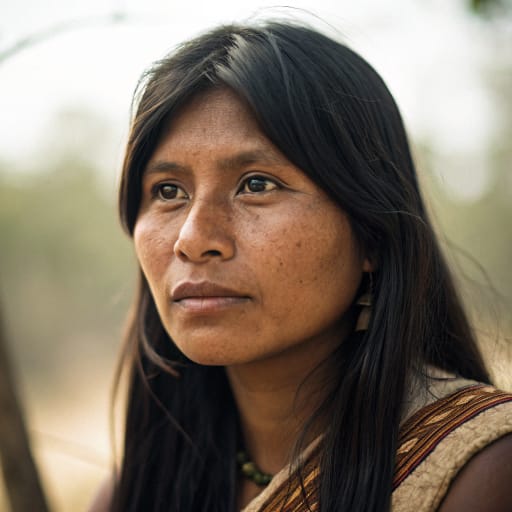
Guaraní
same region (South America)
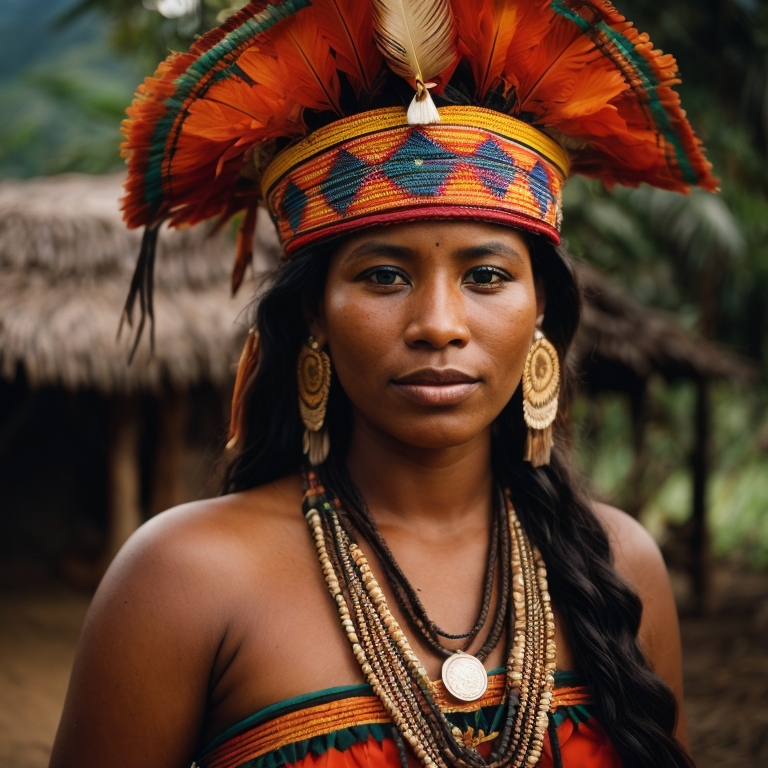
Emberá
same region (South America)
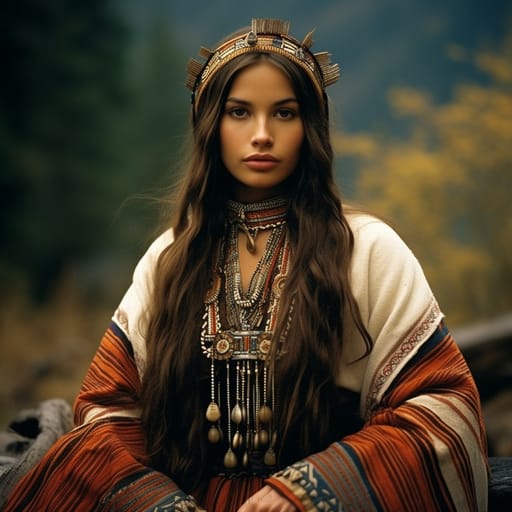
Mapuche
same region (South America)
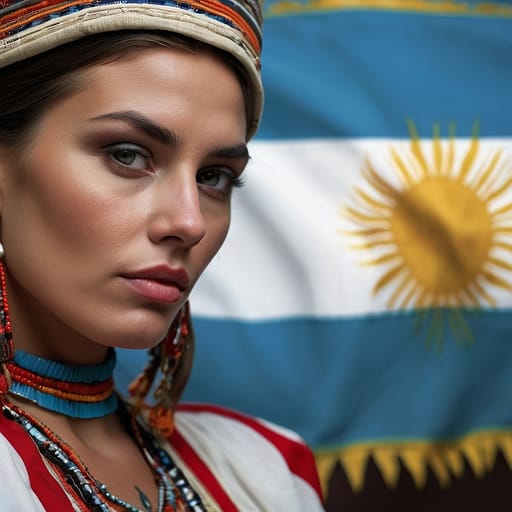
White Argentine
same region (South America)
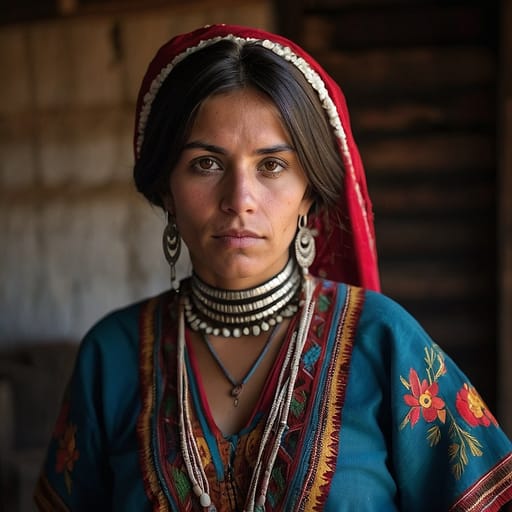
Mestizo Argentine
same region (South America)

Middle Eastern Argentine
same region (South America)
Typical Taruma Phenotypes
Reference for AI generation: hair, eyes, skin, facial structure, build
Taruma Body & Anatomy Reference
South American Indigenous / European-Mestizo / Afro-Latino mix phenotype: anatomy reference for AI nude generation
Taruma Boobs & Breasts
Taruma boobs follow the South American Indigenous / European-Mestizo / Afro-Latino mix profile: medium-to-large cup, full, high projection. Areolar diameter is usually 32-46mm, and the coloring is medium-brown to dark-brown areolar pigmentation against the tan-to-deep-brown skin tone. Breast shape tracks body composition (endomorph-to-mesomorph with high gluteal-femoral deposition, mean adult female BMI 25-28), so Taruma breasts tend to be the classic Brazilian / Latina curvy bust profile in lowland populations; smaller and shorter-set in Andean Indigenous populations. Expect a forward-set shape, not the smaller bust profile of Andean Indigenous sub-populations.
Taruma Ass & Hips
Taruma ass and hip morphology presents as full, high projection, the famous Brazilian / Latina bunda profile, distinctly different from the slim narrow-hip East Asian profile. The Taruma pelvic profile shows wide iliac crests, very full gluteal-femoral fat deposition (the hallmark Brazilian / Latina hip-to-waist ratio), anchored in the South American Indigenous / European-Mestizo / Afro-Latino mix skeletal pattern. Taruma butt shots in adult AI imagery should render the full, high projection, the famous Brazilian / Latina bunda profile silhouette with the overall build (endomorph-to-mesomorph with high gluteal-femoral deposition) and the fat distribution typical of the South American Indigenous / European-Mestizo / Afro-Latino mix phenotype.
Taruma Vagina & Pussy
Taruma pussy anatomy typically shows medium-brown to dark-brown labial pigmentation, fuller labia minora. Pubic hair is usually wavy-to-curly coarse dark texture, dense distribution. In AI-generated Taruma nudes, labial color should blend into the tan to deep-brown skin with a gradual transition, and the hair should keep its wavy-to-curly coarse dark texture.
Taruma Dicks & Penis
Penis reference for Taruma men: regional mean ~13cm erect, moderate-to-above-average girth. Coloring: medium-brown shaft pigmentation. An accurate Taruma cock in AI imagery matches the surrounding tan to deep-brown skin rather than a generic porn default. Circumcision depends on religion and custom, not ancestry.
Taruma Body, Curves & Build
The Taruma figure is generally endomorph-to-mesomorph with high gluteal-femoral deposition, with mean adult female BMI 25-28, characteristic of South American Indigenous / European-Mestizo / Afro-Latino mix ancestry. AI image tools tend to flatten regional body types into a few stock shapes; here the Taruma build is kept as its own reference.
Taruma Skin Tone & Hair Texture
Skin: tan to deep-brown (Fitzpatrick III-VI). Hair: straight-to-curly 1A-3C, varies widely by ancestral composition. Both are typical of South American Indigenous / European-Mestizo / Afro-Latino mix ancestry. The most common mistake in AI nudes of Taruma women is a body rendered lighter than the face.
Explore phenotype categories
Structured taxonomy with peer-reviewed scales · 22 anatomical categories
Erotic Poses & Sex Positions
From the pose catalog: 219 named positions with reference skeletons
Frequently asked questions about Taruma people
Where is the Taruma homeland?
The Taruma homeland is Historically the lower Rio Negro near present-day Manaus, Brazil; later the upper Essequibo River in southern Guyana, where descendants live within Wai-Wai and Wapishana communities in South America.
What language do Taruma people speak?
Taruma people primarily speak Taruma (language isolate), nearly extinct; descendants mostly speak Wapishana (Arawakan), Wai-Wai (Cariban) or English (Germanic).
What religion do Taruma people practice?
The predominant religion among Taruma people is Historically indigenous shamanic beliefs; descendants largely Christian.






Make your own Taruma images
Five a day, free, no credits to buy. The studio starts from this group's phenotype data, so you can set body type, pose and style and keep the traits accurate.
Start with Taruma