Help us get this right
Does this portrait look right for Chiripá?
Nobody has judged this one yet. You would be the first.
Chiripá Erotic
Eastern Paraguay, with communities in Mato Grosso do Sul, Paraná and Santa Catarina in Brazil and in Misiones, Argentina.
Ava Guaraní, also called Nhandeva or Chiripá (Tupi-Guaraní branch, Tupian family); Spanish or Portuguese as a second language.
Guaraní religion centered on Ñanderu and the opy prayer house; Catholic and evangelical Christianity present in many communities.
One of the three Guaraní branches of the Paraná basin, with the Mbyá and the Paĩ Tavyterã (Kaiowá); part of the wider Tupi-Guaraní family.
About Chiripá People
The Chiripá call themselves Avá, "people," or Nhandeva, roughly "us." Chiripá came from outside, and like most outsiders' names it stuck harder in print than in speech. They are Guaraní, one of three surviving branches in the Paraná basin alongside the Mbyá and the Paĩ Tavyterã, and what separates the three is dialect, ceremonial detail and who marries whom, not any line on a map. Their country is the interior of eastern Paraguay, Canindeyú, Caaguazú, San Pedro and Alto Paraná, and it carries on across the river into Mato Grosso do Sul, Paraná and Santa Catarina in Brazil, with communities in Argentine Misiones. This was Atlantic forest, dense subtropical woodland running on summer rain. Most of it is now soy, cattle and eucalyptus, and that conversion, compressed into about sixty years, is the central fact of Chiripá life. Their language, Ava Guaraní, sits in the Tupi-Guaraní branch of the Tupian family, close enough to the Guaraní that Paraguay made a national language for a conversation to work, distinct enough in vocabulary and cadence that nobody confuses the two.
Religious life runs through the opy, the prayer house, where chanting happens at dusk and again before light. Men keep time with the mbaraka rattle, women with takuapu, lengths of bamboo struck against the packed earth floor. A child's name is not chosen by the parents: in the ñemongarai the shaman listens for where the child's soul came from and reports back what it is called. Maize is not simply a crop but avati ete, true maize, blessed at harvest and fermented into kagui. Underneath all of it is yvy marã e'ỹ, the land without evil, a real destination rather than a metaphor, and the search for it sent Guaraní groups walking east toward the ocean well into living memory. The Chiripá were largely forest people who stayed clear of the Jesuit reductions and outlasted the slave raids from São Paulo, which bought them time but not land. The dam at Itaipú took a great deal of riverbank in the 1970s and 1980s, and what has followed on both sides of the border is a long argument over titles and demarcation that is still running. Evangelical churches now stand in many communities. So, in many of the same communities, does the opy.
Related ethnic groups
Groups that share Chiripá's homeland, region, language, or religious tradition. These are likely candidates for comparative phenotype reference.
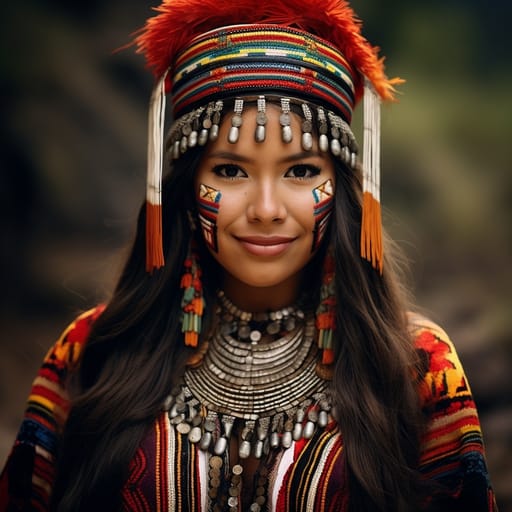
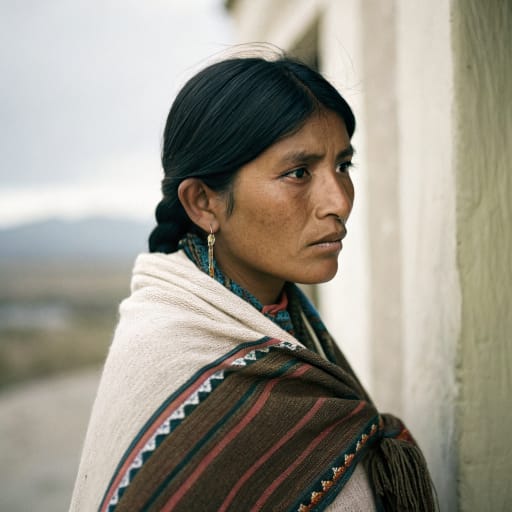
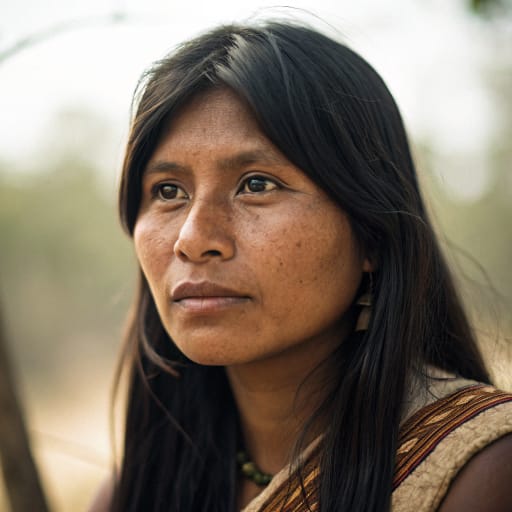
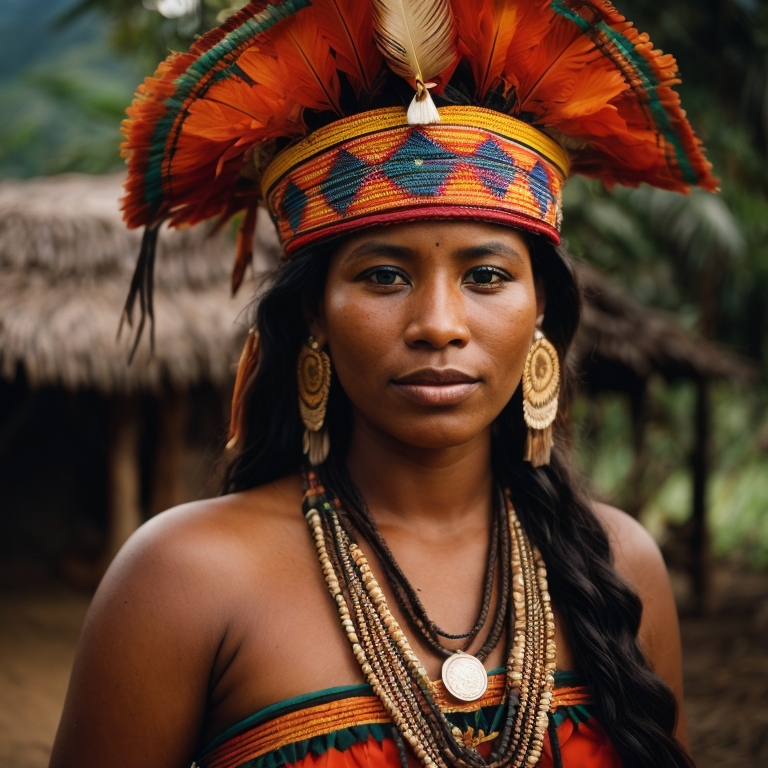
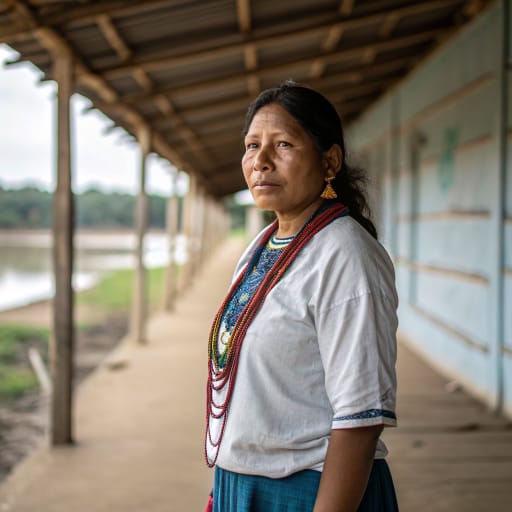
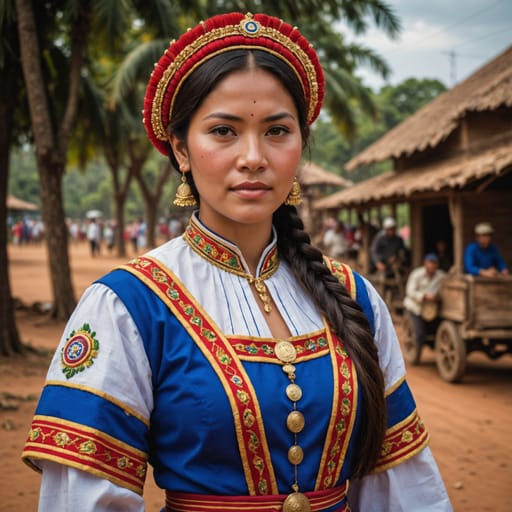
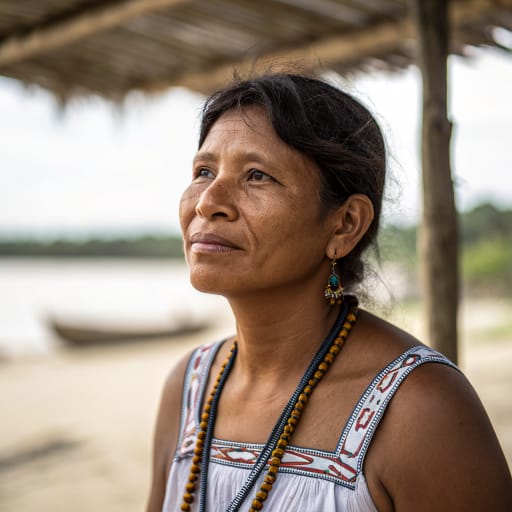
Typical Chiripá Phenotypes
Reference for AI generation: hair, eyes, skin, facial structure, build
Chiripá Body & Anatomy Reference
South American Indigenous / European-Mestizo / Afro-Latino mix phenotype: anatomy reference for AI nude generation
Chiripá Boobs & Breasts
Chiripá tits and boobs run medium-to-large cup, full, high projection, the classic South American Indigenous / European-Mestizo / Afro-Latino mix bust profile. Chiripá nipples and areolas show medium-brown to dark-brown areolar pigmentation against the tan-to-deep-brown skin tone, with areolar diameter typically in the 32-46mm range and forward-set positioning rather than the smaller bust profile of Andean Indigenous sub-populations. Chiripá breasts trend the classic Brazilian / Latina curvy bust profile in lowland populations; smaller and shorter-set in Andean Indigenous populations, a function of the endomorph-to-mesomorph with high gluteal-femoral deposition body habitus and the mean adult female BMI 25-28. For anatomically accurate AI-generated Chiripá nudes the render preserves the medium-to-large cup, full, high projection shape, 32-46mm areolas with medium-brown to dark-brown pigmentation, and the torso proportions of the South American Indigenous / European-Mestizo / Afro-Latino mix phenotype.
Chiripá Ass & Hips
Chiripá hips and butt usually read as full, high projection, the famous Brazilian / Latina bunda profile. The skeletal base is wide iliac crests, very full gluteal-femoral fat deposition (the hallmark Brazilian / Latina hip-to-waist ratio), the South American Indigenous / European-Mestizo / Afro-Latino mix pattern. Set against the slim narrow-hip East Asian profile, the difference is easy to see, and the hip-to-waist ratio is often what identifies Chiripá women in photos.
Chiripá Vagina & Pussy
Expect medium-brown to dark-brown labial pigmentation, fuller labia minora on Chiripá women, in keeping with South American Indigenous / European-Mestizo / Afro-Latino mix ancestry. The pubic hair is wavy-to-curly coarse dark texture, dense distribution. Coloring should run evenly from the tan to deep-brown skin of the thighs to the labia, and Chiripá nude imagery should keep the hair's wavy-to-curly coarse dark texture.
Chiripá Dicks & Penis
Chiripá dick and penile anatomy in adult AI generation should anchor on the regional reference data: regional mean ~13cm erect, moderate-to-above-average girth, and medium-brown shaft pigmentation. The Chiripá cock profile reflects the South American Indigenous / European-Mestizo / Afro-Latino mix population's anthropometric measurements. The shaft pigmentation should track the surrounding tan to deep-brown skin tone, and the pubic hair should keep its wavy-to-curly coarse dark texture in the typical inverted-V escutcheon.
Chiripá Body, Curves & Build
Chiripá body type: endomorph-to-mesomorph with high gluteal-femoral deposition, with mean adult female BMI 25-28. This is the typical South American Indigenous / European-Mestizo / Afro-Latino mix build. Height range, shoulder-to-hip ratio and fat distribution all follow from it, which is what an accurate Chiripá nude body should show.
Chiripá Skin Tone & Hair Texture
Chiripá skin tone falls in the tan to deep-brown (Fitzpatrick III-VI) band, the surface signal most often miscalibrated by generic AI nude generators. Chiripá hair texture is typically straight-to-curly 1A-3C, varies widely by ancestral composition, characteristic of the South American Indigenous / European-Mestizo / Afro-Latino mix phenotype. In Chiripá nude renders the skin should hold that band consistently across the body.
Explore phenotype categories
Structured taxonomy with peer-reviewed scales · 22 anatomical categories
Erotic Poses & Sex Positions
From the pose catalog: 219 named positions with reference skeletons
Frequently asked questions about Chiripá people
Where is the Chiripá homeland?
The Chiripá homeland is Eastern Paraguay, with communities in Mato Grosso do Sul, Paraná and Santa Catarina in Brazil and in Misiones, Argentina. in South America.
What language do Chiripá people speak?
Chiripá people primarily speak Ava Guaraní, also called Nhandeva or Chiripá (Tupi-Guaraní branch, Tupian family); Spanish or Portuguese as a second language..
What religion do Chiripá people practice?
The predominant religion among Chiripá people is Guaraní religion centered on Ñanderu and the opy prayer house; Catholic and evangelical Christianity present in many communities..






Make your own Chiripá images
Five a day, free, no credits to buy. The studio starts from this group's phenotype data, so you can set body type, pose and style and keep the traits accurate.
Start with Chiripá