No portrait yet
Oghuz Turks Erotic
Steppe between the Aral Sea and the lower Syr Darya, in present-day Kazakhstan, Uzbekistan and Turkmenistan, later spreading into Iran, the Caucasus and Anatolia (Turkey)
Oghuz Turkic (Turkic family, Common Turkic branch), ancestral to Turkish, Azerbaijani, Turkmen and Gagauz
Originally Tengrist (sky god and ancestor spirits), converting to Sunni Islam in the 10th and 11th centuries
Traditionally 24 tribes in two wings, Bozok and Üçok, including Kayı, Kınık, Bayat, Afshar, Salur, Bayandur, Çepni and Yıva. Descendants include Turks, Azerbaijanis, Turkmen, Gagauz, Qashqai and Salar
About Oghuz Turks People
The Oghuz Turks were a confederation of Turkic-speaking pastoral tribes who held the steppe between the Aral Sea and the lower Syr Darya from roughly the eighth to the eleventh century, then poured southwest into Iran, the Caucasus and Anatolia, where their descendants are today's Turks, Azerbaijanis and Turkmen. What held them together was less a state than a shared idea of kinship: a genealogy of twenty-four tribes traced to the six sons of a legendary Oghuz Khan, each tribe with its own livestock brand and bird emblem, recorded by the lexicographer Mahmud al-Kashgari in the eleventh century and again by the Ilkhanid vizier Rashid al-Din. The tribes fell into two wings, the Bozok and the Üçok, and a person's tribe counted for more than any ruler's name.
Their language was the Oghuz branch of Turkic, distinct from the Kipchak speech of their northern neighbors and the Karluk speech to the east. It survives with unusual continuity: Turkish, Azerbaijani, Turkmen and Gagauz all descend from it and remain partly intelligible to one another. In 922 the Abbasid envoy Ibn Fadlan crossed Oghuz country and described felt tents, herds of sheep and horses, a ruler titled yabgu, and women who did not veil. Their religion then was Tengrist, centered on the sky god and ancestor spirits, but Islam spread through the tribes over the tenth and eleventh centuries, and Muslim writers began calling converted Oghuz Turkmen to set them apart from unconverted kin. That name eventually swallowed the older one.
The decisive break came with the Seljuks, a family from the Kınık tribe who quarreled with the yabgu, took Islam and crossed into Khorasan. Their victory over the Ghaznavids at Dandanaqan in 1040 gave them Iran. Tughril's entry into Baghdad in 1055 made them protectors of the caliph. Alp Arslan's win at Manzikert in 1071 opened Anatolia to Oghuz settlement, which is why Turkish is spoken there now. A separate stream moved west along the Pontic steppe, known to Byzantine writers as Uzes and to the Rus' chronicles as Torks, and ended up as frontier cavalry for Kiev and Constantinople. Later dynasties kept the tribal memory alive: the Aq Qoyunlu claimed the Bayandur, the Ottomans the Kayı.
The Oghuz built few cities of their own, but they left the Book of Dede Korkut, an epic cycle of raids, marriages and blood feuds among the tribes that Turkmen, Azerbaijani and Turkish readers all claim as foundational literature. The five carpet motifs on Turkmenistan's flag are tribal emblems in the old Oghuz manner, and Oğuz remains a common given name in Turkey.
Related ethnic groups
Groups that share Oghuz Turks's homeland, region, language, or religious tradition. These are likely candidates for comparative phenotype reference.
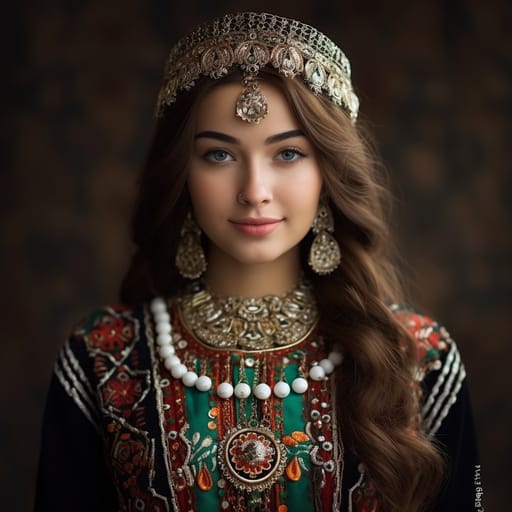
Uzbeks
same region (Central Asia)
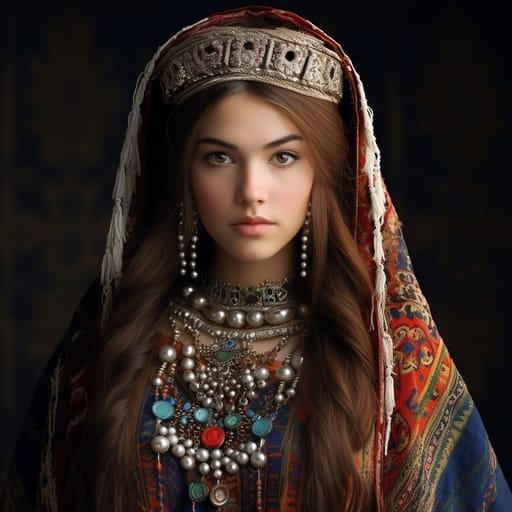
Tajiks
same region (Central Asia)
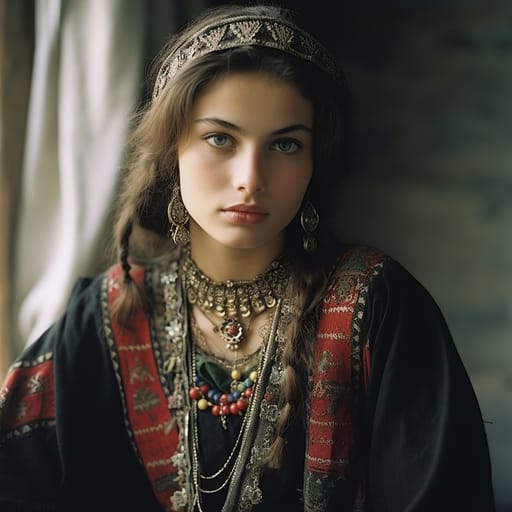
Ossetians
same region (Central Asia)
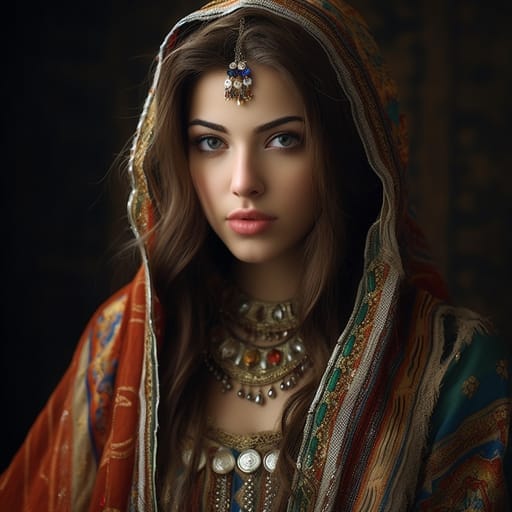
Persians
same region (Central Asia)
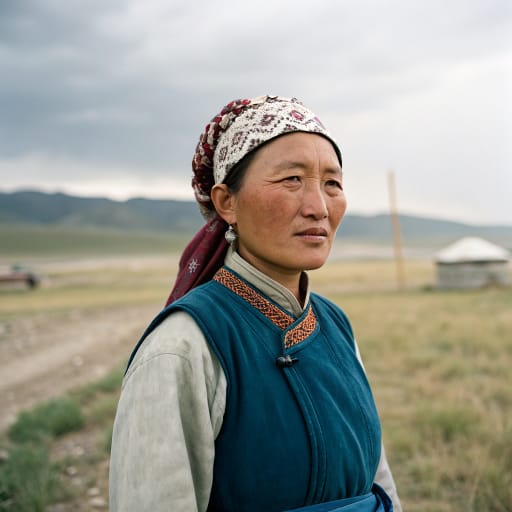
Dzungars
same region (Central Asia)
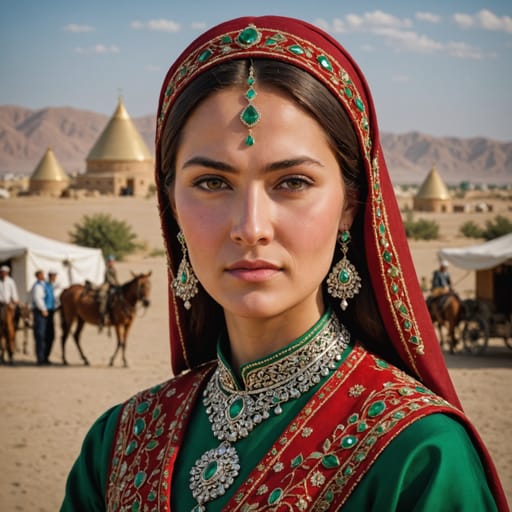
Russian Turkmenistan
same region (Central Asia)
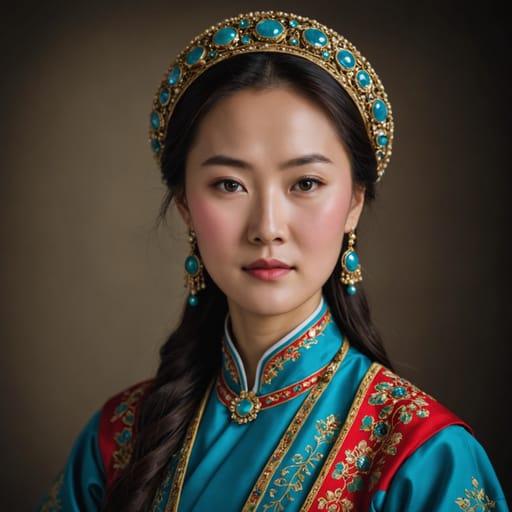
Korean Kazakhstani
same region (Central Asia)
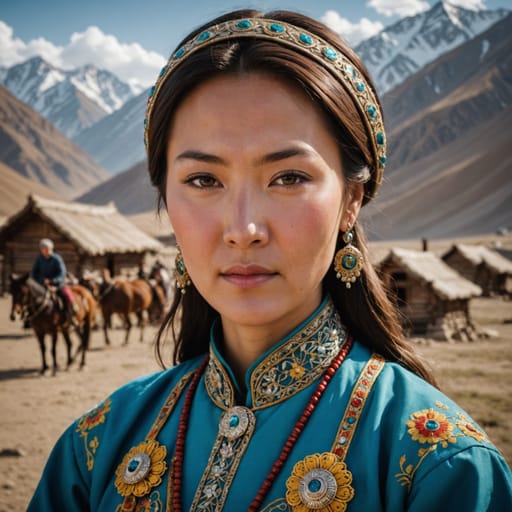
Kazakh Kyrgyzstan
same region (Central Asia)
Typical Oghuz Turks Phenotypes
Reference for AI generation: hair, eyes, skin, facial structure, build
Oghuz Turks Body & Anatomy Reference
Central Asian Turkic-Mongolic phenotype: anatomy reference for AI nude generation
Oghuz Turks Boobs & Breasts
Oghuz Turks tits and boobs run medium cup, moderate projection, the classic Central Asian Turkic-Mongolic bust profile. Oghuz Turks nipples and areolas show medium-brown areolar pigmentation against the tan-to-light-brown skin tone, with areolar diameter typically in the 30-42mm range and forward-set positioning rather than the smaller East Asian bust. Oghuz Turks breasts trend full and modestly projecting, a function of the mesomorph, broader frame than the East Asian norm body habitus and the mean adult female BMI 23-26. For anatomically accurate AI-generated Oghuz Turks nudes the render preserves the medium cup, moderate projection shape, 30-42mm areolas with medium-brown pigmentation, and the torso proportions of the Central Asian Turkic-Mongolic phenotype.
Oghuz Turks Ass & Hips
Oghuz Turks hips and butt usually read as medium, moderate projection, broader hip profile than the East Asian norm. The skeletal base is medium iliac crests, moderate gluteal-femoral fat deposition, the Central Asian Turkic-Mongolic pattern. Set against the slim East Asian narrow-hip profile, the difference is easy to see, and the hip-to-waist ratio is often what identifies Oghuz Turks women in photos.
Oghuz Turks Vagina & Pussy
Expect medium-brown labial pigmentation on Oghuz Turks women, in keeping with Central Asian Turkic-Mongolic ancestry. The pubic hair is straight-to-wavy medium-coarse texture. Coloring should run evenly from the tan to light-brown skin of the thighs to the labia, and Oghuz Turks nude imagery should keep the hair's straight-to-wavy medium-coarse texture.
Oghuz Turks Dicks & Penis
Oghuz Turks dick and penile anatomy in adult AI generation should anchor on the regional reference data: regional mean ~13cm erect, moderate girth, and medium-brown shaft pigmentation. The Oghuz Turks cock profile reflects the Central Asian Turkic-Mongolic population's anthropometric measurements. The shaft pigmentation should track the surrounding tan to light-brown skin tone, and the pubic hair should keep its straight-to-wavy medium-coarse texture in the typical inverted-V escutcheon.
Oghuz Turks Body, Curves & Build
Oghuz Turks body type: mesomorph, broader frame than the East Asian norm, with mean adult female BMI 23-26. This is the typical Central Asian Turkic-Mongolic build. Height range, shoulder-to-hip ratio and fat distribution all follow from it, which is what an accurate Oghuz Turks nude body should show.
Oghuz Turks Skin Tone & Hair Texture
Oghuz Turks skin tone falls in the tan to light-brown (Fitzpatrick III-IV) band, the surface signal most often miscalibrated by generic AI nude generators. Oghuz Turks hair texture is typically straight 1A-1B, dark-brown to black, characteristic of the Central Asian Turkic-Mongolic phenotype. In Oghuz Turks nude renders the skin should hold that band consistently across the body.
Explore phenotype categories
Structured taxonomy with peer-reviewed scales · 22 anatomical categories
Erotic Poses & Sex Positions
From the pose catalog: 219 named positions with reference skeletons
Frequently asked questions about Oghuz Turks people
Where is the Oghuz Turks homeland?
The Oghuz Turks homeland is Steppe between the Aral Sea and the lower Syr Darya, in present-day Kazakhstan, Uzbekistan and Turkmenistan, later spreading into Iran, the Caucasus and Anatolia (Turkey) in Central Asia.
What language do Oghuz Turks people speak?
Oghuz Turks people primarily speak Oghuz Turkic (Turkic family, Common Turkic branch), ancestral to Turkish, Azerbaijani, Turkmen and Gagauz.
What religion do Oghuz Turks people practice?
The predominant religion among Oghuz Turks people is Originally Tengrist (sky god and ancestor spirits), converting to Sunni Islam in the 10th and 11th centuries.






Make your own Oghuz Turks images
Five a day, free, no credits to buy. The studio starts from this group's phenotype data, so you can set body type, pose and style and keep the traits accurate.
Start with Oghuz Turks