No portrait yet
Oeselians Erotic
The islands of Saaremaa and Muhu and the surrounding West Estonian archipelago, Estonia.
An early form of Estonian, ancestral to the Saaremaa dialect (Finnic branch of Uralic).
Pre-Christian Estonian paganism centered on Tharapita; Christianized by force from 1227; their descendants are nominally Lutheran.
A Baltic Finnic people, one of the medieval Estonian counties (Osilia); ancestral to the saarlased, the islanders of modern Saaremaa and Muhu.
About Oeselians People
The Oeselians were the Finnic islanders of Saaremaa and Muhu, off the west coast of present-day Estonia, and from roughly the ninth century until their defeat in 1227 they were the most effective sea power in the eastern Baltic. Outsiders named them for the island: Eysysla to Norse sailors, Osilia in Latin, Ösel to Danes and Germans. They called their own ground Saaremaa, island land. It is flat limestone country, ringed by shallows and juniper, poor for grain and excellent for boats, and the Oeselians built their politics around that fact. They spoke an early form of Estonian, a Finnic language of the Uralic family, which made them kin to the Finns and Livonians and strangers to the Germanic, Slavic and Baltic tongues on nearly every shore they raided. Norse writers call them vikings in the plain sense of the word, and Henry of Livonia, who loathed them, describes their fleets taking Christian shipping, burning coastal villages in Sweden and Denmark, and carrying off captives to sell.
Their religion survives as one name in the written record: Tharapita, the god the island claimed as its own, whom Henry describes as born on a wooded hill on the mainland and flown out to Saaremaa. Older and stranger is Kaali, the meteorite crater near the middle of the island, a round lake inside a rim of shattered stone, which people enclosed with a wall and used as a sacrificial site deep into the Iron Age. Authority sat in dry-stone hill forts, Valjala and Kaarma and Pöide, and in assemblies of elders rather than in kings. The end arrived in the winter of 1227, when the crusading Order and its allies crossed the frozen sea, broke Muhu, and took the islanders' surrender and baptism at Valjala. The Oeselians withdrew both, repeatedly. Saaremaa rose in 1236, again in 1261, and most seriously in 1343, when the islanders killed the Germans among them and elected a king named Vesse. The Order hanged him and ended the rising by 1345. After that they stop appearing in the sources as a nation and start appearing as peasants on an island owned by somebody else. Their descendants never left. The saarlased of Saaremaa speak the most distinctive dialect in Estonia and retain a well-documented reluctance to be told what to do.
Related ethnic groups
Groups that share Oeselians's homeland, region, language, or religious tradition. These are likely candidates for comparative phenotype reference.
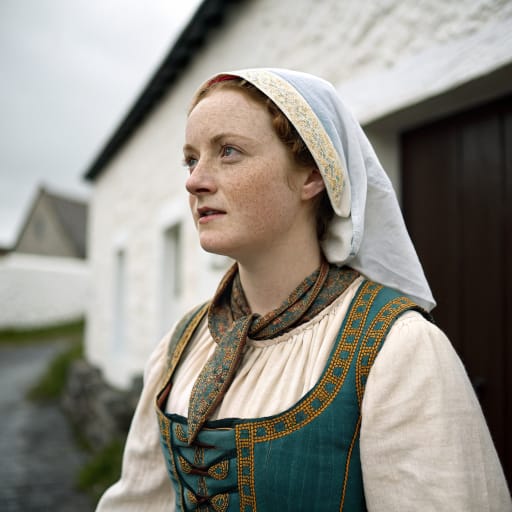
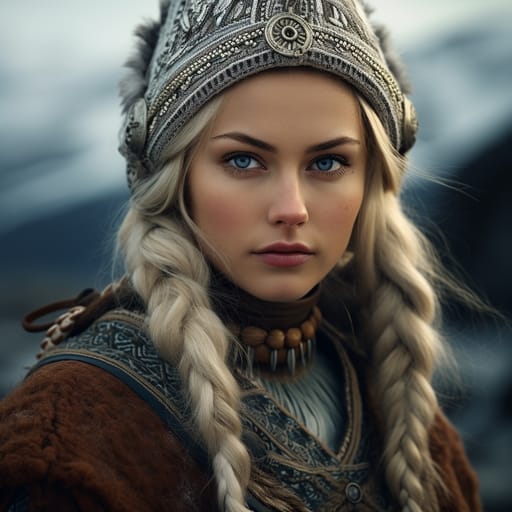
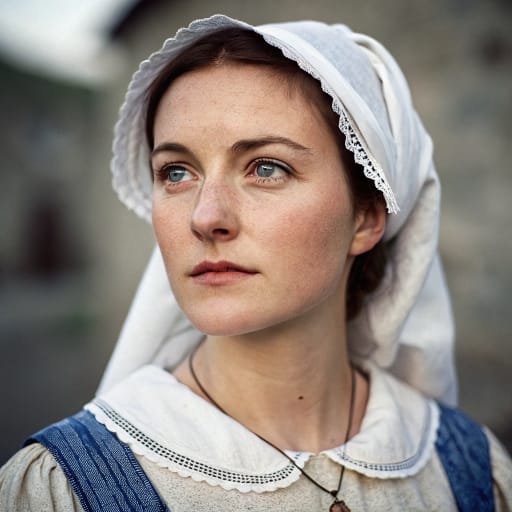
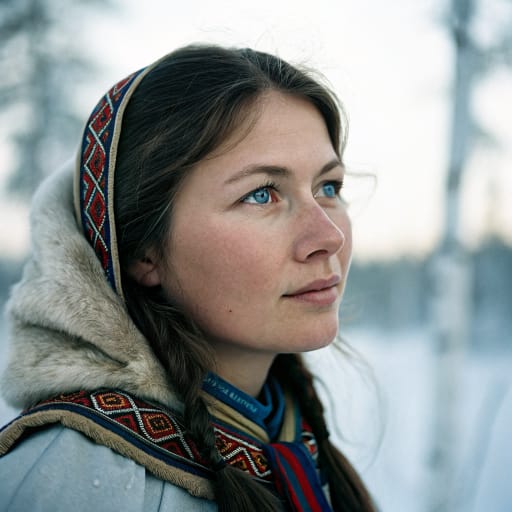
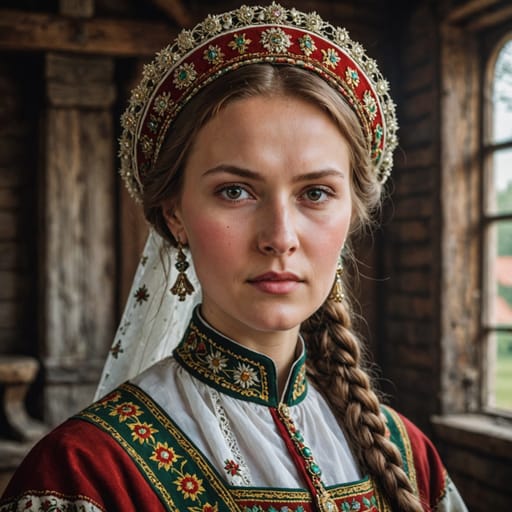
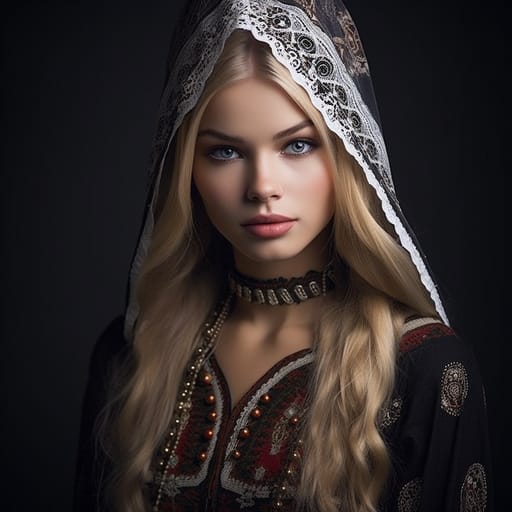
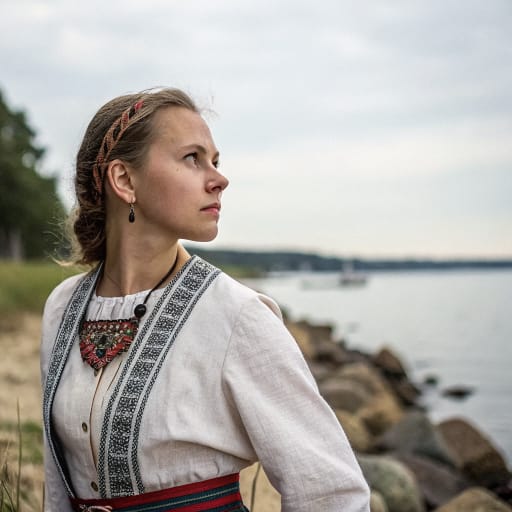

Typical Oeselians Phenotypes
Reference for AI generation: hair, eyes, skin, facial structure, build
Oeselians Body & Anatomy Reference
Anatomy by feature, Northern European / Germanic-Scandinavian phenotype
Oeselians Boobs & Breasts
The typical Oeselians bust is medium-to-large cup, full, high projection, in line with the wider Northern European / Germanic-Scandinavian pattern. Areolas usually fall in the 32-48mm range, with light-pink to medium-pink areolar pigmentation against the fair skin tone. Compared with the smaller East Asian bust, Oeselians breasts sit forward and are generally full and projecting, often the largest cup-size band in regional comparisons. A faithful AI render of Oeselians tits keeps that shape and areola size.
Oeselians Ass & Hips
Butt shape among Oeselians women: medium-to-full, moderate-to-high projection, over medium-to-wide iliac crests. This follows Northern European / Germanic-Scandinavian ancestry and looks quite unlike the slim East Asian narrow-hip profile. An accurate Oeselians ass in adult AI imagery keeps both the silhouette and the overall build (mesomorph with taller stature; ectomorph-to-mesomorph split) instead of a generic average.
Oeselians Vagina & Pussy
Vulvar anatomy among Oeselians women: light-pink to medium-pink labial pigmentation, varied labia minora projection. Pubic hair tends to be fine-to-medium wavy texture, often lighter-pigmented (blond to dark-brown), in the usual inverted-triangle pattern. Both follow Northern European / Germanic-Scandinavian pigmentation, which is why Oeselians pussy renders should not fall back on a pale, sparse Western template.
Oeselians Dicks & Penis
The Oeselians cock profile, from Northern European / Germanic-Scandinavian anthropometric data: regional mean ~13-14cm erect; moderate-to-above-average girth; light-pink to light-brown shaft pigmentation. Pubic hair has a fine-to-medium wavy texture and forms the usual inverted-V pattern. Whether Oeselians men are circumcised follows religious and cultural practice rather than phenotype.
Oeselians Body, Curves & Build
Build and curves among Oeselians women follow the Northern European / Germanic-Scandinavian pattern: mesomorph with taller stature; ectomorph-to-mesomorph split, mean adult female BMI 24-27. Proportions matter as much as skin tone, so Oeselians figures should keep their regional height and limb ratios.
Oeselians Skin Tone & Hair Texture
The Oeselians skin range is fair (Fitzpatrick I-III), and hair tends to be straight-to-wavy 1A-2B, blond to medium-brown common. That combination marks the Northern European / Germanic-Scandinavian phenotype, and skin tone is the trait AI generators most often get wrong for Oeselians women.
Explore phenotype categories
Structured taxonomy with peer-reviewed scales · 22 anatomical categories
Erotic Poses & Sex Positions
From the pose catalog: 219 named positions with reference skeletons
Frequently asked questions about Oeselians people
Where is the Oeselians homeland?
The Oeselians homeland is The islands of Saaremaa and Muhu and the surrounding West Estonian archipelago, Estonia. in Northern Europe.
What language do Oeselians people speak?
Oeselians people primarily speak An early form of Estonian, ancestral to the Saaremaa dialect (Finnic branch of Uralic)..
What religion do Oeselians people practice?
The predominant religion among Oeselians people is Pre-Christian Estonian paganism centered on Tharapita; Christianized by force from 1227; their descendants are nominally Lutheran..






Make your own Oeselians images
Five a day, free, no credits to buy. The studio starts from this group's phenotype data, so you can set body type, pose and style and keep the traits accurate.
Start with Oeselians