No portrait yet
Norse-Gaels Erotic
The Irish Sea rim: Ireland, the Isle of Man, the Hebrides and southwest Scotland, with onward settlement to Iceland
Old Norse (Germanic) alongside Middle Irish and early Gaelic (Goidelic Celtic), commonly both in the same community
Norse paganism, replaced by Latin Christianity within a few generations of settlement
Hiberno-Norse Ostmen of the Irish port towns; the Uí Ímair dynasty of Dublin and York; the Gall-Ghàidheil of Galloway; the Kingdom of the Isles and its successor line, Clann Somhairle
About Norse-Gaels People
The Norse-Gaels were a Scandinavian and Gaelic people of the Irish Sea world, formed in the ninth century and gone as a separate identity by the later Middle Ages, absorbed into the Irish, Manx and Scottish Gaelic populations that still carry their surnames, place names and sea vocabulary. They held Dublin, Waterford, Wexford, Cork and Limerick, the Isle of Man, the Hebrides, and the Galloway coast that takes its name from them. Irish annalists called them Gall-Ghàidheil, foreign Gaels, a label that reads less like an insult than an admission that the old categories had stopped working. They spoke Norse and Gaelic, often in one household, moved names across the language line in both directions, and were reliably available as allies to whichever Irish or Scottish king was paying.
Their power ran along sea lanes rather than borders. The dynasty of Ívarr held Dublin and, for stretches of the tenth century, York, which turned the Irish Sea into a corridor between two capitals instead of a frontier. Dublin under Sitric Silkbeard struck the first coins minted in Ireland around 995, ran one of northern Europe's larger slave markets, sent its king on pilgrimage to Rome, and founded the church that became Christ Church Cathedral. Christianity took hold fast and with little visible struggle. On the Isle of Man the stone crosses carry Norse runic inscriptions commemorating men with Gaelic names, and one at Kirk Andreas sets Odin and the wolf beside Christian figures on a single slab, which is either confusion or a very confident piece of editing. Man kept the Norse assembly too, and Tynwald still sits. In the west, Norway signed the Hebrides and Man over to Scotland in 1266, but the ruling line stayed: Somerled's descendants became the Lords of the Isles, and the galley on West Highland grave slabs and clan arms is a Norse ship with Gaelic owners. Language moved the other way, Gaelic swallowing Norse and keeping the seafaring words and several thousand island place names. Iceland's founding population came substantially by way of Ireland and the Hebrides, which is why Icelandic maternal ancestry is so heavily Gaelic. Nothing survives that calls itself Norse-Gaelic, but the shoreline they left is still legible: Doyle, MacLeod, MacIver, Cotter, Ranald, and a coast of Norse names spoken with Gaelic mouths.
Related ethnic groups
Groups that share Norse-Gaels's homeland, region, language, or religious tradition. These are likely candidates for comparative phenotype reference.
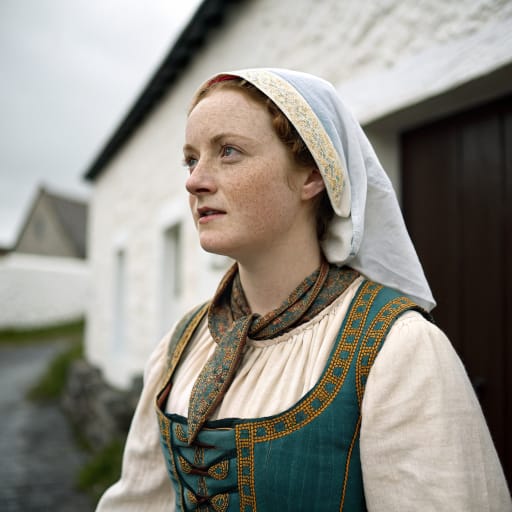
Irish
same region (Northern Europe)
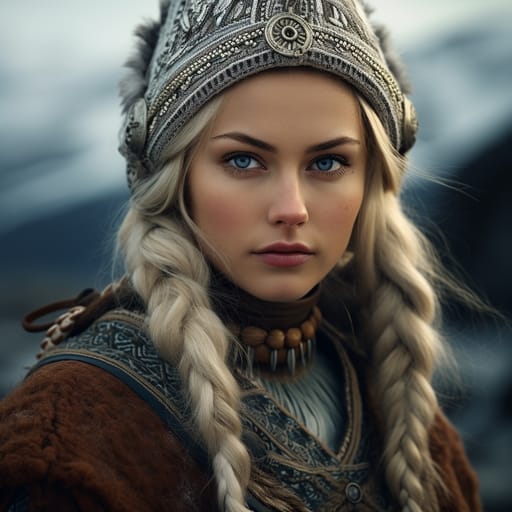
Icelanders
same region (Northern Europe)
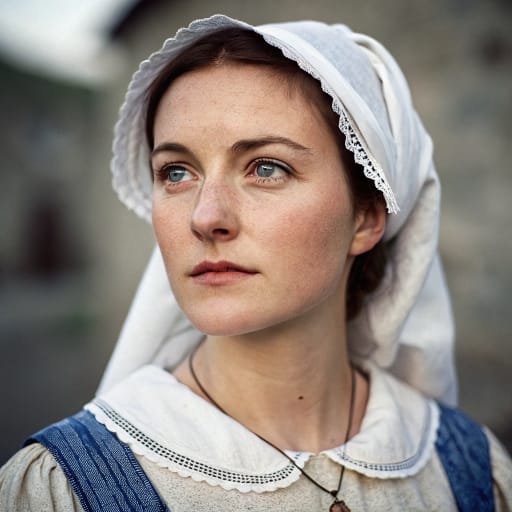
Welsh
same region (Northern Europe)
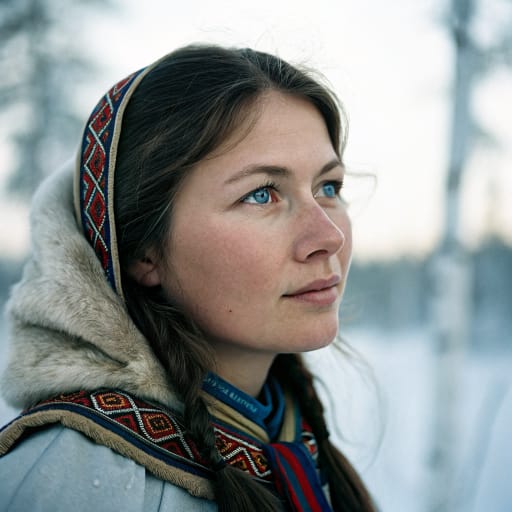
Sámi
same region (Northern Europe)
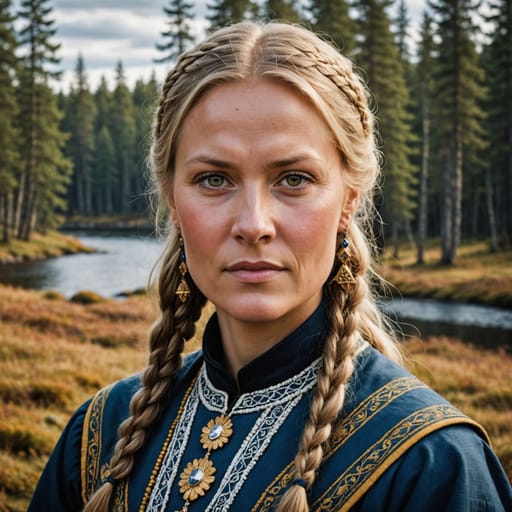
Sweden Finnish Tornedalian
same region (Northern Europe)
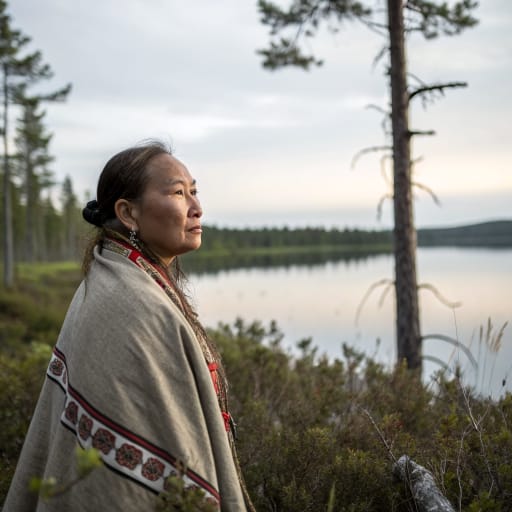
Inari Sami
same region (Northern Europe)
Prussian Lithuanians
same region (Northern Europe)
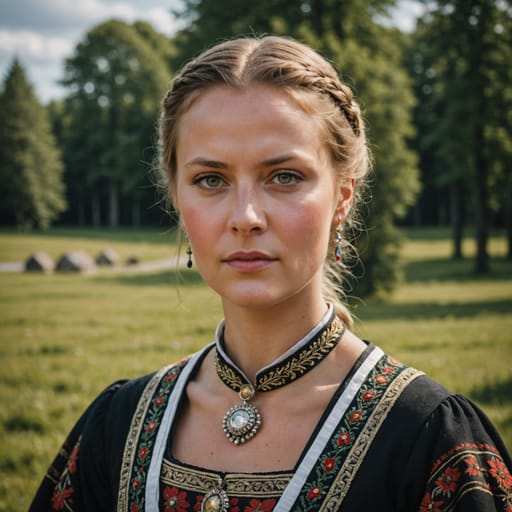
Estonia Other
same region (Northern Europe)
Typical Norse-Gaels Phenotypes
Reference for AI generation: hair, eyes, skin, facial structure, build
Norse-Gaels Body & Anatomy Reference
Northern European / Germanic-Scandinavian phenotype: anatomy reference for AI nude generation
Norse-Gaels Boobs & Breasts
Norse-Gaels tits and boobs run medium-to-large cup, full, high projection, the classic Northern European / Germanic-Scandinavian bust profile. Norse-Gaels nipples and areolas show light-pink to medium-pink areolar pigmentation against the fair skin tone, with areolar diameter typically in the 32-48mm range and forward-set positioning rather than the smaller East Asian bust. Norse-Gaels breasts trend full and projecting, often the largest cup-size band in regional comparisons, a function of the mesomorph with taller stature; ectomorph-to-mesomorph split body habitus and the mean adult female BMI 24-27. For anatomically accurate AI-generated Norse-Gaels nudes the render preserves the medium-to-large cup, full, high projection shape, 32-48mm areolas with light-pink to medium-pink pigmentation, and the torso proportions of the Northern European / Germanic-Scandinavian phenotype.
Norse-Gaels Ass & Hips
Norse-Gaels hips and butt usually read as medium-to-full, moderate-to-high projection. The skeletal base is medium-to-wide iliac crests, the Northern European / Germanic-Scandinavian pattern. Set against the slim East Asian narrow-hip profile, the difference is easy to see, and the hip-to-waist ratio is often what identifies Norse-Gaels women in photos.
Norse-Gaels Vagina & Pussy
Expect light-pink to medium-pink labial pigmentation, varied labia minora projection on Norse-Gaels women, in keeping with Northern European / Germanic-Scandinavian ancestry. The pubic hair is fine-to-medium wavy texture, often lighter-pigmented (blond to dark-brown). Coloring should run evenly from the fair skin of the thighs to the labia, and Norse-Gaels nude imagery should keep the hair's fine-to-medium wavy texture.
Norse-Gaels Dicks & Penis
Norse-Gaels dick and penile anatomy in adult AI generation should anchor on the regional reference data: regional mean ~13-14cm erect, moderate-to-above-average girth, and light-pink to light-brown shaft pigmentation. The Norse-Gaels cock profile reflects the Northern European / Germanic-Scandinavian population's anthropometric measurements. The shaft pigmentation should track the surrounding fair skin tone, and the pubic hair should keep its fine-to-medium wavy texture in the typical inverted-V escutcheon.
Norse-Gaels Body, Curves & Build
Norse-Gaels body type: mesomorph with taller stature; ectomorph-to-mesomorph split, with mean adult female BMI 24-27. This is the typical Northern European / Germanic-Scandinavian build. Height range, shoulder-to-hip ratio and fat distribution all follow from it, which is what an accurate Norse-Gaels nude body should show.
Norse-Gaels Skin Tone & Hair Texture
Norse-Gaels skin tone falls in the fair (Fitzpatrick I-III) band, the surface signal most often miscalibrated by generic AI nude generators. Norse-Gaels hair texture is typically straight-to-wavy 1A-2B, blond to medium-brown common, characteristic of the Northern European / Germanic-Scandinavian phenotype. In Norse-Gaels nude renders the skin should hold that band consistently across the body.
Explore phenotype categories
Structured taxonomy with peer-reviewed scales · 22 anatomical categories
Erotic Poses & Sex Positions
From the pose catalog: 219 named positions with reference skeletons
Frequently asked questions about Norse-Gaels people
Where is the Norse-Gaels homeland?
The Norse-Gaels homeland is The Irish Sea rim: Ireland, the Isle of Man, the Hebrides and southwest Scotland, with onward settlement to Iceland in Northern Europe.
What language do Norse-Gaels people speak?
Norse-Gaels people primarily speak Old Norse (Germanic) alongside Middle Irish and early Gaelic (Goidelic Celtic), commonly both in the same community.
What religion do Norse-Gaels people practice?
The predominant religion among Norse-Gaels people is Norse paganism, replaced by Latin Christianity within a few generations of settlement.






Make your own Norse-Gaels images
Five a day, free, no credits to buy. The studio starts from this group's phenotype data, so you can set body type, pose and style and keep the traits accurate.
Start with Norse-Gaels