No portrait yet
Ndyuka Erotic
Tapanahony River and Marowijne District in southeastern Suriname, and the Maroni border region of French Guiana; large communities in Paramaribo and the Netherlands
Ndyuka or Okanisi (English-based creole, closely related to Aluku and Pamaka); Sranan Tongo, Dutch and French as second languages
Traditional Maroon religion of ancestor veneration, spirits and oracles such as Gaan Tata, alongside a growing Christian presence
Opu (upstream on the Tapanahony) and Bilo (downstream in Marowijne District); matrilineal clans; one of Suriname's six Maroon peoples, closest to the Aluku and Pamaka
About Ndyuka People
The Ndyuka exist because their ancestors refused to stay enslaved. They were Africans held on Dutch plantations in coastal Suriname who escaped during the eighteenth century, regrouped deep in the rainforest and raided the colony until it had to negotiate. In 1760 they became the first Maroon people in Suriname to secure a peace treaty from the Dutch. That was more than a century before slavery ended in the colony, and the treaty is still central to how they remember their history. They are also known as Aukan or Okanisi. On the coast, Djuka was long used as a slur for Maroons in general.
Their heartland lies along the Tapanahony River in southeastern Suriname, with more villages downstream toward the Marowijne, the river that forms the border with French Guiana. Ndyuka distinguish the Opu, who live upstream on the Tapanahony, from the Bilo, who live downstream in Marowijne District. Authority runs through a paramount chief, the gaanman, whose seat is at Diitabiki on the Tapanahony. It also runs through matrilineal clans and lineages, which carry land rights, village offices and obligations to the dead. Funerals and the mourning periods that follow are major communal undertakings, and villages consult their ancestors on current matters rather than simply remembering them.
The Ndyuka language, also called Okanisi, is an English-based creole shaped heavily by West and Central African languages. It is closely related to the speech of the neighboring Aluku and Pamaka. Depending on where people live, Sranan Tongo, Dutch and French are common second languages. In 1908 a Ndyuka man, Afaka Atumisi, created a syllabary for writing the language, a script that did not come from colonial schooling. Religious life centers on ancestors, spirits, healing and powerful oracles, the best known being Gaan Tata. It exists alongside Christian churches that have gained ground in both villages and towns.
The late twentieth century brought war. During Suriname's Interior War, from 1986 to 1992, the Jungle Commando led by Ronnie Brunswijk, himself Ndyuka, fought the military regime. In 1986 soldiers massacred residents of the Ndyuka village of Moiwana. Thousands fled across the river into French Guiana, and large Ndyuka communities now live around Saint-Laurent-du-Maroni. Brunswijk later became vice president of Suriname. Today Ndyuka life stretches from the river villages to Paramaribo and the Netherlands. The carved and painted tembe designs of Maroon art go with it, on paddles, boats and house fronts.
Related ethnic groups
Groups that share Ndyuka's homeland, region, language, or religious tradition. These are likely candidates for comparative phenotype reference.
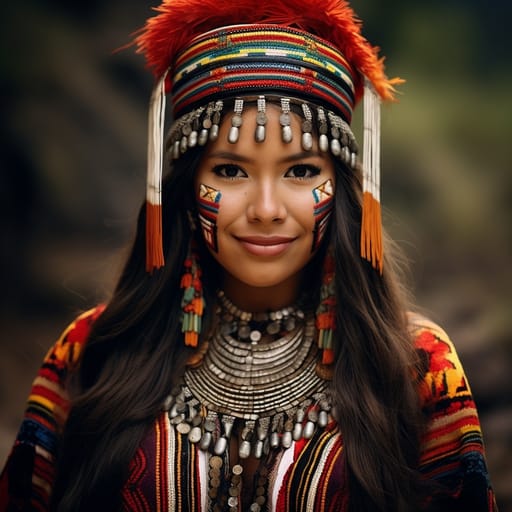
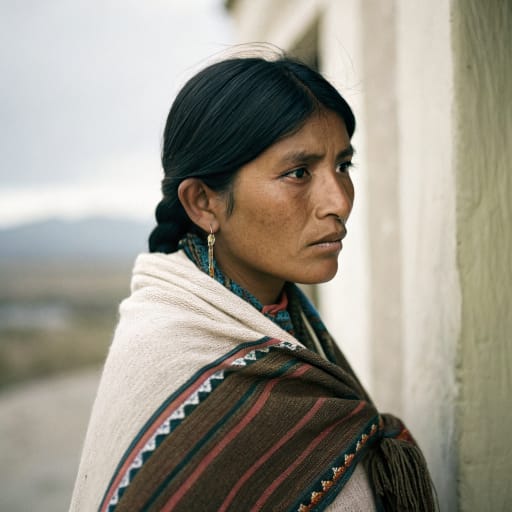
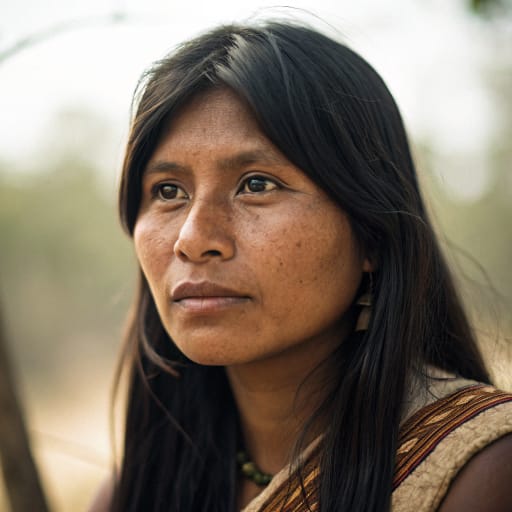
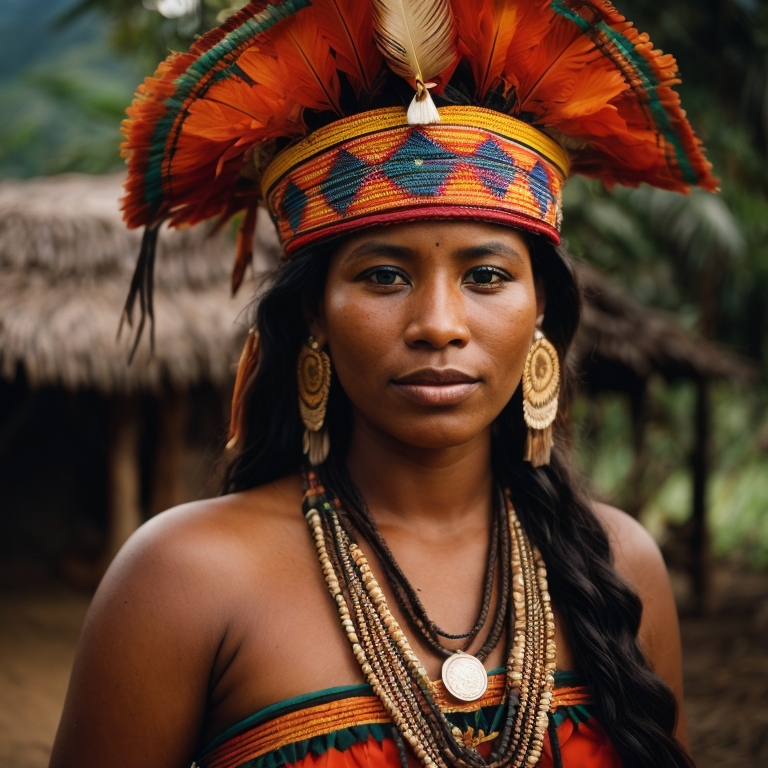
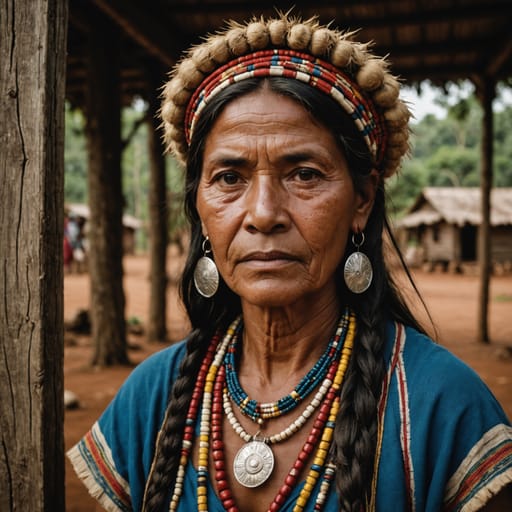
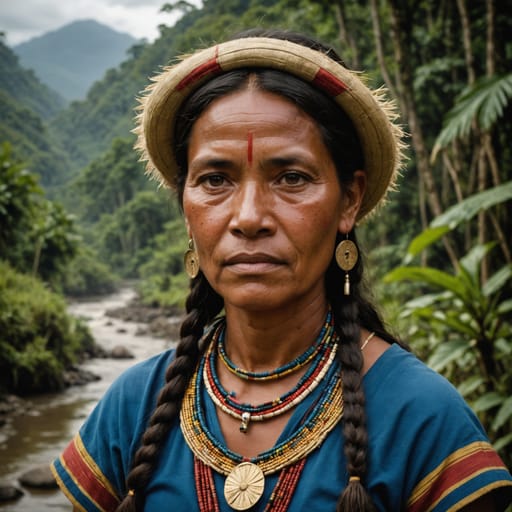
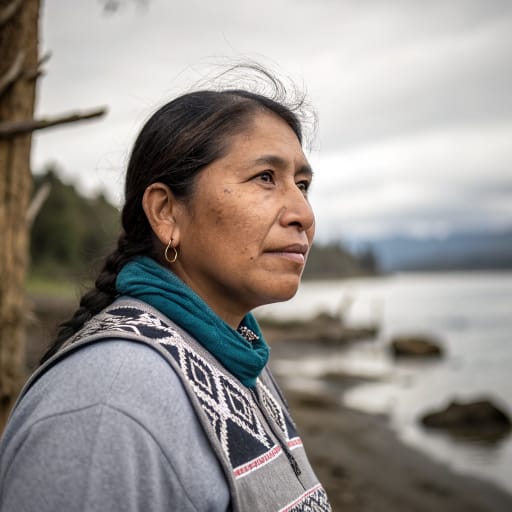
Typical Ndyuka Phenotypes
Reference for AI generation: hair, eyes, skin, facial structure, build
Ndyuka Body & Anatomy Reference
Per-feature anatomical profile for AI nude generation: South American Indigenous / European-Mestizo / Afro-Latino mix phenotype
Ndyuka Boobs & Breasts
Ndyuka boobs follow the South American Indigenous / European-Mestizo / Afro-Latino mix profile: medium-to-large cup, full, high projection. Areolar diameter is usually 32-46mm, and the coloring is medium-brown to dark-brown areolar pigmentation against the tan-to-deep-brown skin tone. Breast shape tracks body composition (endomorph-to-mesomorph with high gluteal-femoral deposition, mean adult female BMI 25-28), so Ndyuka breasts tend to be the classic Brazilian / Latina curvy bust profile in lowland populations; smaller and shorter-set in Andean Indigenous populations. Expect a forward-set shape, not the smaller bust profile of Andean Indigenous sub-populations.
Ndyuka Ass & Hips
Ndyuka ass and hip morphology presents as full, high projection, the famous Brazilian / Latina bunda profile, distinctly different from the slim narrow-hip East Asian profile. The Ndyuka pelvic profile shows wide iliac crests, very full gluteal-femoral fat deposition (the hallmark Brazilian / Latina hip-to-waist ratio), anchored in the South American Indigenous / European-Mestizo / Afro-Latino mix skeletal pattern. Ndyuka butt shots in adult AI imagery should render the full, high projection, the famous Brazilian / Latina bunda profile silhouette with the overall build (endomorph-to-mesomorph with high gluteal-femoral deposition) and the fat distribution typical of the South American Indigenous / European-Mestizo / Afro-Latino mix phenotype.
Ndyuka Vagina & Pussy
Ndyuka pussy anatomy typically shows medium-brown to dark-brown labial pigmentation, fuller labia minora. Pubic hair is usually wavy-to-curly coarse dark texture, dense distribution. In AI-generated Ndyuka nudes, labial color should blend into the tan to deep-brown skin with a gradual transition, and the hair should keep its wavy-to-curly coarse dark texture.
Ndyuka Dicks & Penis
Penis reference for Ndyuka men: regional mean ~13cm erect, moderate-to-above-average girth. Coloring: medium-brown shaft pigmentation. An accurate Ndyuka cock in AI imagery matches the surrounding tan to deep-brown skin rather than a generic porn default. Circumcision depends on religion and custom, not ancestry.
Ndyuka Body, Curves & Build
The Ndyuka figure is generally endomorph-to-mesomorph with high gluteal-femoral deposition, with mean adult female BMI 25-28, characteristic of South American Indigenous / European-Mestizo / Afro-Latino mix ancestry. AI image tools tend to flatten regional body types into a few stock shapes; here the Ndyuka build is kept as its own reference.
Ndyuka Skin Tone & Hair Texture
Skin: tan to deep-brown (Fitzpatrick III-VI). Hair: straight-to-curly 1A-3C, varies widely by ancestral composition. Both are typical of South American Indigenous / European-Mestizo / Afro-Latino mix ancestry. The most common mistake in AI nudes of Ndyuka women is a body rendered lighter than the face.
Explore phenotype categories
Structured taxonomy with peer-reviewed scales · 22 anatomical categories
Erotic Poses & Sex Positions
From the pose catalog: 219 named positions with reference skeletons
Frequently asked questions about Ndyuka people
Where is the Ndyuka homeland?
The Ndyuka homeland is Tapanahony River and Marowijne District in southeastern Suriname, and the Maroni border region of French Guiana; large communities in Paramaribo and the Netherlands in South America.
What language do Ndyuka people speak?
Ndyuka people primarily speak Ndyuka or Okanisi (English-based creole, closely related to Aluku and Pamaka); Sranan Tongo, Dutch and French as second languages.
What religion do Ndyuka people practice?
The predominant religion among Ndyuka people is Traditional Maroon religion of ancestor veneration, spirits and oracles such as Gaan Tata, alongside a growing Christian presence.






Make your own Ndyuka images
Five a day, free, no credits to buy. The studio starts from this group's phenotype data, so you can set body type, pose and style and keep the traits accurate.
Start with Ndyuka