No portrait yet
Tapajós Erotic
Lower Tapajós River at its meeting with the Amazon, around present-day Santarém, Pará, Brazil
Tapajó (unattested, unclassified); later replaced by Língua Geral (Tupian) in the Jesuit mission
Indigenous ancestor veneration centered on preserved remains of the dead; survivors converted to Catholicism under Jesuit missions
Linked to the archaeological Santarém culture; descendants absorbed into the river population of Pará, with some lower Tapajós communities reclaiming Tapajó identity
About Tapajós People
The Tapajós were an Amazonian people who lived where the Tapajós River meets the Amazon, on the bluffs where the Brazilian city of Santarém now stands. Slave raids, disease and mission life broke them apart in the 1600s and 1700s. Their descendants blended into the mixed river population of Pará. Their name lives on in the river and the region, and in communities along the lower Tapajós that have reclaimed an Indigenous identity in recent decades.
What set them apart was scale. Portuguese observers in the seventeenth century found a dense, organized society, not scattered villages. Its chiefs could call up large numbers of archers, and their poisoned arrows made both neighbors and Europeans cautious. The ground under Santarém still shows how many people lived there: deep deposits of terra preta, the dark, fertile soil left by centuries of settlement, spread under a large part of the modern city. Archaeologists link the Tapajós to what they call the Santarém culture, which flourished for several centuries before contact.
That culture made some of the most elaborate pottery in the precolonial Americas. Caryatid vessels rest on small crouching figures, and neck vessels are crowded with modeled birds, frogs and other animals. The potters seem to have refused to leave any surface quiet. The region is also tied to the muiraquitã, a small frog-shaped amulet carved from green stone. Later folklore linked these amulets to the legend of the Amazon women warriors, and they remain an emblem of Pará today.
Religious life centered on the dead. Colonial writers described the preserved bodies of honored ancestors kept in special houses. They also described ceremonies where ancestral bones were ground up and taken in drink, which bound the living to their lineage in a very literal way.
The collapse came fast. Portuguese slaving expeditions hit the Tapajós hard, and epidemics followed. In 1661 Jesuits founded a mission at the river mouth and gathered the survivors there with other peoples. At the mission the Tupian-based Língua Geral became the common tongue, and the Tapajós' own language went almost entirely unrecorded. The mission settlement became the town of Santarém in 1758. By then the Tapajós had disappeared as a distinct nation. They left behind their ceramics, their soil and their name.
Related ethnic groups
Groups that share Tapajós's homeland, region, language, or religious tradition. These are likely candidates for comparative phenotype reference.
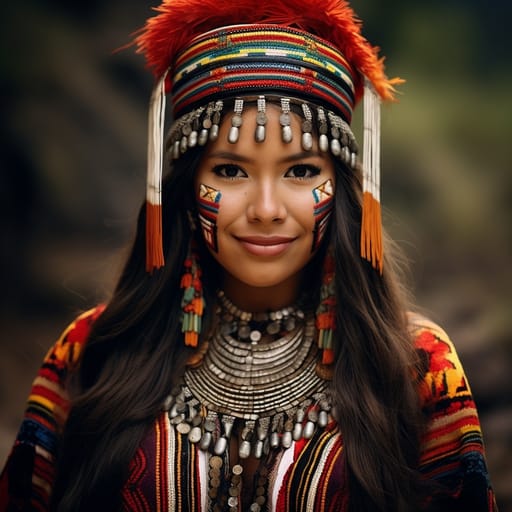
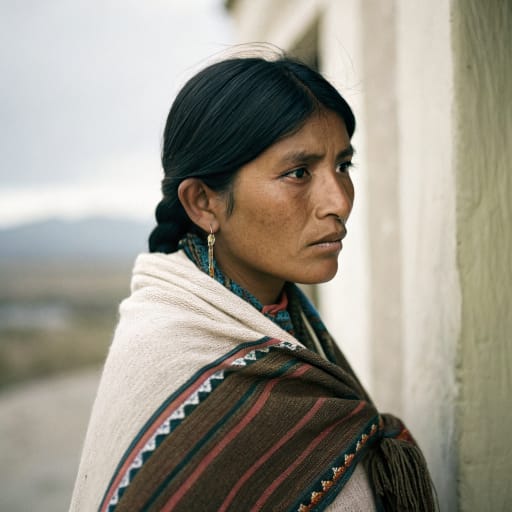
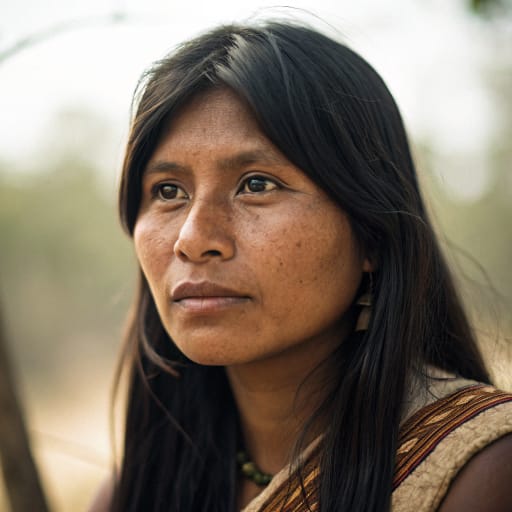
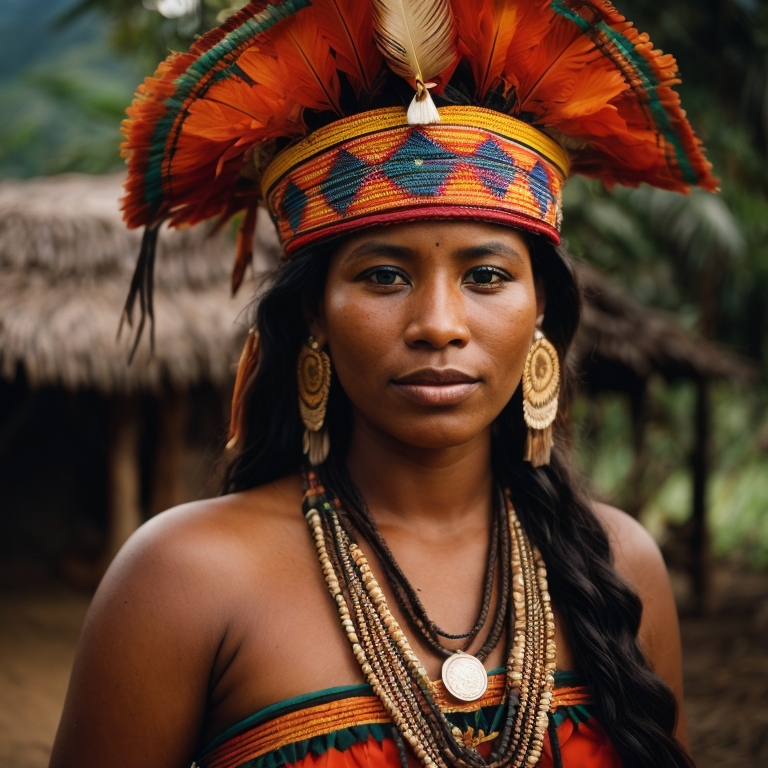
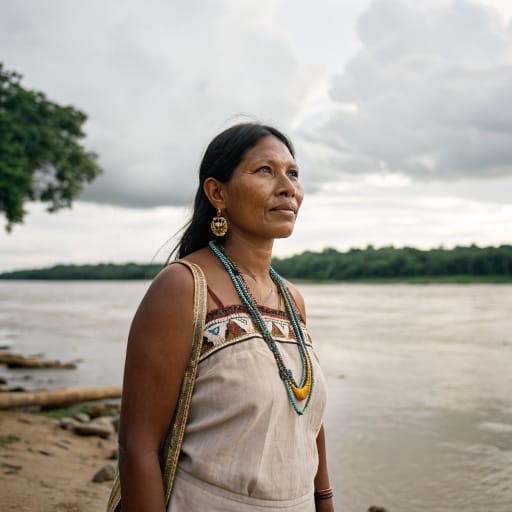
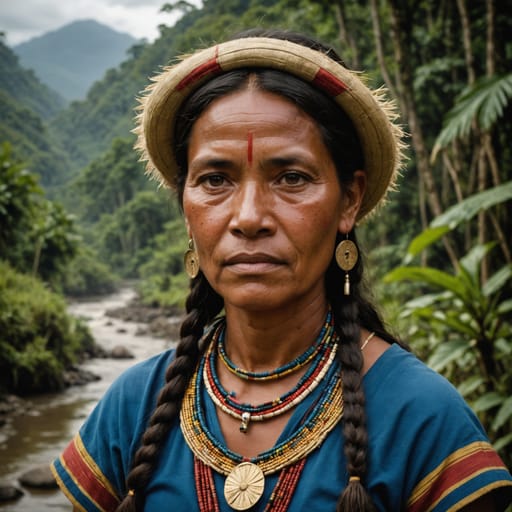
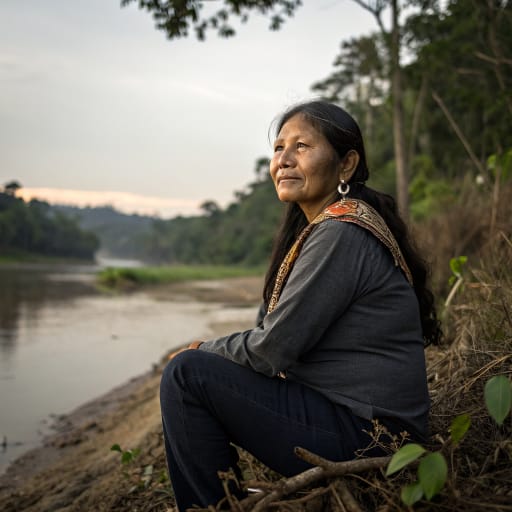
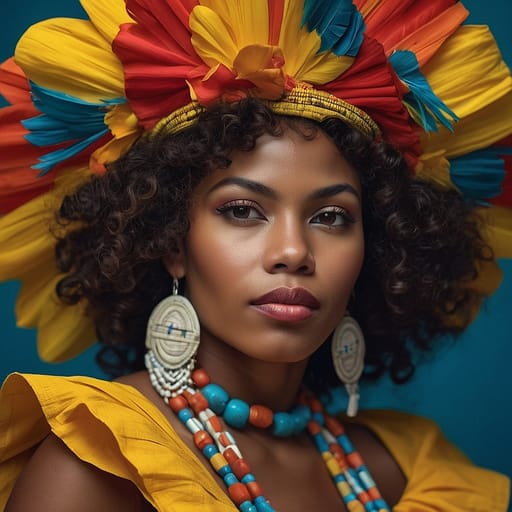
Typical Tapajós Phenotypes
Reference for AI generation: hair, eyes, skin, facial structure, build
Tapajós Body & Anatomy Reference
Anatomy by feature, South American Indigenous / European-Mestizo / Afro-Latino mix phenotype
Tapajós Boobs & Breasts
Tapajós tits and boobs run medium-to-large cup, full, high projection, the classic South American Indigenous / European-Mestizo / Afro-Latino mix bust profile. Tapajós nipples and areolas show medium-brown to dark-brown areolar pigmentation against the tan-to-deep-brown skin tone, with areolar diameter typically in the 32-46mm range and forward-set positioning rather than the smaller bust profile of Andean Indigenous sub-populations. Tapajós breasts trend the classic Brazilian / Latina curvy bust profile in lowland populations; smaller and shorter-set in Andean Indigenous populations, a function of the endomorph-to-mesomorph with high gluteal-femoral deposition body habitus and the mean adult female BMI 25-28. For anatomically accurate AI-generated Tapajós nudes the render preserves the medium-to-large cup, full, high projection shape, 32-46mm areolas with medium-brown to dark-brown pigmentation, and the torso proportions of the South American Indigenous / European-Mestizo / Afro-Latino mix phenotype.
Tapajós Ass & Hips
Tapajós hips and butt usually read as full, high projection, the famous Brazilian / Latina bunda profile. The skeletal base is wide iliac crests, very full gluteal-femoral fat deposition (the hallmark Brazilian / Latina hip-to-waist ratio), the South American Indigenous / European-Mestizo / Afro-Latino mix pattern. Set against the slim narrow-hip East Asian profile, the difference is easy to see, and the hip-to-waist ratio is often what identifies Tapajós women in photos.
Tapajós Vagina & Pussy
Expect medium-brown to dark-brown labial pigmentation, fuller labia minora on Tapajós women, in keeping with South American Indigenous / European-Mestizo / Afro-Latino mix ancestry. The pubic hair is wavy-to-curly coarse dark texture, dense distribution. Coloring should run evenly from the tan to deep-brown skin of the thighs to the labia, and Tapajós nude imagery should keep the hair's wavy-to-curly coarse dark texture.
Tapajós Dicks & Penis
Tapajós dick and penile anatomy in adult AI generation should anchor on the regional reference data: regional mean ~13cm erect, moderate-to-above-average girth, and medium-brown shaft pigmentation. The Tapajós cock profile reflects the South American Indigenous / European-Mestizo / Afro-Latino mix population's anthropometric measurements. The shaft pigmentation should track the surrounding tan to deep-brown skin tone, and the pubic hair should keep its wavy-to-curly coarse dark texture in the typical inverted-V escutcheon.
Tapajós Body, Curves & Build
Tapajós body type: endomorph-to-mesomorph with high gluteal-femoral deposition, with mean adult female BMI 25-28. This is the typical South American Indigenous / European-Mestizo / Afro-Latino mix build. Height range, shoulder-to-hip ratio and fat distribution all follow from it, which is what an accurate Tapajós nude body should show.
Tapajós Skin Tone & Hair Texture
Tapajós skin tone falls in the tan to deep-brown (Fitzpatrick III-VI) band, the surface signal most often miscalibrated by generic AI nude generators. Tapajós hair texture is typically straight-to-curly 1A-3C, varies widely by ancestral composition, characteristic of the South American Indigenous / European-Mestizo / Afro-Latino mix phenotype. In Tapajós nude renders the skin should hold that band consistently across the body.
Explore phenotype categories
Structured taxonomy with peer-reviewed scales · 22 anatomical categories
Erotic Poses & Sex Positions
From the pose catalog: 219 named positions with reference skeletons
Frequently asked questions about Tapajós people
Where is the Tapajós homeland?
The Tapajós homeland is Lower Tapajós River at its meeting with the Amazon, around present-day Santarém, Pará, Brazil in South America.
What language do Tapajós people speak?
Tapajós people primarily speak Tapajó (unattested, unclassified); later replaced by Língua Geral (Tupian) in the Jesuit mission.
What religion do Tapajós people practice?
The predominant religion among Tapajós people is Indigenous ancestor veneration centered on preserved remains of the dead; survivors converted to Catholicism under Jesuit missions.






Make your own Tapajós images
Five a day, free, no credits to buy. The studio starts from this group's phenotype data, so you can set body type, pose and style and keep the traits accurate.
Start with Tapajós