Help us get this right
Does this portrait look right for Ava Guarani?
Nobody has judged this one yet. You would be the first.
Ava Guarani Erotic
Eastern Paraguay, especially Canindeyú and Alto Paraná, and neighboring Brazil in Mato Grosso do Sul, Paraná and São Paulo
Ava Guarani, also called Chiripá or Ñandeva (Tupi-Guarani, Tupian); many also speak Paraguayan Guarani, Spanish or Portuguese
Guarani shamanic tradition led by prayer leaders, alongside Catholic and Pentecostal Christianity
One of the Guarani peoples, closely related to the Mbya and Kaiowá (Paĩ Tavyterã); the Apapokuva are a historically documented branch
About Ava Guarani People
In their own language ava simply means a person, a human being, and the fuller name some elders use, Ava Katu Ete, is usually glossed as the genuine people. Outsiders have preferred other labels. Paraguayans long called them Chiripá, while in Brazil they are recorded as Ñandeva, a name built on ñande, the inclusive Guarani word for we. Whatever the label, the group is defined by teko, the Guarani way of living, and by tekoha, the land where that way of living is possible. Most of their modern story is about keeping, losing and reclaiming that land.
Their country is the upper Paraná basin, once covered by Atlantic Forest. It takes in eastern Paraguay, above all the departments of Canindeyú and Alto Paraná, and runs across the river into the Brazilian states of Mato Grosso do Sul, Paraná and São Paulo, where they often share reserves with Kaiowá neighbors. Their speech belongs to the Tupi-Guarani branch of the Tupian family and sits close to Mbya and Kaiowá. It is also a near cousin of Paraguayan Guarani, the everyday language of millions of non-Indigenous Paraguayans. That leaves the Ava Guarani in a strange spot: a Guarani language is a national symbol, while they hold a sliver of the forest they once moved through.
Religious life turns on prayer leaders, often called ñanderu, who lead long night sessions of chanting and dancing kept in time by gourd rattles and bamboo stamping tubes. The ethnographer Curt Nimuendajú lived among the Apapokuva branch in the early 1900s and took his surname from the name they gave him. He recorded that a child's name is revealed by the shaman and counts as a piece of the soul. He also recorded how, through the nineteenth century, whole communities walked east toward the Atlantic in search of Yvy Marane'ỹ, the Land without Evil. Catholic and especially Pentecostal churches have since made deep inroads, sometimes in open friction with the prayer leaders.
The twentieth century stripped the forest away. Yerba mate concessions came first, then cattle ranches and soybean fields that cleared most of eastern Paraguay's woodland. The reservoir behind the Itaipu Dam, filled in 1982, displaced Ava Guarani communities on both banks of the Paraná. Today many live on small reserves or on land recovered through occupations and legal claims. They grow maize, manioc and beans where the soil allows and take wage work on the farms that surround them.
Related ethnic groups
Groups that share Ava Guarani's homeland, region, language, or religious tradition. These are likely candidates for comparative phenotype reference.
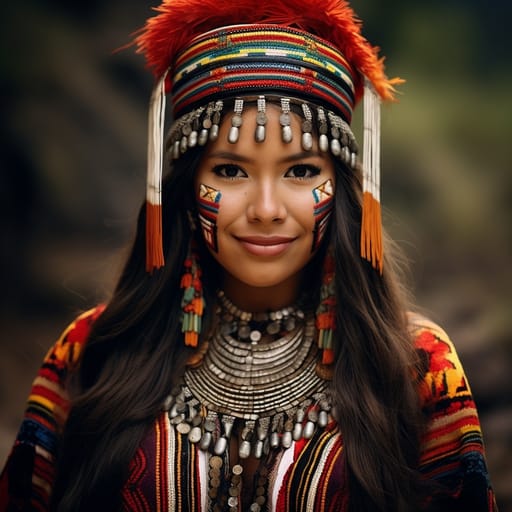
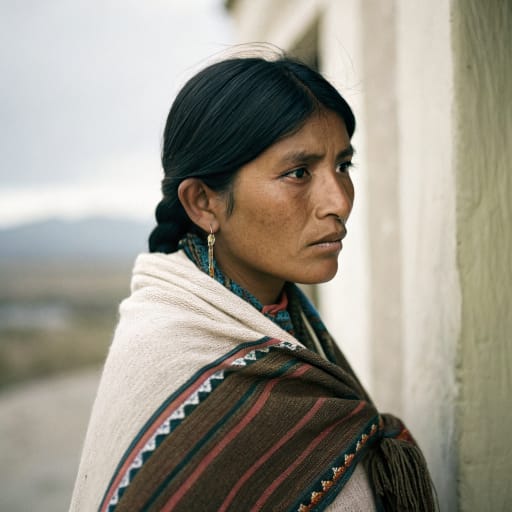
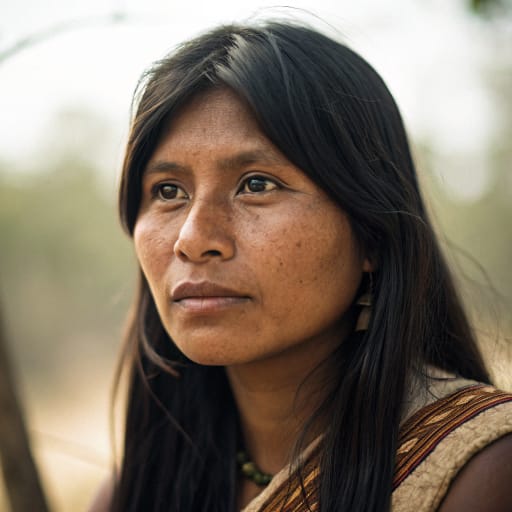
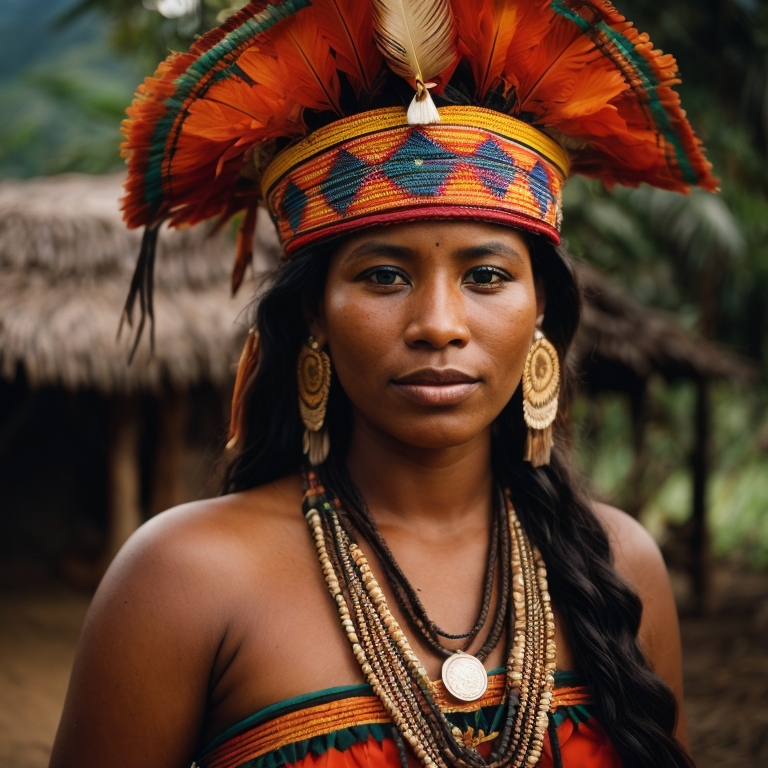
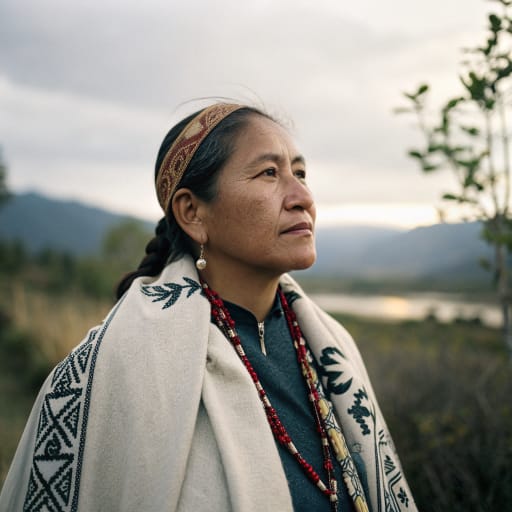
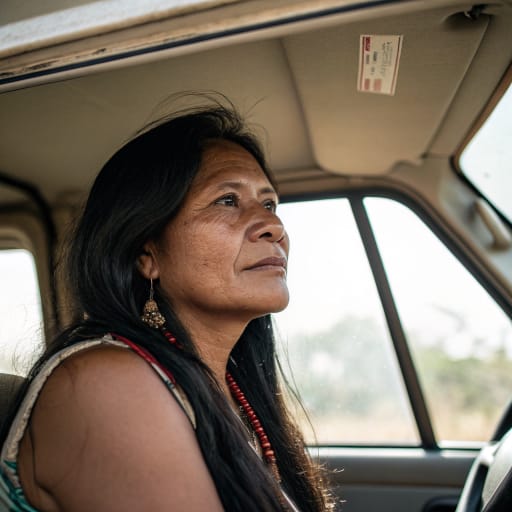
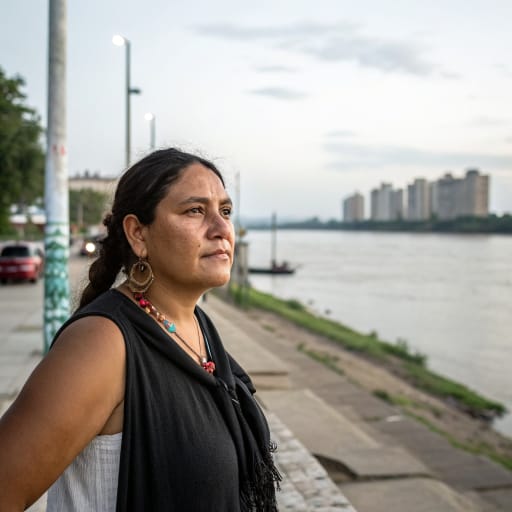
Typical Ava Guarani Phenotypes
Reference for AI generation: hair, eyes, skin, facial structure, build
Ava Guarani Body & Anatomy Reference
Per-feature anatomical profile for AI nude generation: South American Indigenous / European-Mestizo / Afro-Latino mix phenotype
Ava Guarani Boobs & Breasts
The typical Ava Guarani bust is medium-to-large cup, full, high projection, in line with the wider South American Indigenous / European-Mestizo / Afro-Latino mix pattern. Areolas usually fall in the 32-46mm range, with medium-brown to dark-brown areolar pigmentation against the tan-to-deep-brown skin tone. Compared with the smaller bust profile of Andean Indigenous sub-populations, Ava Guarani breasts sit forward and are generally the classic Brazilian / Latina curvy bust profile in lowland populations; smaller and shorter-set in Andean Indigenous populations. A faithful AI render of Ava Guarani tits keeps that shape and areola size.
Ava Guarani Ass & Hips
Butt shape among Ava Guarani women: full, high projection, the famous Brazilian / Latina bunda profile, over wide iliac crests, very full gluteal-femoral fat deposition (the hallmark Brazilian / Latina hip-to-waist ratio). This follows South American Indigenous / European-Mestizo / Afro-Latino mix ancestry and looks quite unlike the slim narrow-hip East Asian profile. An accurate Ava Guarani ass in adult AI imagery keeps both the silhouette and the overall build (endomorph-to-mesomorph with high gluteal-femoral deposition) instead of a generic average.
Ava Guarani Vagina & Pussy
Vulvar anatomy among Ava Guarani women: medium-brown to dark-brown labial pigmentation, fuller labia minora. Pubic hair tends to be wavy-to-curly coarse dark texture, dense distribution, in the usual inverted-triangle pattern. Both follow South American Indigenous / European-Mestizo / Afro-Latino mix pigmentation, which is why Ava Guarani pussy renders should not fall back on a pale, sparse Western template.
Ava Guarani Dicks & Penis
The Ava Guarani cock profile, from South American Indigenous / European-Mestizo / Afro-Latino mix anthropometric data: regional mean ~13cm erect; moderate-to-above-average girth; medium-brown shaft pigmentation. Pubic hair has a wavy-to-curly coarse dark texture and forms the usual inverted-V pattern. Whether Ava Guarani men are circumcised follows religious and cultural practice rather than phenotype.
Ava Guarani Body, Curves & Build
Build and curves among Ava Guarani women follow the South American Indigenous / European-Mestizo / Afro-Latino mix pattern: endomorph-to-mesomorph with high gluteal-femoral deposition, mean adult female BMI 25-28. Proportions matter as much as skin tone, so Ava Guarani figures should keep their regional height and limb ratios.
Ava Guarani Skin Tone & Hair Texture
The Ava Guarani skin range is tan to deep-brown (Fitzpatrick III-VI), and hair tends to be straight-to-curly 1A-3C, varies widely by ancestral composition. That combination marks the South American Indigenous / European-Mestizo / Afro-Latino mix phenotype, and skin tone is the trait AI generators most often get wrong for Ava Guarani women.
Explore phenotype categories
Structured taxonomy with peer-reviewed scales · 22 anatomical categories
Erotic Poses & Sex Positions
From the pose catalog: 219 named positions with reference skeletons
Frequently asked questions about Ava Guarani people
Where is the Ava Guarani homeland?
The Ava Guarani homeland is Eastern Paraguay, especially Canindeyú and Alto Paraná, and neighboring Brazil in Mato Grosso do Sul, Paraná and São Paulo in South America.
What language do Ava Guarani people speak?
Ava Guarani people primarily speak Ava Guarani, also called Chiripá or Ñandeva (Tupi-Guarani, Tupian); many also speak Paraguayan Guarani, Spanish or Portuguese.
What religion do Ava Guarani people practice?
The predominant religion among Ava Guarani people is Guarani shamanic tradition led by prayer leaders, alongside Catholic and Pentecostal Christianity.






Make your own Ava Guarani images
Five a day, free, no credits to buy. The studio starts from this group's phenotype data, so you can set body type, pose and style and keep the traits accurate.
Start with Ava Guarani