No portrait yet
Nağaybäk Erotic
Nagaybaksky and Chebarkulsky districts of Chelyabinsk Oblast in the southern Urals, Russia; earlier settled around the Nagaybak fortress in present-day Bashkortostan, Russia
Tatar, Nagaybak sub-dialect of the middle dialect (Turkic, Kipchak branch); Russian (Indo-European, Slavic) widely spoken
Russian Orthodox Christianity
Christian branch of the Volga Tatars, closely related to the Kryashens; historically part of the Orenburg Cossack Host
About Nağaybäk People
The Nağaybäk speak Tatar, hold an Orthodox Christian faith, and descend from Cossacks who guarded the Russian frontier in the southern Urals for close to two centuries. That combination is what sets them apart. Across the Volga-Ural region, speaking Tatar and practicing Islam usually go together. The Nağaybäk broke that pattern long ago and built an identity on the difference. Recent censuses count fewer than ten thousand of them. Most live in a small cluster of villages in the Nagaybaksky and Chebarkulsky districts of Chelyabinsk Oblast, on the eastern side of the southern Urals.
Their speech is a local form of the middle dialect of Tatar, the same dialect that underlies the literary language of Kazan. That places it in the Kipchak branch of Turkic, alongside Bashkir and Kazakh, both heard in the surrounding region. Nearly everyone also speaks Russian. Most Russian and Tatar historians treat the Nağaybäk as a Christian branch of the Volga Tatars and close kin to the Kryashens of Tatarstan. Russian law takes a different view: since 2000 it has listed them as a small indigenous people in their own right. Soviet statistics had mostly counted them simply as Tatars, so the recognition was a real shift.
Historians still argue over how far back their Christianity goes and which Turkic communities they descend from. The record gets firmer in the eighteenth century, when baptized Tatars were settled around the Nagaybak fortress in what is now Bashkortostan and enrolled as Cossacks, later serving in the Orenburg Cossack Host. Nağaybäk Cossacks fought in the wars against Napoleon. In the mid-nineteenth century the community was moved east to garrison a new defensive line, and the new settlements took their names from those campaigns. That is why Nağaybäk families live in places called Fershampenuaz, after the 1814 battle of Fère-Champenoise, and Parizh, which now has a scaled-down Eiffel Tower that doubles as a mobile phone mast.
Orthodoxy remains the community's faith, though decades of Soviet atheism thinned church attendance here as it did across Russia. The Cossack estate was abolished after the Revolution. Today the Nağaybäk are a largely rural people who combine a Tatar language, an Orthodox faith and a Cossack past in a way none of their neighbors quite match.
Related ethnic groups
Groups that share Nağaybäk's homeland, region, language, or religious tradition. These are likely candidates for comparative phenotype reference.
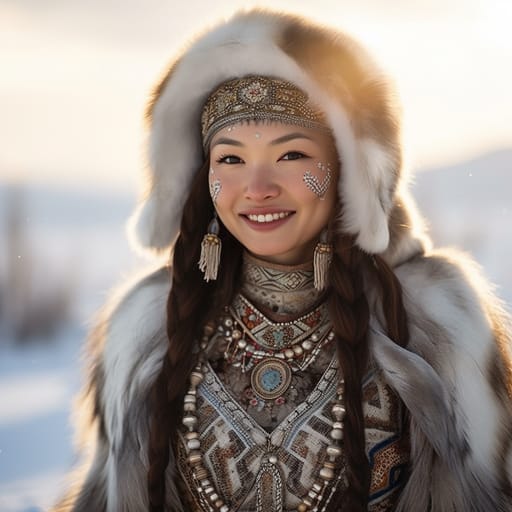
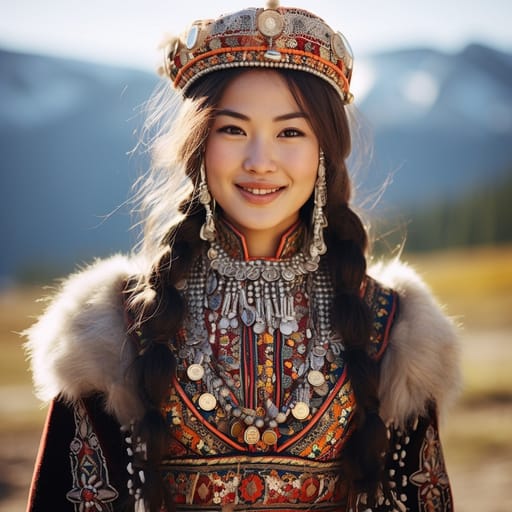
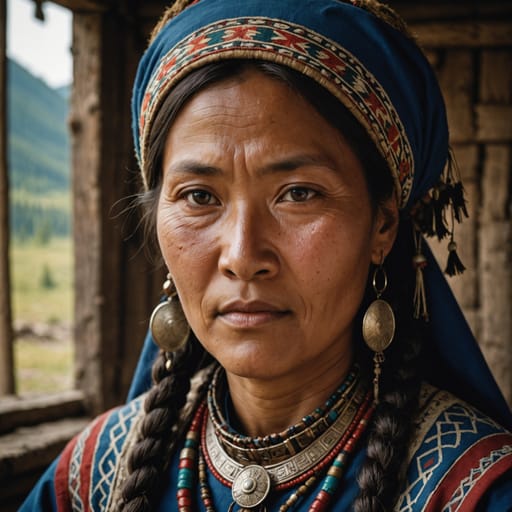
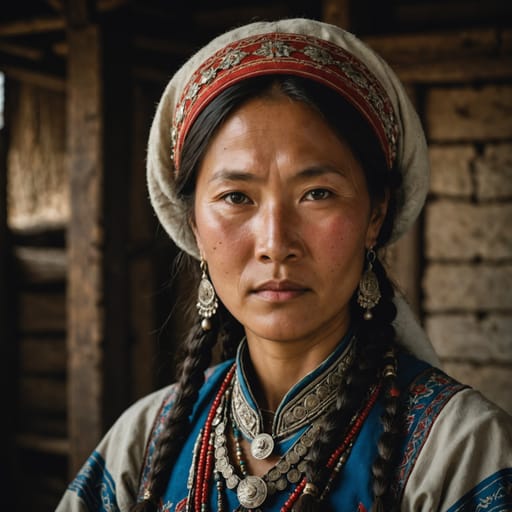
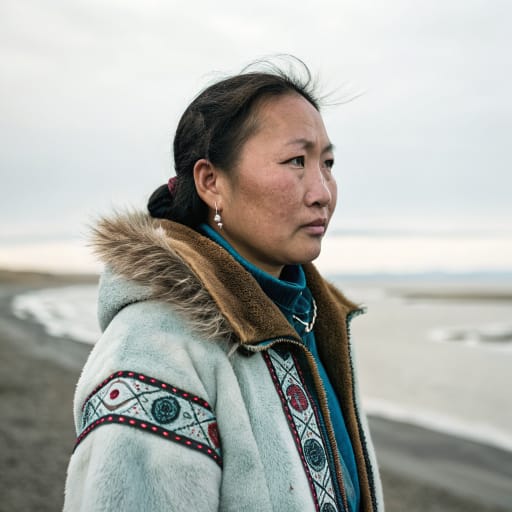
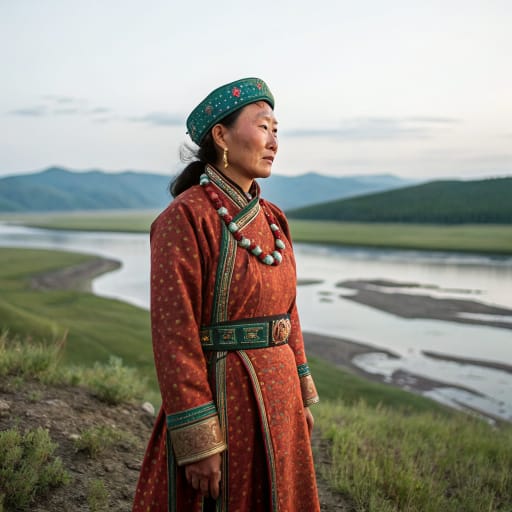
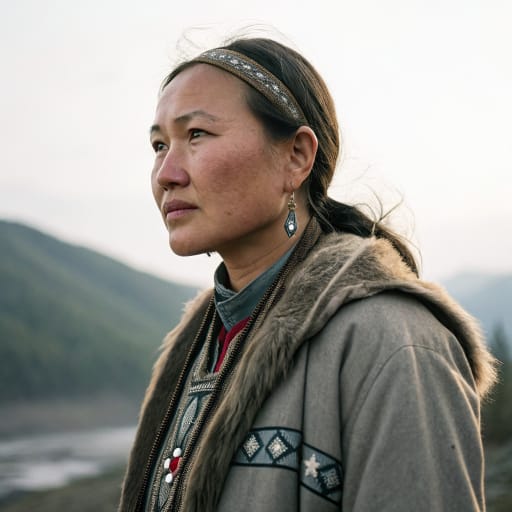
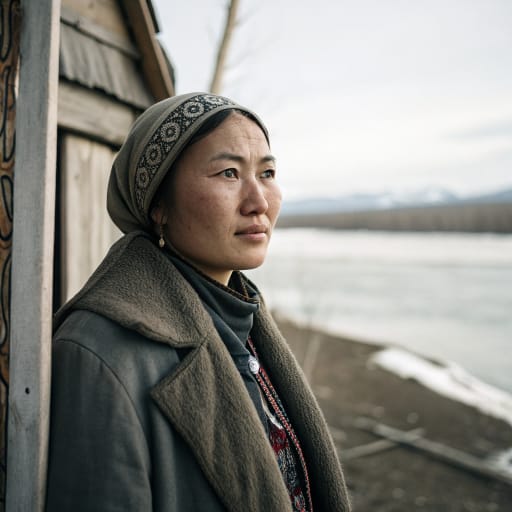
Typical Nağaybäk Phenotypes
Reference for AI generation: hair, eyes, skin, facial structure, build
Nağaybäk Body & Anatomy Reference
Per-feature anatomical profile for AI nude generation: Siberian Indigenous / Tungusic phenotype
Nağaybäk Boobs & Breasts
The typical Nağaybäk bust is small-to-medium cup, modest projection, in line with the wider Siberian Indigenous / Tungusic pattern. Areolas usually fall in the 26-38mm range, with medium-brown areolar pigmentation against the light-to-medium skin tone. Compared with the fuller Central Asian or East Asian bust, Nağaybäk breasts sit forward and are generally firm, modest projection. A faithful AI render of Nağaybäk tits keeps that shape and areola size.
Nağaybäk Ass & Hips
Butt shape among Nağaybäk women: small-to-medium, modest projection, over narrow-to-medium iliac crests. This follows Siberian Indigenous / Tungusic ancestry and looks quite unlike the broader Central Asian hip profile. An accurate Nağaybäk ass in adult AI imagery keeps both the silhouette and the overall build (mesomorph, broader stocky frame adapted to cold climate) instead of a generic average.
Nağaybäk Vagina & Pussy
Vulvar anatomy among Nağaybäk women: medium-brown labial pigmentation. Pubic hair tends to be straight fine-to-medium texture, sparser distribution, in the usual inverted-triangle pattern. Both follow Siberian Indigenous / Tungusic pigmentation, which is why Nağaybäk pussy renders should not fall back on a pale, sparse Western template.
Nağaybäk Dicks & Penis
The Nağaybäk cock profile, from Siberian Indigenous / Tungusic anthropometric data: regional mean ~12cm erect; moderate girth; medium-brown shaft pigmentation. Pubic hair has a straight fine-to-medium texture and forms the usual inverted-V pattern. Whether Nağaybäk men are circumcised follows religious and cultural practice rather than phenotype.
Nağaybäk Body, Curves & Build
Build and curves among Nağaybäk women follow the Siberian Indigenous / Tungusic pattern: mesomorph, broader stocky frame adapted to cold climate, mean adult female BMI 22-25. Proportions matter as much as skin tone, so Nağaybäk figures should keep their regional height and limb ratios.
Nağaybäk Skin Tone & Hair Texture
The Nağaybäk skin range is light to medium (Fitzpatrick II-IV), and hair tends to be straight 1A, dark-brown to black. That combination marks the Siberian Indigenous / Tungusic phenotype, and skin tone is the trait AI generators most often get wrong for Nağaybäk women.
Explore phenotype categories
Structured taxonomy with peer-reviewed scales · 22 anatomical categories
Erotic Poses & Sex Positions
From the pose catalog: 219 named positions with reference skeletons
Frequently asked questions about Nağaybäk people
Where is the Nağaybäk homeland?
The Nağaybäk homeland is Nagaybaksky and Chebarkulsky districts of Chelyabinsk Oblast in the southern Urals, Russia; earlier settled around the Nagaybak fortress in present-day Bashkortostan, Russia in Northern Asia.
What language do Nağaybäk people speak?
Nağaybäk people primarily speak Tatar, Nagaybak sub-dialect of the middle dialect (Turkic, Kipchak branch); Russian (Indo-European, Slavic) widely spoken.
What religion do Nağaybäk people practice?
The predominant religion among Nağaybäk people is Russian Orthodox Christianity.






Make your own Nağaybäk images
Five a day, free, no credits to buy. The studio starts from this group's phenotype data, so you can set body type, pose and style and keep the traits accurate.
Start with Nağaybäk