Help us get this right
Does this portrait look right for Mpoto?
Nobody has judged this one yet. You would be the first.
Mpoto Erotic
Eastern shore of Lake Nyasa (Lake Malawi) in Nyasa District, Ruvuma Region, southern Tanzania, around Mbamba Bay and Liuli; a smaller population is counted in Malawi.
Mpoto, also called Chimpoto or Kinyasa (Bantu, Niger-Congo; Manda group, Guthrie N.14); Swahili is near universal as a second language.
Predominantly Christian, with a strong Anglican presence on the lakeshore dating to the UMCA mission at Liuli, alongside Catholics; ancestor and healing practices persist.
Part of the broader Wanyasa (lake people) identity of Tanzania's Lake Nyasa shore; linguistically grouped with the Manda, Matengo, Ngoni of Songea and the Tonga of Malawi.
About Mpoto People
The Mpoto are lake people. Their villages run along the Tanzanian shore of Lake Nyasa, the water the rest of the world calls Lake Malawi, on a narrow strip of sand and cassava plots squeezed between the lake and the steep wall of the Matengo highlands. This is Nyasa District, split off from Mbinga District in 2012, in Tanzania's Ruvuma Region, with Mbamba Bay as its main town and port. Outsiders, and often the Mpoto themselves, use the broader label Wanyasa, people of the lake, and the language is as likely to be called Kinyasa as Chimpoto. Estimates from the late 1980s counted about 80,000 Mpoto in Tanzania, with a smaller number on the Malawian side.
Chimpoto is a Bantu language of the small Manda cluster, which makes its closest relatives the speech of the immediate neighbors: Manda to the north along the shore, Matengo up in the hills, the Ngoni of Songea, and Tonga across the water in Malawi. Nearly everyone also speaks Swahili, which carries school, church and trade. Daily life runs on the lake. Men fish from dugout canoes, often at night with lamps, for the small silvery fish that are sold sun-dried. Cassava is the staple starch, with rice where rivers reach the shore. Dried fish travels uphill to the Matengo coffee country, and maize, beans and cash come back down.
The nineteenth century brought two kinds of outsiders. First came the Ngoni, who arrived from the south, built raiding kingdoms around Songea and pressed hard on every community in reach. Then came Anglican missionaries of the Universities' Mission to Central Africa, who worked the shore by steamer from Likoma Island and planted a station at Liuli. The result is still visible: the lakeshore leans Anglican while the highlands behind it are firmly Catholic, and older practices around ancestors and healing continue alongside both. Under German rule Liuli was Sphinxhafen, and in August 1914 a British gunboat disabled a German steamer on the slipway there, in what is often described as the first naval action of the First World War. The German captain reportedly had not yet heard that war had been declared.
The lake is still contested. Malawi claims the water right up to the Tanzanian shoreline under an 1890 colonial treaty, Tanzania claims the median line, and Mpoto fishermen work the water in between. On shore, the dances that mark weddings and holidays are shared with neighbors up and down the lake: mganda, a men's drill dance in matching uniforms descended from colonial military bands, and kioda, which belongs to the women.
Related ethnic groups
Groups that share Mpoto's homeland, region, language, or religious tradition. These are likely candidates for comparative phenotype reference.
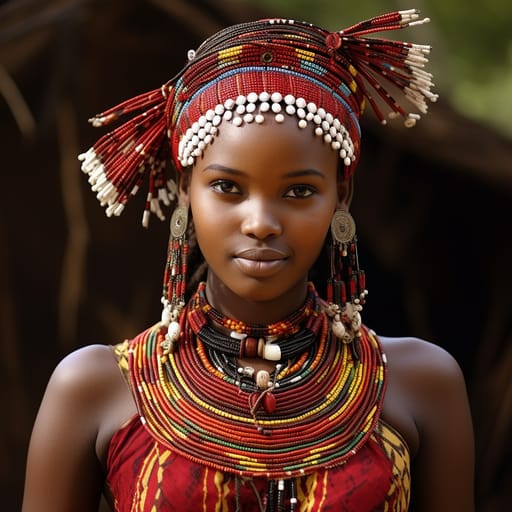
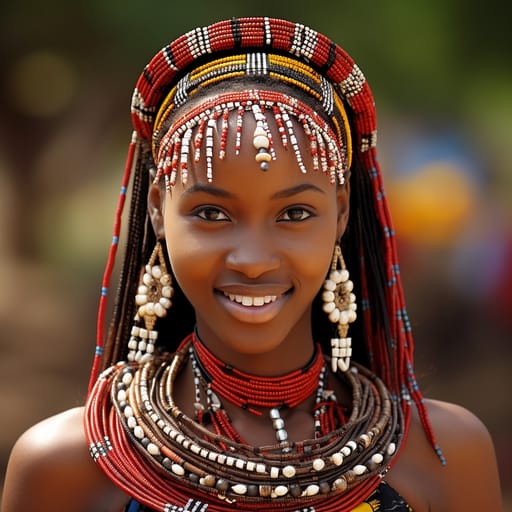
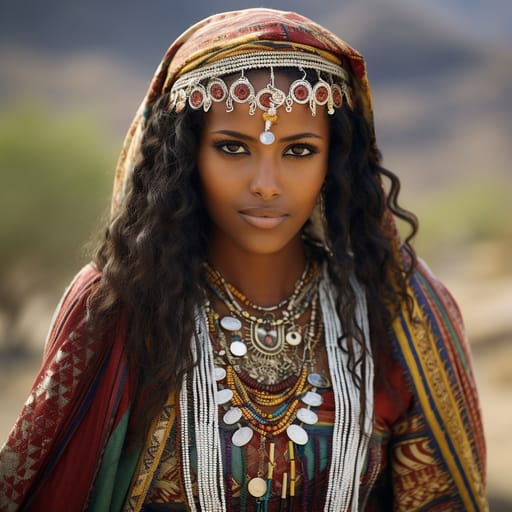
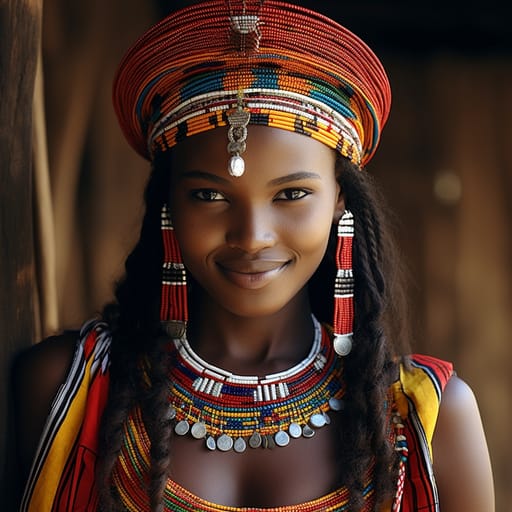
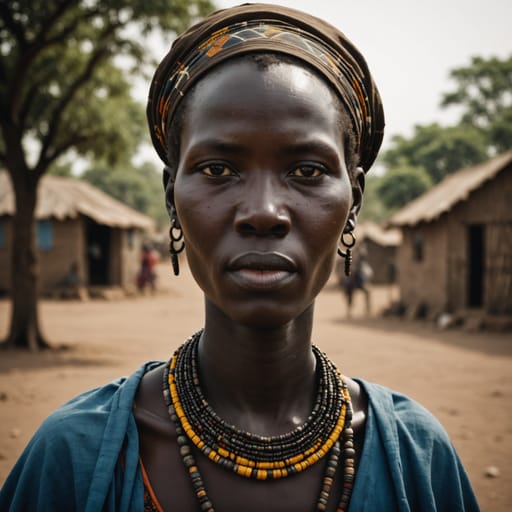
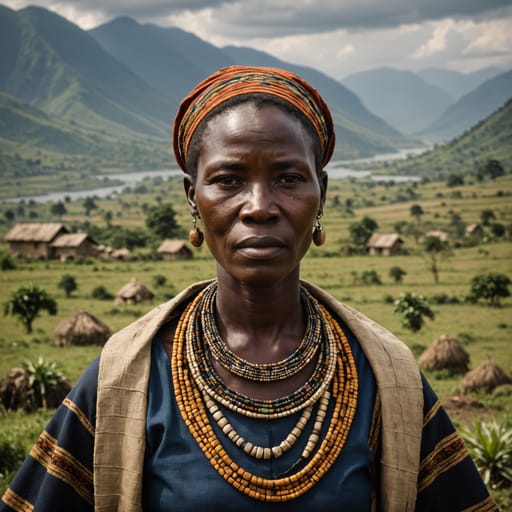
Typical Mpoto Phenotypes
Reference for AI generation: hair, eyes, skin, facial structure, build
Mpoto Body & Anatomy Reference
Anatomy by feature, Cushitic / Nilo-Cushitic East African phenotype
Mpoto Boobs & Breasts
Bust reference for Mpoto women: small-to-medium-cup, high-set, conical, which is typical of Cushitic / Nilo-Cushitic East African ancestry. Areolas measure about 28-38mm across, with moderate-to-high pigmentation. Body type (lean ectomorph-to-mesomorph) shapes the bust as well, so Mpoto tits are usually firmer and less projecting than the African-American or West African norm. In AI imagery, keep the forward-set shape rather than drifting toward the lateral spread of the West African phenotype.
Mpoto Ass & Hips
The Mpoto ass is typically small-to-medium, high-set, rounded, which sets it apart from the wide-set heavy-projection West African or African-American norm. Underneath, the pelvis shows narrow-to-medium iliac crests, longer torso-to-leg ratio, part of the Cushitic / Nilo-Cushitic East African skeletal pattern. For Mpoto butt pics and AI renders, match that silhouette and the overall build (lean ectomorph-to-mesomorph).
Mpoto Vagina & Pussy
Mpoto pussy and vulvar anatomy presents brown-to-deep-brown labial pigmentation, narrow-to-medium labia minora projection, consistent with the Cushitic / Nilo-Cushitic East African phenotype's pigmentation pattern. Mpoto pubic hair is typically tightly-coiled coarse texture, densely distributed, in the inverted-triangle pattern. For anatomically accurate Mpoto pussy renders the labial coloration should match the surrounding brown to deep brown skin tone with a continuous gradient, and the hair should keep its tightly-coiled coarse texture.
Mpoto Dicks & Penis
Mpoto dicks follow the Cushitic / Nilo-Cushitic East African reference data: regional mean ~13.5cm erect; moderate girth, ~12cm circumference; deeper-pigmented than the West African norm. Shaft color should track the brown to deep brown skin tone with a smooth change toward the glans, and Mpoto pubic hair keeps its tightly-coiled coarse texture.
Mpoto Body, Curves & Build
Mpoto body type and overall build presents as lean ectomorph-to-mesomorph, with mean adult female BMI 19-22: the characteristic Cushitic / Nilo-Cushitic East African habitus. Mpoto curves and proportions should keep the regional skeletal frame (height, shoulder-to-hip ratio, limb proportions) rather than a generic mesomorph default.
Mpoto Skin Tone & Hair Texture
Mpoto skin sits in the brown to deep brown (Fitzpatrick V-VI) band. Hair is typically tight 4A-4C coil, often worn natural or in braided/twisted protective styles, in keeping with the Cushitic / Nilo-Cushitic East African phenotype. In nude renders the skin should stay one even tone from face to body, and body, pubic and head hair should match.
Explore phenotype categories
Structured taxonomy with peer-reviewed scales · 22 anatomical categories
Erotic Poses & Sex Positions
From the pose catalog: 219 named positions with reference skeletons
Frequently asked questions about Mpoto people
Where is the Mpoto homeland?
The Mpoto homeland is Eastern shore of Lake Nyasa (Lake Malawi) in Nyasa District, Ruvuma Region, southern Tanzania, around Mbamba Bay and Liuli; a smaller population is counted in Malawi. in Eastern Africa.
What language do Mpoto people speak?
Mpoto people primarily speak Mpoto, also called Chimpoto or Kinyasa (Bantu, Niger-Congo; Manda group, Guthrie N.14); Swahili is near universal as a second language..
What religion do Mpoto people practice?
The predominant religion among Mpoto people is Predominantly Christian, with a strong Anglican presence on the lakeshore dating to the UMCA mission at Liuli, alongside Catholics; ancestor and healing practices persist..






Make your own Mpoto images
Five a day, free, no credits to buy. The studio starts from this group's phenotype data, so you can set body type, pose and style and keep the traits accurate.
Start with Mpoto