Help us get this right
Does this portrait look right for Motu?
Nobody has judged this one yet. You would be the first.
Motu Erotic
Coastal villages in and around Port Moresby, in the National Capital District and Central Province of Papua New Guinea, including Hanuabada, Tatana, Vabukori, Pari, Porebada and Boera
Motu (Austronesian, Oceanic); Hiri Motu, Tok Pisin and English also widely used
Christian, mainly the United Church in Papua New Guinea, which grew out of the London Missionary Society mission founded in 1874
Closely tied to the Koitabu (Koita), who share their villages and their customary ownership of Port Moresby land; part of the Austronesian-speaking peoples of the Papuan south coast
About Motu People
The Motu are a coastal people whose villages line the shore around Port Moresby, and they were there long before it became a capital. Together with the Koitabu, their inland neighbors and frequent in-laws, they are the customary owners of the land the city stands on, and that fact still drives local politics and land disputes. Motu settlements run along the dry southern shore of Central Province, from Boera and Porebada in the west through Hanuabada and Tatana to Vabukori and Pari in the east. Hanuabada, whose name means big village, still stands partly on stilts over the water, a short drive from the downtown office towers.
Motu is an Austronesian language of the Oceanic branch. That sets it apart from the Papuan languages spoken by the Koitabu and many other inland groups. The language split once matched a working partnership: Motu men fished and Motu women made pottery, while the Koitabu gardened and hunted, and the two peoples intermarried and came to share villages. The colonial police carried a simplified form of Motu across Papua, and that form, long called Police Motu, became Hiri Motu. It is still one of Papua New Guinea's official languages, even as Tok Pisin crowds it out in the capital.
The institution that defined the Motu was the hiri. The Port Moresby coast lies in a rain shadow with a long dry season, which makes it poor country for growing enough food. So Motu men loaded clay pots onto lakatoi, big sailing craft made of several dugout hulls lashed together under crab-claw sails, and sailed west to the Gulf of Papua. There they traded the pots for sago and for logs to carve new hulls, then came home months later when the winds turned. Tradition says Edai Siabo of Boera made the first voyage. Every September the Hiri Moale Festival puts lakatoi back on the water in Port Moresby.
Outside contact came early and at close range. The London Missionary Society settled among the Motu in 1874 and its missionaries translated scripture into Motu. Most Motu today belong to the United Church, and church life sets much of the village calendar. When Britain declared its protectorate over southeastern New Guinea in 1884, it did so at Port Moresby, which put the Motu on the doorstep of every government since. Some older practices are coming back into view. Women's tattooing, once applied in stages from girlhood to marriage, is being revived. And toea, the Motu word for a prized shell armband, is now the name of the smallest unit of the national currency.
Related ethnic groups
Groups that share Motu's homeland, region, language, or religious tradition. These are likely candidates for comparative phenotype reference.
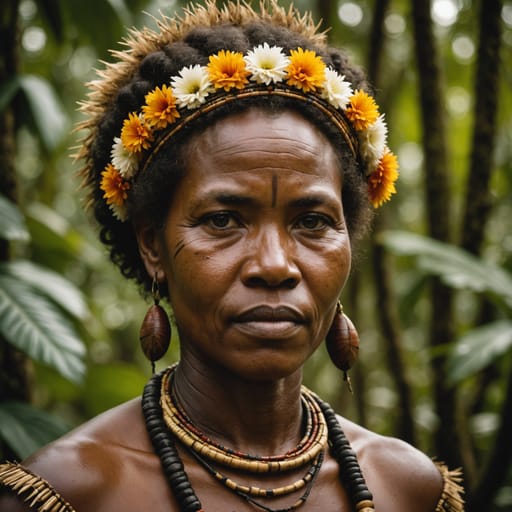
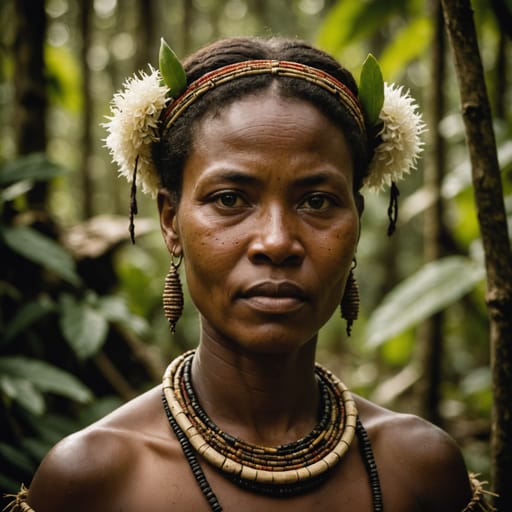
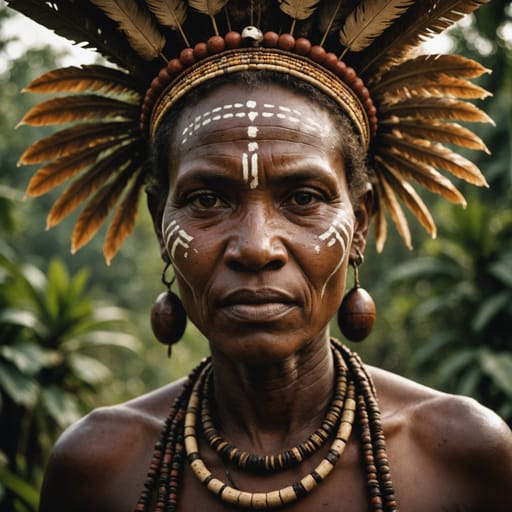
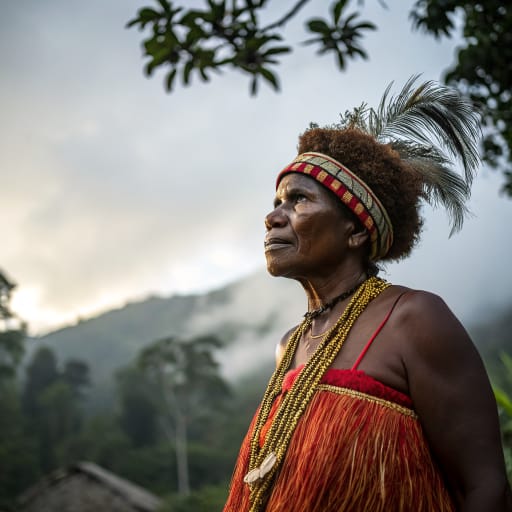
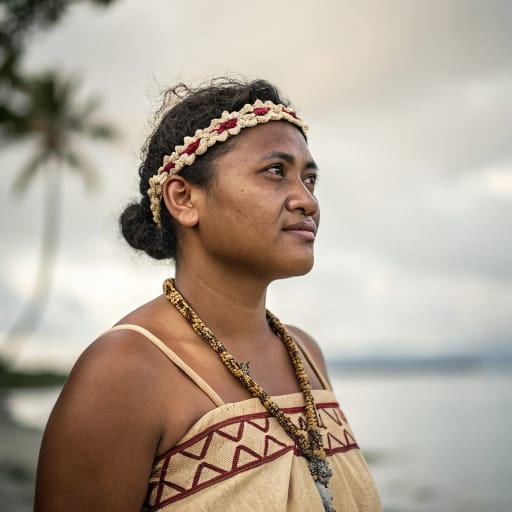
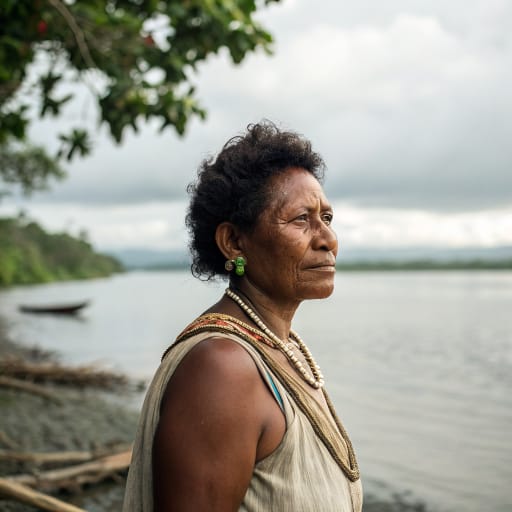
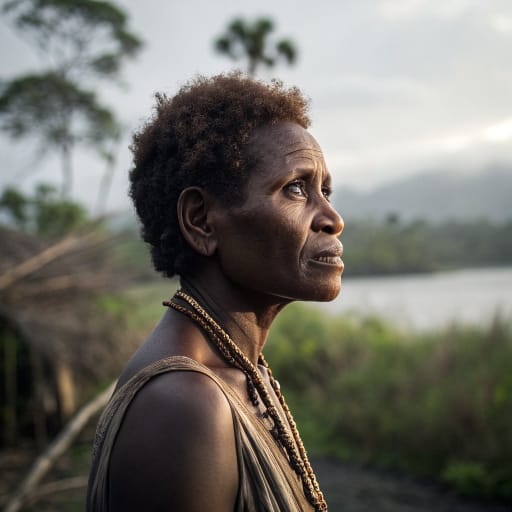
Typical Motu Phenotypes
Reference for AI generation: hair, eyes, skin, facial structure, build
Motu Body & Anatomy Reference
Anatomy by feature, Melanesian / Papuan phenotype
Motu Boobs & Breasts
The typical Motu bust is medium-to-large cup, full, moderate projection, in line with the wider Melanesian / Papuan pattern. Areolas usually fall in the 32-46mm range, with deep-brown to near-black areolar pigmentation against the deep-brown skin tone. Compared with the smaller Aboriginal Australian bust, Motu breasts sit forward and are generally full, moderate projection. A faithful AI render of Motu tits keeps that shape and areola size.
Motu Ass & Hips
Butt shape among Motu women: medium-to-full, moderate-to-high projection, over medium-to-wide iliac crests, full gluteal-femoral fat deposition. This follows Melanesian / Papuan ancestry and looks quite unlike the slim Aboriginal Australian narrow-hip profile. An accurate Motu ass in adult AI imagery keeps both the silhouette and the overall build (mesomorph) instead of a generic average.
Motu Vagina & Pussy
Vulvar anatomy among Motu women: deep-brown labial pigmentation. Pubic hair tends to be tightly-coiled coarse texture, dense distribution, in the usual inverted-triangle pattern. Both follow Melanesian / Papuan pigmentation, which is why Motu pussy renders should not fall back on a pale, sparse Western template.
Motu Dicks & Penis
The Motu cock profile, from Melanesian / Papuan anthropometric data: regional mean ~13cm erect; moderate-to-above-average girth; deep-brown shaft pigmentation. Pubic hair has a tightly-coiled coarse texture and forms the usual inverted-V pattern. Whether Motu men are circumcised follows religious and cultural practice rather than phenotype.
Motu Body, Curves & Build
Build and curves among Motu women follow the Melanesian / Papuan pattern: mesomorph, mean adult female BMI 25-28. Proportions matter as much as skin tone, so Motu figures should keep their regional height and limb ratios.
Motu Skin Tone & Hair Texture
The Motu skin range is deep-brown (Fitzpatrick V-VI); the distinctive blond-hair-on-dark-skin trait widely documented in Solomon Islands populations, and hair tends to be tight 4A-4C coil; the blond-on-dark trait is a TYRP1 variant unique to Melanesia. That combination marks the Melanesian / Papuan phenotype, and skin tone is the trait AI generators most often get wrong for Motu women.
Explore phenotype categories
Structured taxonomy with peer-reviewed scales · 22 anatomical categories
Erotic Poses & Sex Positions
From the pose catalog: 219 named positions with reference skeletons
Frequently asked questions about Motu people
Where is the Motu homeland?
The Motu homeland is Coastal villages in and around Port Moresby, in the National Capital District and Central Province of Papua New Guinea, including Hanuabada, Tatana, Vabukori, Pari, Porebada and Boera in Melanesia.
What language do Motu people speak?
Motu people primarily speak Motu (Austronesian, Oceanic); Hiri Motu, Tok Pisin and English also widely used.
What religion do Motu people practice?
The predominant religion among Motu people is Christian, mainly the United Church in Papua New Guinea, which grew out of the London Missionary Society mission founded in 1874.






Make your own Motu images
Five a day, free, no credits to buy. The studio starts from this group's phenotype data, so you can set body type, pose and style and keep the traits accurate.
Start with Motu