Help us get this right
Does this portrait look right for Melpa?
Nobody has judged this one yet. You would be the first.
Melpa Erotic
Mount Hagen area, Western Highlands, Papua New Guinea
Melpa (Trans-New Guinea, Chimbu-Wahgi)
Indigenous religion and Christianity
About Melpa People
Melpa are a people of the Western Highlands of Papua New Guinea, living in and around the Mount Hagen area. They speak Melpa, a Chimbu-Wahgi language of the Trans-New Guinea family, and number in the tens of thousands. They became widely known in anthropology through the work of Andrew and Marilyn Strathern, above all for their ceremonial exchange system.
Society and subsistence
Melpa livelihood rests on intensive sweet potato horticulture and the raising of pigs, which are central to both diet and social value. The defining institution is the moka, a system of competitive ceremonial gift exchange in which men, through their networks, give away pigs, shells, and later money in ever larger amounts to rivals and partners. A man who gives more than he received gains prestige and the standing of a big man, a leader whose influence rests on skill in exchange and persuasion rather than inherited rank. Pigs and shells also flow as bride wealth and compensation, binding clans through marriage and the settlement of disputes, and the annual cultural shows near Mount Hagen now gather many groups to display their dances and finery. Kin groups, alliance, and the management of debt and obligation structure political life.
Appearance and adornment
The Melpa share the New Guinea Highlands physical type, with dark brown skin, tightly curled black hair, and a robust, muscular build. They are famous for spectacular self-decoration at the sing-sing festival, where dancers assemble towering headdresses of bird of paradise and other plumes, paint their faces in bold red, black, and white designs, and wear crescent shaped pearl and kina shells on the chest. Andrew and Marilyn Strathern described how the Melpa treat such decoration almost as a second skin, in which inner health and social force are made visible. Aprons of cloth and leaves, netted bags, and oiled skin complete the display.
Related ethnic groups
Groups that share Melpa's homeland, region, language, or religious tradition. These are likely candidates for comparative phenotype reference.
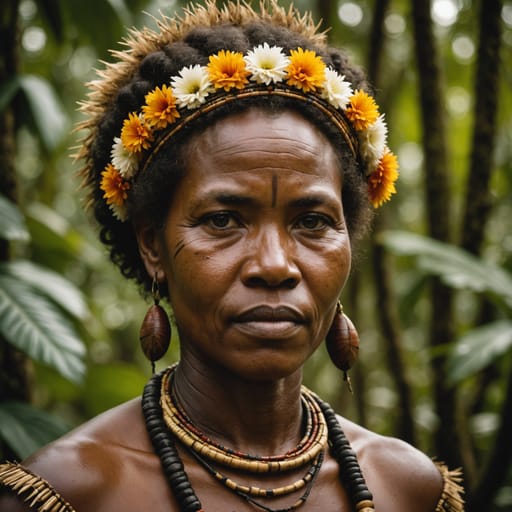
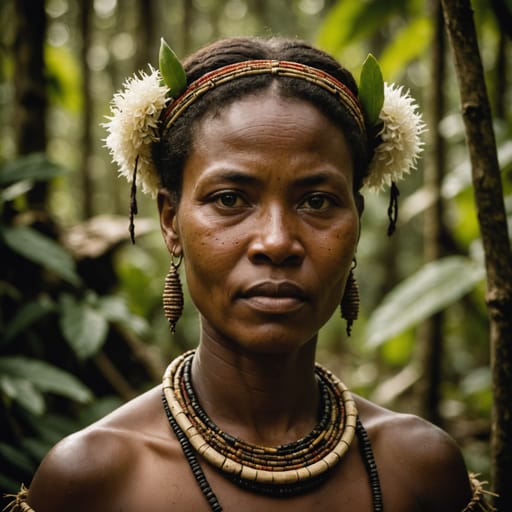
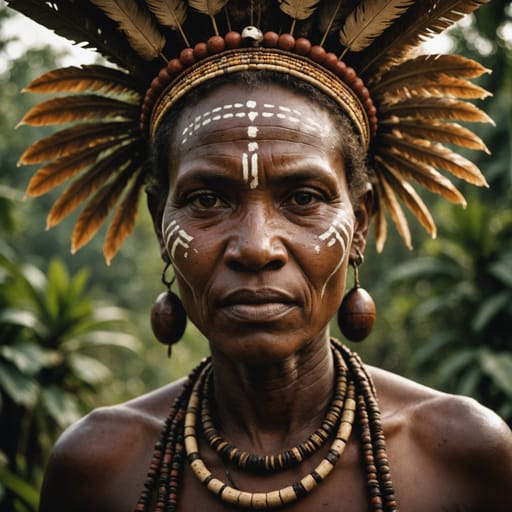
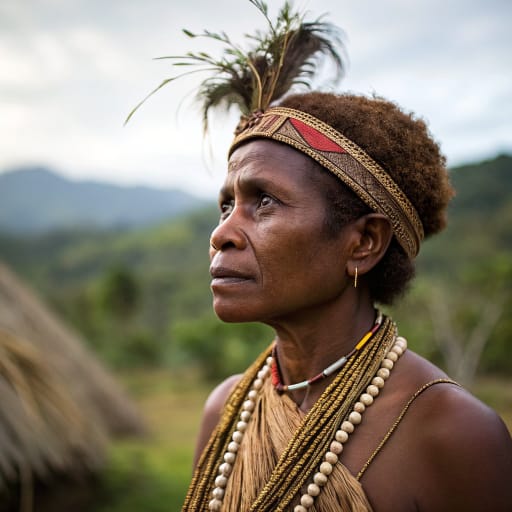
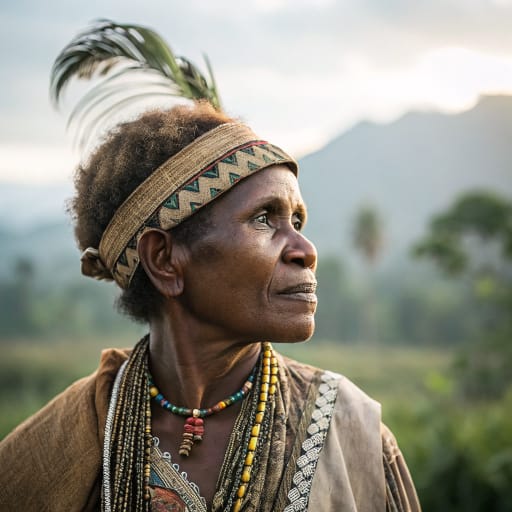
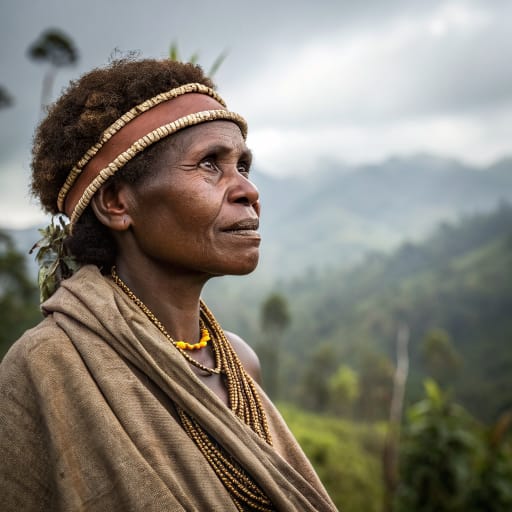
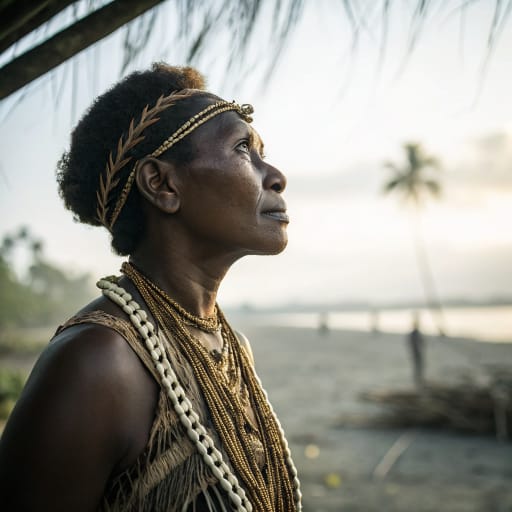
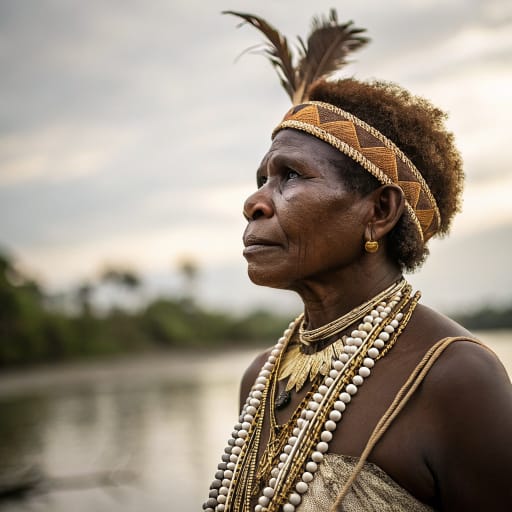
Typical Melpa Phenotypes
Reference for AI generation: hair, eyes, skin, facial structure, build
Melpa Body & Anatomy Reference
Melanesian / Papuan phenotype: anatomy reference for AI nude generation
Melpa Boobs & Breasts
The typical Melpa bust is medium-to-large cup, full, moderate projection, in line with the wider Melanesian / Papuan pattern. Areolas usually fall in the 32-46mm range, with deep-brown to near-black areolar pigmentation against the deep-brown skin tone. Compared with the smaller Aboriginal Australian bust, Melpa breasts sit forward and are generally full, moderate projection. A faithful AI render of Melpa tits keeps that shape and areola size.
Melpa Ass & Hips
Butt shape among Melpa women: medium-to-full, moderate-to-high projection, over medium-to-wide iliac crests, full gluteal-femoral fat deposition. This follows Melanesian / Papuan ancestry and looks quite unlike the slim Aboriginal Australian narrow-hip profile. An accurate Melpa ass in adult AI imagery keeps both the silhouette and the overall build (mesomorph) instead of a generic average.
Melpa Vagina & Pussy
Vulvar anatomy among Melpa women: deep-brown labial pigmentation. Pubic hair tends to be tightly-coiled coarse texture, dense distribution, in the usual inverted-triangle pattern. Both follow Melanesian / Papuan pigmentation, which is why Melpa pussy renders should not fall back on a pale, sparse Western template.
Melpa Dicks & Penis
The Melpa cock profile, from Melanesian / Papuan anthropometric data: regional mean ~13cm erect; moderate-to-above-average girth; deep-brown shaft pigmentation. Pubic hair has a tightly-coiled coarse texture and forms the usual inverted-V pattern. Whether Melpa men are circumcised follows religious and cultural practice rather than phenotype.
Melpa Body, Curves & Build
Build and curves among Melpa women follow the Melanesian / Papuan pattern: mesomorph, mean adult female BMI 25-28. Proportions matter as much as skin tone, so Melpa figures should keep their regional height and limb ratios.
Melpa Skin Tone & Hair Texture
The Melpa skin range is deep-brown (Fitzpatrick V-VI); the distinctive blond-hair-on-dark-skin trait widely documented in Solomon Islands populations, and hair tends to be tight 4A-4C coil; the blond-on-dark trait is a TYRP1 variant unique to Melanesia. That combination marks the Melanesian / Papuan phenotype, and skin tone is the trait AI generators most often get wrong for Melpa women.
Explore phenotype categories
Structured taxonomy with peer-reviewed scales · 22 anatomical categories
Erotic Poses & Sex Positions
From the pose catalog: 219 named positions with reference skeletons
Frequently asked questions about Melpa people
Where is the Melpa homeland?
The Melpa homeland is Mount Hagen area, Western Highlands, Papua New Guinea in Melanesia.
What language do Melpa people speak?
Melpa people primarily speak Melpa (Trans-New Guinea, Chimbu-Wahgi).
What religion do Melpa people practice?
The predominant religion among Melpa people is Indigenous religion and Christianity.






Make your own Melpa images
Five a day, free, no credits to buy. The studio starts from this group's phenotype data, so you can set body type, pose and style and keep the traits accurate.
Start with Melpa