No portrait yet
'Are'are Erotic
Southern Malaita, with a related community at Marau Sound on eastern Guadalcanal, Solomon Islands
'Are'are (Austronesian, Oceanic, Southeast Solomonic), with Solomons Pijin widely used
Predominantly Christian across several denominations; customary rules about land, ancestry and exchange remain influential
One of the Malaitan peoples of the Solomon Islands, neighbors of the Kwaio and Sa'a; includes the Marau Sound community on Guadalcanal
About 'Are'are People
The apostrophes in the name are glottal stops, and they matter: 'Are'are is a word, a language and a people, and the spelling keeps the sound. The 'Are'are are the people of southern Malaita, the most populous island in the Solomon Islands. Their land runs from the coasts up into the forested interior, and a related community lives across the water at Marau Sound on the eastern end of Guadalcanal. Their language belongs to the Southeast Solomonic branch of Oceanic. It is one link in a chain of related Malaitan languages, with Kwaio speakers to the north and Sa'a speakers on Small Malaita to the south. Solomons Pijin fills the gaps between them.
If outsiders know one thing about the 'Are'are, it is usually the music. Their bamboo panpipe ensembles play in several parts at once, with their own tuning and a detailed vocabulary for talking about sound. In the 1970s the Swiss ethnomusicologist Hugo Zemp recorded them and wrote about them, and those recordings carried the music far beyond Malaita. The tradition never became a museum piece: Narasirato, an 'Are'are panpipe band, has toured internationally.
Shell money sits at the center of social life. Strings of shell beads change hands at marriages and in settling disputes. Above all, they change hands at funerals, where the ties a person built in life are paid out and closed. The French anthropologist Daniel de Coppet spent decades with 'Are'are communities and understood the whole society through these exchanges. Leadership in the old days rested on two very different figures: a peacemaker who ran feasts and brokered settlements, and the ramo, a fighter who could kill to collect a bounty paid in shell money.
In the late 1800s, Malaita supplied a large share of the laborers recruited, often by force, for plantations in Queensland and Fiji. Many who came home brought Christianity with them. The biggest break came after World War II. Maasina Rule, the anti-colonial movement that reorganized much of Malaita around its own chiefs, councils and written custom, began in 'Are'are country in 1944, and its name comes from an 'Are'are word for brotherhood. British authorities jailed its leaders, but it is remembered as an early moment of political self-assertion in the Solomons.
Most 'Are'are today are Christian, spread across several churches. Customary rules about land, descent and exchange still decide who belongs where. Families grow taro, yams and sweet potato, raise pigs for feasts, and many split their lives between the village and wage work in Honiara.
Related ethnic groups
Groups that share 'Are'are's homeland, region, language, or religious tradition. These are likely candidates for comparative phenotype reference.
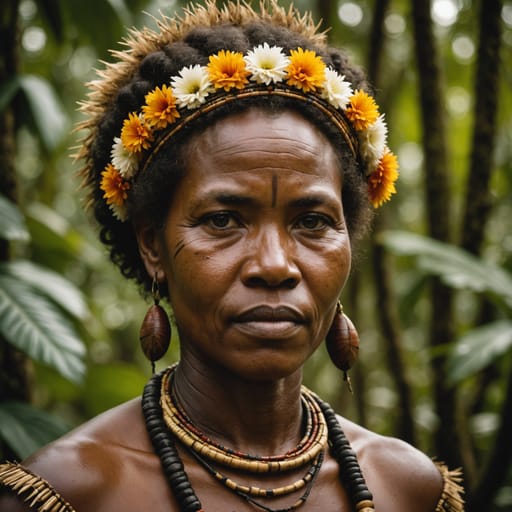
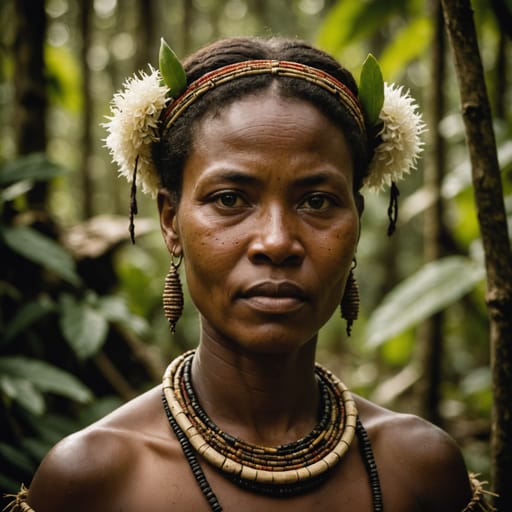
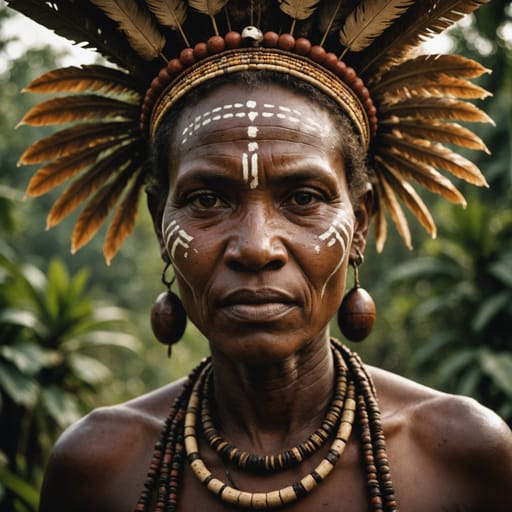
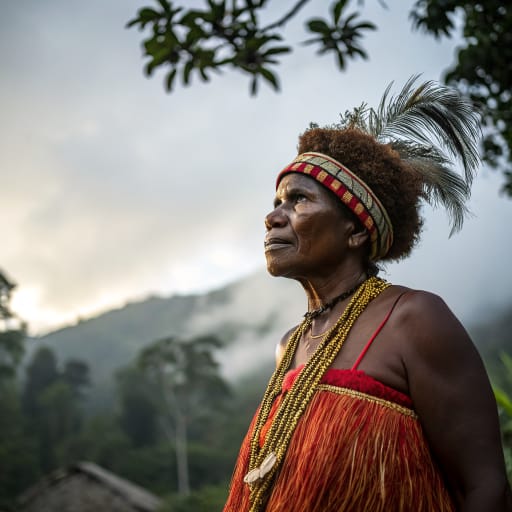
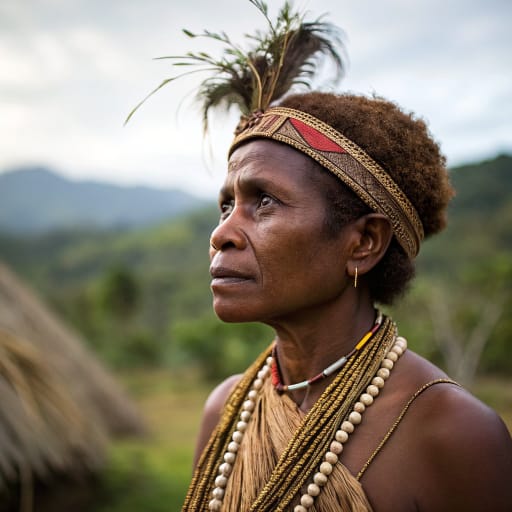
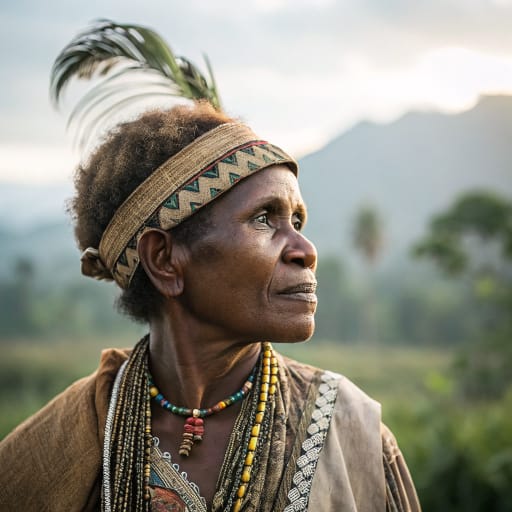
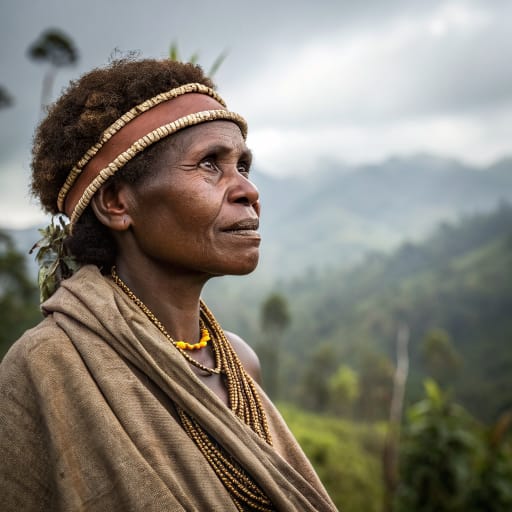
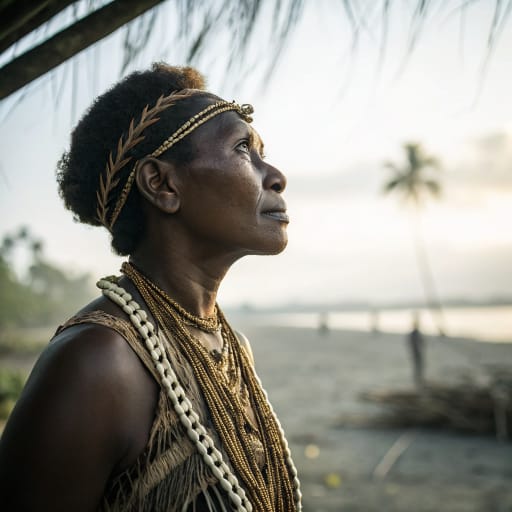
Typical 'Are'are Phenotypes
Reference for AI generation: hair, eyes, skin, facial structure, build
'Are'are Body & Anatomy Reference
Anatomy by feature, Melanesian / Papuan phenotype
'Are'are Boobs & Breasts
'Are'are boobs follow the Melanesian / Papuan profile: medium-to-large cup, full, moderate projection. Areolar diameter is usually 32-46mm, and the coloring is deep-brown to near-black areolar pigmentation against the deep-brown skin tone. Breast shape tracks body composition (mesomorph, mean adult female BMI 25-28), so 'Are'are breasts tend to be full, moderate projection. Expect a forward-set shape, not the smaller Aboriginal Australian bust.
'Are'are Ass & Hips
'Are'are ass and hip morphology presents as medium-to-full, moderate-to-high projection, distinctly different from the slim Aboriginal Australian narrow-hip profile. The 'Are'are pelvic profile shows medium-to-wide iliac crests, full gluteal-femoral fat deposition, anchored in the Melanesian / Papuan skeletal pattern. 'Are'are butt shots in adult AI imagery should render the medium-to-full, moderate-to-high projection silhouette with the overall build (mesomorph) and the fat distribution typical of the Melanesian / Papuan phenotype.
'Are'are Vagina & Pussy
'Are'are pussy anatomy typically shows deep-brown labial pigmentation. Pubic hair is usually tightly-coiled coarse texture, dense distribution. In AI-generated 'Are'are nudes, labial color should blend into the deep-brown skin with a gradual transition, and the hair should keep its tightly-coiled coarse texture.
'Are'are Dicks & Penis
Penis reference for 'Are'are men: regional mean ~13cm erect, moderate-to-above-average girth. Coloring: deep-brown shaft pigmentation. An accurate 'Are'are cock in AI imagery matches the surrounding deep-brown skin rather than a generic porn default. Circumcision depends on religion and custom, not ancestry.
'Are'are Body, Curves & Build
The 'Are'are figure is generally mesomorph, with mean adult female BMI 25-28, characteristic of Melanesian / Papuan ancestry. AI image tools tend to flatten regional body types into a few stock shapes; here the 'Are'are build is kept as its own reference.
'Are'are Skin Tone & Hair Texture
Skin: deep-brown (Fitzpatrick V-VI); the distinctive blond-hair-on-dark-skin trait widely documented in Solomon Islands populations. Hair: tight 4A-4C coil; the blond-on-dark trait is a TYRP1 variant unique to Melanesia. Both are typical of Melanesian / Papuan ancestry. The most common mistake in AI nudes of 'Are'are women is a body rendered lighter than the face.
Explore phenotype categories
Structured taxonomy with peer-reviewed scales · 22 anatomical categories
Erotic Poses & Sex Positions
From the pose catalog: 219 named positions with reference skeletons
Frequently asked questions about 'Are'are people
Where is the 'Are'are homeland?
The 'Are'are homeland is Southern Malaita, with a related community at Marau Sound on eastern Guadalcanal, Solomon Islands in Melanesia.
What language do 'Are'are people speak?
'Are'are people primarily speak 'Are'are (Austronesian, Oceanic, Southeast Solomonic), with Solomons Pijin widely used.
What religion do 'Are'are people practice?
The predominant religion among 'Are'are people is Predominantly Christian across several denominations; customary rules about land, ancestry and exchange remain influential.






Make your own 'Are'are images
Five a day, free, no credits to buy. The studio starts from this group's phenotype data, so you can set body type, pose and style and keep the traits accurate.
Start with 'Are'are