Help us get this right
Does this portrait look right for Kombai?
Nobody has judged this one yet. You would be the first.
Kombai Erotic
Lowland rainforest of Boven Digoel Regency, South Papua province, Indonesia, on the island of New Guinea, bordering Korowai lands
Kombai (Awyu-Dumut, Trans-New Guinea); Indonesian used in villages, schools and trade
Ancestral spirit and sorcery beliefs alongside Christianity introduced by missionaries
Organized in land-holding patrilineal clans; part of the Awyu-Dumut speaking peoples of southern Papua, alongside the Korowai, Wambon and Awyu
About Kombai People
The Kombai are a clan-based people of the New Guinea lowlands, a few thousand strong, best known to outsiders for houses raised high on poles or built into living trees. The height is practical rather than picturesque: it keeps a household above floodwater, damp and insects, and in earlier generations it offered protection against raids from rival clans. Their country lies in Boven Digoel Regency, in Indonesia's South Papua province, a flat and roadless stretch of swamp forest and slow rivers shared at its edges with the related Korowai. Land belongs to clans, and where a family may hunt, gather and fell sago is worked out through clan membership.
Their language, also called Kombai, belongs to the Awyu-Dumut branch of the Trans-New Guinea family and sits among related languages spoken by the Korowai, Wambon and Awyu. Indonesian is the language of schools, officials and traders. Daily life runs on sago. Families cut down sago palms, pound the pith and wash out the starch that anchors nearly every meal, adding wild pig, cassowary, fish and forest greens. Sago also drives the social calendar: felled trunks are left to rot until they fill with beetle larvae, and the harvested grubs become the centerpiece of large feasts that bring allied clans together and reaffirm the ties between them.
Sustained contact with the outside world came late, in the closing decades of the twentieth century, when missionaries and Indonesian government posts reached the area. Since then some Kombai have moved into villages built around a church, a school or an airstrip, while others keep to scattered forest homesteads. Christianity now sits alongside older convictions about ancestral spirits and sorcery, which still shape how many people account for sickness and sudden death. In recent decades documentary crews and adventure tourists have come too, mostly chasing the treehouse and the idea of a people untouched by time. The Kombai on the ground are neither exhibit nor relic: they are a small society dealing with cash, government programs and pressure on their forest, while still organizing food, land and obligation around the clan.
Related ethnic groups
Groups that share Kombai's homeland, region, language, or religious tradition. These are likely candidates for comparative phenotype reference.
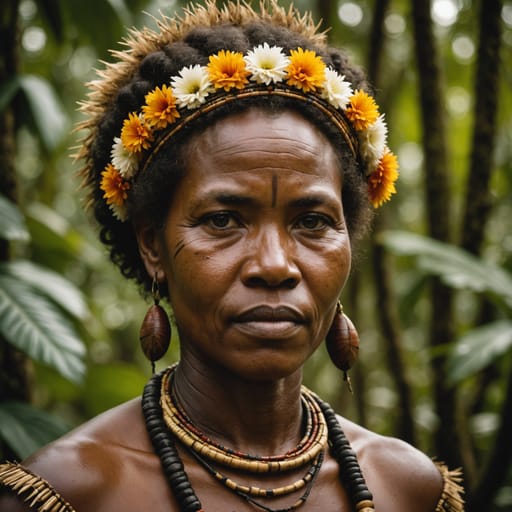
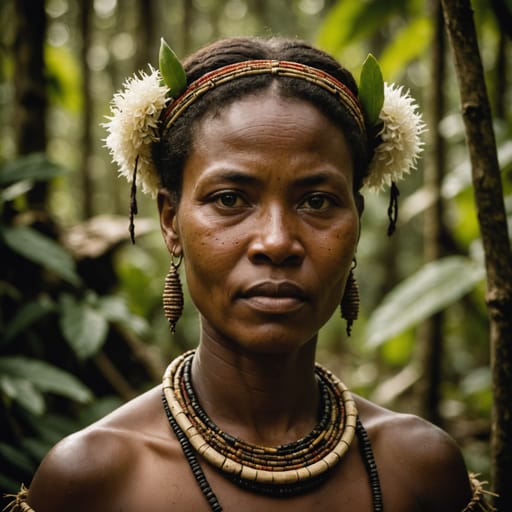
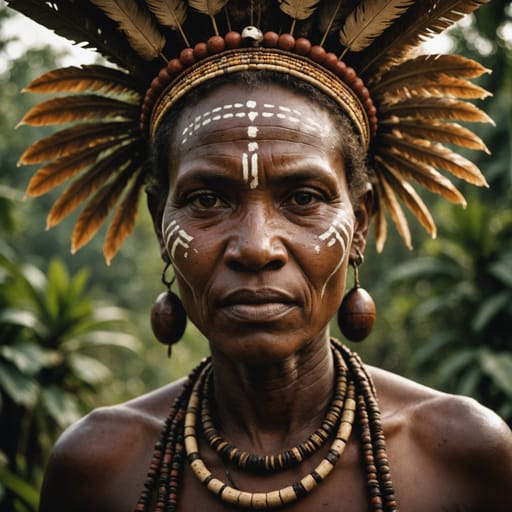
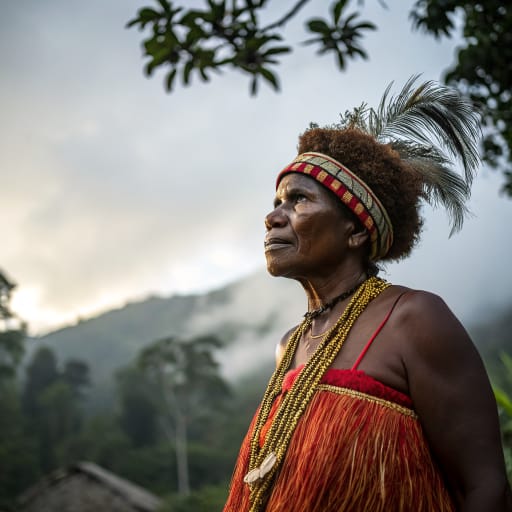
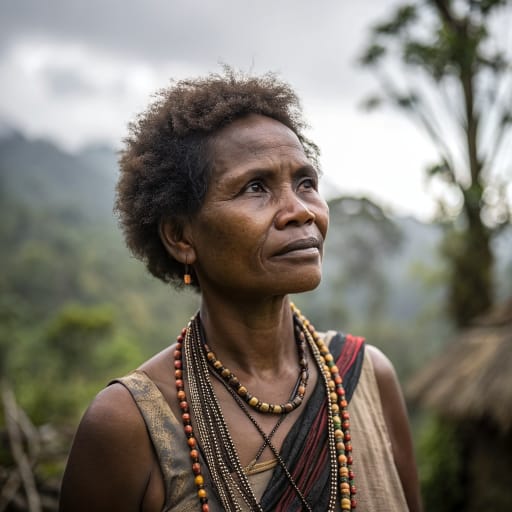
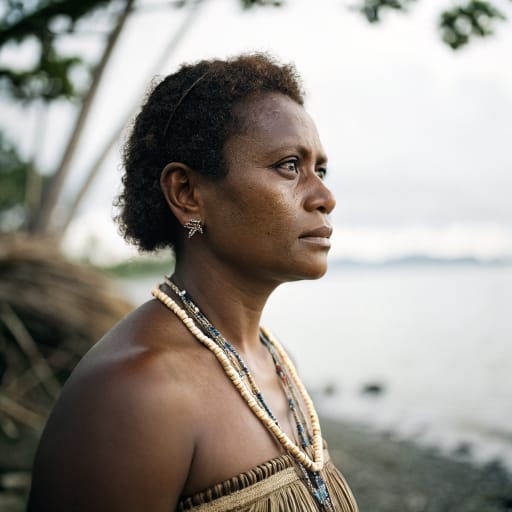
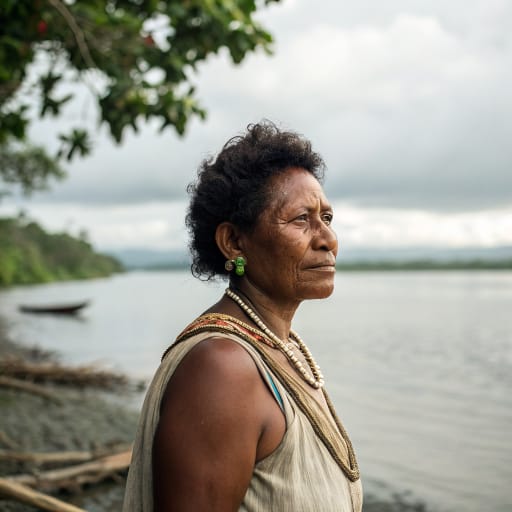
Typical Kombai Phenotypes
Reference for AI generation: hair, eyes, skin, facial structure, build
Kombai Body & Anatomy Reference
Per-feature anatomical profile for AI nude generation: Melanesian / Papuan phenotype
Kombai Boobs & Breasts
The typical Kombai bust is medium-to-large cup, full, moderate projection, in line with the wider Melanesian / Papuan pattern. Areolas usually fall in the 32-46mm range, with deep-brown to near-black areolar pigmentation against the deep-brown skin tone. Compared with the smaller Aboriginal Australian bust, Kombai breasts sit forward and are generally full, moderate projection. A faithful AI render of Kombai tits keeps that shape and areola size.
Kombai Ass & Hips
Butt shape among Kombai women: medium-to-full, moderate-to-high projection, over medium-to-wide iliac crests, full gluteal-femoral fat deposition. This follows Melanesian / Papuan ancestry and looks quite unlike the slim Aboriginal Australian narrow-hip profile. An accurate Kombai ass in adult AI imagery keeps both the silhouette and the overall build (mesomorph) instead of a generic average.
Kombai Vagina & Pussy
Vulvar anatomy among Kombai women: deep-brown labial pigmentation. Pubic hair tends to be tightly-coiled coarse texture, dense distribution, in the usual inverted-triangle pattern. Both follow Melanesian / Papuan pigmentation, which is why Kombai pussy renders should not fall back on a pale, sparse Western template.
Kombai Dicks & Penis
The Kombai cock profile, from Melanesian / Papuan anthropometric data: regional mean ~13cm erect; moderate-to-above-average girth; deep-brown shaft pigmentation. Pubic hair has a tightly-coiled coarse texture and forms the usual inverted-V pattern. Whether Kombai men are circumcised follows religious and cultural practice rather than phenotype.
Kombai Body, Curves & Build
Build and curves among Kombai women follow the Melanesian / Papuan pattern: mesomorph, mean adult female BMI 25-28. Proportions matter as much as skin tone, so Kombai figures should keep their regional height and limb ratios.
Kombai Skin Tone & Hair Texture
The Kombai skin range is deep-brown (Fitzpatrick V-VI); the distinctive blond-hair-on-dark-skin trait widely documented in Solomon Islands populations, and hair tends to be tight 4A-4C coil; the blond-on-dark trait is a TYRP1 variant unique to Melanesia. That combination marks the Melanesian / Papuan phenotype, and skin tone is the trait AI generators most often get wrong for Kombai women.
Explore phenotype categories
Structured taxonomy with peer-reviewed scales · 22 anatomical categories
Erotic Poses & Sex Positions
From the pose catalog: 219 named positions with reference skeletons
Frequently asked questions about Kombai people
Where is the Kombai homeland?
The Kombai homeland is Lowland rainforest of Boven Digoel Regency, South Papua province, Indonesia, on the island of New Guinea, bordering Korowai lands in Melanesia.
What language do Kombai people speak?
Kombai people primarily speak Kombai (Awyu-Dumut, Trans-New Guinea); Indonesian used in villages, schools and trade.
What religion do Kombai people practice?
The predominant religion among Kombai people is Ancestral spirit and sorcery beliefs alongside Christianity introduced by missionaries.






Make your own Kombai images
Five a day, free, no credits to buy. The studio starts from this group's phenotype data, so you can set body type, pose and style and keep the traits accurate.
Start with Kombai