Help us get this right
Does this portrait look right for Lani?
Nobody has judged this one yet. You would be the first.
Lani Erotic
Central highlands of Papua, Indonesia, west of the Baliem Valley, mainly in Lanny Jaya, Tolikara, Puncak Jaya, Puncak and Central Mamberamo regencies
Lani, also called Western Dani (Dani family, Trans-New Guinea); Indonesian widely used
Predominantly Protestant Christian, with the Gereja Injili di Indonesia (GIDI) especially strong
Highland Papuan people of the Dani family, related to the Baliem Valley Dani, Walak, Wano and Nggem; organized in patrilineal clans
About Lani People
The Lani are the people of the high valleys west of the Baliem, along the mountain spine of Indonesian New Guinea. Missionaries and linguists long filed them under Western Dani, and that label still shows up in books and Bible translations. Lani is the name they use for themselves. Their land is steep limestone ridges and river basins around towns like Tiom, Karubaga, Mulia and Bokondini, and it is now split among several highland regencies. One of them, Lanny Jaya, is named after the Lani. By most counts they are among the largest peoples of the Papuan highlands.
Their language belongs to the Dani family, part of the larger Trans-New Guinea grouping. It is clearly related to the speech of the Baliem Valley Dani but different enough to count as its own language. Walak, Wano and Nggem speakers are also part of the Dani family. Indonesian is used in school and government, but Lani is still the language of home, the garden and much of church life. Daily life was built around sweet potato gardens and pigs, and across much of the highlands it still is. Pigs matter the way money matters elsewhere: they settle disputes and pay bridewealth. For the feasts that mark deaths, marriages and peace settlements, they are cooked in earth ovens lined with heated stones. Society is organized into patrilineal clans, and surnames like Wenda, Kogoya, Tabuni and Wanimbo tell people across the region which lineage someone comes from.
The biggest turn in recent Lani history came with Protestant missionaries, who arrived by light aircraft in the 1950s. Many Lani understood the new teaching through an older belief called hai, a promised age of plenty and endless life. In the early 1960s whole communities publicly burned their sacred objects when they converted. Today the Lani are overwhelmingly Protestant. The Gereja Injili di Indonesia, which grew out of those missions, is a central institution in villages and towns, and church services, councils and Christmas gatherings shape the year as much as the planting cycle does. The highlands have also lived through decades of armed conflict over Indonesian rule, and that tension is never far from daily life.
Related ethnic groups
Groups that share Lani's homeland, region, language, or religious tradition. These are likely candidates for comparative phenotype reference.
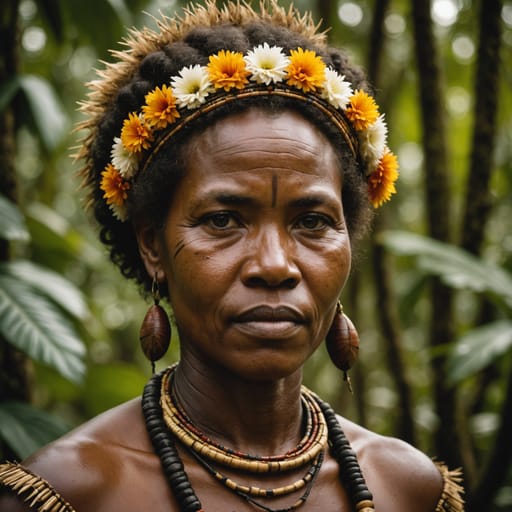
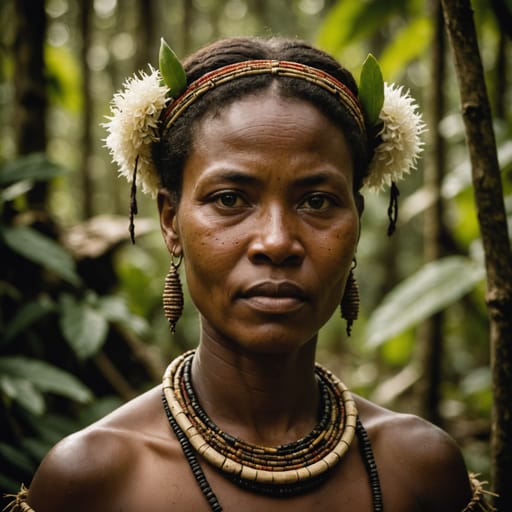
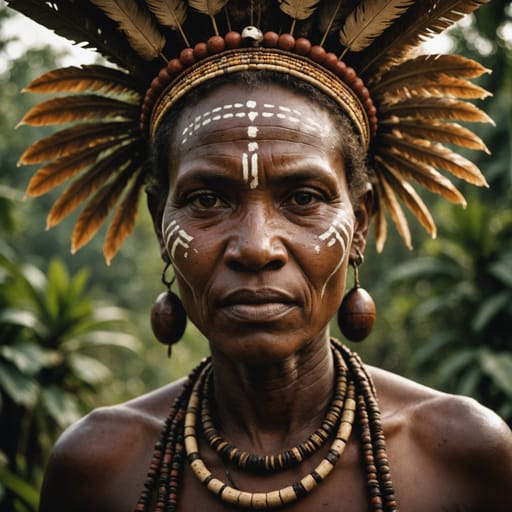
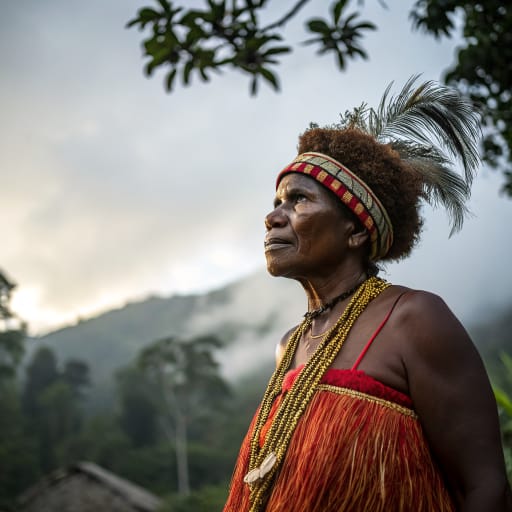
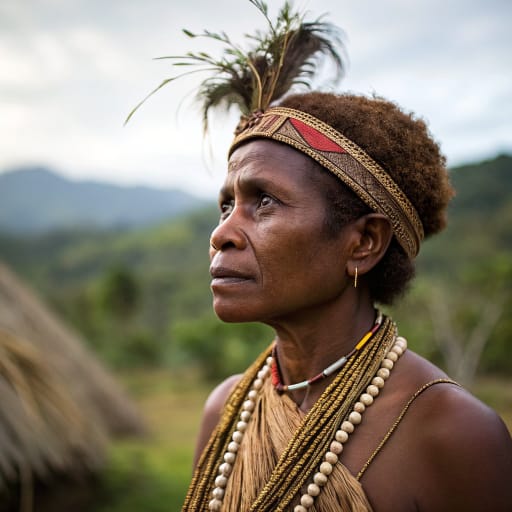
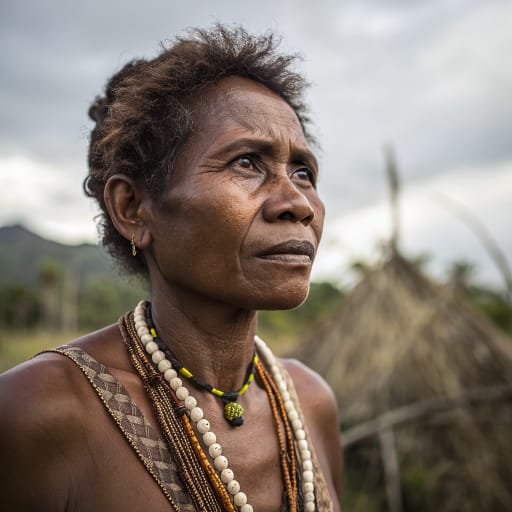
Typical Lani Phenotypes
Reference for AI generation: hair, eyes, skin, facial structure, build
Lani Body & Anatomy Reference
Anatomy by feature, Melanesian / Papuan phenotype
Lani Boobs & Breasts
Lani tits and boobs run medium-to-large cup, full, moderate projection, the classic Melanesian / Papuan bust profile. Lani nipples and areolas show deep-brown to near-black areolar pigmentation against the deep-brown skin tone, with areolar diameter typically in the 32-46mm range and forward-set positioning rather than the smaller Aboriginal Australian bust. Lani breasts trend full, moderate projection, a function of the mesomorph body habitus and the mean adult female BMI 25-28. For anatomically accurate AI-generated Lani nudes the render preserves the medium-to-large cup, full, moderate projection shape, 32-46mm areolas with deep-brown to near-black pigmentation, and the torso proportions of the Melanesian / Papuan phenotype.
Lani Ass & Hips
Lani hips and butt usually read as medium-to-full, moderate-to-high projection. The skeletal base is medium-to-wide iliac crests, full gluteal-femoral fat deposition, the Melanesian / Papuan pattern. Set against the slim Aboriginal Australian narrow-hip profile, the difference is easy to see, and the hip-to-waist ratio is often what identifies Lani women in photos.
Lani Vagina & Pussy
Expect deep-brown labial pigmentation on Lani women, in keeping with Melanesian / Papuan ancestry. The pubic hair is tightly-coiled coarse texture, dense distribution. Coloring should run evenly from the deep-brown skin of the thighs to the labia, and Lani nude imagery should keep the hair's tightly-coiled coarse texture.
Lani Dicks & Penis
Lani dick and penile anatomy in adult AI generation should anchor on the regional reference data: regional mean ~13cm erect, moderate-to-above-average girth, and deep-brown shaft pigmentation. The Lani cock profile reflects the Melanesian / Papuan population's anthropometric measurements. The shaft pigmentation should track the surrounding deep-brown skin tone, and the pubic hair should keep its tightly-coiled coarse texture in the typical inverted-V escutcheon.
Lani Body, Curves & Build
Lani body type: mesomorph, with mean adult female BMI 25-28. This is the typical Melanesian / Papuan build. Height range, shoulder-to-hip ratio and fat distribution all follow from it, which is what an accurate Lani nude body should show.
Lani Skin Tone & Hair Texture
Lani skin tone falls in the deep-brown (Fitzpatrick V-VI); the distinctive blond-hair-on-dark-skin trait widely documented in Solomon Islands populations band, the surface signal most often miscalibrated by generic AI nude generators. Lani hair texture is typically tight 4A-4C coil; the blond-on-dark trait is a TYRP1 variant unique to Melanesia, characteristic of the Melanesian / Papuan phenotype. In Lani nude renders the skin should hold that band consistently across the body.
Explore phenotype categories
Structured taxonomy with peer-reviewed scales · 22 anatomical categories
Erotic Poses & Sex Positions
From the pose catalog: 219 named positions with reference skeletons
Frequently asked questions about Lani people
Where is the Lani homeland?
The Lani homeland is Central highlands of Papua, Indonesia, west of the Baliem Valley, mainly in Lanny Jaya, Tolikara, Puncak Jaya, Puncak and Central Mamberamo regencies in Melanesia.
What language do Lani people speak?
Lani people primarily speak Lani, also called Western Dani (Dani family, Trans-New Guinea); Indonesian widely used.
What religion do Lani people practice?
The predominant religion among Lani people is Predominantly Protestant Christian, with the Gereja Injili di Indonesia (GIDI) especially strong.






Make your own Lani images
Five a day, free, no credits to buy. The studio starts from this group's phenotype data, so you can set body type, pose and style and keep the traits accurate.
Start with Lani