No portrait yet
Wolani Erotic
Central highlands of Indonesian Papua: the Kemandoga and Mbiyandogo river valleys northeast of the Paniai Lakes, in Paniai and Intan Jaya regencies, Central Papua province, Indonesia.
Wolani, also called Wodani (Paniai Lakes family, Trans-New Guinea); Indonesian as the language of school, church and government.
Christianity, both Protestant and Catholic, practiced alongside older beliefs about spirits and the dead.
Papuan highlanders of the Paniai Lakes cluster, closest to the Mee (Ekari) and Moni; no widely documented internal branches.
About Wolani People
The Wolani, who also go by Wodani, are highland Papuans of the steep river valleys northeast of the Paniai Lakes, in what is now Indonesia's Central Papua province. They are a small people, roughly five thousand by a 1992 estimate, strung along the Kemandoga and Mbiyandogo rivers in hamlets rather than towns. What marks them off from their larger neighbors, the Mee to the southwest and the Moni to the east, is mostly language and territory. All three speak related tongues of the Paniai Lakes family, a small branch of the sprawling Trans-New Guinea group, and they have long traded, intermarried and feuded across the same ridgelines. Indonesian is the language of school, church and government.
Life runs on sweet potatoes and pigs. Gardens are cut into slopes that would look unfarmable to a lowlander and fenced against the pigs, which are the wealth that gets spent at weddings, funerals and the settling of grievances. The other currency is the cowrie shell. Like the Mee, the Wolani built a whole economy of bridewealth and compensation around shells traded up from a coast most of them had never seen, sorted into grades of value. The French anthropologist Stéphane Breton, who lived among them in the 1990s, argued that the shells stand in for persons as much as for prices. A death, in this way of reckoning, is a debt that someone owes. Rupiah now handles everyday buying, though shells were still changing hands in marriage payments when Breton worked there.
Outsiders arrived late. The lakes were first sighted from the air by a Dutch pilot in 1936, and missions and government posts reached the surrounding valleys only in the decades that followed. Most Wolani today are Christian, Protestant or Catholic depending on which mission reached their valley first, but older ideas about spirits, illness and the obligations owed to the dead have not gone anywhere. The recent history is harder. Much of Wolani country falls in Intan Jaya regency, which since 2019 has been one of the most violent fronts in the conflict between Indonesian security forces and Papuan independence fighters, with a large undeveloped gold deposit adding to the pressure. Thousands of villagers in the regency have been displaced, some to church compounds, some to the coastal towns.
Related ethnic groups
Groups that share Wolani's homeland, region, language, or religious tradition. These are likely candidates for comparative phenotype reference.
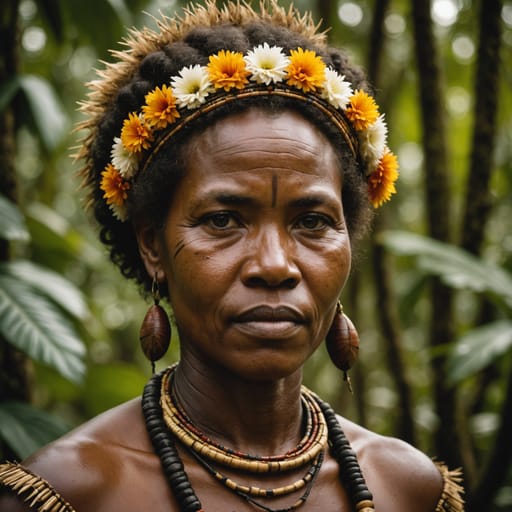
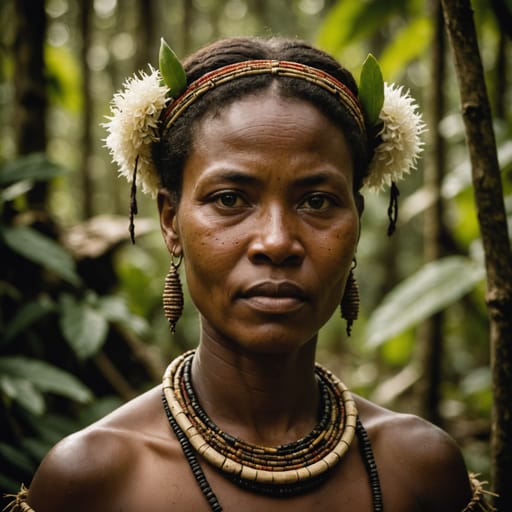
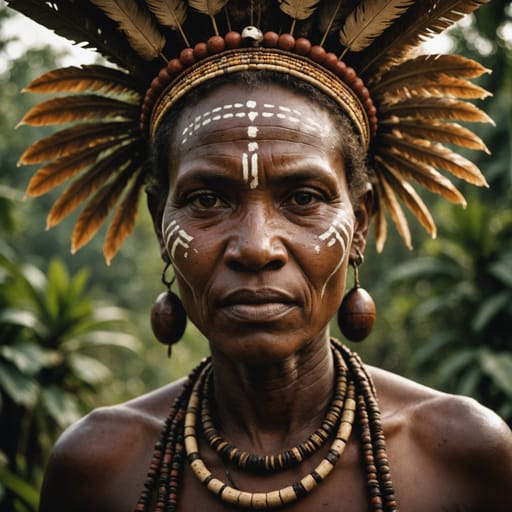
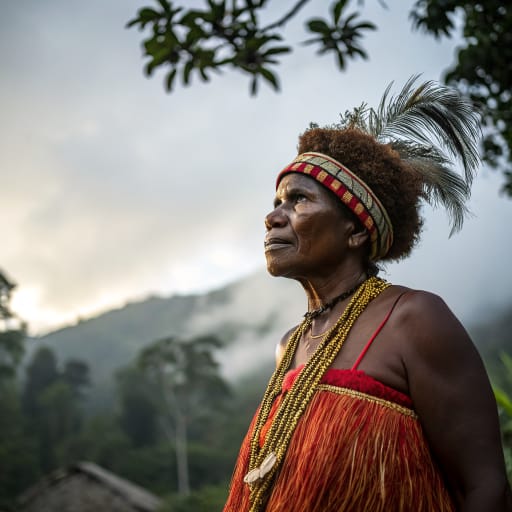
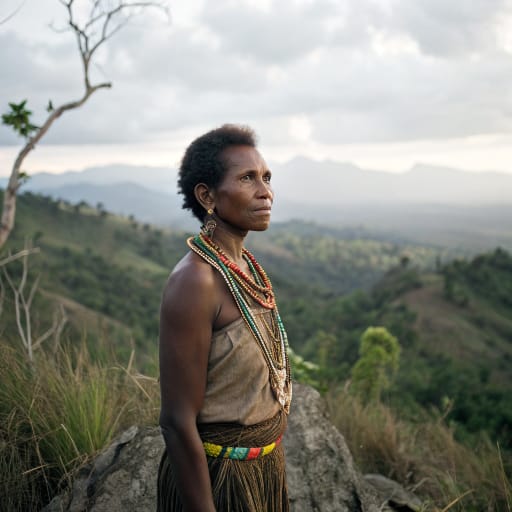
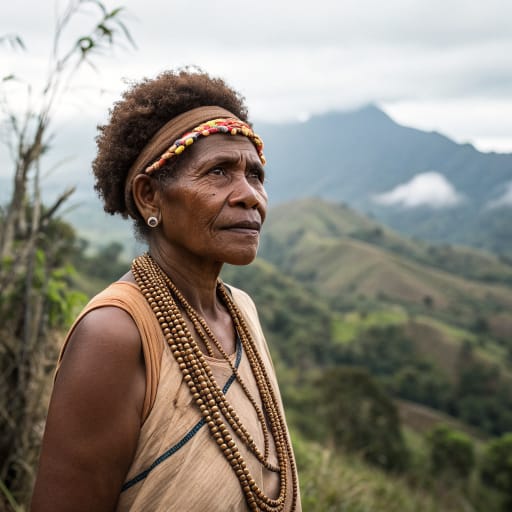
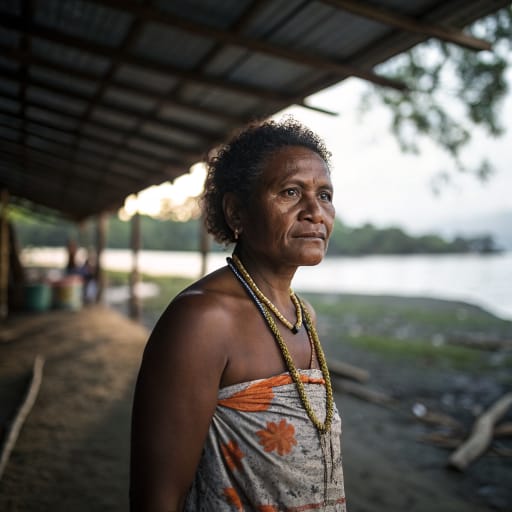
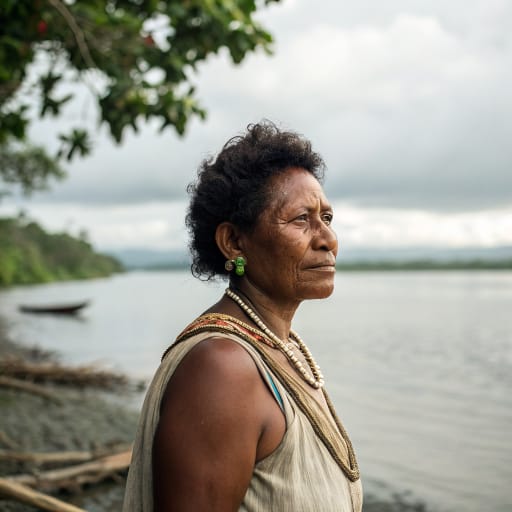
Typical Wolani Phenotypes
Reference for AI generation: hair, eyes, skin, facial structure, build
Wolani Body & Anatomy Reference
Per-feature anatomical profile for AI nude generation: Melanesian / Papuan phenotype
Wolani Boobs & Breasts
Wolani boobs follow the Melanesian / Papuan profile: medium-to-large cup, full, moderate projection. Areolar diameter is usually 32-46mm, and the coloring is deep-brown to near-black areolar pigmentation against the deep-brown skin tone. Breast shape tracks body composition (mesomorph, mean adult female BMI 25-28), so Wolani breasts tend to be full, moderate projection. Expect a forward-set shape, not the smaller Aboriginal Australian bust.
Wolani Ass & Hips
Wolani ass and hip morphology presents as medium-to-full, moderate-to-high projection, distinctly different from the slim Aboriginal Australian narrow-hip profile. The Wolani pelvic profile shows medium-to-wide iliac crests, full gluteal-femoral fat deposition, anchored in the Melanesian / Papuan skeletal pattern. Wolani butt shots in adult AI imagery should render the medium-to-full, moderate-to-high projection silhouette with the overall build (mesomorph) and the fat distribution typical of the Melanesian / Papuan phenotype.
Wolani Vagina & Pussy
Wolani pussy anatomy typically shows deep-brown labial pigmentation. Pubic hair is usually tightly-coiled coarse texture, dense distribution. In AI-generated Wolani nudes, labial color should blend into the deep-brown skin with a gradual transition, and the hair should keep its tightly-coiled coarse texture.
Wolani Dicks & Penis
Penis reference for Wolani men: regional mean ~13cm erect, moderate-to-above-average girth. Coloring: deep-brown shaft pigmentation. An accurate Wolani cock in AI imagery matches the surrounding deep-brown skin rather than a generic porn default. Circumcision depends on religion and custom, not ancestry.
Wolani Body, Curves & Build
The Wolani figure is generally mesomorph, with mean adult female BMI 25-28, characteristic of Melanesian / Papuan ancestry. AI image tools tend to flatten regional body types into a few stock shapes; here the Wolani build is kept as its own reference.
Wolani Skin Tone & Hair Texture
Skin: deep-brown (Fitzpatrick V-VI); the distinctive blond-hair-on-dark-skin trait widely documented in Solomon Islands populations. Hair: tight 4A-4C coil; the blond-on-dark trait is a TYRP1 variant unique to Melanesia. Both are typical of Melanesian / Papuan ancestry. The most common mistake in AI nudes of Wolani women is a body rendered lighter than the face.
Explore phenotype categories
Structured taxonomy with peer-reviewed scales · 22 anatomical categories
Erotic Poses & Sex Positions
From the pose catalog: 219 named positions with reference skeletons
Frequently asked questions about Wolani people
Where is the Wolani homeland?
The Wolani homeland is Central highlands of Indonesian Papua: the Kemandoga and Mbiyandogo river valleys northeast of the Paniai Lakes, in Paniai and Intan Jaya regencies, Central Papua province, Indonesia. in Melanesia.
What language do Wolani people speak?
Wolani people primarily speak Wolani, also called Wodani (Paniai Lakes family, Trans-New Guinea); Indonesian as the language of school, church and government..
What religion do Wolani people practice?
The predominant religion among Wolani people is Christianity, both Protestant and Catholic, practiced alongside older beliefs about spirits and the dead..






Make your own Wolani images
Five a day, free, no credits to buy. The studio starts from this group's phenotype data, so you can set body type, pose and style and keep the traits accurate.
Start with Wolani