No portrait yet
Mundugumor Erotic
Villages along the lower Yuat River, a tributary of the Sepik, in East Sepik Province, Papua New Guinea.
Biwat, also called Mundugumor (Yuat family); Tok Pisin widely used.
Mostly Christian, with older beliefs about spirits and ancestral power persisting.
Speakers of the Yuat language family, shared with neighboring Yuat River communities; part of the wider Sepik cultural region.
About Mundugumor People
For most readers outside Papua New Guinea, the Mundugumor are a chapter in someone else's book. In 1932 Margaret Mead and Reo Fortune spent a few tense months in their villages on the Yuat River. Mead's Sex and Temperament in Three Primitive Societies (1935) then cast them as the hard-edged contrast to the gentle Arapesh and the Tchambuli (Chambri). Today the people are generally called Biwat, which is also the name of their language. They have gone on living on the Yuat long after becoming a fixture of introductory anthropology courses.
The Yuat runs north out of the highlands to join the Sepik, and Biwat settlements sit along its lower course in East Sepik Province. Biwat belongs to the small Yuat family, a handful of related languages spoken along that river. It stands apart from the languages of the larger Sepik peoples, such as the Iatmul. Tok Pisin is used for church, school and trade. Most people are Christian, as they are across the country, but older ideas about spirits and ancestral power have not simply disappeared.
Mead described a society in which Australian patrols had stopped headhunting and cannibalism only a few years before she arrived. In her account, men and women alike were expected to be assertive and quick to take offense, and babies got little indulgence. She also recorded an unusual way of tracing descent through ropes: a man belonged to his mother's line and a woman to her father's, so membership switched between the sexes from one generation to the next. Marriages were supposed to be arranged by trading sisters. In her telling, that could leave a father and his son competing to trade the same young woman for a wife.
Later scholars have read that portrait with more caution. Among them is Nancy McDowell, who turned the pair's field notes into a 1991 book. They point out how short the fieldwork was and how much upheaval colonial rule had just brought to the river. The artwork is less disputed. Biwat carvers made figures to crown their sacred flutes, heavy with shell and feathers, and these pieces now sit in major museum collections. For many museum visitors, they are the only thing they will ever see of the Yuat.
Related ethnic groups
Groups that share Mundugumor's homeland, region, language, or religious tradition. These are likely candidates for comparative phenotype reference.
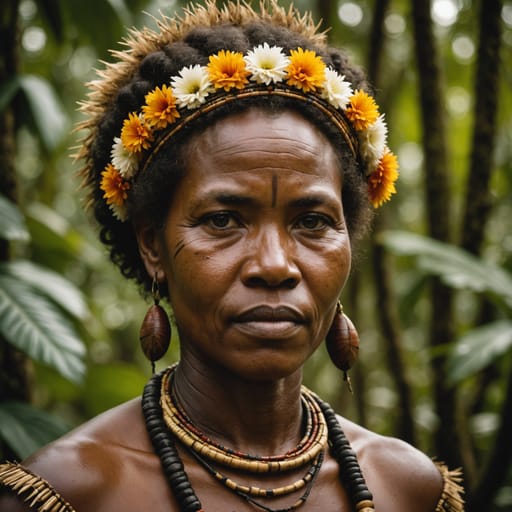
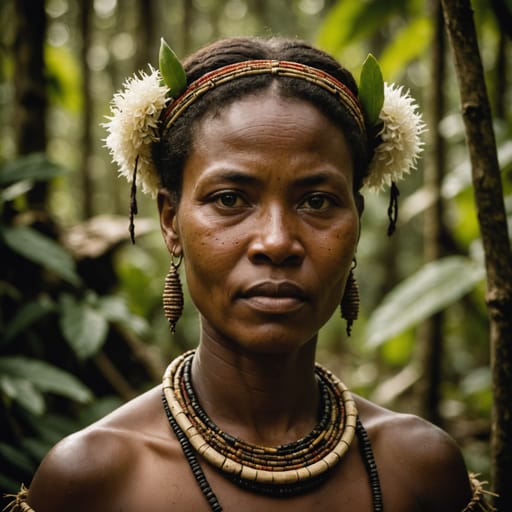
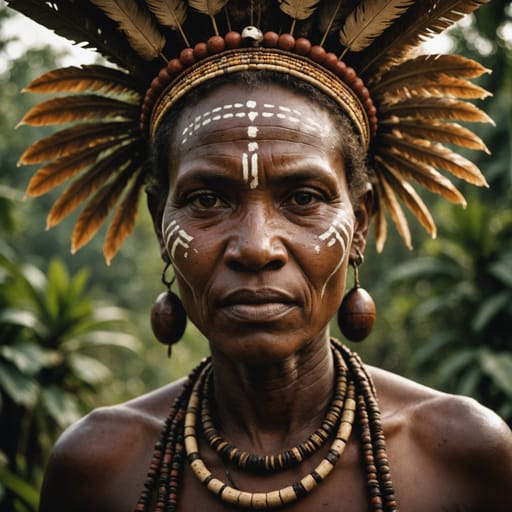
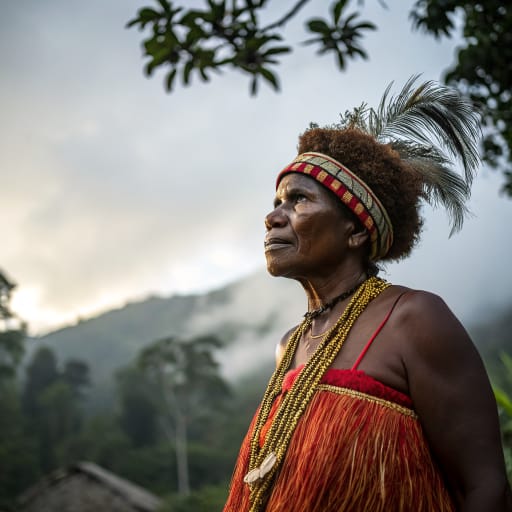
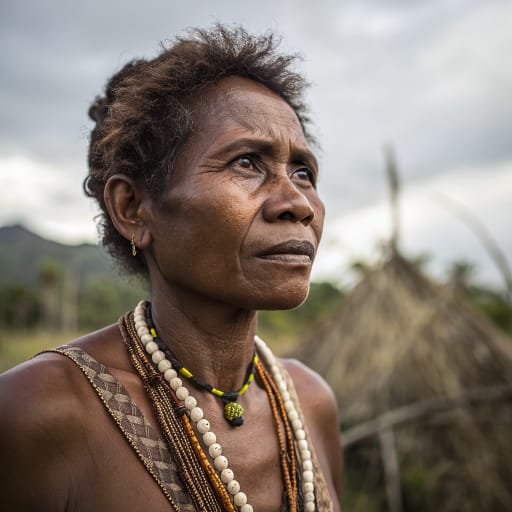
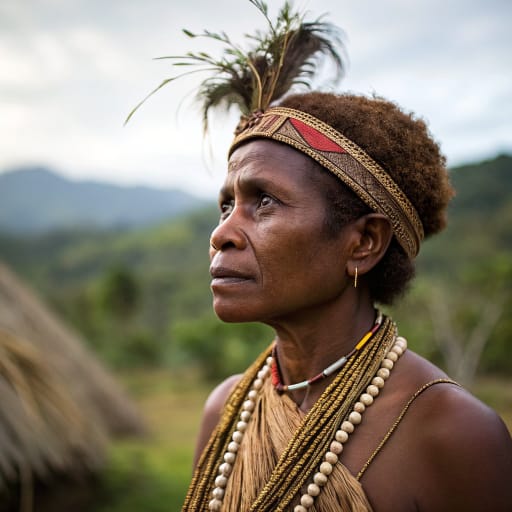
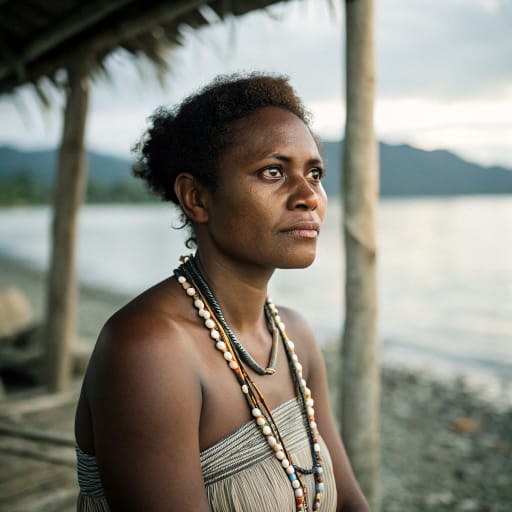
Typical Mundugumor Phenotypes
Reference for AI generation: hair, eyes, skin, facial structure, build
Mundugumor Body & Anatomy Reference
Per-feature anatomical profile for AI nude generation: Melanesian / Papuan phenotype
Mundugumor Boobs & Breasts
The typical Mundugumor bust is medium-to-large cup, full, moderate projection, in line with the wider Melanesian / Papuan pattern. Areolas usually fall in the 32-46mm range, with deep-brown to near-black areolar pigmentation against the deep-brown skin tone. Compared with the smaller Aboriginal Australian bust, Mundugumor breasts sit forward and are generally full, moderate projection. A faithful AI render of Mundugumor tits keeps that shape and areola size.
Mundugumor Ass & Hips
Butt shape among Mundugumor women: medium-to-full, moderate-to-high projection, over medium-to-wide iliac crests, full gluteal-femoral fat deposition. This follows Melanesian / Papuan ancestry and looks quite unlike the slim Aboriginal Australian narrow-hip profile. An accurate Mundugumor ass in adult AI imagery keeps both the silhouette and the overall build (mesomorph) instead of a generic average.
Mundugumor Vagina & Pussy
Vulvar anatomy among Mundugumor women: deep-brown labial pigmentation. Pubic hair tends to be tightly-coiled coarse texture, dense distribution, in the usual inverted-triangle pattern. Both follow Melanesian / Papuan pigmentation, which is why Mundugumor pussy renders should not fall back on a pale, sparse Western template.
Mundugumor Dicks & Penis
The Mundugumor cock profile, from Melanesian / Papuan anthropometric data: regional mean ~13cm erect; moderate-to-above-average girth; deep-brown shaft pigmentation. Pubic hair has a tightly-coiled coarse texture and forms the usual inverted-V pattern. Whether Mundugumor men are circumcised follows religious and cultural practice rather than phenotype.
Mundugumor Body, Curves & Build
Build and curves among Mundugumor women follow the Melanesian / Papuan pattern: mesomorph, mean adult female BMI 25-28. Proportions matter as much as skin tone, so Mundugumor figures should keep their regional height and limb ratios.
Mundugumor Skin Tone & Hair Texture
The Mundugumor skin range is deep-brown (Fitzpatrick V-VI); the distinctive blond-hair-on-dark-skin trait widely documented in Solomon Islands populations, and hair tends to be tight 4A-4C coil; the blond-on-dark trait is a TYRP1 variant unique to Melanesia. That combination marks the Melanesian / Papuan phenotype, and skin tone is the trait AI generators most often get wrong for Mundugumor women.
Explore phenotype categories
Structured taxonomy with peer-reviewed scales · 22 anatomical categories
Erotic Poses & Sex Positions
From the pose catalog: 219 named positions with reference skeletons
Frequently asked questions about Mundugumor people
Where is the Mundugumor homeland?
The Mundugumor homeland is Villages along the lower Yuat River, a tributary of the Sepik, in East Sepik Province, Papua New Guinea. in Melanesia.
What language do Mundugumor people speak?
Mundugumor people primarily speak Biwat, also called Mundugumor (Yuat family); Tok Pisin widely used..
What religion do Mundugumor people practice?
The predominant religion among Mundugumor people is Mostly Christian, with older beliefs about spirits and ancestral power persisting..






Make your own Mundugumor images
Five a day, free, no credits to buy. The studio starts from this group's phenotype data, so you can set body type, pose and style and keep the traits accurate.
Start with Mundugumor