Help us get this right
Does this portrait look right for Mlabri?
Nobody has judged this one yet. You would be the first.
Mlabri Erotic
Nan and Phrae Provinces, northern Thailand (and Sainyabuli Province, Laos)
Traditional animism
About Mlabri People
The Mlabri are a small Austroasiatic-speaking people of the mountainous borderlands between northern Thailand and Laos, historically famous as one of Southeast Asia's last nomadic hunter-gatherer groups. Their Thai and Lao neighbours long knew them as Phi Tong Luang, the "spirits of the yellow leaves," a name drawn from the belief that a band would abandon a campsite and move on once the banana-leaf roofs of their temporary shelters had withered and turned yellow. Their own name, Mlabri, means roughly "people of the forest." They are very few, with recent counts suggesting only about 300 to 400 individuals.
A forest-dwelling people
For generations the Mlabri lived by hunting small game, trapping, and gathering wild yams, tubers, honey, and forest plants, carrying few possessions and building leaf shelters that were used only briefly before the group moved on. They did not farm, keeping instead to a mobile life within the forest and trading forest goods and labour with settled neighbours for metal tools, cloth, and salt. This way of life has largely ended. Deforestation and the shrinking of wild land have pushed most Mlabri into settled or semi-settled villages, where they now work chiefly as agricultural labourers for Hmong and other farming communities, an arrangement that has at times left them poor and dependent.
Language and society
The Mlabri language belongs to the Khmuic branch of the Austroasiatic family, distantly related to Khmu and other languages of the region, and it remains unwritten. Traditional Mlabri society had no chiefs or formal hierarchy: it was organised into small, flexible bands of related families that shared food and cooperated in the daily work of survival, with decisions reached by consensus. Marriage, birth, and death were marked by simple customs rather than elaborate ceremony.
Belief and appearance
Mlabri religion is animist, centred on spirits of the forest, sky, and natural features whose favour is sought and whose anger is feared as a source of illness and misfortune. The Mlabri are typically short in stature with the brown skin and dark hair of the region's peoples. Traditionally they wore very little, using loincloths and simple garments made from bark, leaves, or cloth obtained in trade, and they carried digging sticks, knives, and woven bags on their forest rounds. Today most wear ordinary modern clothing.
Related ethnic groups
Groups that share Mlabri's homeland, region, language, or religious tradition. These are likely candidates for comparative phenotype reference.
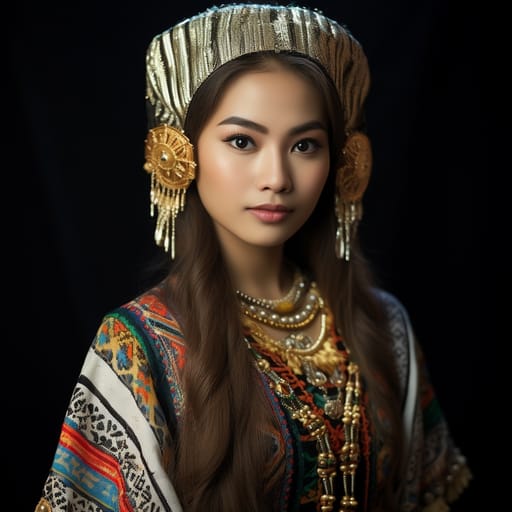
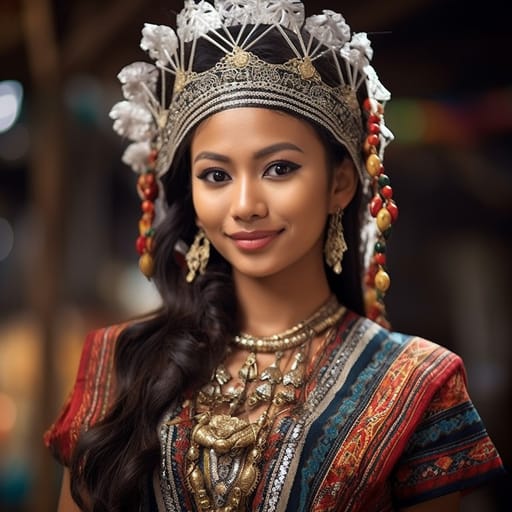
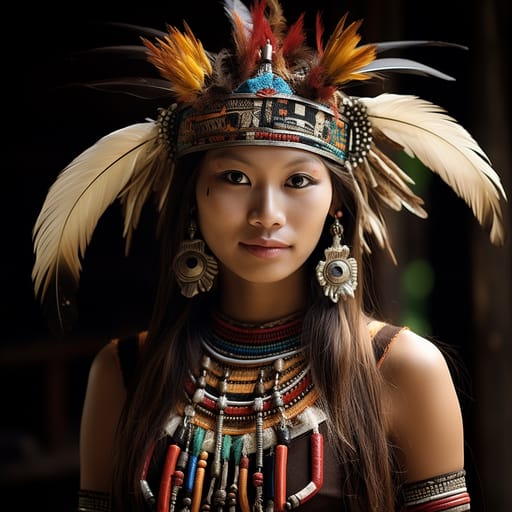
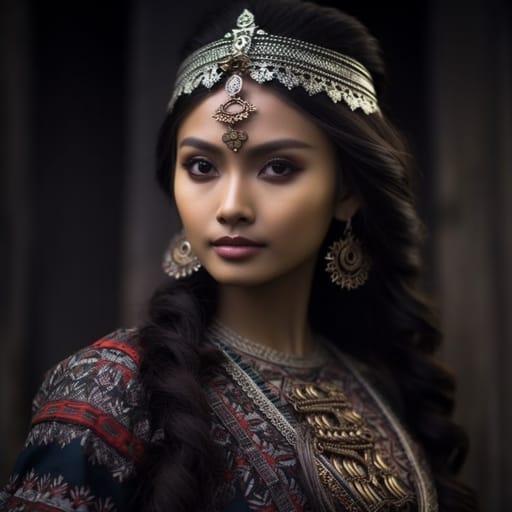
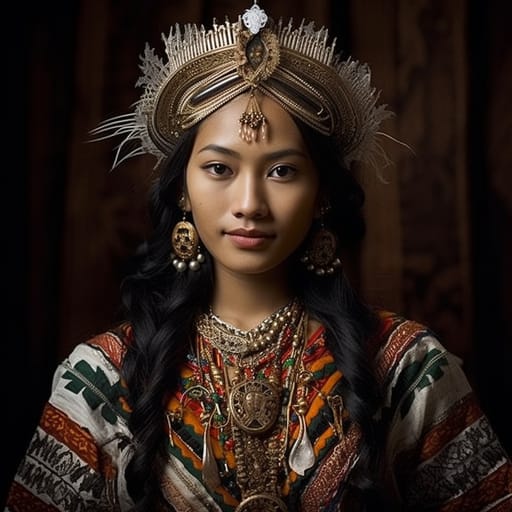
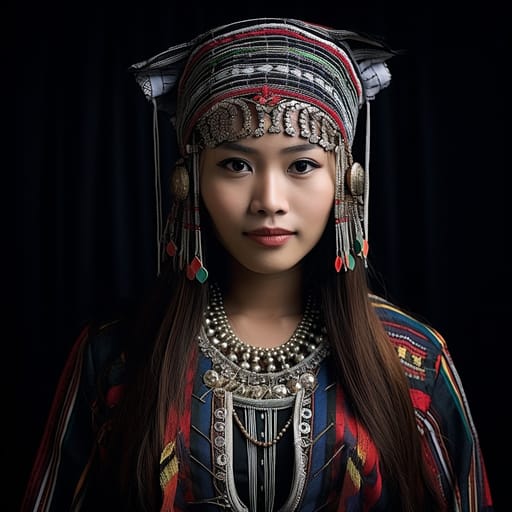
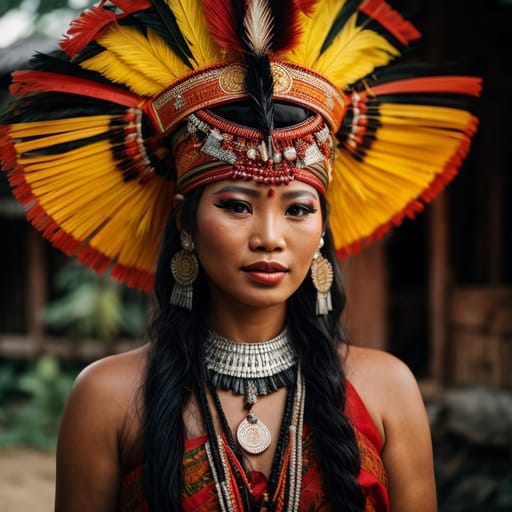
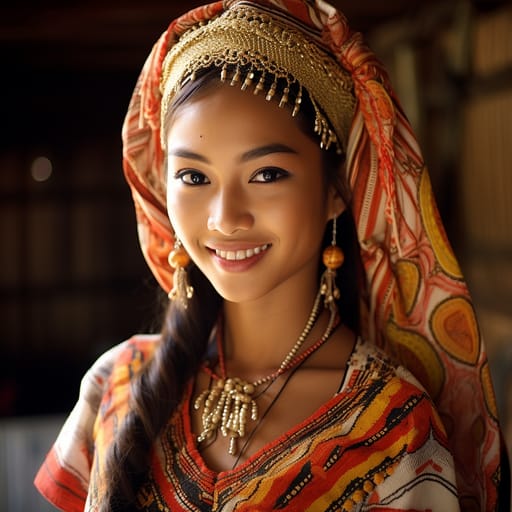
Typical Mlabri Phenotypes
Reference for AI generation: hair, eyes, skin, facial structure, build
Mlabri Body & Anatomy Reference
Anatomy by feature, Southeast Asian Austronesian / Austroasiatic phenotype
Mlabri Boobs & Breasts
The typical Mlabri bust is small-to-medium cup, modest projection, in line with the wider Southeast Asian Austronesian / Austroasiatic pattern. Areolas usually fall in the 26-38mm range, with medium-brown to dark-brown areolar pigmentation against the tan-to-medium-brown skin tone. Compared with the fuller South Asian or Polynesian bust, Mlabri breasts sit forward and are generally firm, modest projection. A faithful AI render of Mlabri tits keeps that shape and areola size.
Mlabri Ass & Hips
Butt shape among Mlabri women: small-to-medium, modest projection, narrower hip profile, over narrow-to-medium iliac crests. This follows Southeast Asian Austronesian / Austroasiatic ancestry and looks quite unlike the fuller glutes of the Pacific Islander phenotype. An accurate Mlabri ass in adult AI imagery keeps both the silhouette and the overall build (ectomorph, petite frame) instead of a generic average.
Mlabri Vagina & Pussy
Vulvar anatomy among Mlabri women: medium-brown to dark-brown labial pigmentation. Pubic hair tends to be straight-to-wavy fine-to-medium texture, in the usual inverted-triangle pattern. Both follow Southeast Asian Austronesian / Austroasiatic pigmentation, which is why Mlabri pussy renders should not fall back on a pale, sparse Western template.
Mlabri Dicks & Penis
The Mlabri cock profile, from Southeast Asian Austronesian / Austroasiatic anthropometric data: regional mean ~11cm erect; moderate girth; medium-brown shaft pigmentation. Pubic hair has a straight-to-wavy fine-to-medium texture and forms the usual inverted-V pattern. Whether Mlabri men are circumcised follows religious and cultural practice rather than phenotype.
Mlabri Body, Curves & Build
Build and curves among Mlabri women follow the Southeast Asian Austronesian / Austroasiatic pattern: ectomorph, petite frame, mean adult female BMI 20-23. Proportions matter as much as skin tone, so Mlabri figures should keep their regional height and limb ratios.
Mlabri Skin Tone & Hair Texture
The Mlabri skin range is tan to medium-brown (Fitzpatrick III-V), and hair tends to be straight-to-wavy 1A-2A, dark-brown to black. That combination marks the Southeast Asian Austronesian / Austroasiatic phenotype, and skin tone is the trait AI generators most often get wrong for Mlabri women.
Explore phenotype categories
Structured taxonomy with peer-reviewed scales · 22 anatomical categories
Erotic Poses & Sex Positions
From the pose catalog: 219 named positions with reference skeletons
Frequently asked questions about Mlabri people
Where is the Mlabri homeland?
The Mlabri homeland is Nan and Phrae Provinces, northern Thailand (and Sainyabuli Province, Laos) in Southeast Asia.
What language do Mlabri people speak?
Mlabri people primarily speak Mlabri (Austroasiatic, Khmuic).
What religion do Mlabri people practice?
The predominant religion among Mlabri people is Traditional animism.






Make your own Mlabri images
Five a day, free, no credits to buy. The studio starts from this group's phenotype data, so you can set body type, pose and style and keep the traits accurate.
Start with Mlabri