Help us get this right
Does this portrait look right for Minokok?
Nobody has judged this one yet. You would be the first.
Minokok Erotic
Interior Sabah, Malaysian Borneo, along the upper Kinabatangan River system, chiefly in and around Tongod District, Malaysia
Minokok (Austronesian, Dusunic); Malay widely used as a second language
Christianity and Islam, with traces of older Dusunic animist belief
A Dusunic people, counted within Sabah's Kadazan-Dusun umbrella group
About Minokok People
The Minokok are one of the smaller Indigenous peoples of interior Sabah, in Malaysian Borneo, and what sets them apart is mostly the way they speak. Officially they belong to the Kadazan-Dusun, the umbrella Sabah uses for dozens of related Dusunic communities with a shared background of rice farming, harvest ritual and village kinship. Locally, though, the Minokok name stands for one particular people with their own way of talking. Keeping that difference visible is the reason the name is still used.
Their country lies inland along the upper reaches of the Kinabatangan River system, in and around Tongod District, far from the coastal towns where most of Sabah's modern history happened. For generations people reached it by river and on foot. The Minokok language belongs to the Dusunic branch of the Austronesian family. Like its neighbors, it sits on a chain of related varieties that blend into one another from valley to valley. Malay is the common language of school, government and the market, and it puts real pressure on a group of speakers this small.
Religion follows the pattern of the Sabah interior. Christianity and Islam are both part of community life now, shaping weddings, funerals and the weekly calendar. Older Dusunic belief centered on rice spirits, taboos and ritual specialists who dealt with the unseen world. Where it is no longer practiced as a full system, it still shapes how people think about the harvest and the household. Kaamatan, the harvest festival held across Kadazan-Dusun Sabah at the end of May, is where that heritage goes on public show: traditional dress, rice wine, gong music and dance.
The biggest turning points came from outside. The British North Borneo Chartered Company began pulling the region into a colonial economy in the 1880s, and Sabah joined Malaysia in 1963. In the decades since, logging and oil palm have reshaped the Kinabatangan basin. They brought roads and wage work, and new pressure on land held under customary rights. Many younger Minokok now move back and forth between home villages and towns. That keeps the community tied to the rest of the state, but it also means nobody can take the survival of the language for granted.
Related ethnic groups
Groups that share Minokok's homeland, region, language, or religious tradition. These are likely candidates for comparative phenotype reference.
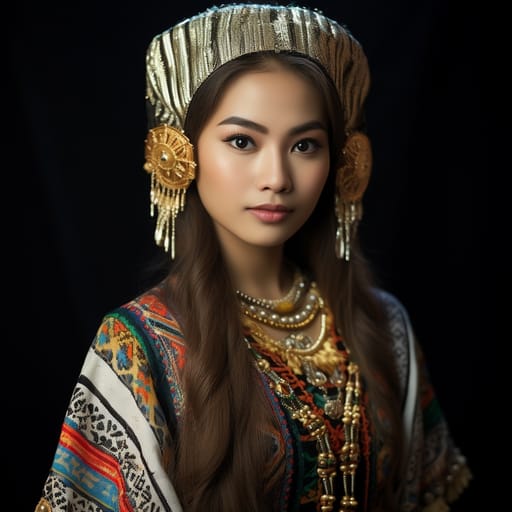
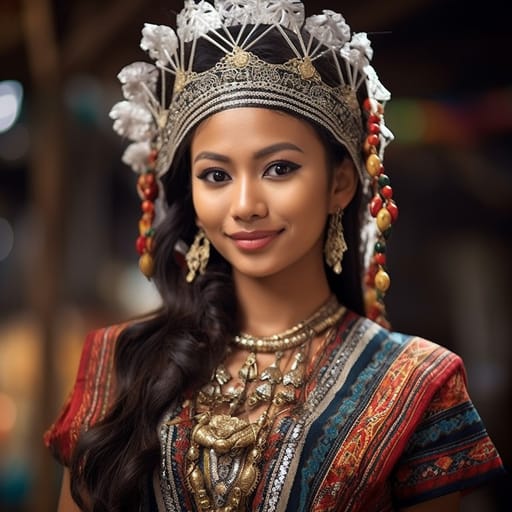
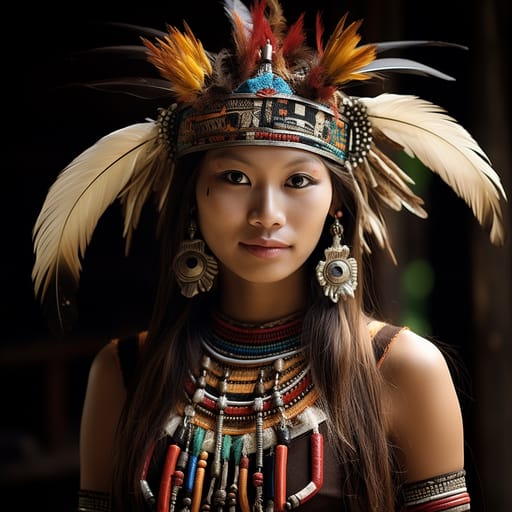
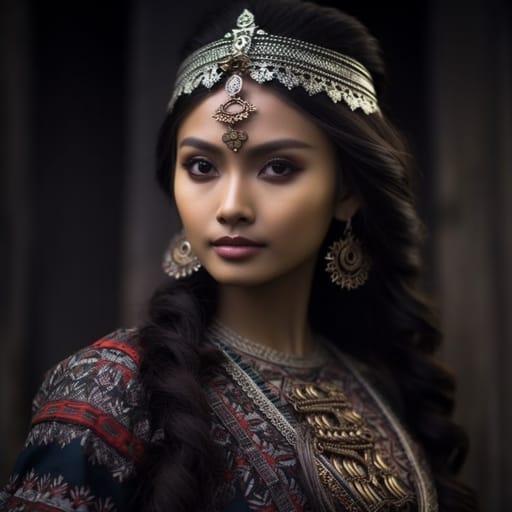
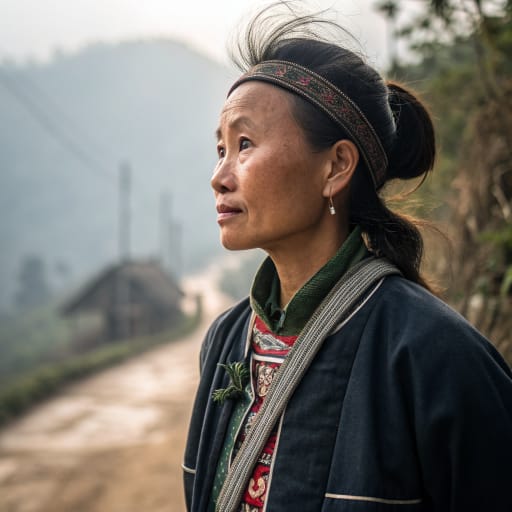
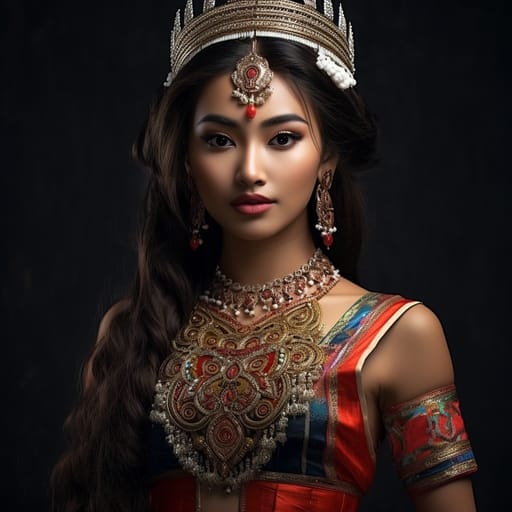
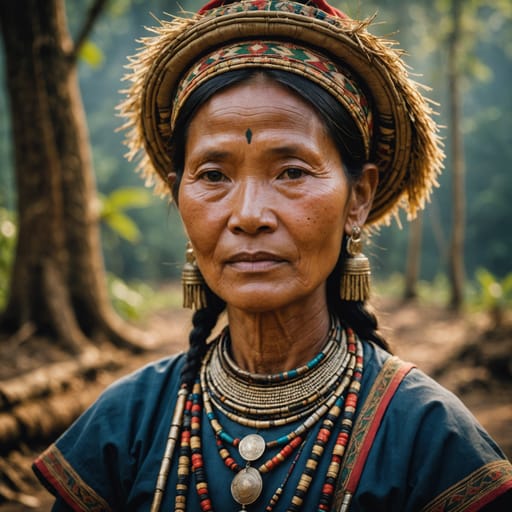
Typical Minokok Phenotypes
Reference for AI generation: hair, eyes, skin, facial structure, build
Minokok Body & Anatomy Reference
Anatomy by feature, Southeast Asian Austronesian / Austroasiatic phenotype
Minokok Boobs & Breasts
Minokok tits and boobs run small-to-medium cup, modest projection, the classic Southeast Asian Austronesian / Austroasiatic bust profile. Minokok nipples and areolas show medium-brown to dark-brown areolar pigmentation against the tan-to-medium-brown skin tone, with areolar diameter typically in the 26-38mm range and forward-set positioning rather than the fuller South Asian or Polynesian bust. Minokok breasts trend firm, modest projection, a function of the ectomorph, petite frame body habitus and the mean adult female BMI 20-23. For anatomically accurate AI-generated Minokok nudes the render preserves the small-to-medium cup, modest projection shape, 26-38mm areolas with medium-brown to dark-brown pigmentation, and the torso proportions of the Southeast Asian Austronesian / Austroasiatic phenotype.
Minokok Ass & Hips
Minokok hips and butt usually read as small-to-medium, modest projection, narrower hip profile. The skeletal base is narrow-to-medium iliac crests, the Southeast Asian Austronesian / Austroasiatic pattern. Set against the fuller glutes of the Pacific Islander phenotype, the difference is easy to see, and the hip-to-waist ratio is often what identifies Minokok women in photos.
Minokok Vagina & Pussy
Expect medium-brown to dark-brown labial pigmentation on Minokok women, in keeping with Southeast Asian Austronesian / Austroasiatic ancestry. The pubic hair is straight-to-wavy fine-to-medium texture. Coloring should run evenly from the tan to medium-brown skin of the thighs to the labia, and Minokok nude imagery should keep the hair's straight-to-wavy fine-to-medium texture.
Minokok Dicks & Penis
Minokok dick and penile anatomy in adult AI generation should anchor on the regional reference data: regional mean ~11cm erect, moderate girth, and medium-brown shaft pigmentation. The Minokok cock profile reflects the Southeast Asian Austronesian / Austroasiatic population's anthropometric measurements. The shaft pigmentation should track the surrounding tan to medium-brown skin tone, and the pubic hair should keep its straight-to-wavy fine-to-medium texture in the typical inverted-V escutcheon.
Minokok Body, Curves & Build
Minokok body type: ectomorph, petite frame, with mean adult female BMI 20-23. This is the typical Southeast Asian Austronesian / Austroasiatic build. Height range, shoulder-to-hip ratio and fat distribution all follow from it, which is what an accurate Minokok nude body should show.
Minokok Skin Tone & Hair Texture
Minokok skin tone falls in the tan to medium-brown (Fitzpatrick III-V) band, the surface signal most often miscalibrated by generic AI nude generators. Minokok hair texture is typically straight-to-wavy 1A-2A, dark-brown to black, characteristic of the Southeast Asian Austronesian / Austroasiatic phenotype. In Minokok nude renders the skin should hold that band consistently across the body.
Explore phenotype categories
Structured taxonomy with peer-reviewed scales · 22 anatomical categories
Erotic Poses & Sex Positions
From the pose catalog: 219 named positions with reference skeletons
Frequently asked questions about Minokok people
Where is the Minokok homeland?
The Minokok homeland is Interior Sabah, Malaysian Borneo, along the upper Kinabatangan River system, chiefly in and around Tongod District, Malaysia in Southeast Asia.
What language do Minokok people speak?
Minokok people primarily speak Minokok (Austronesian, Dusunic); Malay widely used as a second language.
What religion do Minokok people practice?
The predominant religion among Minokok people is Christianity and Islam, with traces of older Dusunic animist belief.






Make your own Minokok images
Five a day, free, no credits to buy. The studio starts from this group's phenotype data, so you can set body type, pose and style and keep the traits accurate.
Start with Minokok