Help us get this right
Does this portrait look right for Mexica?
Nobody has judged this one yet. You would be the first.
Mexica Erotic
Tenochtitlan and Tlatelolco on Lake Texcoco in the Valley of Mexico, the site of present-day Mexico City, Mexico
Classical Nahuatl (Uto-Aztecan, Nahuan branch)
Mesoamerican polytheism centered on Huitzilopochtli and Tlaloc, replaced by Roman Catholicism after the Spanish conquest
Tenochca of Tenochtitlan and Tlatelolca of Tlatelolco; a Nahua people and the leading power of the Aztec Triple Alliance with Texcoco and Tlacopan
About Mexica People
The Mexica were a Nahuatl-speaking people who founded Tenochtitlan on an island in Lake Texcoco in the fourteenth century and dominated central Mexico until the Spanish conquest of 1521. Their descendants merged into the Indigenous and mestizo population of the region. They are who most people mean by Aztecs, a name they did not use for themselves. What bound them together was a migration story. They were latecomers from a northern homeland called Aztlan, led south by their patron god Huitzilopochtli until they saw an eagle perched on a nopal cactus, the sign to settle. That image sits on Mexico's flag, and the country carries their name. Their language, Classical Nahuatl, belongs to the Uto-Aztecan family, which also includes Hopi and Comanche far to the north. It served as a common tongue across much of Mesoamerica and outlasted the empire, surviving in English words like tomato, avocado and coyote. Arriving in a valley crowded with older city-states, the Mexica spent generations as tributaries and hired soldiers. In 1428 they joined Texcoco and Tlacopan in the Triple Alliance. By 1519 that alliance drew tribute from the Gulf coast to the Pacific, and Tenochtitlan had grown outward on chinampa garden plots into one of the largest cities of its time.
Religion set the rhythm of the city. Twin shrines to Huitzilopochtli and the rain god Tlaloc crowned the Templo Mayor. A 365-day solar year meshed with a 260-day ritual count, and the two cycles lined up again every 52 years. At that point every fire was put out and a new flame was drilled on the Hill of the Star. Human sacrifice was central to state ritual, understood as payment to the gods who kept the sun moving and the rain falling. Ordinary life ran through the calpolli, neighborhood units that held land, trained young men and supplied warriors, and schooling reached commoners as well as nobles. Long-distance merchants called pochteca doubled as the state's eyes abroad. The end came fast. Hernán Cortés landed in 1519 and found eager allies among the Mexica's enemies and resentful subjects, the Tlaxcalans above all. Smallpox swept the city in 1520, and after a hard siege Tenochtitlan fell in August 1521 under its last ruler, Cuauhtemoc. Mexico City was built directly on the ruins. The Mexica were absorbed into colonial society rather than wiped out, and their legacy runs through central Mexico today: in place names, in food and in the Nahuatl language, still spoken by more than a million people.
Related ethnic groups
Groups that share Mexica's homeland, region, language, or religious tradition. These are likely candidates for comparative phenotype reference.
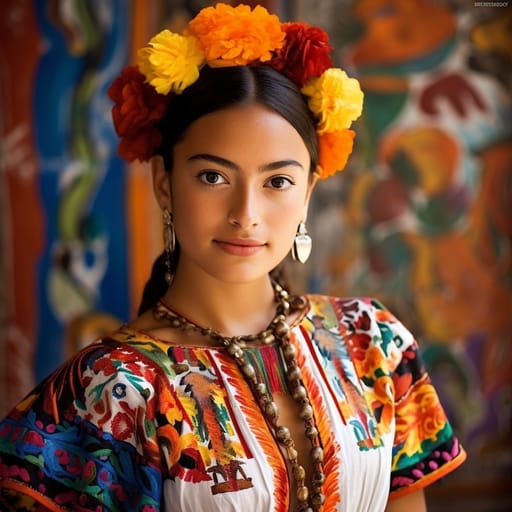
Otomi
same region (Central America)
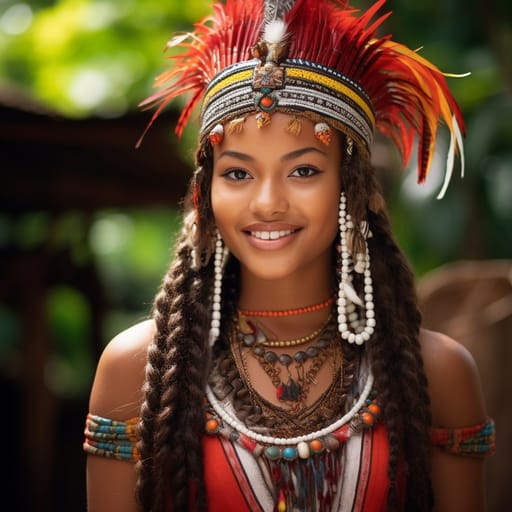
Kalinago
same region (Central America)
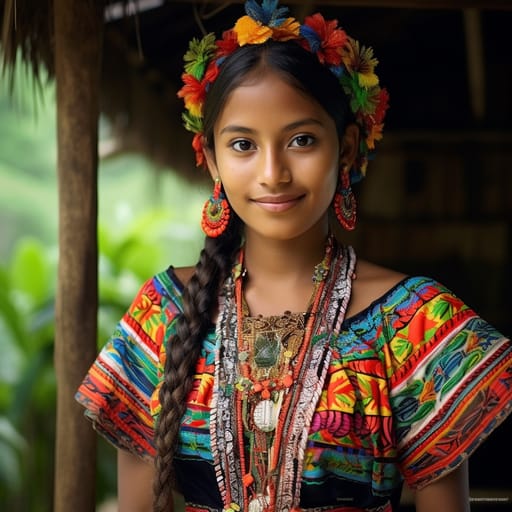
Miskito
same region (Central America)
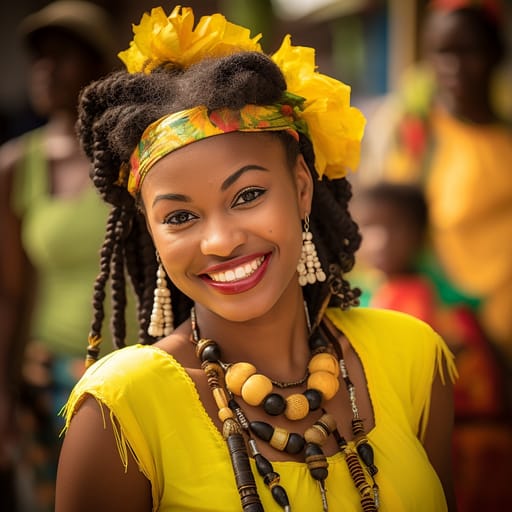
Garifuna
same region (Central America)
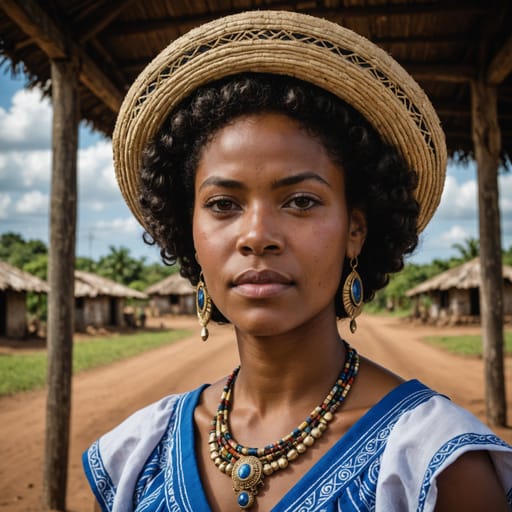
Afro-Nicaraguan
same region (Central America)
Olmecs
same region (Central America)
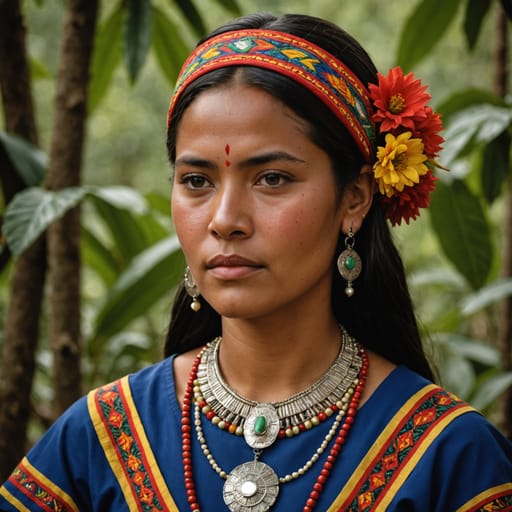
Kakawira
same region (Central America)
Tequistlatec
same region (Central America)
Typical Mexica Phenotypes
Reference for AI generation: hair, eyes, skin, facial structure, build
Mexica Body & Anatomy Reference
Per-feature anatomical profile for AI nude generation: Mesoamerican Indigenous / Mestizo phenotype
Mexica Boobs & Breasts
Bust reference for Mexica women: medium-to-large cup, full, moderate-to-high projection, which is typical of Mesoamerican Indigenous / Mestizo ancestry. Areolas measure about 32-46mm across, with medium-brown to dark-brown pigmentation. Body type (endomorph-to-mesomorph with strong hip-and-bust deposition) shapes the bust as well, so Mexica tits are usually full and projecting, classic Latina curvy bust profile. In AI imagery, keep the forward-set shape rather than drifting toward the smaller East Asian bust.
Mexica Ass & Hips
The Mexica ass is typically medium-to-full, high projection, classic Latina curvy hip profile, which sets it apart from the slim narrow-hip East Asian profile. Underneath, the pelvis shows wide iliac crests, full gluteal-femoral fat deposition, part of the Mesoamerican Indigenous / Mestizo skeletal pattern. For Mexica butt pics and AI renders, match that silhouette and the overall build (endomorph-to-mesomorph with strong hip-and-bust deposition).
Mexica Vagina & Pussy
Mexica pussy and vulvar anatomy presents medium-brown to dark-brown labial pigmentation, fuller labia minora, consistent with the Mesoamerican Indigenous / Mestizo phenotype's pigmentation pattern. Mexica pubic hair is typically straight-to-wavy coarse dark texture, dense distribution, in the inverted-triangle pattern. For anatomically accurate Mexica pussy renders the labial coloration should match the surrounding tan to medium-brown skin tone with a continuous gradient, and the hair should keep its straight-to-wavy coarse dark texture.
Mexica Dicks & Penis
Mexica dicks follow the Mesoamerican Indigenous / Mestizo reference data: regional mean ~13cm erect; moderate girth; medium-brown shaft pigmentation. Shaft color should track the tan to medium-brown skin tone with a smooth change toward the glans, and Mexica pubic hair keeps its straight-to-wavy coarse dark texture.
Mexica Body, Curves & Build
Mexica body type and overall build presents as endomorph-to-mesomorph with strong hip-and-bust deposition, with mean adult female BMI 26-29: the characteristic Mesoamerican Indigenous / Mestizo habitus. Mexica curves and proportions should keep the regional skeletal frame (height, shoulder-to-hip ratio, limb proportions) rather than a generic mesomorph default.
Mexica Skin Tone & Hair Texture
Mexica skin sits in the tan to medium-brown (Fitzpatrick III-V) band. Hair is typically straight-to-wavy 1A-2B, dense dark-brown to black, in keeping with the Mesoamerican Indigenous / Mestizo phenotype. In nude renders the skin should stay one even tone from face to body, and body, pubic and head hair should match.
Explore phenotype categories
Structured taxonomy with peer-reviewed scales · 22 anatomical categories
Erotic Poses & Sex Positions
From the pose catalog: 219 named positions with reference skeletons
Frequently asked questions about Mexica people
Where is the Mexica homeland?
The Mexica homeland is Tenochtitlan and Tlatelolco on Lake Texcoco in the Valley of Mexico, the site of present-day Mexico City, Mexico in Central America.
What language do Mexica people speak?
Mexica people primarily speak Classical Nahuatl (Uto-Aztecan, Nahuan branch).
What religion do Mexica people practice?
The predominant religion among Mexica people is Mesoamerican polytheism centered on Huitzilopochtli and Tlaloc, replaced by Roman Catholicism after the Spanish conquest.






Make your own Mexica images
Five a day, free, no credits to buy. The studio starts from this group's phenotype data, so you can set body type, pose and style and keep the traits accurate.
Start with Mexica