Help us get this right
Does this portrait look right for Lohana?
Nobody has judged this one yet. You would be the first.
Lohana Erotic
Sindh in Pakistan, and Kutch, Saurashtra and mainland Gujarat in India, with large settled communities in Mumbai, East Africa and the United Kingdom.
Kutchi, Gujarati and Sindhi (Indo-Aryan, Indo-European), with Hindi and English in the diaspora.
Hinduism, mainly Vaishnav, including Pushtimarg and Swaminarayan followings, with Jhulelal veneration in the Sindhi branch and family kuldevi worship throughout.
Regional sections include Kutchi, Halai (Saurashtra) and Sindhi Lohana; the Sindhi branch divides into Amil and Bhaiband. The community identifies itself as Raghuvanshi Kshatriya.
About Lohana People
The Lohana are a Hindu trading community whose center of gravity has shifted twice in a century, and who have carried their name and their institutions through both moves. The older homeland is Sindh, on the lower Indus, from which they spread east into Kutch, the Halar coast of Saurashtra, and the market towns of Gujarat and Rajasthan. They are merchants by occupation and Kshatriya by claim: tradition traces descent from Lava, son of Rama, which is why "Raghuvanshi" appears on their halls and wedding cards about as often as "Lohana" does. The community has never conceded the argument that a caste of shopkeepers cannot have started as warriors.
Language follows geography rather than caste. Lohanas in Kutch speak Kutchi, which sits close to Sindhi; those in Saurashtra and mainland Gujarat speak Gujarati; the Sindh-born generation spoke Sindhi, and some of their grandchildren in Mumbai still do. Religion is mostly Vaishnav, with Pushtimarg and Swaminarayan houses drawing large followings alongside the household kuldevi each family keeps and returns to for weddings and first haircuts. The Sindhi branch adds Jhulelal, deity of the Indus, and keeps Cheti Chand as its new year.
Two ruptures shaped the modern community. In 1947 the Sindhi Lohanas left Sindh almost entirely, and the Amil and Bhaiband sections that had supplied the province with its clerks and its shopkeepers reassembled in Bombay, Ulhasnagar and Gandhidham. Before that, from the 1860s, Bhaiband firms out of Hyderabad in Sindh ran the Sindwork trade, selling silk, curios and lacquerware from shops in Gibraltar, Cairo, Colombo, Yokohama and Panama, a global retail network staffed by relatives sent out on contract. The second rupture came from East Africa, where Lohana traders had been building duka networks around Zanzibar, Mombasa and Kampala since the nineteenth century. Idi Amin's 1972 expulsion of Uganda's Asians moved thousands of them to Britain within weeks. That is why Leicester, Harrow and Wembley have Lohana community centers, and why a family tree can run Kutch to Jinja to Leicester in three generations.
What holds the whole thing together is unglamorous: the mahajan, the caste hall, the printed directory, the hostels that housed boys sent to town for school, and marriage networks that still work by section and surname. Thakkar, Kotecha, Karia and a few dozen other names read as Lohana anywhere in the world.
Related ethnic groups
Groups that share Lohana's homeland, region, language, or religious tradition. These are likely candidates for comparative phenotype reference.
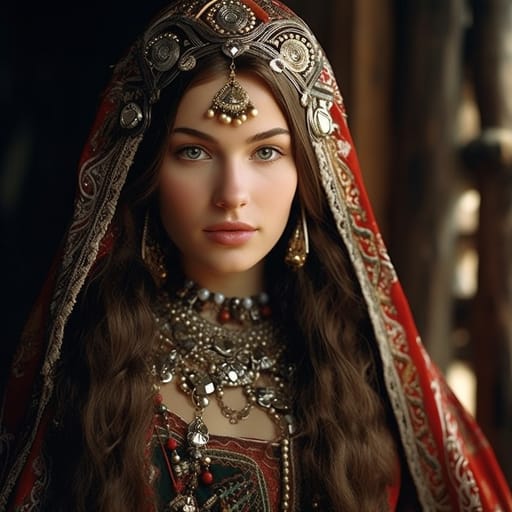
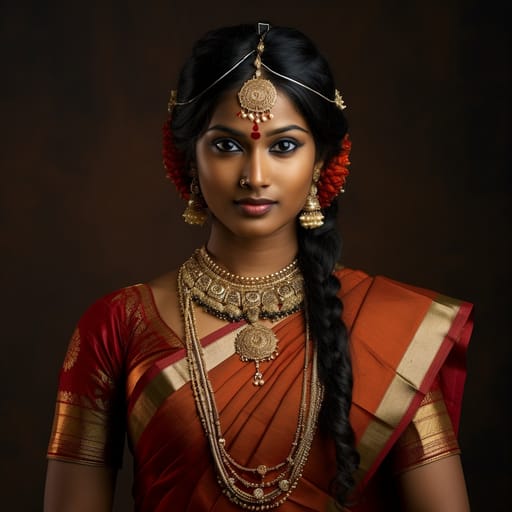
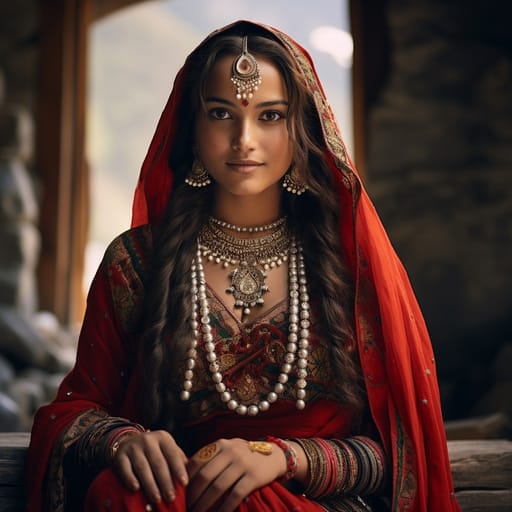
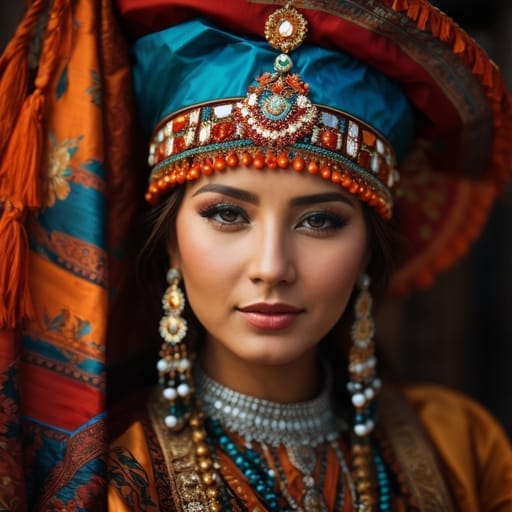
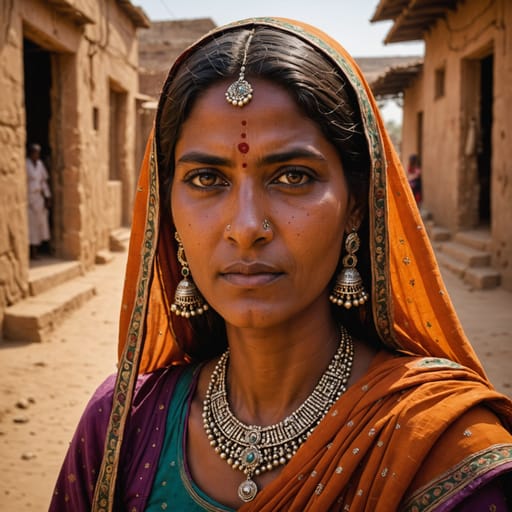
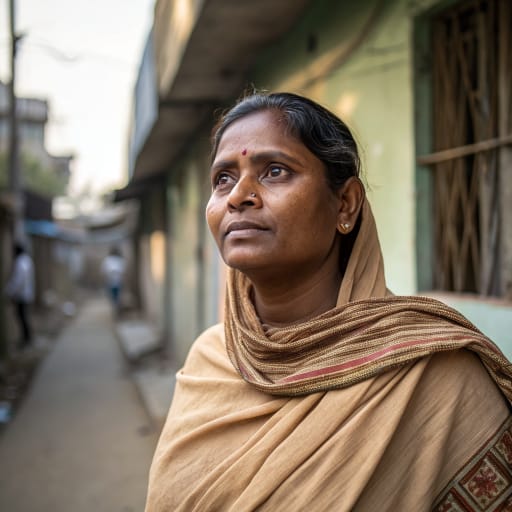
Typical Lohana Phenotypes
Reference for AI generation: hair, eyes, skin, facial structure, build
Lohana Body & Anatomy Reference
Anatomy by feature, Indo-Aryan / Dravidian South Asian phenotype
Lohana Boobs & Breasts
The typical Lohana bust is medium-to-large cup, moderate-to-full projection, in line with the wider Indo-Aryan / Dravidian South Asian pattern. Areolas usually fall in the 32-46mm range, with medium-brown to dark-brown areolar pigmentation against the wheatish-to-brown skin tone. Compared with the smaller East Asian bust profile, Lohana breasts sit forward and are generally full and soft, generally fuller than the East Asian norm. A faithful AI render of Lohana tits keeps that shape and areola size.
Lohana Ass & Hips
Butt shape among Lohana women: medium-to-full, moderate-to-high projection, classic curvy hip profile, over medium-to-wide iliac crests, full gluteal-femoral fat distribution. This follows Indo-Aryan / Dravidian South Asian ancestry and looks quite unlike the slim hip profile of East Asian women. An accurate Lohana ass in adult AI imagery keeps both the silhouette and the overall build (endomorph-to-mesomorph with fuller hip deposition) instead of a generic average.
Lohana Vagina & Pussy
Vulvar anatomy among Lohana women: medium-brown to dark-brown labial pigmentation, fuller labia minora projection. Pubic hair tends to be straight-to-wavy coarse texture, dense distribution, in the usual inverted-triangle pattern. Both follow Indo-Aryan / Dravidian South Asian pigmentation, which is why Lohana pussy renders should not fall back on a pale, sparse Western template.
Lohana Dicks & Penis
The Lohana cock profile, from Indo-Aryan / Dravidian South Asian anthropometric data: regional mean ~13cm erect; moderate girth; medium-brown shaft pigmentation. Pubic hair has a straight-to-wavy coarse texture and forms the usual inverted-V pattern. Whether Lohana men are circumcised follows religious and cultural practice rather than phenotype.
Lohana Body, Curves & Build
Build and curves among Lohana women follow the Indo-Aryan / Dravidian South Asian pattern: endomorph-to-mesomorph with fuller hip deposition, mean adult female BMI 22-25. Proportions matter as much as skin tone, so Lohana figures should keep their regional height and limb ratios.
Lohana Skin Tone & Hair Texture
The Lohana skin range is wheatish to brown (Fitzpatrick III-V), and hair tends to be straight-to-wavy 1A-2B, dense, dark-brown to black. That combination marks the Indo-Aryan / Dravidian South Asian phenotype, and skin tone is the trait AI generators most often get wrong for Lohana women.
Explore phenotype categories
Structured taxonomy with peer-reviewed scales · 22 anatomical categories
Erotic Poses & Sex Positions
From the pose catalog: 219 named positions with reference skeletons
Frequently asked questions about Lohana people
Where is the Lohana homeland?
The Lohana homeland is Sindh in Pakistan, and Kutch, Saurashtra and mainland Gujarat in India, with large settled communities in Mumbai, East Africa and the United Kingdom. in Southern Asia.
What language do Lohana people speak?
Lohana people primarily speak Kutchi, Gujarati and Sindhi (Indo-Aryan, Indo-European), with Hindi and English in the diaspora..
What religion do Lohana people practice?
The predominant religion among Lohana people is Hinduism, mainly Vaishnav, including Pushtimarg and Swaminarayan followings, with Jhulelal veneration in the Sindhi branch and family kuldevi worship throughout..






Make your own Lohana images
Five a day, free, no credits to buy. The studio starts from this group's phenotype data, so you can set body type, pose and style and keep the traits accurate.
Start with Lohana