Help us get this right
Does this portrait look right for Kwele?
Nobody has judged this one yet. You would be the first.
Kwele Erotic
Rainforest of the upper Ivindo, Dja and Ngoko river basins: northwestern Republic of the Congo (Sangha, Cuvette-Ouest), northeastern Gabon (around Mékambo) and the southeastern corner of Cameroon.
Bekwel, also written Bekwil or Bakwele (Bantu, Makaa-Njem group, Niger-Congo); French is the language of school and administration.
Mostly Christian (Catholic and Protestant), alongside ancestor veneration and witchcraft beliefs; the older beete ritual cycle has largely lapsed.
Northwestern Bantu people of the Makaa-Njem cluster, closest to the Njem, Koonzime, Makaa and Mpiemo; organized in autonomous village lineages rather than named branches.
About Kwele People
The Kwele, who call themselves Bekwel and turn up in older books as Bakwele, are a forest people of the corner where the Republic of the Congo, Gabon and Cameroon meet. Most outsiders know them through one thing: the heart-shaped masks, whitened with kaolin, that sit in museum cases from Paris to New York. The people who carved them are still there, farming and hunting along the upper Ivindo, the Dja and the Ngoko, around Souanké, Sembé and Ouesso in Congo and Mékambo in Gabon. Their language, also called Bekwel, is Bantu of the Makaa-Njem cluster, which ties them more closely to the Njem and Koonzime of southeastern Cameroon than to their Kota and Fang neighbors on the Gabonese side.
The usual account of how they got there is a nineteenth-century flight. Rivals armed with guns from the coastal slave trade drove them inland, a conflict remembered as the Poupou war, and they regrouped between the Dja and the Ivindo. What they built was loosely held together. A village was a bundle of lineages that had agreed to live together, each with its own head and no chief over the lot, and villages split easily. The counterweight was beete, a ritual cycle called when things went wrong: an epidemic, a run of deaths, failing hunts. Men left for the forest to hunt antelope for a closing meal cooked with protective medicines, while masked figures called ekuk, forest spirits, danced in the village to keep it animated until the hunters came back. The white faces carry the point: white clay stands for light and clear sight, the opposite of the witchcraft blamed for a village's bad luck. Many masks now in collections were never danced at all but hung indoors. Marriage was sealed in iron, with large anchor-shaped forged pieces called mandjong that circulated mainly as bridewealth.
Colonial rule, missions and the cash economy wore beete down over the twentieth century. Most Kwele today are Christian, Catholic or Protestant, with respect for ancestors and worry about witchcraft still working underneath. Daily life runs on cassava and plantain plots, hunting, river fishing and, around Souanké and Sembé, cocoa. Old exchange ties with Baka foragers continue, not always on equal terms. The forest itself is now divided among logging concessions, iron ore prospects and parks such as Odzala-Kokoua, and the Ebola outbreaks of the early 2000s struck this same country around Mékambo and Mbomo. The written record still leans on Leon Siroto's fieldwork from around 1960, which means far more has been published about Kwele masks than about Kwele people now.
Related ethnic groups
Groups that share Kwele's homeland, region, language, or religious tradition. These are likely candidates for comparative phenotype reference.
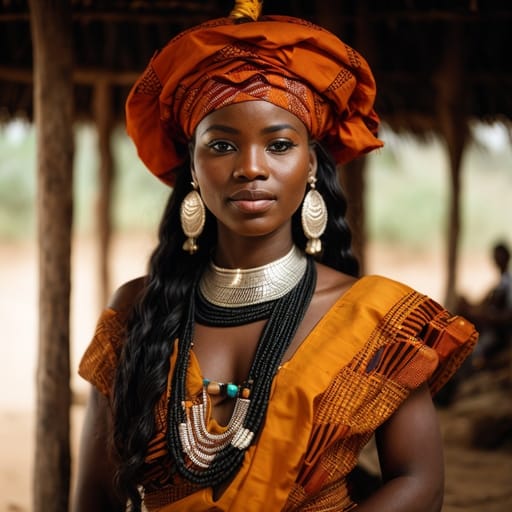
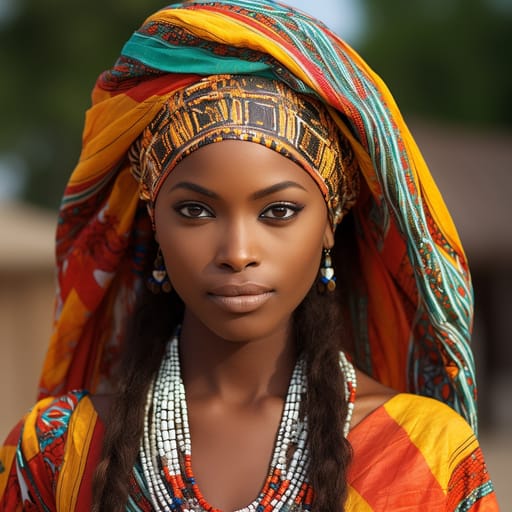
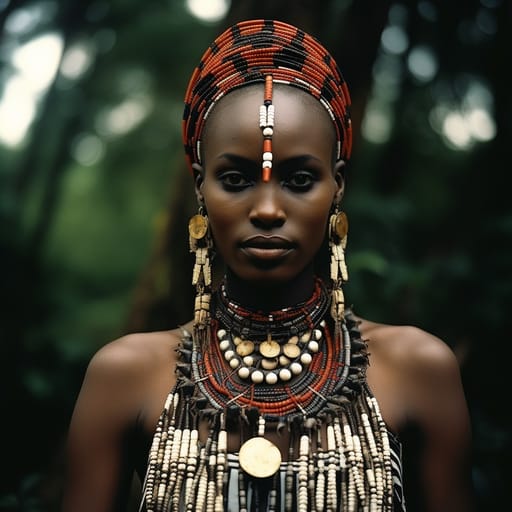
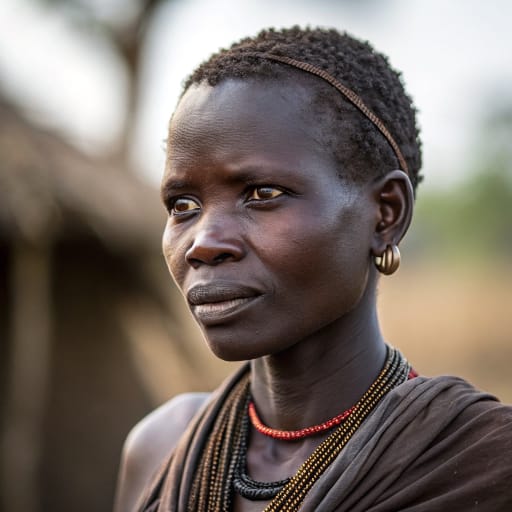
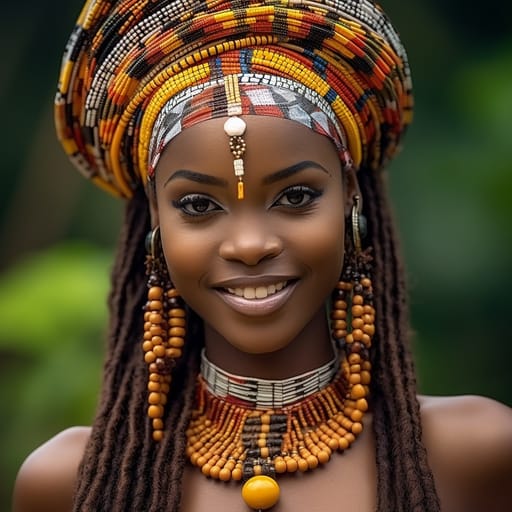
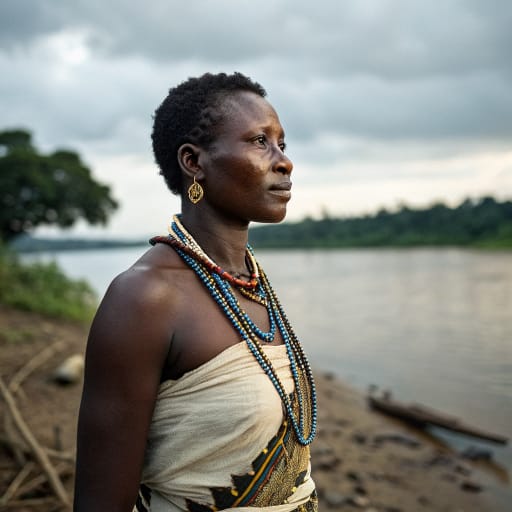
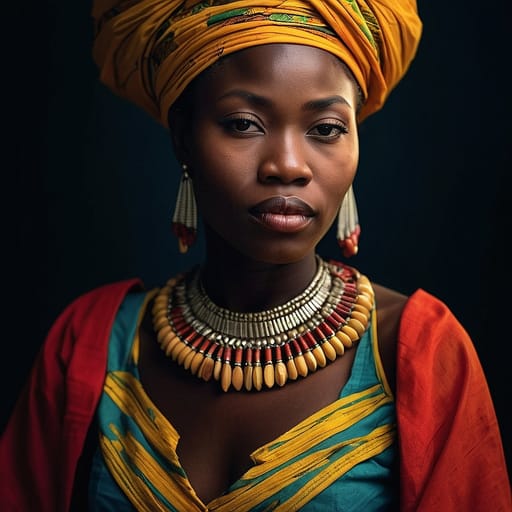
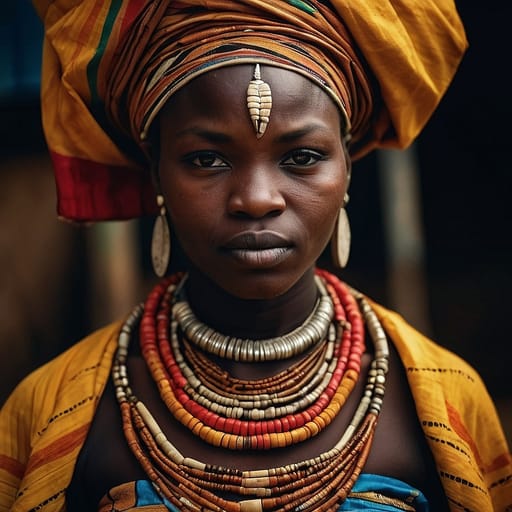
Typical Kwele Phenotypes
Reference for AI generation: hair, eyes, skin, facial structure, build
Kwele Body & Anatomy Reference
Anatomy by feature, Bantu / Central African Niger-Congo phenotype
Kwele Boobs & Breasts
Kwele boobs follow the Bantu / Central African Niger-Congo profile: medium-to-large cup, full, projecting. Areolar diameter is usually 32-48mm, and the coloring is deep-brown areolar pigmentation against the deep-brown skin tone. Breast shape tracks body composition (mesomorph with strong gluteal-femoral fat deposition, mean adult female BMI 23-26), so Kwele breasts tend to be fuller projection than East African; comparable to West African norm. Expect a forward-set shape, not the smaller East African conical profile.
Kwele Ass & Hips
Kwele ass and hip morphology presents as full, projected, wide-set glutes, distinctly different from the slim narrow-hip Cushitic East African profile. The Kwele pelvic profile shows broad iliac crests, gynoid pelvic pattern, anchored in the Bantu / Central African Niger-Congo skeletal pattern. Kwele butt shots in adult AI imagery should render the full, projected, wide-set glutes silhouette with the overall build (mesomorph with strong gluteal-femoral fat deposition) and the fat distribution typical of the Bantu / Central African Niger-Congo phenotype.
Kwele Vagina & Pussy
Kwele pussy anatomy typically shows deep-brown labial pigmentation, fuller labia minora. Pubic hair is usually tightly-coiled coarse texture, dense distribution. In AI-generated Kwele nudes, labial color should blend into the deep-brown skin with a gradual transition, and the hair should keep its tightly-coiled coarse texture.
Kwele Dicks & Penis
Penis reference for Kwele men: regional mean ~14cm erect, above-average girth. Coloring: deep-brown shaft pigmentation. An accurate Kwele cock in AI imagery matches the surrounding deep-brown skin rather than a generic porn default. Circumcision depends on religion and custom, not ancestry.
Kwele Body, Curves & Build
The Kwele figure is generally mesomorph with strong gluteal-femoral fat deposition, with mean adult female BMI 23-26, characteristic of Bantu / Central African Niger-Congo ancestry. AI image tools tend to flatten regional body types into a few stock shapes; here the Kwele build is kept as its own reference.
Kwele Skin Tone & Hair Texture
Skin: deep-brown (Fitzpatrick VI). Hair: tight 4A-4C coil. Both are typical of Bantu / Central African Niger-Congo ancestry. The most common mistake in AI nudes of Kwele women is a body rendered lighter than the face.
Explore phenotype categories
Structured taxonomy with peer-reviewed scales · 22 anatomical categories
Erotic Poses & Sex Positions
From the pose catalog: 219 named positions with reference skeletons
Frequently asked questions about Kwele people
Where is the Kwele homeland?
The Kwele homeland is Rainforest of the upper Ivindo, Dja and Ngoko river basins: northwestern Republic of the Congo (Sangha, Cuvette-Ouest), northeastern Gabon (around Mékambo) and the southeastern corner of Cameroon. in Central Africa.
What language do Kwele people speak?
Kwele people primarily speak Bekwel, also written Bekwil or Bakwele (Bantu, Makaa-Njem group, Niger-Congo); French is the language of school and administration..
What religion do Kwele people practice?
The predominant religion among Kwele people is Mostly Christian (Catholic and Protestant), alongside ancestor veneration and witchcraft beliefs; the older beete ritual cycle has largely lapsed..






Make your own Kwele images
Five a day, free, no credits to buy. The studio starts from this group's phenotype data, so you can set body type, pose and style and keep the traits accurate.
Start with Kwele