Help us get this right
Does this portrait look right for Kursenieki?
Nobody has judged this one yet. You would be the first.
Kursenieki Erotic
The Curonian Spit and the adjacent lagoon shore, today divided between Lithuania and the Kaliningrad Oblast of Russia; surviving descendants mostly in Germany.
Kursenieki, also called kursisch (Indo-European, Baltic): a variety of Latvian heavily marked by Lithuanian, German and Low German.
Lutheran, within the Prussian Evangelical church.
Descendants of the medieval Curonians, a Baltic people closest to the Latvians and counted culturally within Lithuania Minor; identity was organized by spit village (Nida, Juodkrantė, Preila, Pervalka, Rasytė, Pilkopa).
About Kursenieki People
The Kursenieki were a people of one narrow thing: a bar of sand about sixty miles long, rarely more than two miles wide, separating the Curonian Lagoon from the open Baltic. They arrived from Courland, in present-day Latvia, in the late medieval centuries, and they came to fish. What made them a group rather than a regional accent was the combination they carried. They spoke a form of Latvian in a country of Lithuanian speakers, prayed in Lutheran churches under Prussian administration, and did their schooling and their paperwork in German. They called themselves kursenieki and their speech kursisch. In the mid 1600s their villages ran along the coast from Memel toward Danzig; by 1900 they were down to a handful of settlements on the spit itself, several of which the sand had already taken. That last part is not a metaphor. Logging for shipbuilding stripped the dunes of their cover, the dunes began to move, and villages went under one at a time. Karvaičiai was one of them. A boy born there in 1776, Liudvikas Rėza, became a professor of theology at Königsberg and published the first edition of Donelaitis's Metai together with a landmark collection of Lithuanian folk songs: a man from a village that no longer exists, rescuing the literature of a language that was not his first.
Two habits of their working life are worth knowing. The kurėnas was a flat-bottomed lagoon boat, broad and shallow for water barely deep enough to sail. From the 1840s Prussian fishing rules required every boat to carry a carved vane at the masthead, black and white in a pattern assigned to its home village, and the fishermen kept adding to them: cut silhouettes of the church, the tavern, an elk, birds, a man's own house, until the vanes had become a folk art that told you at a glance whose boat was out on the water. The other habit is crows. Spit families netted hooded crows in autumn, killed them with a bite to the neck, then salted and smoked them for the winter. Visitors found this astonishing. The Kursenieki did not. What ended the community was 1945. Lutheran, German-schooled and registered as Prussian subjects, they were counted as Germans when East Prussia was emptied, and they went with everyone else, ahead of the front or under expulsion behind it. The old villages sit in a national park now, split between Lithuania and the Kaliningrad Oblast, and Nida sells its dune views to tourists. The language is down to a few elderly speakers in Germany, plus recordings and descendants who know what they are without being able to say it in kursisch.
Related ethnic groups
Groups that share Kursenieki's homeland, region, language, or religious tradition. These are likely candidates for comparative phenotype reference.
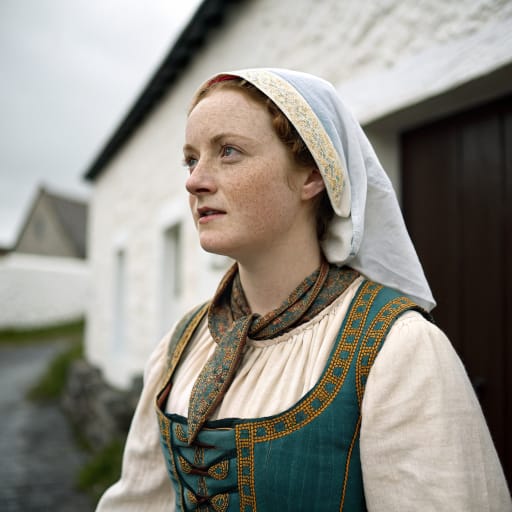
Irish
same region (Northern Europe)
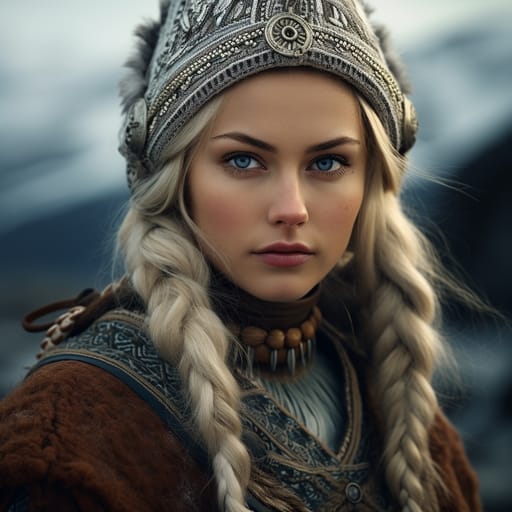
Icelanders
same region (Northern Europe)
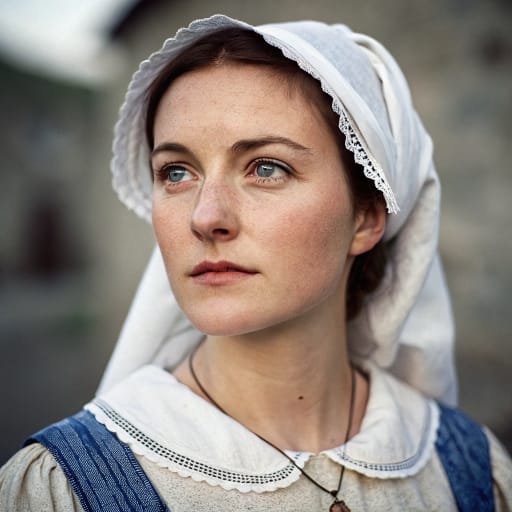
Welsh
same region (Northern Europe)
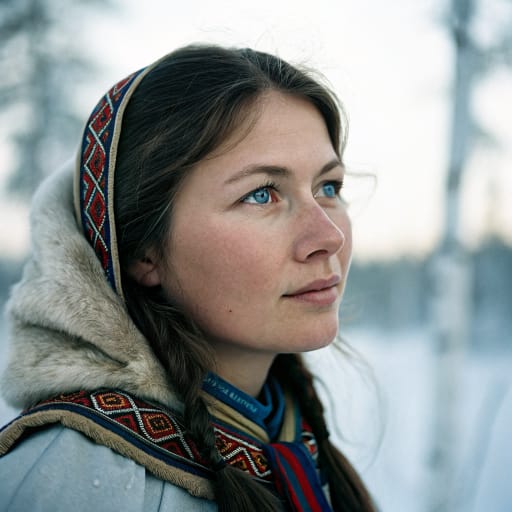
Sámi
same region (Northern Europe)
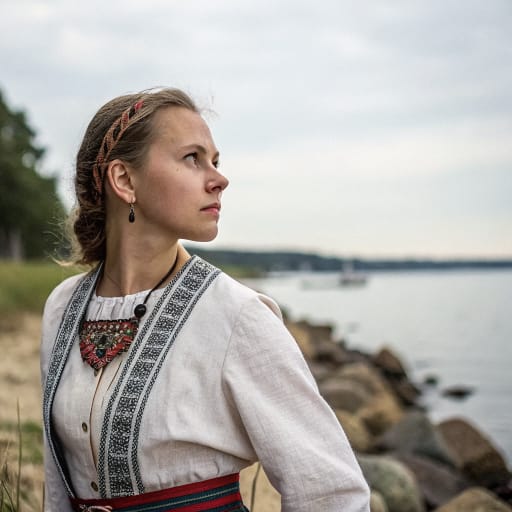
Livonians
same region (Northern Europe)
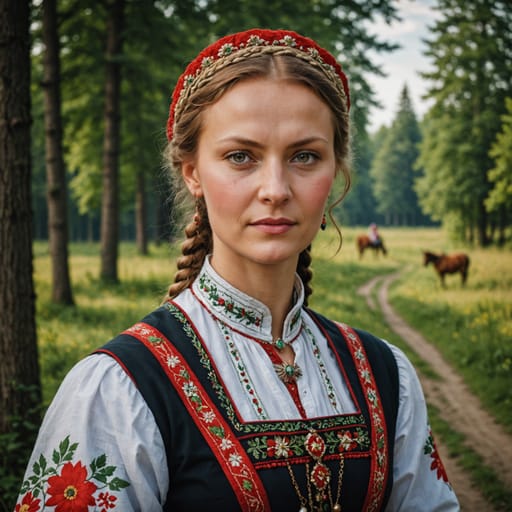
Belarusian Latvia
same region (Northern Europe)
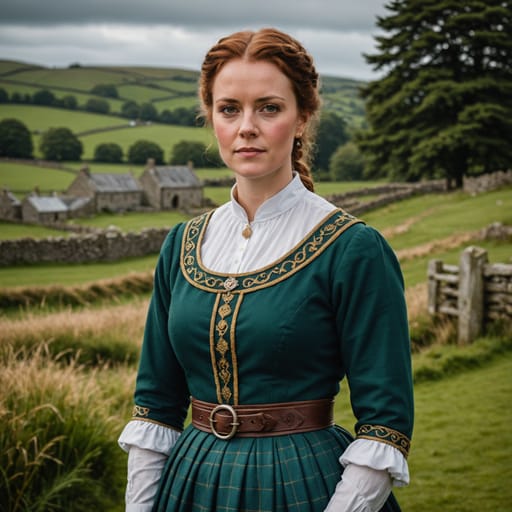
Northern Irish
same region (Northern Europe)
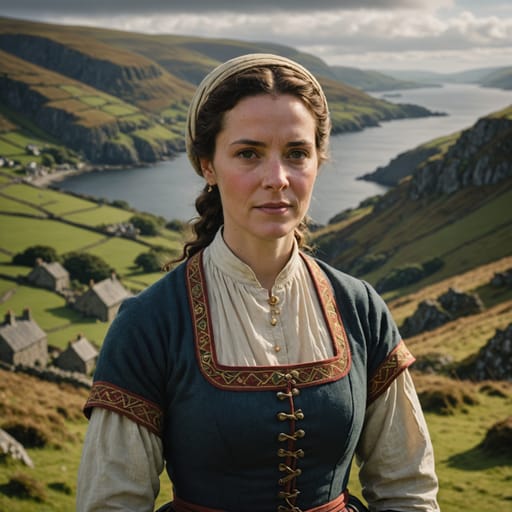
Ordovices
same region (Northern Europe)
Typical Kursenieki Phenotypes
Reference for AI generation: hair, eyes, skin, facial structure, build
Kursenieki Body & Anatomy Reference
Anatomy by feature, Northern European / Germanic-Scandinavian phenotype
Kursenieki Boobs & Breasts
Kursenieki tits and boobs run medium-to-large cup, full, high projection, the classic Northern European / Germanic-Scandinavian bust profile. Kursenieki nipples and areolas show light-pink to medium-pink areolar pigmentation against the fair skin tone, with areolar diameter typically in the 32-48mm range and forward-set positioning rather than the smaller East Asian bust. Kursenieki breasts trend full and projecting, often the largest cup-size band in regional comparisons, a function of the mesomorph with taller stature; ectomorph-to-mesomorph split body habitus and the mean adult female BMI 24-27. For anatomically accurate AI-generated Kursenieki nudes the render preserves the medium-to-large cup, full, high projection shape, 32-48mm areolas with light-pink to medium-pink pigmentation, and the torso proportions of the Northern European / Germanic-Scandinavian phenotype.
Kursenieki Ass & Hips
Kursenieki hips and butt usually read as medium-to-full, moderate-to-high projection. The skeletal base is medium-to-wide iliac crests, the Northern European / Germanic-Scandinavian pattern. Set against the slim East Asian narrow-hip profile, the difference is easy to see, and the hip-to-waist ratio is often what identifies Kursenieki women in photos.
Kursenieki Vagina & Pussy
Expect light-pink to medium-pink labial pigmentation, varied labia minora projection on Kursenieki women, in keeping with Northern European / Germanic-Scandinavian ancestry. The pubic hair is fine-to-medium wavy texture, often lighter-pigmented (blond to dark-brown). Coloring should run evenly from the fair skin of the thighs to the labia, and Kursenieki nude imagery should keep the hair's fine-to-medium wavy texture.
Kursenieki Dicks & Penis
Kursenieki dick and penile anatomy in adult AI generation should anchor on the regional reference data: regional mean ~13-14cm erect, moderate-to-above-average girth, and light-pink to light-brown shaft pigmentation. The Kursenieki cock profile reflects the Northern European / Germanic-Scandinavian population's anthropometric measurements. The shaft pigmentation should track the surrounding fair skin tone, and the pubic hair should keep its fine-to-medium wavy texture in the typical inverted-V escutcheon.
Kursenieki Body, Curves & Build
Kursenieki body type: mesomorph with taller stature; ectomorph-to-mesomorph split, with mean adult female BMI 24-27. This is the typical Northern European / Germanic-Scandinavian build. Height range, shoulder-to-hip ratio and fat distribution all follow from it, which is what an accurate Kursenieki nude body should show.
Kursenieki Skin Tone & Hair Texture
Kursenieki skin tone falls in the fair (Fitzpatrick I-III) band, the surface signal most often miscalibrated by generic AI nude generators. Kursenieki hair texture is typically straight-to-wavy 1A-2B, blond to medium-brown common, characteristic of the Northern European / Germanic-Scandinavian phenotype. In Kursenieki nude renders the skin should hold that band consistently across the body.
Explore phenotype categories
Structured taxonomy with peer-reviewed scales · 22 anatomical categories
Erotic Poses & Sex Positions
From the pose catalog: 219 named positions with reference skeletons
Frequently asked questions about Kursenieki people
Where is the Kursenieki homeland?
The Kursenieki homeland is The Curonian Spit and the adjacent lagoon shore, today divided between Lithuania and the Kaliningrad Oblast of Russia; surviving descendants mostly in Germany. in Northern Europe.
What language do Kursenieki people speak?
Kursenieki people primarily speak Kursenieki, also called kursisch (Indo-European, Baltic): a variety of Latvian heavily marked by Lithuanian, German and Low German..
What religion do Kursenieki people practice?
The predominant religion among Kursenieki people is Lutheran, within the Prussian Evangelical church..






Make your own Kursenieki images
Five a day, free, no credits to buy. The studio starts from this group's phenotype data, so you can set body type, pose and style and keep the traits accurate.
Start with Kursenieki