Help us get this right
Does this portrait look right for Komati?
Nobody has judged this one yet. You would be the first.
Komati Erotic
Andhra Pradesh and Telangana, India, with long-settled communities in Karnataka, Tamil Nadu, Maharashtra and Odisha.
Telugu (Dravidian); Tamil, Kannada, Marathi or Odia as second languages outside the Telugu states.
Hinduism, both Vaishnava and Shaiva; caste goddess Vasavi Kanyaka Parameswari; many are vegetarian. A historical Jain connection has been proposed.
Gavara, Kalinga and Traivarnika branches; 102 exogamous gotras. Ranked as Vaishya and widely known as Arya Vysya; one of the South Indian trading castes alongside the Beri Chettis and Chettiars.
About Komati People
The Komati are the merchant caste of the Telugu country: the shopkeepers, grain dealers, moneylenders and jewelers whose storefronts anchor bazaars from the Godavari delta to the back streets of Chennai and Bengaluru. They are a community defined by an occupation and by a story, and they have held onto both. Many now prefer the name Arya Vysya, a claim to the Vaishya rank of the classical four-fold order, and one they pressed hard during the colonial era through caste associations and disputes over the right to Vedic rites.
The story is Vasavi's. In the community's own purana, a Komati girl of Penugonda, in what is now West Godavari district, was demanded in marriage by a king. Rather than give her up or go to war, she walked into a fire, and the families of 102 lineages followed her. Those 102 gotras are still how Komatis reckon descent and arrange marriages, Vasavi Kanyaka Parameswari is still the caste goddess, and her temples mark Komati neighborhoods wherever the community has settled. The legend doubles as a charter for nonviolence, and many Komatis, the Gavara branch especially, keep a vegetarian kitchen. Some scholars read this, along with a proposed link between the caste name and the Jain figure Gomateshwara, as the trace of a Jain mercantile past, though the etymology remains disputed.
Telugu, a Dravidian language, is the mother tongue, and it tends to stay the home language even among families settled for generations in Tamil Nadu, Karnataka, Maharashtra or Odisha, where the regional language handles business outside. Main divisions include the Gavara, the Kalinga Komatis of the northern Andhra and Odisha coast, and the Traivarnika, who lean Vaishnava. The community was long known for its firm attachment to menarikam, marriage of a man to his mother's brother's daughter, a custom the Vasavi legend itself endorses and one that has loosened in recent decades.
In colonial Madras, Komati traders were prominent brokers to the East India Company and rivals of the Beri Chettis in the city's right-hand and left-hand caste quarrels. Potti Sriramulu, whose fatal 1952 hunger strike forced the creation of a Telugu-speaking state, was a Komati, as was Konijeti Rosaiah, a later chief minister of Andhra Pradesh. The old stereotype of the tight-fisted trader still follows the community, and it still stings: a 2017 Telugu booklet casting Komatis as "social smugglers" brought Arya Vysya groups into the streets. What persists underneath is a dense web of caste associations, hostels, charities and credit, which is a large part of why a small community carries such commercial weight.
Related ethnic groups
Groups that share Komati's homeland, region, language, or religious tradition. These are likely candidates for comparative phenotype reference.
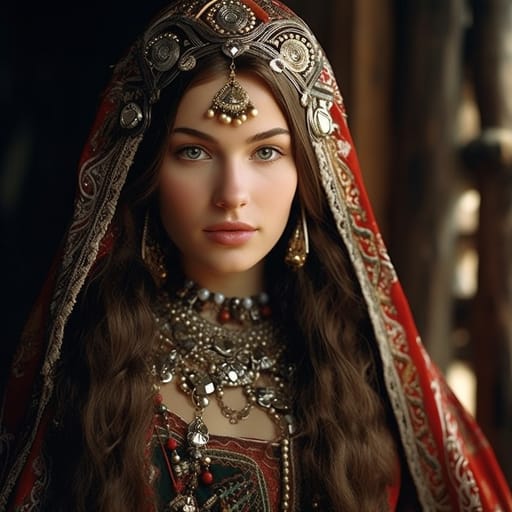
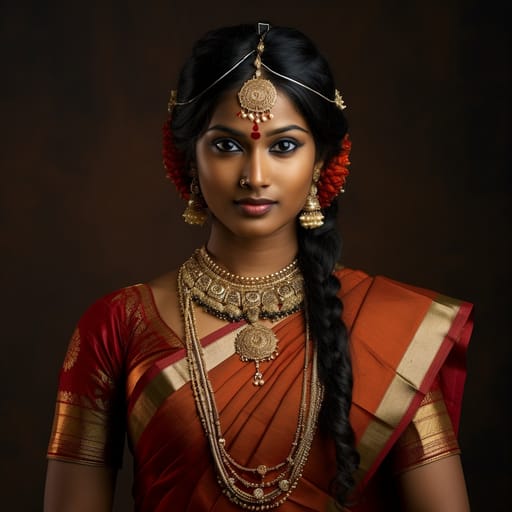
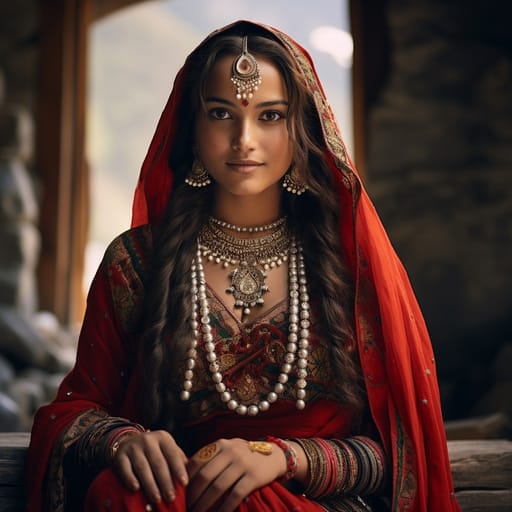
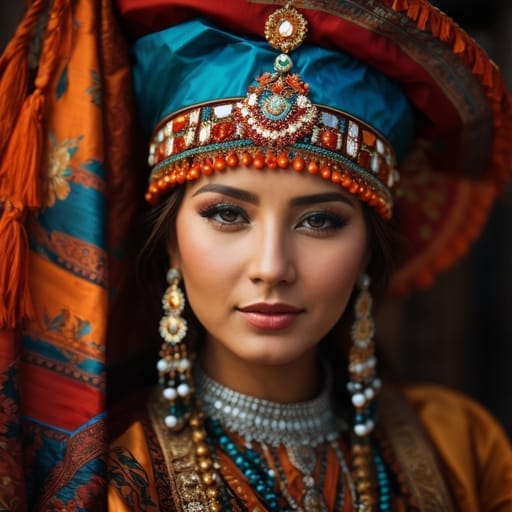
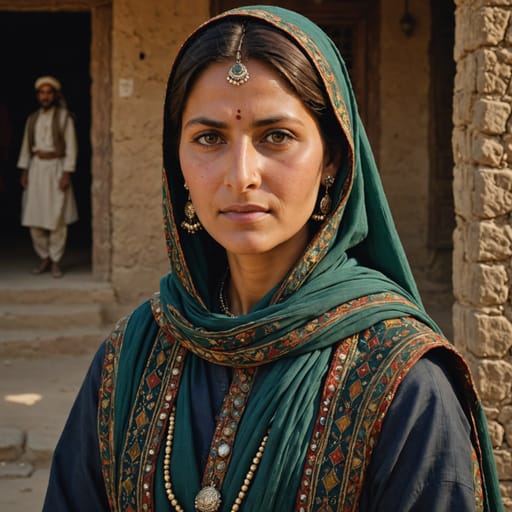
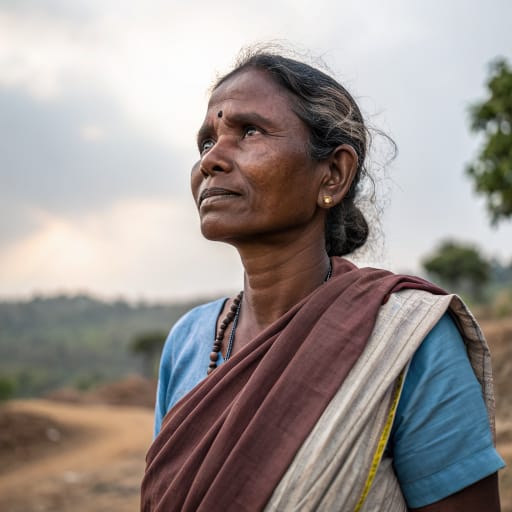
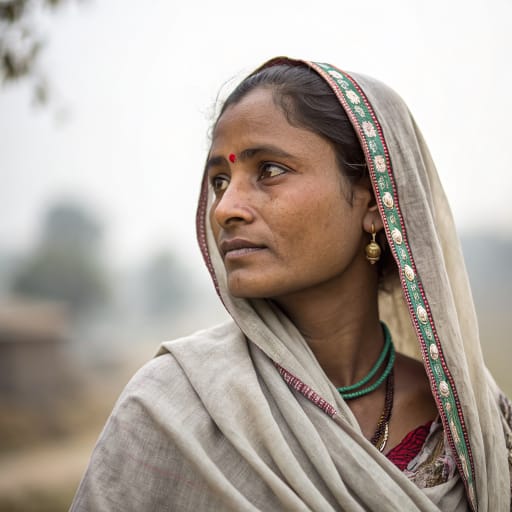
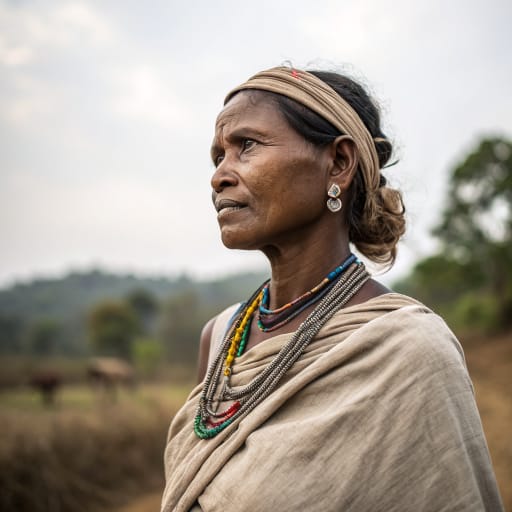
Typical Komati Phenotypes
Reference for AI generation: hair, eyes, skin, facial structure, build
Komati Body & Anatomy Reference
Per-feature anatomical profile for AI nude generation: Indo-Aryan / Dravidian South Asian phenotype
Komati Boobs & Breasts
The typical Komati bust is medium-to-large cup, moderate-to-full projection, in line with the wider Indo-Aryan / Dravidian South Asian pattern. Areolas usually fall in the 32-46mm range, with medium-brown to dark-brown areolar pigmentation against the wheatish-to-brown skin tone. Compared with the smaller East Asian bust profile, Komati breasts sit forward and are generally full and soft, generally fuller than the East Asian norm. A faithful AI render of Komati tits keeps that shape and areola size.
Komati Ass & Hips
Butt shape among Komati women: medium-to-full, moderate-to-high projection, classic curvy hip profile, over medium-to-wide iliac crests, full gluteal-femoral fat distribution. This follows Indo-Aryan / Dravidian South Asian ancestry and looks quite unlike the slim hip profile of East Asian women. An accurate Komati ass in adult AI imagery keeps both the silhouette and the overall build (endomorph-to-mesomorph with fuller hip deposition) instead of a generic average.
Komati Vagina & Pussy
Vulvar anatomy among Komati women: medium-brown to dark-brown labial pigmentation, fuller labia minora projection. Pubic hair tends to be straight-to-wavy coarse texture, dense distribution, in the usual inverted-triangle pattern. Both follow Indo-Aryan / Dravidian South Asian pigmentation, which is why Komati pussy renders should not fall back on a pale, sparse Western template.
Komati Dicks & Penis
The Komati cock profile, from Indo-Aryan / Dravidian South Asian anthropometric data: regional mean ~13cm erect; moderate girth; medium-brown shaft pigmentation. Pubic hair has a straight-to-wavy coarse texture and forms the usual inverted-V pattern. Whether Komati men are circumcised follows religious and cultural practice rather than phenotype.
Komati Body, Curves & Build
Build and curves among Komati women follow the Indo-Aryan / Dravidian South Asian pattern: endomorph-to-mesomorph with fuller hip deposition, mean adult female BMI 22-25. Proportions matter as much as skin tone, so Komati figures should keep their regional height and limb ratios.
Komati Skin Tone & Hair Texture
The Komati skin range is wheatish to brown (Fitzpatrick III-V), and hair tends to be straight-to-wavy 1A-2B, dense, dark-brown to black. That combination marks the Indo-Aryan / Dravidian South Asian phenotype, and skin tone is the trait AI generators most often get wrong for Komati women.
Explore phenotype categories
Structured taxonomy with peer-reviewed scales · 22 anatomical categories
Erotic Poses & Sex Positions
From the pose catalog: 219 named positions with reference skeletons
Frequently asked questions about Komati people
Where is the Komati homeland?
The Komati homeland is Andhra Pradesh and Telangana, India, with long-settled communities in Karnataka, Tamil Nadu, Maharashtra and Odisha. in Southern Asia.
What language do Komati people speak?
Komati people primarily speak Telugu (Dravidian); Tamil, Kannada, Marathi or Odia as second languages outside the Telugu states..
What religion do Komati people practice?
The predominant religion among Komati people is Hinduism, both Vaishnava and Shaiva; caste goddess Vasavi Kanyaka Parameswari; many are vegetarian. A historical Jain connection has been proposed..






Make your own Komati images
Five a day, free, no credits to buy. The studio starts from this group's phenotype data, so you can set body type, pose and style and keep the traits accurate.
Start with Komati