Help us get this right
Does this portrait look right for Kehek?
Nobody has judged this one yet. You would be the first.
Kehek Erotic
Exact territory unknown: somewhere west of the Nile Delta, in what is now northwestern Egypt and eastern Libya. Many later lived in garrison towns inside Egypt.
Unrecorded; presumed an early Berber (Libyco-Berber) language (Afroasiatic). Those settled in Egypt would also have used Egyptian (Afroasiatic).
Not recorded. Presumably indigenous Libyan beliefs, with Egyptian cults adopted by those settled in Egypt.
One of the ancient Libyan tribes named in Egyptian records, alongside the Libu, Meshwesh, Tjehenu and Tjemehu; part of the population broadly ancestral to the Amazigh (Berber) peoples.
About Kehek People
The Kehek were an ancient Libyan people of the 13th and 12th centuries BC, known only from Egyptian records, who lived somewhere in the dry country west of the Nile Delta, fought both against Egypt and for it, and were finally absorbed into the mixed Libyan and Egyptian population of the Delta. They left no writing of their own and no site an archaeologist can point to. What identifies them is a name, written qhq by Egyptian scribes and sometimes rendered Qeheq, that keeps turning up in military contexts: sometimes in the enemy column, more often on the payroll.
Their clearest moment as enemies came around 1208 BC, when the Libu chief Meryey led a coalition of Libyan tribes and seaborne allies into the western Delta. Merneptah's long victory inscription at Karnak counts Kehek among the defeated, next to the Libu and Meshwesh. An older trace may exist: a soldier of Amenhotep I, some three centuries earlier, boasts of taking three enemy hands at a place called Iamu-Kehek, though whether that name belongs to the same people is not settled.
As soldiers of pharaoh they are better documented. Papyrus Anastasi I, a Ramesside satirical letter in which one scribe torments another with a supply problem, imagines an expeditionary force of 5,000 bound for the Levant. Of those men 1,600 are Kehek, roughly three times the Sherden contingent and second only to the regular archers. In the Great Harris Papyrus, Ramesses III brags that his reign was so secure that the Sherden and Kehek could lie stretched out on their backs in their towns. The line tells you what they had become: a standing class of foreign troops, housed in their own settlements on Egyptian soil and named in the same breath as the most famous mercenaries of the age.
Nothing of their speech survives. It is usually assumed to have been an early relative of the Berber languages, the Afroasiatic branch still spoken across North Africa, but that rests on geography, not texts. Their gods, their customs and their own name for themselves are equally lost, since every word about them was written by Egyptians with an army to count or a victory to advertise.
The name fades from the record as the New Kingdom winds down. Their legacy is collective: the Libyan garrison communities of the Delta, of which the Kehek were one strand, grew into the military class that put Libyan-descended kings on the Egyptian throne in the tenth century BC. Further west, the wider ancient Libyan population they belonged to is counted among the ancestors of today's Amazigh peoples.
Related ethnic groups
Groups that share Kehek's homeland, region, language, or religious tradition. These are likely candidates for comparative phenotype reference.
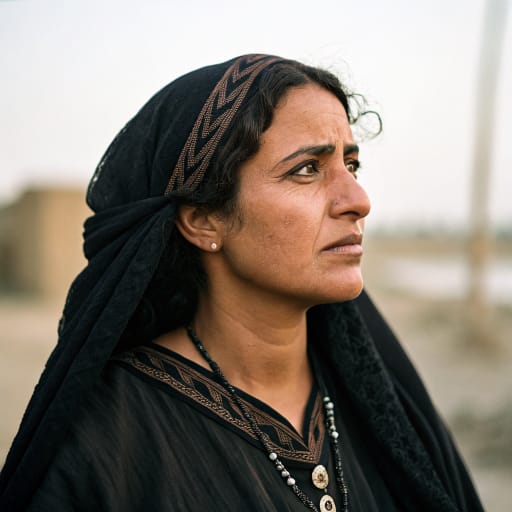
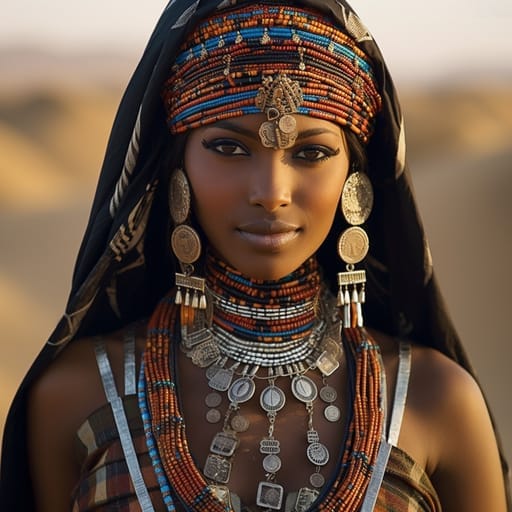
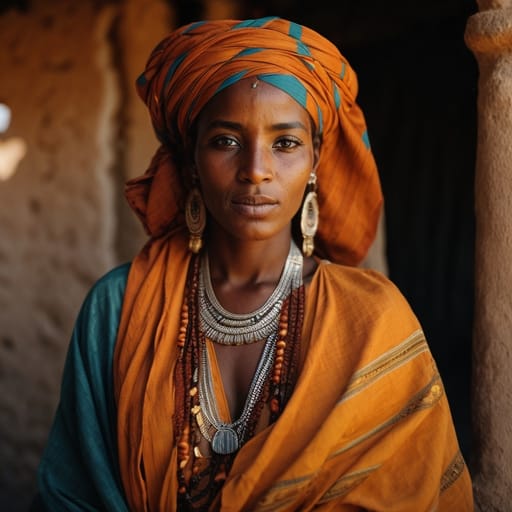
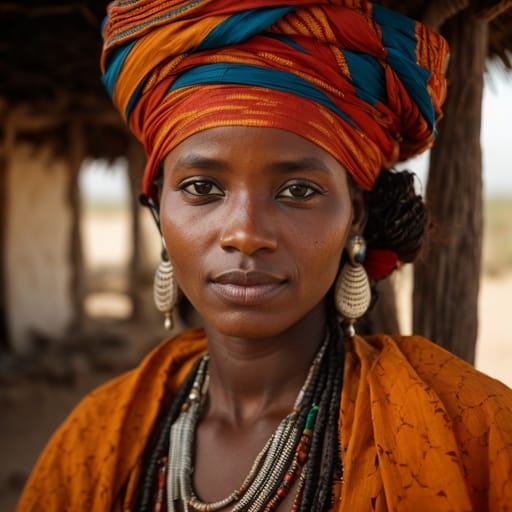
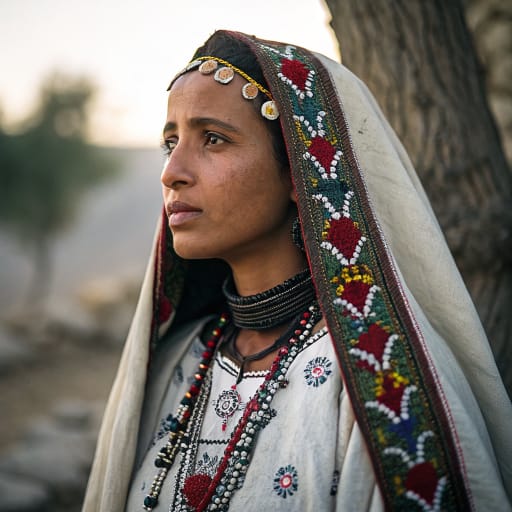
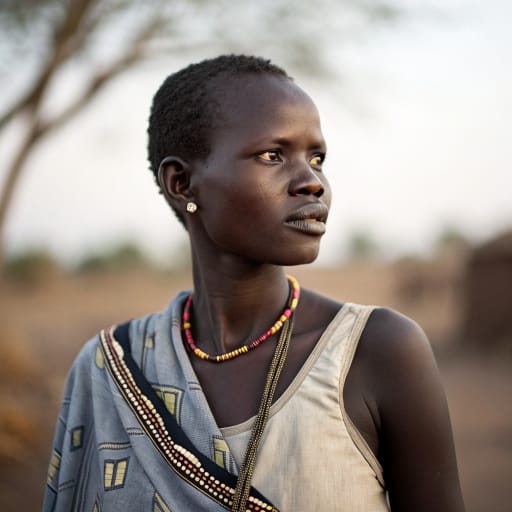
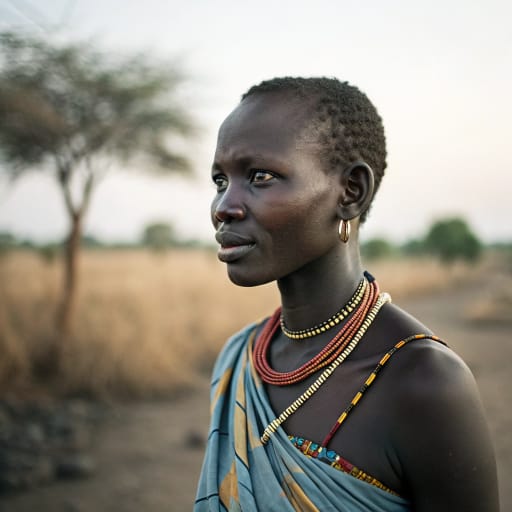
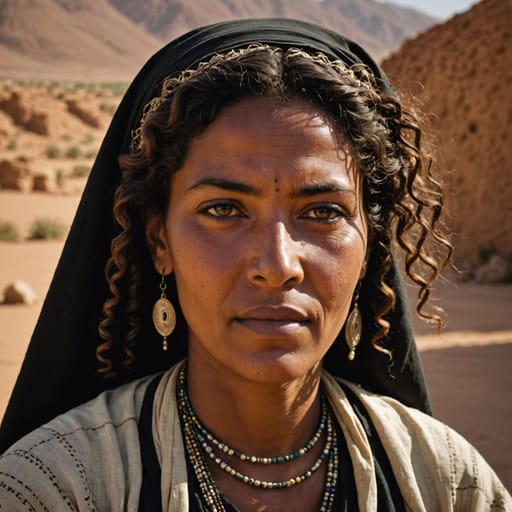
Typical Kehek Phenotypes
Reference for AI generation: hair, eyes, skin, facial structure, build
Kehek Body & Anatomy Reference
Anatomy by feature, Berber / Mediterranean-Saharan phenotype
Kehek Boobs & Breasts
Kehek tits and boobs run medium-to-large cup, full, moderate projection, the classic Berber / Mediterranean-Saharan bust profile. Kehek nipples and areolas show medium-brown to dark-brown areolar pigmentation against the olive-to-light-brown skin tone, with areolar diameter typically in the 30-44mm range and forward-set positioning rather than the smaller East Asian bust profile. Kehek breasts trend fuller and softer than the Cushitic East African norm, a function of the mesomorph with fuller hip-and-bust deposition body habitus and the mean adult female BMI 24-28. For anatomically accurate AI-generated Kehek nudes the render preserves the medium-to-large cup, full, moderate projection shape, 30-44mm areolas with medium-brown to dark-brown pigmentation, and the torso proportions of the Berber / Mediterranean-Saharan phenotype.
Kehek Ass & Hips
Kehek hips and butt usually read as medium-to-full, moderate projection, broader hip profile. The skeletal base is medium-to-wide iliac crests, fuller gluteal-femoral fat distribution, the Berber / Mediterranean-Saharan pattern. Set against the slim narrow-hip Cushitic East African profile, the difference is easy to see, and the hip-to-waist ratio is often what identifies Kehek women in photos.
Kehek Vagina & Pussy
Expect medium-brown to dark-brown labial pigmentation, fuller labia minora on Kehek women, in keeping with Berber / Mediterranean-Saharan ancestry. The pubic hair is wavy-to-coiled medium-coarse texture, dense distribution. Coloring should run evenly from the olive to medium-brown skin of the thighs to the labia, and Kehek nude imagery should keep the hair's wavy-to-coiled medium-coarse texture.
Kehek Dicks & Penis
Kehek dick and penile anatomy in adult AI generation should anchor on the regional reference data: regional mean ~13-14cm erect, moderate girth, and medium-brown shaft pigmentation. The Kehek cock profile reflects the Berber / Mediterranean-Saharan population's anthropometric measurements. The shaft pigmentation should track the surrounding olive to medium-brown skin tone, and the pubic hair should keep its wavy-to-coiled medium-coarse texture in the typical inverted-V escutcheon.
Kehek Body, Curves & Build
Kehek body type: mesomorph with fuller hip-and-bust deposition, with mean adult female BMI 24-28. This is the typical Berber / Mediterranean-Saharan build. Height range, shoulder-to-hip ratio and fat distribution all follow from it, which is what an accurate Kehek nude body should show.
Kehek Skin Tone & Hair Texture
Kehek skin tone falls in the olive to medium-brown (Fitzpatrick III-V) band, the surface signal most often miscalibrated by generic AI nude generators. Kehek hair texture is typically wavy-to-curly 2B-3C, often dark-brown to black, characteristic of the Berber / Mediterranean-Saharan phenotype. In Kehek nude renders the skin should hold that band consistently across the body.
Explore phenotype categories
Structured taxonomy with peer-reviewed scales · 22 anatomical categories
Erotic Poses & Sex Positions
From the pose catalog: 219 named positions with reference skeletons
Frequently asked questions about Kehek people
Where is the Kehek homeland?
The Kehek homeland is Exact territory unknown: somewhere west of the Nile Delta, in what is now northwestern Egypt and eastern Libya. Many later lived in garrison towns inside Egypt. in Northern Africa.
What language do Kehek people speak?
Kehek people primarily speak Unrecorded; presumed an early Berber (Libyco-Berber) language (Afroasiatic). Those settled in Egypt would also have used Egyptian (Afroasiatic)..
What religion do Kehek people practice?
The predominant religion among Kehek people is Not recorded. Presumably indigenous Libyan beliefs, with Egyptian cults adopted by those settled in Egypt..






Make your own Kehek images
Five a day, free, no credits to buy. The studio starts from this group's phenotype data, so you can set body type, pose and style and keep the traits accurate.
Start with Kehek