No portrait yet
Karay-a Erotic
Panay Island, Philippines: Antique province and much of inland and southern Iloilo, with pockets in Capiz and Aklan and migrant communities in Mindanao and Palawan
Kinaray-a, also called Hamtikanon (Austronesian, West Bisayan); most speakers also use Hiligaynon, Filipino and English
Predominantly Roman Catholic, with Protestant and independent church minorities and lingering folk belief in spirits and babaylan healing
Bisayan (Visayan) peoples; close kin to the Hiligaynon and Aklanon of Panay and to the upland Panay Bukidnon (Sulod)
About Karay-a People
The name tells you where they stand. Karay-a comes from iraya, meaning upstream, and it has always been set against the people of the river mouths and the coast. On Panay, the lowland city dwellers of Iloilo speak Hiligaynon. The farmers of the interior valleys and the long western coast speak Kinaray-a. The two languages share an island, a church and a lot of vocabulary, but for generations the line between them was also a line of class. In Iloilo City, a Karay-a accent marked someone as coming from the provinces, and plenty of speakers learned to drop it at the market and pick it back up at home.
Antique is the heartland: a narrow province pressed between the Sulu Sea and the mountains of central Panay. Kinaray-a is also the everyday language of much of upland and southern Iloilo, with pockets in Capiz and Aklan. Migration carried it farther, to settler towns in Mindanao and to Palawan. Linguists place it in the West Bisayan branch of the Austronesian family, alongside Aklanon, while Hiligaynon sits in a separate branch. It also has a vowel sound that Hiligaynon lacks, which is why the two can sound further apart than their shared words suggest.
Most Karay-a are Roman Catholic, and the parish calendar sets the rhythm of village life: patron saint fiestas, Holy Week, novenas for the dead. Under that sits an older layer. Stories of engkanto and forest spirits, regard for the babaylan healing tradition, and the habit of asking permission of unseen owners before clearing land still turn up, especially in the hill barangays. Higher in the mountains live the Panay Bukidnon, also called Sulod or Tumandok, who speak a closely related tongue. Their chanted epics, the Hinilawod among them, keep a version of the pre-Christian world that the lowlands mostly left behind.
Much of the history people tell here comes from the Maragtas, the story of ten datus from Borneo who bought the Panay lowlands from the Ati chief Marikudo for a golden hat and a long gold necklace. Historians treat it as legend, not record, but Antique celebrates it every year at the Binirayan festival. The language's other name, Hamtikanon, comes from Hamtic, the old settlement that gave Antique its name. Weaving is the other living inheritance: the checked patadyong cloth from Antique's looms, and the hablon of Miag-ao, a Kinaray-a town better known abroad for its fortress church. A small, stubborn circle of writers now publishes poetry and fiction in Kinaray-a, turning a language once dismissed as rustic into a literary one.
Related ethnic groups
Groups that share Karay-a's homeland, region, language, or religious tradition. These are likely candidates for comparative phenotype reference.
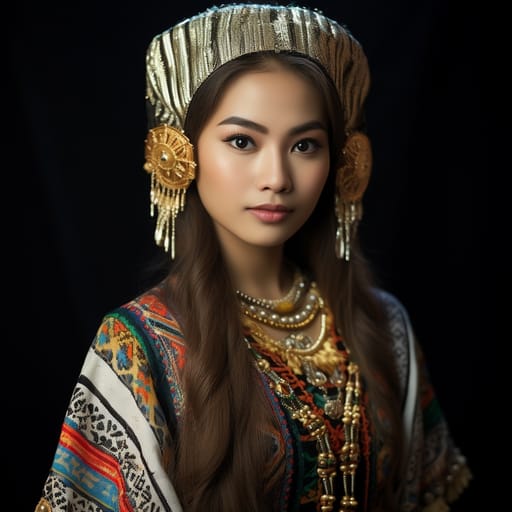
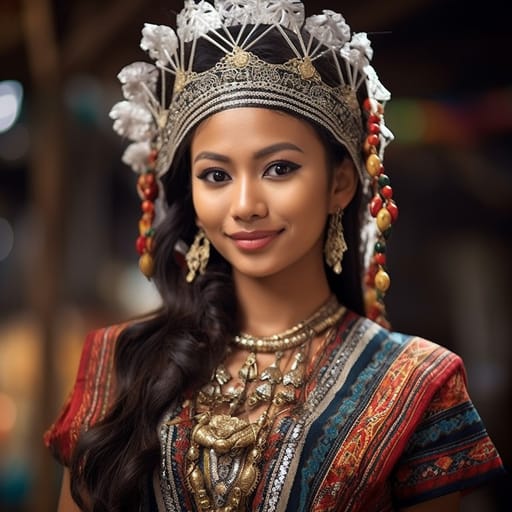
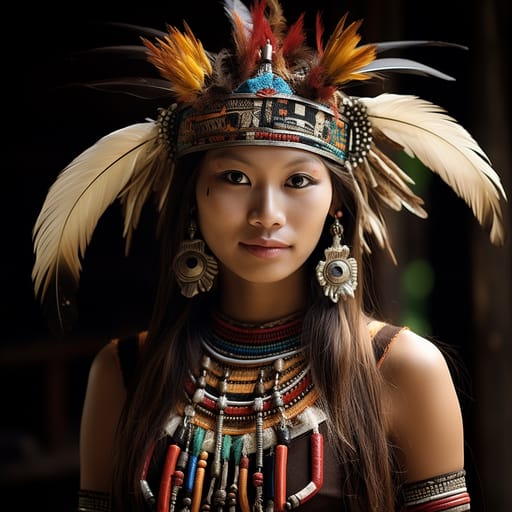

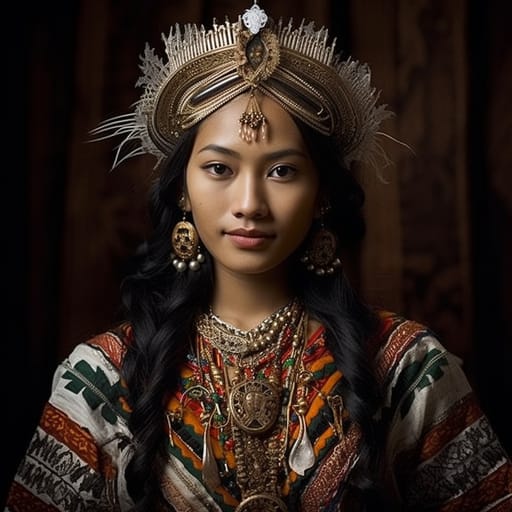

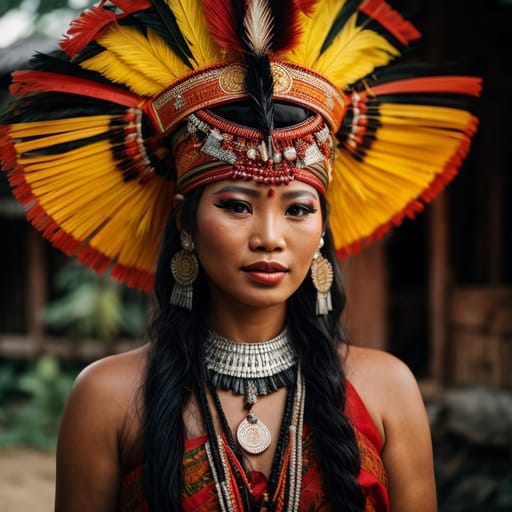
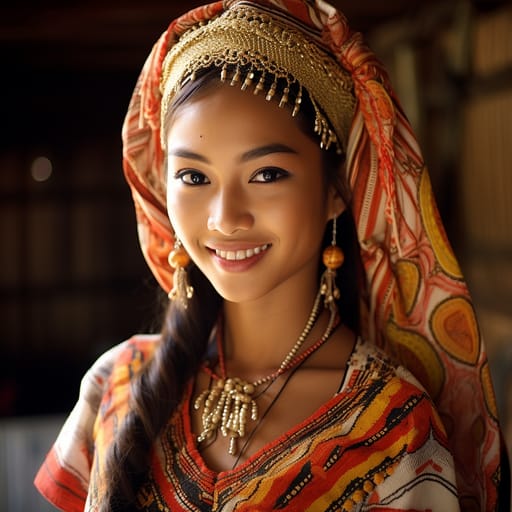
Typical Karay-a Phenotypes
Reference for AI generation: hair, eyes, skin, facial structure, build
Karay-a Body & Anatomy Reference
Southeast Asian Austronesian / Austroasiatic phenotype: anatomy reference for AI nude generation
Karay-a Boobs & Breasts
Karay-a boobs follow the Southeast Asian Austronesian / Austroasiatic profile: small-to-medium cup, modest projection. Areolar diameter is usually 26-38mm, and the coloring is medium-brown to dark-brown areolar pigmentation against the tan-to-medium-brown skin tone. Breast shape tracks body composition (ectomorph, petite frame, mean adult female BMI 20-23), so Karay-a breasts tend to be firm, modest projection. Expect a forward-set shape, not the fuller South Asian or Polynesian bust.
Karay-a Ass & Hips
Karay-a ass and hip morphology presents as small-to-medium, modest projection, narrower hip profile, distinctly different from the fuller glutes of the Pacific Islander phenotype. The Karay-a pelvic profile shows narrow-to-medium iliac crests, anchored in the Southeast Asian Austronesian / Austroasiatic skeletal pattern. Karay-a butt shots in adult AI imagery should render the small-to-medium, modest projection, narrower hip profile silhouette with the overall build (ectomorph, petite frame) and the fat distribution typical of the Southeast Asian Austronesian / Austroasiatic phenotype.
Karay-a Vagina & Pussy
Karay-a pussy anatomy typically shows medium-brown to dark-brown labial pigmentation. Pubic hair is usually straight-to-wavy fine-to-medium texture. In AI-generated Karay-a nudes, labial color should blend into the tan to medium-brown skin with a gradual transition, and the hair should keep its straight-to-wavy fine-to-medium texture.
Karay-a Dicks & Penis
Penis reference for Karay-a men: regional mean ~11cm erect, moderate girth. Coloring: medium-brown shaft pigmentation. An accurate Karay-a cock in AI imagery matches the surrounding tan to medium-brown skin rather than a generic porn default. Circumcision depends on religion and custom, not ancestry.
Karay-a Body, Curves & Build
The Karay-a figure is generally ectomorph, petite frame, with mean adult female BMI 20-23, characteristic of Southeast Asian Austronesian / Austroasiatic ancestry. AI image tools tend to flatten regional body types into a few stock shapes; here the Karay-a build is kept as its own reference.
Karay-a Skin Tone & Hair Texture
Skin: tan to medium-brown (Fitzpatrick III-V). Hair: straight-to-wavy 1A-2A, dark-brown to black. Both are typical of Southeast Asian Austronesian / Austroasiatic ancestry. The most common mistake in AI nudes of Karay-a women is a body rendered lighter than the face.
Explore phenotype categories
Structured taxonomy with peer-reviewed scales · 22 anatomical categories
Erotic Poses & Sex Positions
From the pose catalog: 219 named positions with reference skeletons
Frequently asked questions about Karay-a people
Where is the Karay-a homeland?
The Karay-a homeland is Panay Island, Philippines: Antique province and much of inland and southern Iloilo, with pockets in Capiz and Aklan and migrant communities in Mindanao and Palawan in Southeast Asia.
What language do Karay-a people speak?
Karay-a people primarily speak Kinaray-a, also called Hamtikanon (Austronesian, West Bisayan); most speakers also use Hiligaynon, Filipino and English.
What religion do Karay-a people practice?
The predominant religion among Karay-a people is Predominantly Roman Catholic, with Protestant and independent church minorities and lingering folk belief in spirits and babaylan healing.






Make your own Karay-a images
Five a day, free, no credits to buy. The studio starts from this group's phenotype data, so you can set body type, pose and style and keep the traits accurate.
Start with Karay-a