Help us get this right
Does this portrait look right for Kanindé?
Nobody has judged this one yet. You would be the first.
Kanindé Erotic
Ceará, Brazil: Fernandes village in Aratuba (Serra de Baturité) and a community in the municipality of Canindé
Portuguese (Indo-European, Romance); the ancestral language, historically linked to the Tarairiú peoples of the backlands, is extinct
Roman Catholic, alongside the toré ritual dance and Indigenous spiritual practice
Two communities: Kanindé of Aratuba and Kanindé of Canindé; historically tied to the Janduí and Tarairiú peoples; distinct from the Jenipapo-Kanindé of Aquiraz
About Kanindé People
The Kanindé are one of the Indigenous peoples of Ceará, in northeastern Brazil, who were officially told they no longer existed. In 1863 the provincial government declared that Ceará had no Indians left. Families who kept their own memory of descent went on living as backcountry farmers, called caboclos by their neighbors rather than recognized as a people. What makes the Kanindé a group today is a shared decision, made publicly in the 1990s, to reject that verdict.
Most live in the village of Fernandes in the municipality of Aratuba, high in the Serra de Baturité. The serra is a cool, green range that rises out of the dry sertão, and it has long been farmed for coffee, bananas and cassava. A second community lives in the municipality of Canindé, a town most Brazilians know as one of the country's great Franciscan pilgrimage centers. The name goes back to the colonial wars of the late seventeenth century. Peoples of the interior fought the cattle ranchers pushing into their lands, and a Janduí leader called Canindé made peace with the Portuguese Crown. People often confuse the Kanindé with the Jenipapo-Kanindé of the coast near Aquiraz, but the two are separate peoples.
The ancestral language did not survive the colonial centuries, and the Kanindé speak Portuguese. Their religion is Catholic in the way rural Ceará is Catholic, with patron saints, vows and feast days. The toré is a circle dance with maracas and chanting that many Indigenous peoples of the northeast share. For the Kanindé it has become the ritual center of their identity, danced at gatherings and at moments when they need to show publicly who they are.
The museum is what sets the Kanindé apart. In the mid-1990s Cacique Sotero began gathering objects in Fernandes: hunting gear, tools for processing cassava, old ceramics and things turned up in the fields. That collection grew into the Museu Indígena Kanindé, one of the pioneering Indigenous-run museums in the state. There the community decides what counts as its own history, instead of waiting for outsiders to confirm it. Much of the collection centers on hunting and farming, the work that actually fed families in the serra. Land is the unfinished business. Formal demarcation has moved slowly, and the Kanindé keep pressing for legal title to ground their families have worked for generations.
Related ethnic groups
Groups that share Kanindé's homeland, region, language, or religious tradition. These are likely candidates for comparative phenotype reference.
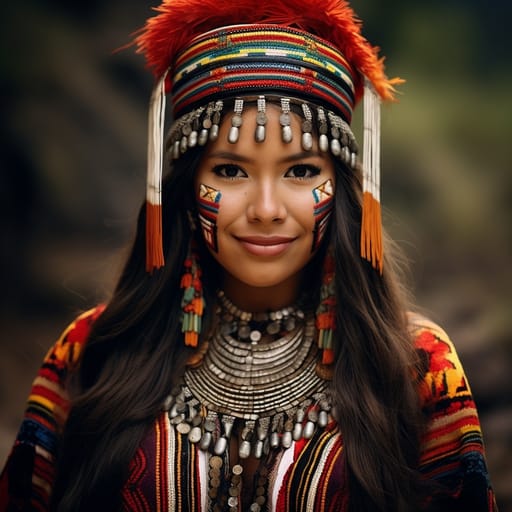
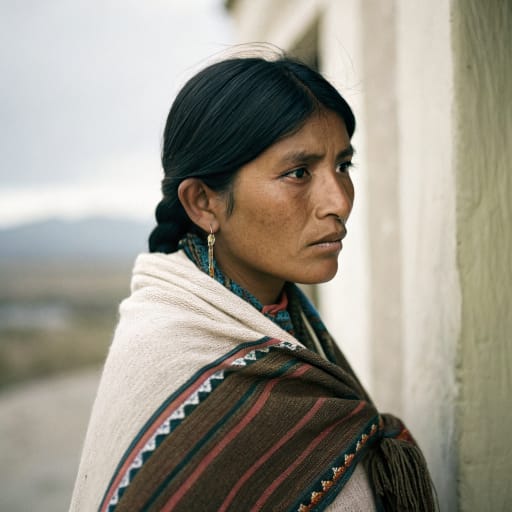
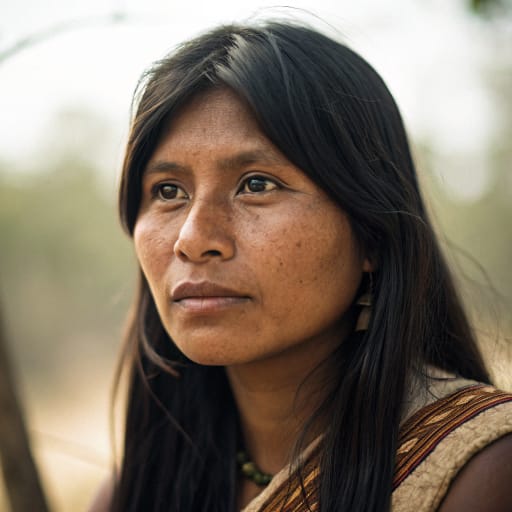
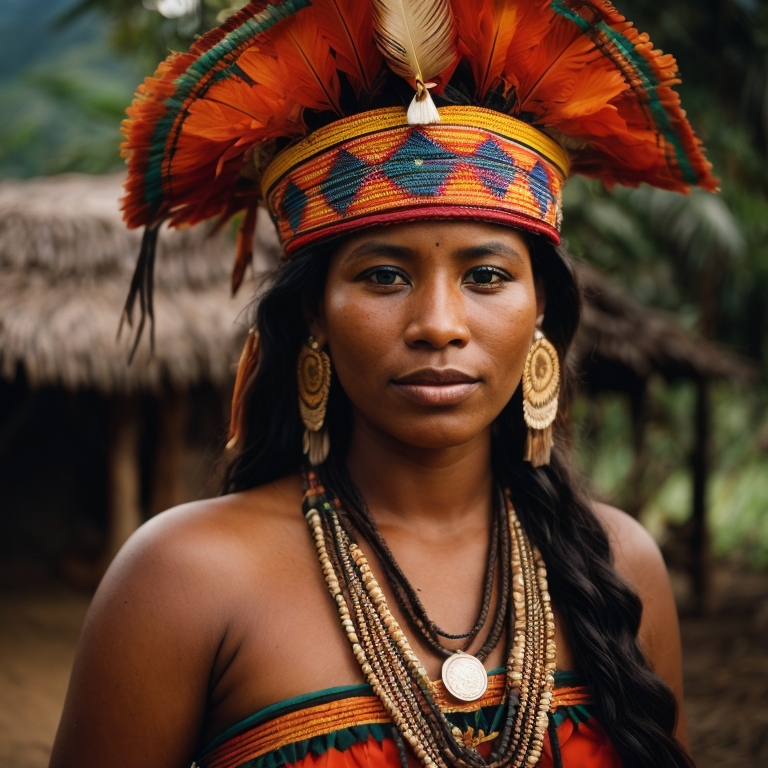
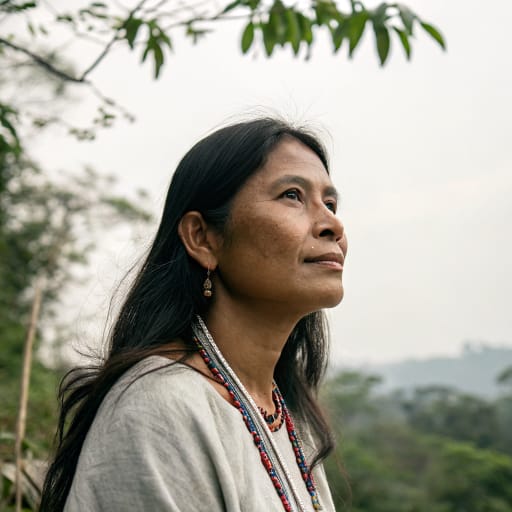
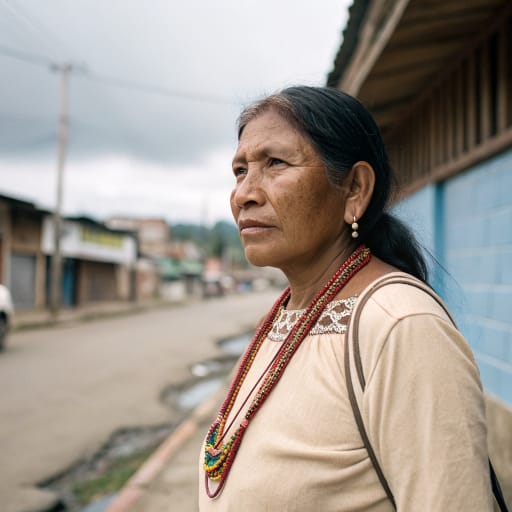
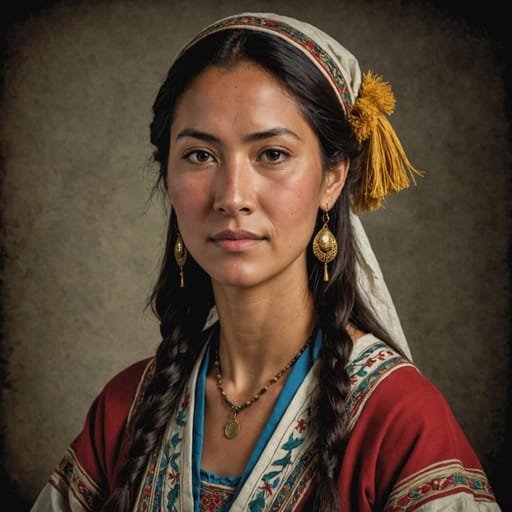
Typical Kanindé Phenotypes
Reference for AI generation: hair, eyes, skin, facial structure, build
Kanindé Body & Anatomy Reference
South American Indigenous / European-Mestizo / Afro-Latino mix phenotype: anatomy reference for AI nude generation
Kanindé Boobs & Breasts
Kanindé boobs follow the South American Indigenous / European-Mestizo / Afro-Latino mix profile: medium-to-large cup, full, high projection. Areolar diameter is usually 32-46mm, and the coloring is medium-brown to dark-brown areolar pigmentation against the tan-to-deep-brown skin tone. Breast shape tracks body composition (endomorph-to-mesomorph with high gluteal-femoral deposition, mean adult female BMI 25-28), so Kanindé breasts tend to be the classic Brazilian / Latina curvy bust profile in lowland populations; smaller and shorter-set in Andean Indigenous populations. Expect a forward-set shape, not the smaller bust profile of Andean Indigenous sub-populations.
Kanindé Ass & Hips
Kanindé ass and hip morphology presents as full, high projection, the famous Brazilian / Latina bunda profile, distinctly different from the slim narrow-hip East Asian profile. The Kanindé pelvic profile shows wide iliac crests, very full gluteal-femoral fat deposition (the hallmark Brazilian / Latina hip-to-waist ratio), anchored in the South American Indigenous / European-Mestizo / Afro-Latino mix skeletal pattern. Kanindé butt shots in adult AI imagery should render the full, high projection, the famous Brazilian / Latina bunda profile silhouette with the overall build (endomorph-to-mesomorph with high gluteal-femoral deposition) and the fat distribution typical of the South American Indigenous / European-Mestizo / Afro-Latino mix phenotype.
Kanindé Vagina & Pussy
Kanindé pussy anatomy typically shows medium-brown to dark-brown labial pigmentation, fuller labia minora. Pubic hair is usually wavy-to-curly coarse dark texture, dense distribution. In AI-generated Kanindé nudes, labial color should blend into the tan to deep-brown skin with a gradual transition, and the hair should keep its wavy-to-curly coarse dark texture.
Kanindé Dicks & Penis
Penis reference for Kanindé men: regional mean ~13cm erect, moderate-to-above-average girth. Coloring: medium-brown shaft pigmentation. An accurate Kanindé cock in AI imagery matches the surrounding tan to deep-brown skin rather than a generic porn default. Circumcision depends on religion and custom, not ancestry.
Kanindé Body, Curves & Build
The Kanindé figure is generally endomorph-to-mesomorph with high gluteal-femoral deposition, with mean adult female BMI 25-28, characteristic of South American Indigenous / European-Mestizo / Afro-Latino mix ancestry. AI image tools tend to flatten regional body types into a few stock shapes; here the Kanindé build is kept as its own reference.
Kanindé Skin Tone & Hair Texture
Skin: tan to deep-brown (Fitzpatrick III-VI). Hair: straight-to-curly 1A-3C, varies widely by ancestral composition. Both are typical of South American Indigenous / European-Mestizo / Afro-Latino mix ancestry. The most common mistake in AI nudes of Kanindé women is a body rendered lighter than the face.
Explore phenotype categories
Structured taxonomy with peer-reviewed scales · 22 anatomical categories
Erotic Poses & Sex Positions
From the pose catalog: 219 named positions with reference skeletons
Frequently asked questions about Kanindé people
Where is the Kanindé homeland?
The Kanindé homeland is Ceará, Brazil: Fernandes village in Aratuba (Serra de Baturité) and a community in the municipality of Canindé in South America.
What language do Kanindé people speak?
Kanindé people primarily speak Portuguese (Indo-European, Romance); the ancestral language, historically linked to the Tarairiú peoples of the backlands, is extinct.
What religion do Kanindé people practice?
The predominant religion among Kanindé people is Roman Catholic, alongside the toré ritual dance and Indigenous spiritual practice.






Make your own Kanindé images
Five a day, free, no credits to buy. The studio starts from this group's phenotype data, so you can set body type, pose and style and keep the traits accurate.
Start with Kanindé