Help us get this right
Does this portrait look right for Ibaloi?
Nobody has judged this one yet. You would be the first.
Ibaloi Erotic
Southern Benguet in the Cordillera of northern Luzon, Philippines, including Baguio, La Trinidad, Kabayan, Bokod, Itogon, Tuba and Tublay, with communities in adjacent Nueva Vizcaya and Pangasinan
Ibaloi, also called Nabaloi (Austronesian, Northern Luzon, Southern Cordilleran), with Ilocano, Tagalog and English in wide daily use
Mostly Roman Catholic and Protestant, alongside continuing indigenous practice centered on Kabunian and the ancestors and officiated by a mambunong
One of the Igorot peoples of the Cordillera. Closest linguistic kin are the Kalanguya (Ikalahan) and Karao. Share Benguet with the Kankanaey, who hold the northern towns
About Ibaloi People
The Ibaloi hold the southern half of Benguet, in the mountains of northern Luzon, and they are the people whose land the city of Baguio was built on. That fact organizes much of what follows. Among the Cordillera peoples lumped together as Igorot, the Ibaloi ran the most stratified society: a class of baknang, wealthy families holding rice land, cattle and gold-bearing creeks, sitting above everyone else and converting that wealth into standing by feeding people. The instrument was the cañao, a prestige feast running days at a time, animals killed in sequence, meat distributed outward through the community, a mambunong presiding and reading the bile of the sacrificed pigs for the ancestors' verdict. This was never simple hospitality. It was the accounting system. The dance that goes with it, the bendian, is a wide slow circle with the arms raised, once tied to victory and now performed for healing and thanksgiving.
Their language, Nabaloi, is Austronesian but sits apart from the Bontoc and Kankanaey speech of the northern Cordillera. Its nearest relatives are Kalanguya and Karao, and further out Pangasinan down on the coastal plain, which says something about who the Ibaloi traded with. They mined and panned gold at Itogon and Antamok long before the Spanish arrived and sold it downhill, and three centuries of Spanish expeditions hunting for those mines came to very little. The Ibaloi are also the people of the Kabayan mummies, the dead cured slowly over low fire, tattooed, and laid in wooden coffins in cliff caves, a practice colonization ended and that left bodies the community still treats as relatives rather than artifacts. The sharpest turn came under the Americans. Mateo Cariño sued over land seized for the new hill station and won at the US Supreme Court in 1909, establishing that ground held since time immemorial had never been public land to begin with. The doctrine carrying his name underwrites indigenous land claims across the Philippines, which has not spared Ibaloi families a century of arguing over parcels inside Baguio itself. Most are Catholic or Protestant now. Many of the same households still send for a mambunong when someone dies.
Related ethnic groups
Groups that share Ibaloi's homeland, region, language, or religious tradition. These are likely candidates for comparative phenotype reference.
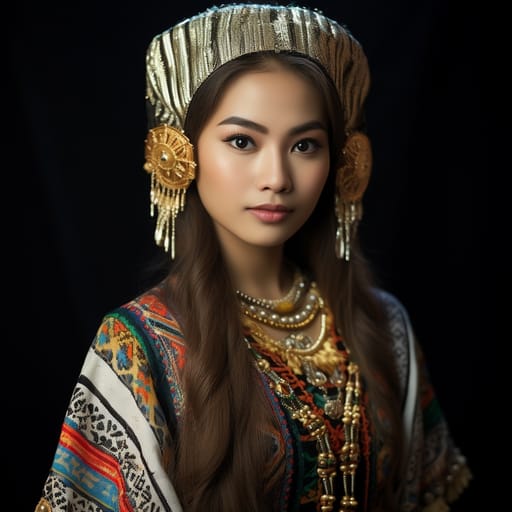
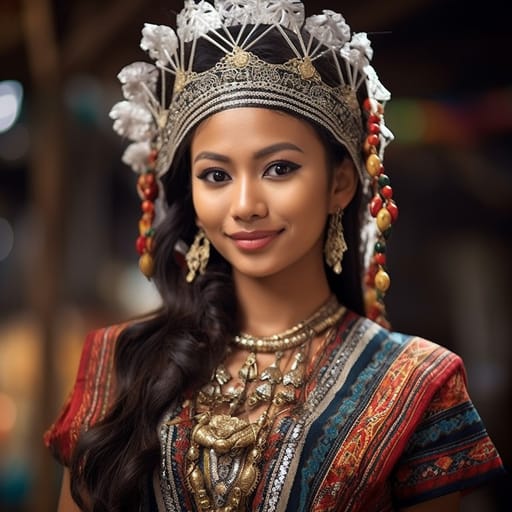
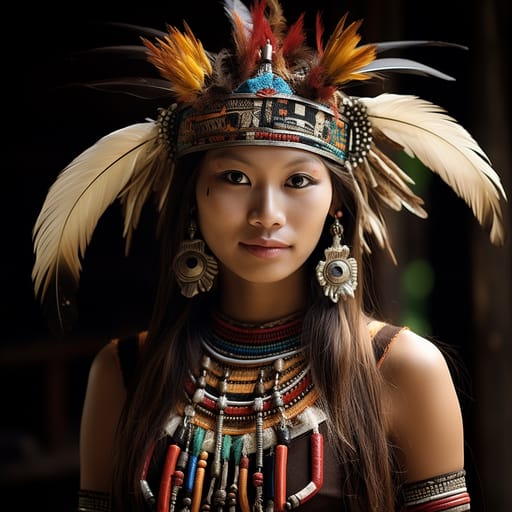
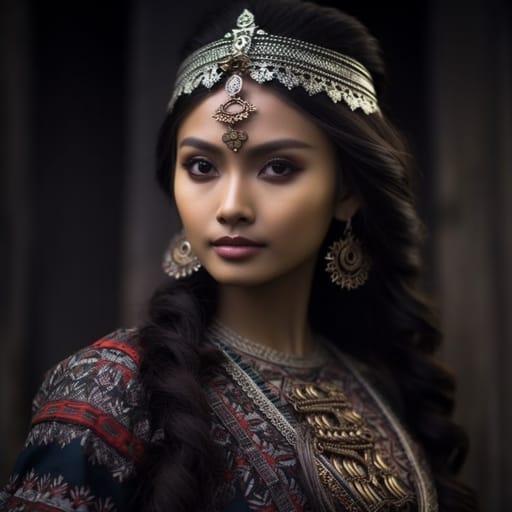
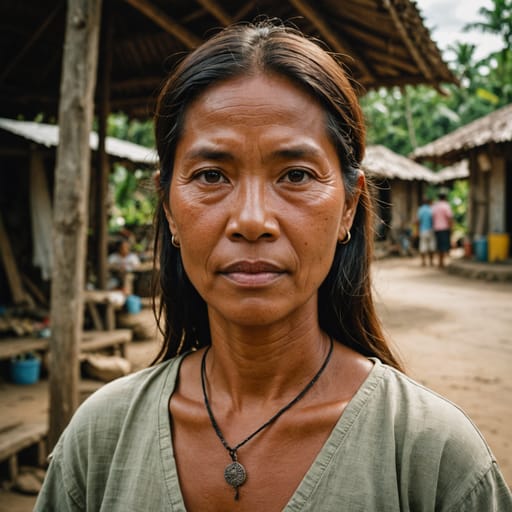
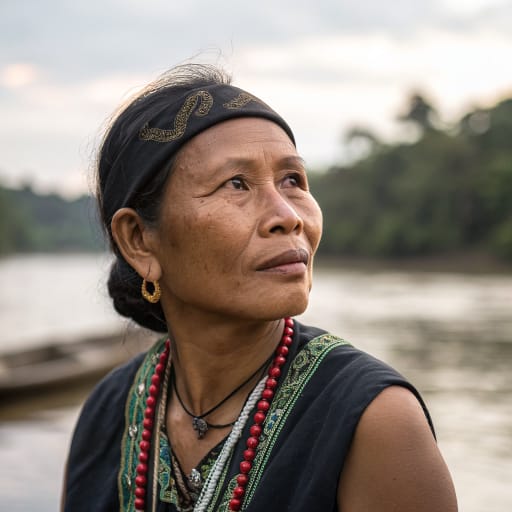
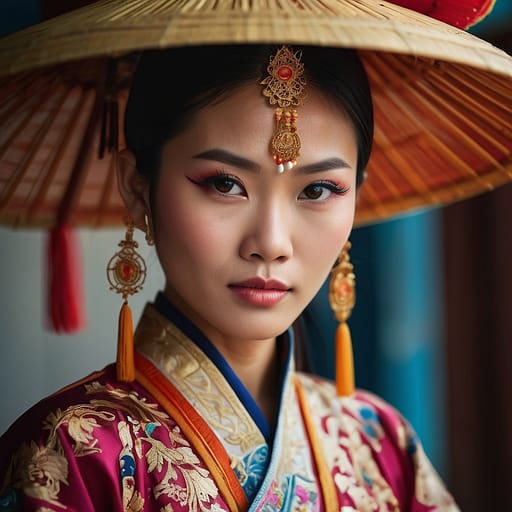
Typical Ibaloi Phenotypes
Reference for AI generation: hair, eyes, skin, facial structure, build
Ibaloi Body & Anatomy Reference
Southeast Asian Austronesian / Austroasiatic phenotype: anatomy reference for AI nude generation
Ibaloi Boobs & Breasts
Ibaloi tits and boobs run small-to-medium cup, modest projection, the classic Southeast Asian Austronesian / Austroasiatic bust profile. Ibaloi nipples and areolas show medium-brown to dark-brown areolar pigmentation against the tan-to-medium-brown skin tone, with areolar diameter typically in the 26-38mm range and forward-set positioning rather than the fuller South Asian or Polynesian bust. Ibaloi breasts trend firm, modest projection, a function of the ectomorph, petite frame body habitus and the mean adult female BMI 20-23. For anatomically accurate AI-generated Ibaloi nudes the render preserves the small-to-medium cup, modest projection shape, 26-38mm areolas with medium-brown to dark-brown pigmentation, and the torso proportions of the Southeast Asian Austronesian / Austroasiatic phenotype.
Ibaloi Ass & Hips
Ibaloi hips and butt usually read as small-to-medium, modest projection, narrower hip profile. The skeletal base is narrow-to-medium iliac crests, the Southeast Asian Austronesian / Austroasiatic pattern. Set against the fuller glutes of the Pacific Islander phenotype, the difference is easy to see, and the hip-to-waist ratio is often what identifies Ibaloi women in photos.
Ibaloi Vagina & Pussy
Expect medium-brown to dark-brown labial pigmentation on Ibaloi women, in keeping with Southeast Asian Austronesian / Austroasiatic ancestry. The pubic hair is straight-to-wavy fine-to-medium texture. Coloring should run evenly from the tan to medium-brown skin of the thighs to the labia, and Ibaloi nude imagery should keep the hair's straight-to-wavy fine-to-medium texture.
Ibaloi Dicks & Penis
Ibaloi dick and penile anatomy in adult AI generation should anchor on the regional reference data: regional mean ~11cm erect, moderate girth, and medium-brown shaft pigmentation. The Ibaloi cock profile reflects the Southeast Asian Austronesian / Austroasiatic population's anthropometric measurements. The shaft pigmentation should track the surrounding tan to medium-brown skin tone, and the pubic hair should keep its straight-to-wavy fine-to-medium texture in the typical inverted-V escutcheon.
Ibaloi Body, Curves & Build
Ibaloi body type: ectomorph, petite frame, with mean adult female BMI 20-23. This is the typical Southeast Asian Austronesian / Austroasiatic build. Height range, shoulder-to-hip ratio and fat distribution all follow from it, which is what an accurate Ibaloi nude body should show.
Ibaloi Skin Tone & Hair Texture
Ibaloi skin tone falls in the tan to medium-brown (Fitzpatrick III-V) band, the surface signal most often miscalibrated by generic AI nude generators. Ibaloi hair texture is typically straight-to-wavy 1A-2A, dark-brown to black, characteristic of the Southeast Asian Austronesian / Austroasiatic phenotype. In Ibaloi nude renders the skin should hold that band consistently across the body.
Explore phenotype categories
Structured taxonomy with peer-reviewed scales · 22 anatomical categories
Erotic Poses & Sex Positions
From the pose catalog: 219 named positions with reference skeletons
Frequently asked questions about Ibaloi people
Where is the Ibaloi homeland?
The Ibaloi homeland is Southern Benguet in the Cordillera of northern Luzon, Philippines, including Baguio, La Trinidad, Kabayan, Bokod, Itogon, Tuba and Tublay, with communities in adjacent Nueva Vizcaya and Pangasinan in Southeast Asia.
What language do Ibaloi people speak?
Ibaloi people primarily speak Ibaloi, also called Nabaloi (Austronesian, Northern Luzon, Southern Cordilleran), with Ilocano, Tagalog and English in wide daily use.
What religion do Ibaloi people practice?
The predominant religion among Ibaloi people is Mostly Roman Catholic and Protestant, alongside continuing indigenous practice centered on Kabunian and the ancestors and officiated by a mambunong.






Make your own Ibaloi images
Five a day, free, no credits to buy. The studio starts from this group's phenotype data, so you can set body type, pose and style and keep the traits accurate.
Start with Ibaloi