Help us get this right
Does this portrait look right for Boholanos?
Nobody has judged this one yet. You would be the first.
Boholanos Erotic
Bohol island province in the Central Visayas, Philippines; large settler communities in northern and eastern Mindanao, with many more in Cebu and Metro Manila
Boholano variety of Cebuano (Austronesian, Bisayan branch); Filipino and English widely spoken; Eskaya used by a small interior community
Predominantly Roman Catholic, with smaller Protestant and independent Christian churches
A Visayan people closely related to the Cebuanos; includes the Eskaya community of the interior and Boholano settler communities in Mindanao
About Boholanos People
Boholanos are the people of Bohol, an island province in the Central Visayas of the Philippines. It sits between Cebu, Leyte and the north coast of Mindanao. They are Visayans and speak Cebuano, the same language heard across the strait in Cebu, but the island has given them a strongly local identity. Other Visayans can usually pick out a Boholano within a sentence. In the Boholano variety the y sound often shifts toward a j, and the island keeps its own words and intonation. Boholanos tend to wear that as a badge rather than smooth it over when they move to Cebu City or Manila.
Boholanos still talk about a handful of moments in the island's history. In 1565 the chieftain Sikatuna sealed a blood compact, the Sandugo, with the Spanish commander Miguel López de Legazpi. Every July, Tagbilaran reenacts it as a civic festival. The friendship did not last. In 1621 a native priest, or babaylan, named Tamblot led an uprising against the missionaries. In 1744 Francisco Dagohoy began a revolt, reportedly after a priest refused Christian burial for his brother. His followers held the interior hills against Spanish rule until 1829. It is usually counted as the longest revolt in Philippine history, and Dagohoy remains a local hero.
Catholicism took deep root anyway. Spanish missionaries built coral stone churches in towns such as Baclayon, Loboc and Loon. Each town still plans its year around the fiesta of its patron saint, with novenas, processions and open-house feasts. In October 2013 a magnitude 7.2 earthquake destroyed or badly damaged several of those churches. Rebuilding them became a matter of local pride as much as faith.
Outside the churches, Boholano life has long been rural: rice paddies and coconut farms inland, fishing along the coast. Towns have their own specialties, like the calamay of Jagna, a sticky sweet of coconut and sugar packed in sealed coconut shells. There was never much farmland to go around, so many families moved away. Boholano settlers helped populate large parts of northern and eastern Mindanao during the twentieth century, and many more work in Cebu, Manila and overseas. In the southeastern interior, a small community called the Eskaya keeps its own script and vocabulary and teaches them in its own schools. Scholars still debate where that tradition came from, and it is one of the island's more unusual living practices.
Related ethnic groups
Groups that share Boholanos's homeland, region, language, or religious tradition. These are likely candidates for comparative phenotype reference.
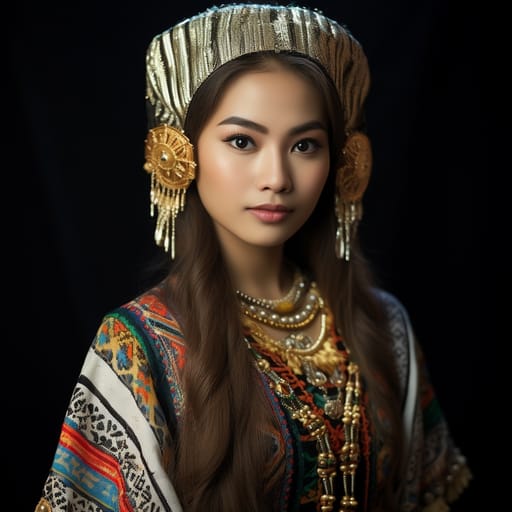
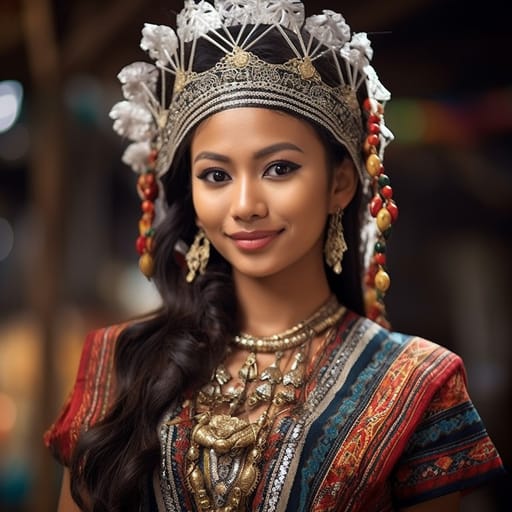
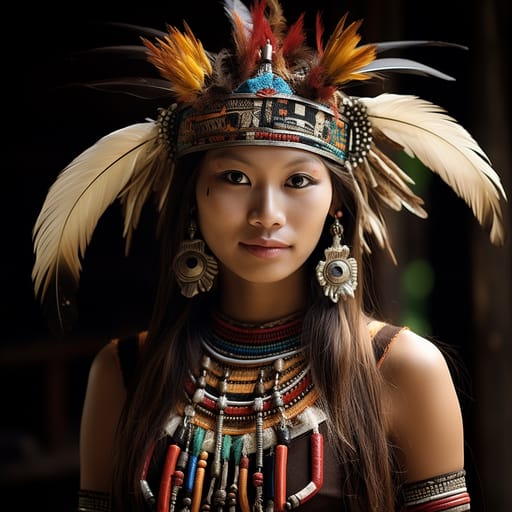

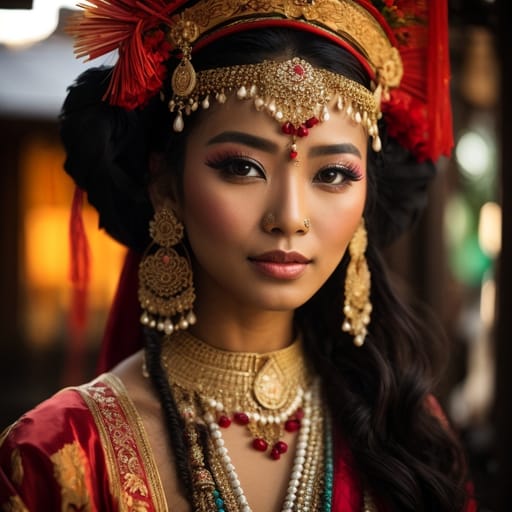
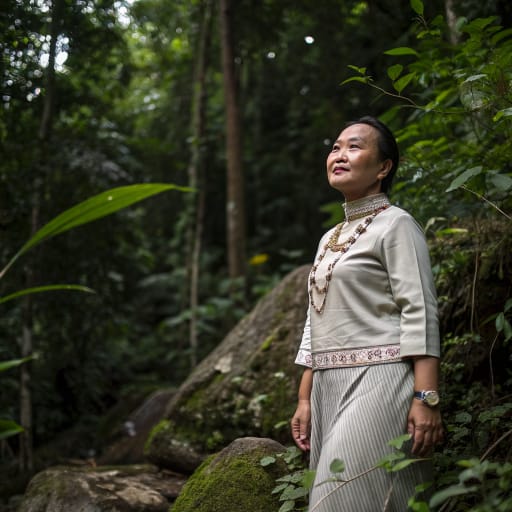
Typical Boholanos Phenotypes
Reference for AI generation: hair, eyes, skin, facial structure, build
Boholanos Body & Anatomy Reference
Per-feature anatomical profile for AI nude generation: Southeast Asian Austronesian / Austroasiatic phenotype
Boholanos Boobs & Breasts
Bust reference for Boholanos women: small-to-medium cup, modest projection, which is typical of Southeast Asian Austronesian / Austroasiatic ancestry. Areolas measure about 26-38mm across, with medium-brown to dark-brown pigmentation. Body type (ectomorph, petite frame) shapes the bust as well, so Boholanos tits are usually firm, modest projection. In AI imagery, keep the forward-set shape rather than drifting toward the fuller South Asian or Polynesian bust.
Boholanos Ass & Hips
The Boholanos ass is typically small-to-medium, modest projection, narrower hip profile, which sets it apart from the fuller glutes of the Pacific Islander phenotype. Underneath, the pelvis shows narrow-to-medium iliac crests, part of the Southeast Asian Austronesian / Austroasiatic skeletal pattern. For Boholanos butt pics and AI renders, match that silhouette and the overall build (ectomorph, petite frame).
Boholanos Vagina & Pussy
Boholanos pussy and vulvar anatomy presents medium-brown to dark-brown labial pigmentation, consistent with the Southeast Asian Austronesian / Austroasiatic phenotype's pigmentation pattern. Boholanos pubic hair is typically straight-to-wavy fine-to-medium texture, in the inverted-triangle pattern. For anatomically accurate Boholanos pussy renders the labial coloration should match the surrounding tan to medium-brown skin tone with a continuous gradient, and the hair should keep its straight-to-wavy fine-to-medium texture.
Boholanos Dicks & Penis
Boholanos dicks follow the Southeast Asian Austronesian / Austroasiatic reference data: regional mean ~11cm erect; moderate girth; medium-brown shaft pigmentation. Shaft color should track the tan to medium-brown skin tone with a smooth change toward the glans, and Boholanos pubic hair keeps its straight-to-wavy fine-to-medium texture.
Boholanos Body, Curves & Build
Boholanos body type and overall build presents as ectomorph, petite frame, with mean adult female BMI 20-23: the characteristic Southeast Asian Austronesian / Austroasiatic habitus. Boholanos curves and proportions should keep the regional skeletal frame (height, shoulder-to-hip ratio, limb proportions) rather than a generic mesomorph default.
Boholanos Skin Tone & Hair Texture
Boholanos skin sits in the tan to medium-brown (Fitzpatrick III-V) band. Hair is typically straight-to-wavy 1A-2A, dark-brown to black, in keeping with the Southeast Asian Austronesian / Austroasiatic phenotype. In nude renders the skin should stay one even tone from face to body, and body, pubic and head hair should match.
Explore phenotype categories
Structured taxonomy with peer-reviewed scales · 22 anatomical categories
Erotic Poses & Sex Positions
From the pose catalog: 219 named positions with reference skeletons
Frequently asked questions about Boholanos people
Where is the Boholanos homeland?
The Boholanos homeland is Bohol island province in the Central Visayas, Philippines; large settler communities in northern and eastern Mindanao, with many more in Cebu and Metro Manila in Southeast Asia.
What language do Boholanos people speak?
Boholanos people primarily speak Boholano variety of Cebuano (Austronesian, Bisayan branch); Filipino and English widely spoken; Eskaya used by a small interior community.
What religion do Boholanos people practice?
The predominant religion among Boholanos people is Predominantly Roman Catholic, with smaller Protestant and independent Christian churches.






Make your own Boholanos images
Five a day, free, no credits to buy. The studio starts from this group's phenotype data, so you can set body type, pose and style and keep the traits accurate.
Start with Boholanos