No portrait yet
Goran Erotic
Zagros highlands on the Iran-Iraq border: Hawraman and the Gahvareh-Dalahu area in Kurdistan and Kermanshah provinces, Iran, and Halabja, with pockets near Khanaqin, Kirkuk and Mosul, Iraq
Gorani (Gurani), chiefly the Hawrami dialect, with related Bajalani, Macho and Shabaki (Indo-European, Iranian, Northwestern, Zaza-Gorani); most also speak Sorani or Southern Kurdish, Persian or Arabic
Sunni Islam with strong Naqshbandi Sufi ties in Hawraman; Yarsan (Ahl-e Haqq) around Gahvareh and Dalahu and among the Kakai; some Shia Muslims
Hawrami of Hawraman, the Guran confederation of Gahvareh and Dalahu, and the related Bajalan, Kakai and Shabak; Zaza-Gorani speakers generally counted among the Kurds
About Goran People
The Goran stand out less by a border than by a language. In the high Zagros where Iran meets Iraq, Gûran is the name for people who speak Gorani, or whose grandparents did. Most of its speakers call it Kurdish, but most linguists don't. Gorani belongs to the Northwestern Iranian branch, and its nearest relative isn't the Kurdish spoken next door. It's Zazaki, heard far away in eastern Anatolia. That odd kinship has long fed a scholarly argument that Gorani speakers came south from the Caspian region, and that the Kurdish around them later spread over an older Gorani layer. Most Goran today still see themselves as Kurds. Apart from the name, they have nothing to do with the Slavic-speaking Gorani of the Balkans.
They have two heartlands. The first is Hawraman, a tangle of steep valleys around Paveh and Marivan in Iran and Halabja in Iraq. The language holds on best there. Its stepped villages, where one family's roof is the next family's yard, were added to UNESCO's World Heritage list on the Iranian side in 2021. Farther south, the old Guran tribal confederation held the uplands around Gahvareh and the Dalahu range in Kermanshah province. There, Gorani has been losing ground to Southern Kurdish and Persian. The related Bajalan, Kakai and Shabak communities live in pockets near Khanaqin, Kirkuk and Mosul.
Religion follows the same map. Hawraman is now largely Sunni, and its Naqshbandi Sufi lodges long carried real authority. Yet the valley shrine at Perdiwar is tied to Sultan Sahak, the founding figure of Yarsan, also called Ahl-e Haqq. The Dalahu country is still one of that faith's centers. Yarsani gatherings center on the long-necked tanbur and on sacred verse written in Gorani, and Yarsani men traditionally leave their mustaches untrimmed. Some Goran communities are Shia Muslim.
For generations Gorani was the language of poetry in this part of the Zagros. It was the court language of the Ardalan princes at Sanandaj, and even poets who spoke other dialects at home wrote in it. Khana Qubadi told the story of Shirin and Khusraw in Gorani in the 18th century. Mawlawi Tawgozi, the great Sufi poet of the 19th, wrote in it too, even as Sorani, backed by the rival Baban court at Sulaymaniyah, was taking its place. Older customs are easy to spot in Hawraman. There is klash, the white hand-knit cotton shoes still made in the valleys. There is siyah chamana, an old style of unaccompanied singing. And there is the yearly Pir Shalyar gathering at Hawraman Takht, with shared food, daf drums and long lines of dancers.
Related ethnic groups
Groups that share Goran's homeland, region, language, or religious tradition. These are likely candidates for comparative phenotype reference.
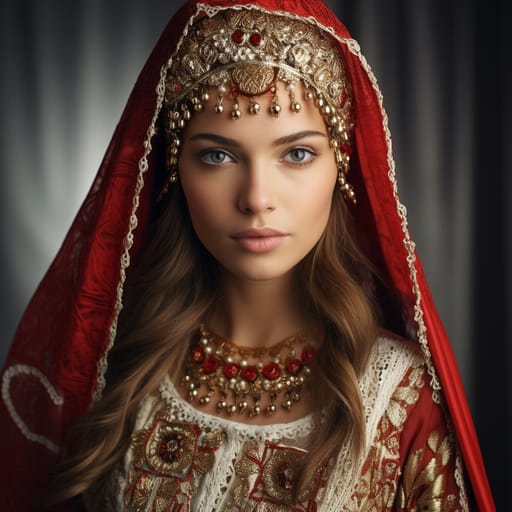
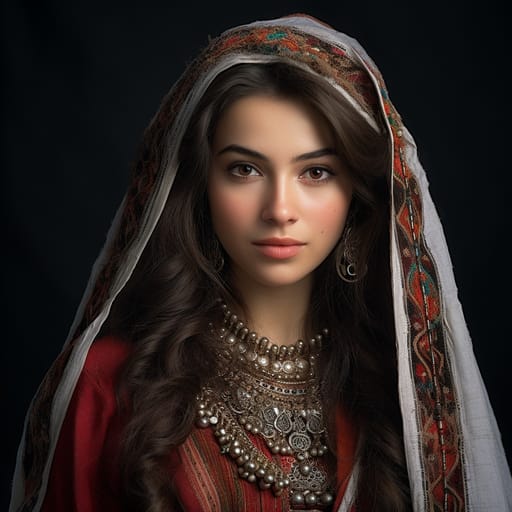
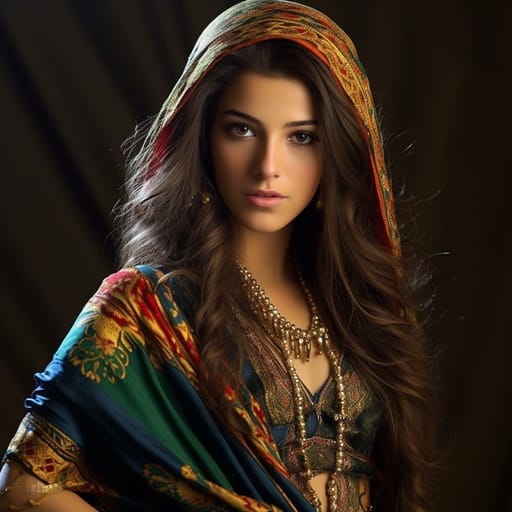
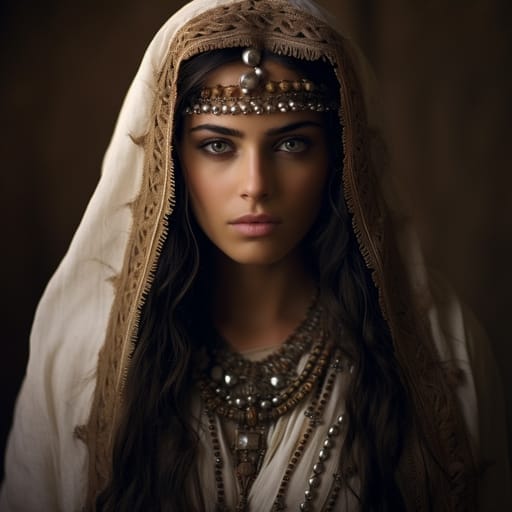
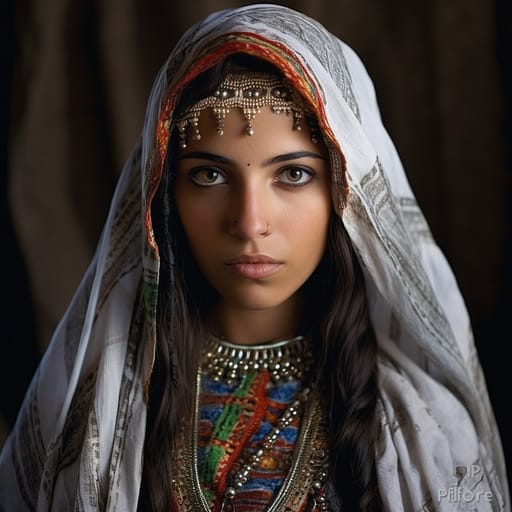
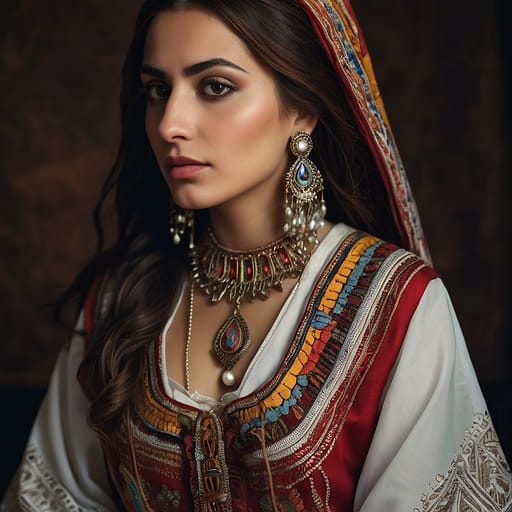
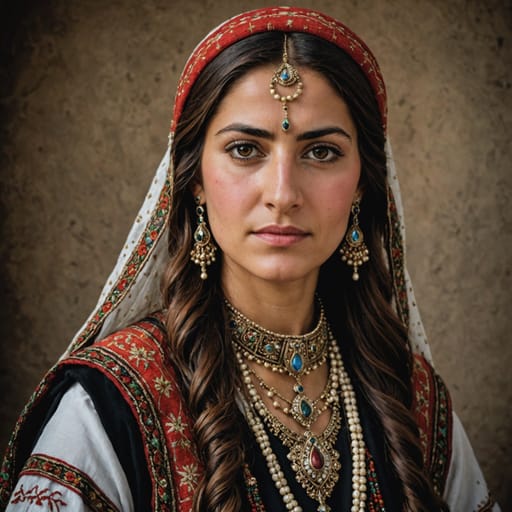
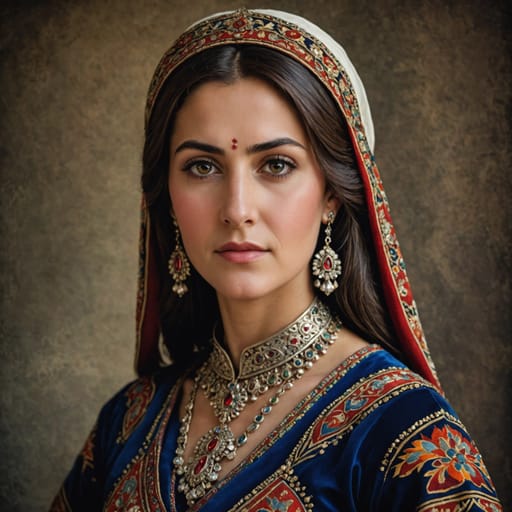
Typical Goran Phenotypes
Reference for AI generation: hair, eyes, skin, facial structure, build
Goran Body & Anatomy Reference
Per-feature anatomical profile for AI nude generation: Levantine / Mediterranean Middle Eastern phenotype
Goran Boobs & Breasts
Bust reference for Goran women: medium-to-large cup, full, moderate-to-high projection, which is typical of Levantine / Mediterranean Middle Eastern ancestry. Areolas measure about 32-46mm across, with medium-brown to dark-brown pigmentation. Body type (mesomorph with fuller hip-and-bust deposition) shapes the bust as well, so Goran tits are usually full and soft, fuller projection than the North-African Berber norm. In AI imagery, keep the forward-set shape rather than drifting toward the smaller East Asian bust profile.
Goran Ass & Hips
The Goran ass is typically medium-to-full, moderate projection, broader hip profile, which sets it apart from the slim East Asian narrow-hip profile. Underneath, the pelvis shows medium-to-wide iliac crests, fuller gluteal-femoral deposition, part of the Levantine / Mediterranean Middle Eastern skeletal pattern. For Goran butt pics and AI renders, match that silhouette and the overall build (mesomorph with fuller hip-and-bust deposition).
Goran Vagina & Pussy
Goran pussy and vulvar anatomy presents medium-brown to dark-brown labial pigmentation, fuller labia minora, consistent with the Levantine / Mediterranean Middle Eastern phenotype's pigmentation pattern. Goran pubic hair is typically wavy-to-coiled medium-coarse dark texture, dense distribution, in the inverted-triangle pattern. For anatomically accurate Goran pussy renders the labial coloration should match the surrounding olive to medium-brown skin tone with a continuous gradient, and the hair should keep its wavy-to-coiled medium-coarse dark texture.
Goran Dicks & Penis
Goran dicks follow the Levantine / Mediterranean Middle Eastern reference data: regional mean ~14cm erect; moderate-to-above-average girth; medium-brown shaft pigmentation. Shaft color should track the olive to medium-brown skin tone with a smooth change toward the glans, and Goran pubic hair keeps its wavy-to-coiled medium-coarse dark texture.
Goran Body, Curves & Build
Goran body type and overall build presents as mesomorph with fuller hip-and-bust deposition, with mean adult female BMI 25-28: the characteristic Levantine / Mediterranean Middle Eastern habitus. Goran curves and proportions should keep the regional skeletal frame (height, shoulder-to-hip ratio, limb proportions) rather than a generic mesomorph default.
Goran Skin Tone & Hair Texture
Goran skin sits in the olive to medium-brown (Fitzpatrick III-V) band. Hair is typically wavy-to-curly 2B-3B, predominantly dark-brown to black, in keeping with the Levantine / Mediterranean Middle Eastern phenotype. In nude renders the skin should stay one even tone from face to body, and body, pubic and head hair should match.
Explore phenotype categories
Structured taxonomy with peer-reviewed scales · 22 anatomical categories
Erotic Poses & Sex Positions
From the pose catalog: 219 named positions with reference skeletons
Frequently asked questions about Goran people
Where is the Goran homeland?
The Goran homeland is Zagros highlands on the Iran-Iraq border: Hawraman and the Gahvareh-Dalahu area in Kurdistan and Kermanshah provinces, Iran, and Halabja, with pockets near Khanaqin, Kirkuk and Mosul, Iraq in Western Asia.
What language do Goran people speak?
Goran people primarily speak Gorani (Gurani), chiefly the Hawrami dialect, with related Bajalani, Macho and Shabaki (Indo-European, Iranian, Northwestern, Zaza-Gorani); most also speak Sorani or Southern Kurdish, Persian or Arabic.
What religion do Goran people practice?
The predominant religion among Goran people is Sunni Islam with strong Naqshbandi Sufi ties in Hawraman; Yarsan (Ahl-e Haqq) around Gahvareh and Dalahu and among the Kakai; some Shia Muslims.






Make your own Goran images
Five a day, free, no credits to buy. The studio starts from this group's phenotype data, so you can set body type, pose and style and keep the traits accurate.
Start with Goran