Help us get this right
Does this portrait look right for Funj?
Nobody has judged this one yet. You would be the first.
Funj Erotic
The Gezira plain between the Blue and White Niles, the Blue Nile valley around Sennar, and the Sudan-Ethiopia borderlands, in present day Sudan
Arabic (Afro-Asiatic, Semitic) among descendants of the sultanate; Berta, Gumuz and Uduk (Nilo-Saharan) among the Blue Nile communities called Funj today. The original Funj speech is unrecorded.
Sunni Islam, Maliki school, organized largely through Sufi orders, chiefly the Qadiriyya; older local practice persists in the Blue Nile hills
Historically the Sennar dynasty with its Abdallab and Hamaj vassals; today the Berta, Gumuz, Uduk and Hamaj of Blue Nile State are grouped under the name
About Funj People
The Funj are a dynasty that turned into a people. In 1504 a leader remembered as Amara Dunqas took the middle Nile from the last Christian kings of Alodia, whose capital at Soba had held the confluence for centuries, and built a state at Sennar on the Blue Nile that ran the center of what is now Sudan for three hundred years. Its subjects called it the Blue Sultanate. Where the Funj themselves came from is still argued: cattle people off the White Nile, a Nubian aristocracy under a new name, migrants from further south. The sultans closed the question on their own terms by claiming Umayyad descent, which says less about their origins than about what a Muslim throne needed to say to be taken seriously in Cairo and Mecca. Islam reached Sennar first as a court religion and then spread outward through wandering holy men, the fuqara, who were handed land and tax exemptions and set up river schools. The Qadiriyya took root early, and the Sufi lodge became the ordinary unit of religious life across the Gezira, which it largely still is.
Underneath the Muslim surface the kingship stayed old. The sultan was kept apart and seen rarely, and James Bruce, who reached Sennar in 1772, described a council of nobles with the power to vote a king to death. The Funj stopped the Ottoman advance up the Nile in the 1580s and froze the frontier near the Third Cataract, fought long wars with Ethiopia in the eastern hills, and then lost the state from the inside: in 1762 Muhammad Abu Likaylik, a Hamaj commander from the borderlands, made himself regent and left the sultans as ornaments. Sixty years on, Ismail Pasha's Egyptian army walked into Sennar and Badi VII gave it up without a fight. What happened to the name afterward is the strange part. The old ruling families dissolved into the Arabic speaking riverain population and stopped being a separate people, while the label traveled south. In Blue Nile State, Funj now covers the Berta, Gumuz, Uduk and Hamaj communities of the hills and the Ethiopian border, people the sultanate once raided, who speak Nilo-Saharan languages and keep older practice alongside Islam. It is a geographic name doing genealogical work.
Related ethnic groups
Groups that share Funj's homeland, region, language, or religious tradition. These are likely candidates for comparative phenotype reference.
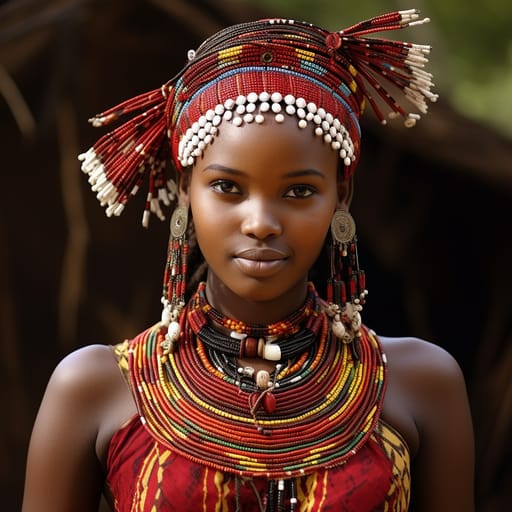
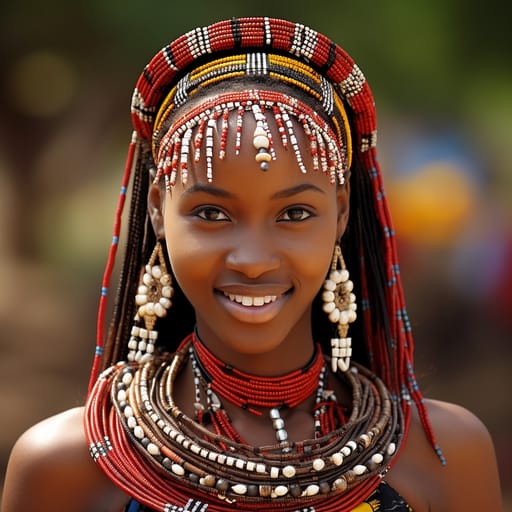
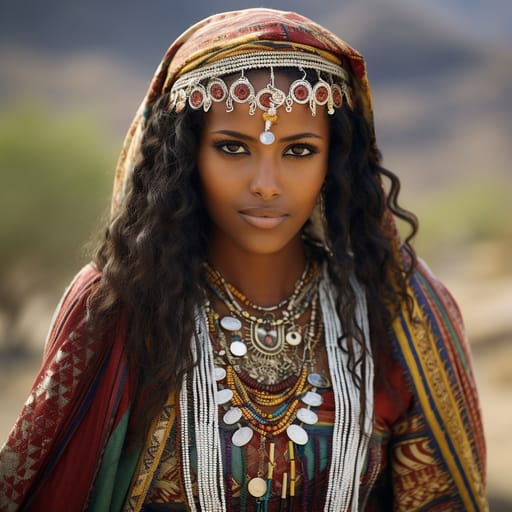
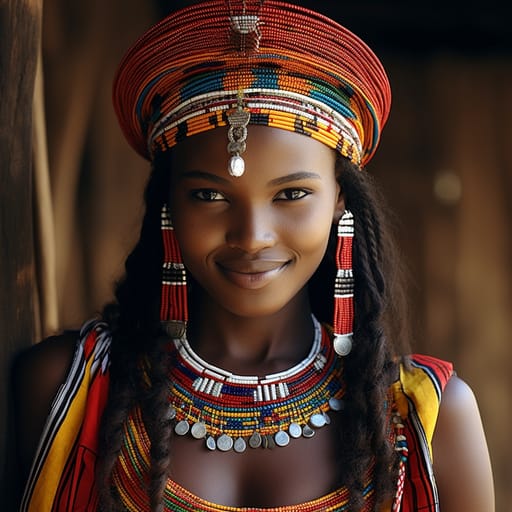
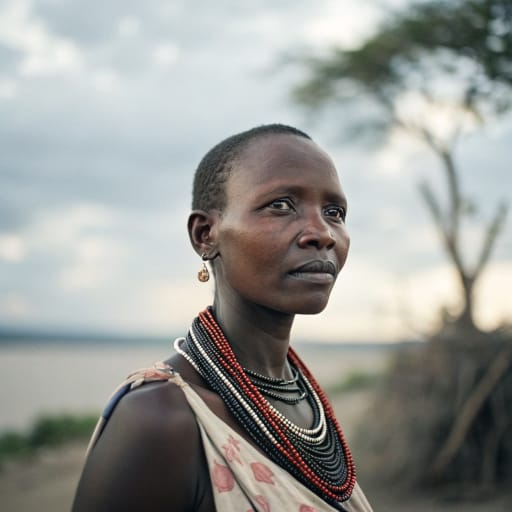
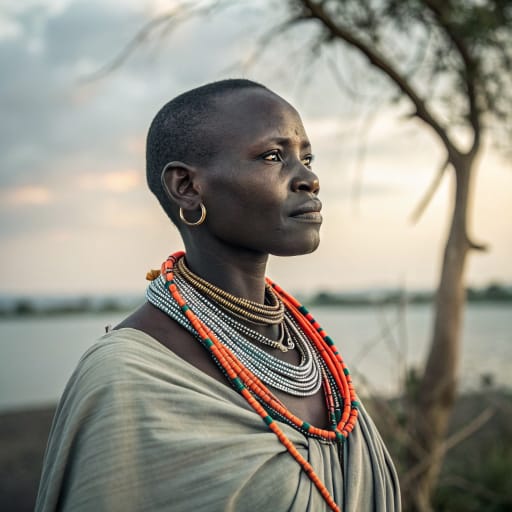
Typical Funj Phenotypes
Reference for AI generation: hair, eyes, skin, facial structure, build
Funj Body & Anatomy Reference
Anatomy by feature, Cushitic / Nilo-Cushitic East African phenotype
Funj Boobs & Breasts
Bust reference for Funj women: small-to-medium-cup, high-set, conical, which is typical of Cushitic / Nilo-Cushitic East African ancestry. Areolas measure about 28-38mm across, with moderate-to-high pigmentation. Body type (lean ectomorph-to-mesomorph) shapes the bust as well, so Funj tits are usually firmer and less projecting than the African-American or West African norm. In AI imagery, keep the forward-set shape rather than drifting toward the lateral spread of the West African phenotype.
Funj Ass & Hips
The Funj ass is typically small-to-medium, high-set, rounded, which sets it apart from the wide-set heavy-projection West African or African-American norm. Underneath, the pelvis shows narrow-to-medium iliac crests, longer torso-to-leg ratio, part of the Cushitic / Nilo-Cushitic East African skeletal pattern. For Funj butt pics and AI renders, match that silhouette and the overall build (lean ectomorph-to-mesomorph).
Funj Vagina & Pussy
Funj pussy and vulvar anatomy presents brown-to-deep-brown labial pigmentation, narrow-to-medium labia minora projection, consistent with the Cushitic / Nilo-Cushitic East African phenotype's pigmentation pattern. Funj pubic hair is typically tightly-coiled coarse texture, densely distributed, in the inverted-triangle pattern. For anatomically accurate Funj pussy renders the labial coloration should match the surrounding brown to deep brown skin tone with a continuous gradient, and the hair should keep its tightly-coiled coarse texture.
Funj Dicks & Penis
Funj dicks follow the Cushitic / Nilo-Cushitic East African reference data: regional mean ~13.5cm erect; moderate girth, ~12cm circumference; deeper-pigmented than the West African norm. Shaft color should track the brown to deep brown skin tone with a smooth change toward the glans, and Funj pubic hair keeps its tightly-coiled coarse texture.
Funj Body, Curves & Build
Funj body type and overall build presents as lean ectomorph-to-mesomorph, with mean adult female BMI 19-22: the characteristic Cushitic / Nilo-Cushitic East African habitus. Funj curves and proportions should keep the regional skeletal frame (height, shoulder-to-hip ratio, limb proportions) rather than a generic mesomorph default.
Funj Skin Tone & Hair Texture
Funj skin sits in the brown to deep brown (Fitzpatrick V-VI) band. Hair is typically tight 4A-4C coil, often worn natural or in braided/twisted protective styles, in keeping with the Cushitic / Nilo-Cushitic East African phenotype. In nude renders the skin should stay one even tone from face to body, and body, pubic and head hair should match.
Explore phenotype categories
Structured taxonomy with peer-reviewed scales · 22 anatomical categories
Erotic Poses & Sex Positions
From the pose catalog: 219 named positions with reference skeletons
Frequently asked questions about Funj people
Where is the Funj homeland?
The Funj homeland is The Gezira plain between the Blue and White Niles, the Blue Nile valley around Sennar, and the Sudan-Ethiopia borderlands, in present day Sudan in Eastern Africa.
What language do Funj people speak?
Funj people primarily speak Arabic (Afro-Asiatic, Semitic) among descendants of the sultanate; Berta, Gumuz and Uduk (Nilo-Saharan) among the Blue Nile communities called Funj today. The original Funj speech is unrecorded..
What religion do Funj people practice?
The predominant religion among Funj people is Sunni Islam, Maliki school, organized largely through Sufi orders, chiefly the Qadiriyya; older local practice persists in the Blue Nile hills.






Make your own Funj images
Five a day, free, no credits to buy. The studio starts from this group's phenotype data, so you can set body type, pose and style and keep the traits accurate.
Start with Funj