Help us get this right
Does this portrait look right for Dom (Domari)?
Nobody has judged this one yet. You would be the first.
Dom (Domari) Erotic
Predominantly Muslim (following local majority traditions)
Distinct from but related to the European Roma and the Lom
About Dom (Domari) People
Dom (also Domari, and known regionally as Nawar, Ghajar, or Kurbat, among other names) are a traditionally itinerant people dispersed across the Middle East, with communities in Iraq, Iran, Turkey, the Levant (Syria, Lebanon, Jordan, and Palestine), and Egypt. They speak Domari, a Central Indo-Aryan language of the Indo-European family whose ancestors, like those of the European Roma, migrated westward from the Indian subcontinent. The Dom are sometimes described as the Middle Eastern counterpart of the Roma, though the two are distinct peoples.
Society and subsistence
Dom communities have historically occupied mobile and service occupations at the margins of settled society: metalworking and tinsmithing, tool making and repair, horse and animal dealing, and, prominently, music, dance, and entertainment for weddings and festivals. Many Dom have long since become settled or semi-settled, often in poorer urban quarters, while retaining a strong sense of separate identity. The great majority are Muslim, generally following the dominant local tradition, and they typically speak the language of their host country alongside Domari, which in many places is now endangered. Marginalization, poverty, and discrimination have been persistent features of Dom life across the region.
Appearance and adornment
Dom appearance varies across their wide range but tends toward darker olive or brown complexions with dark hair and eyes. Women have been especially associated in the popular imagination with colorful layered dresses, heavy silver jewelry, and traditional tattoos on the face and hands, worn along with headscarves; performers dress distinctively for music and dance. In everyday urban life, however, most Dom now wear ordinary regional clothing, and it is language, occupation, and community identity, rather than a fixed costume, that principally distinguish them.
Related ethnic groups
Groups that share Dom (Domari)'s homeland, region, language, or religious tradition. These are likely candidates for comparative phenotype reference.
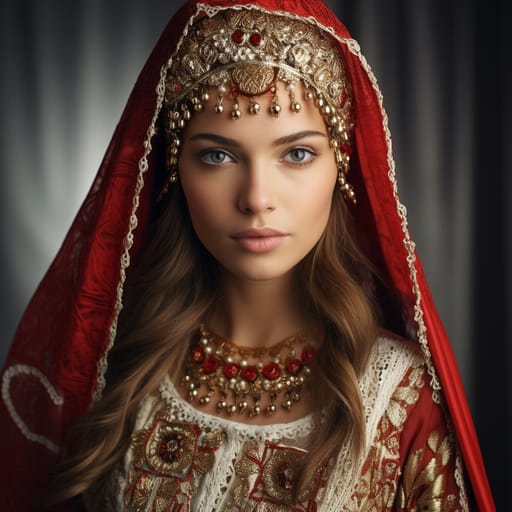
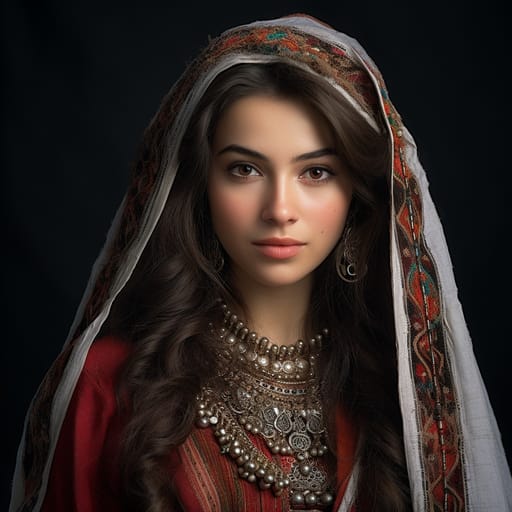
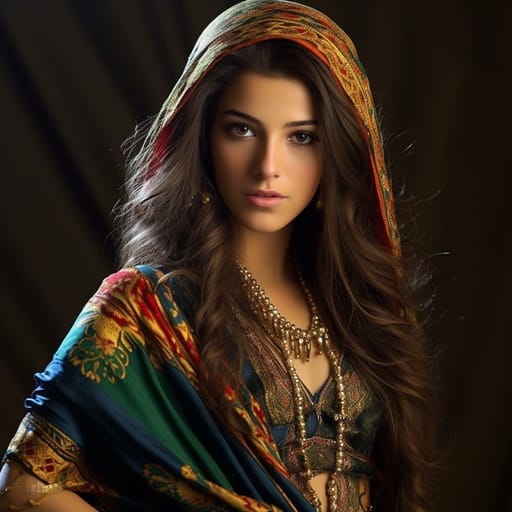
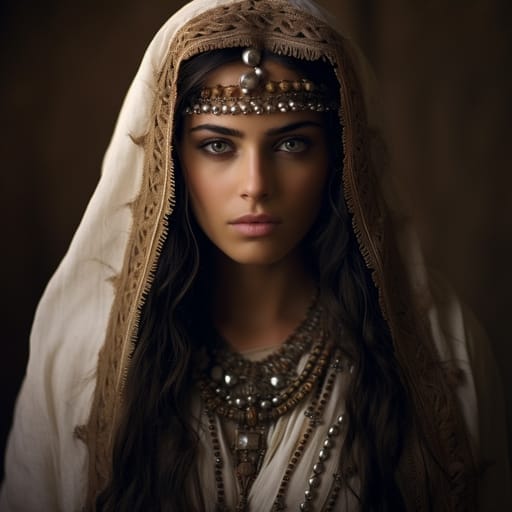
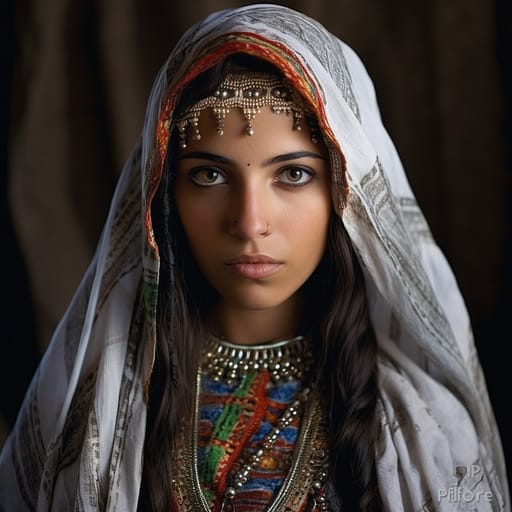
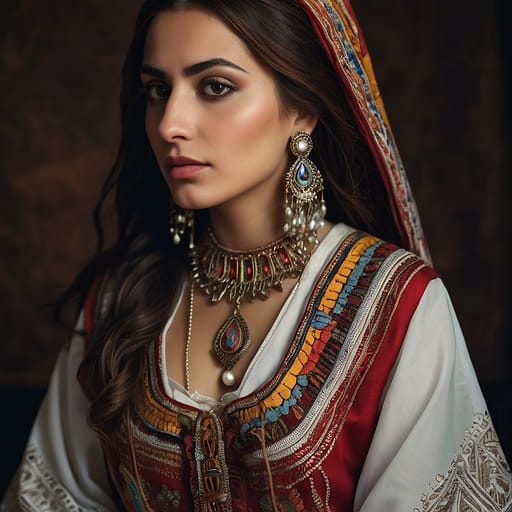
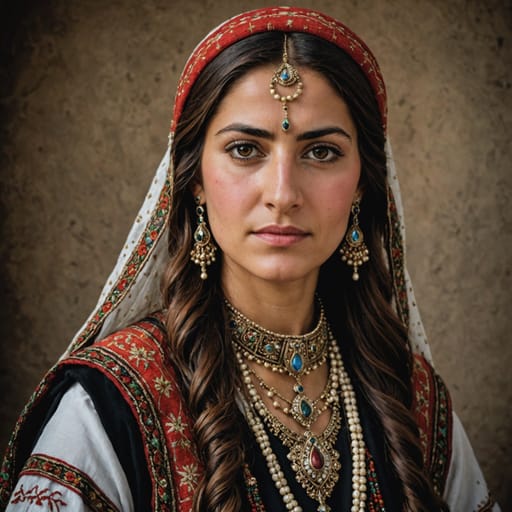
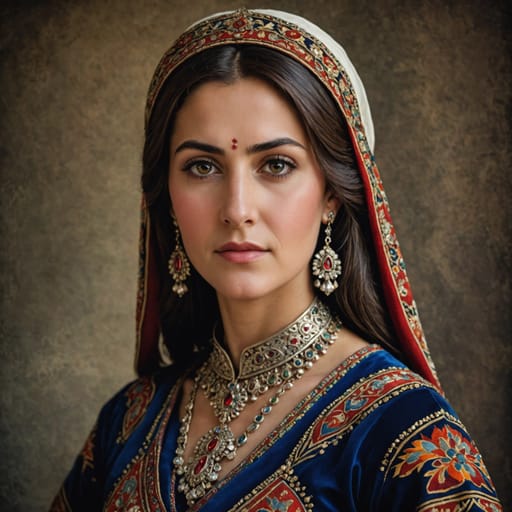
Typical Dom (Domari) Phenotypes
Reference for AI generation: hair, eyes, skin, facial structure, build
Dom (Domari) Body & Anatomy Reference
Levantine / Mediterranean Middle Eastern phenotype: anatomy reference for AI nude generation
Dom (Domari) Boobs & Breasts
Bust reference for Dom (Domari) women: medium-to-large cup, full, moderate-to-high projection, which is typical of Levantine / Mediterranean Middle Eastern ancestry. Areolas measure about 32-46mm across, with medium-brown to dark-brown pigmentation. Body type (mesomorph with fuller hip-and-bust deposition) shapes the bust as well, so Dom (Domari) tits are usually full and soft, fuller projection than the North-African Berber norm. In AI imagery, keep the forward-set shape rather than drifting toward the smaller East Asian bust profile.
Dom (Domari) Ass & Hips
The Dom (Domari) ass is typically medium-to-full, moderate projection, broader hip profile, which sets it apart from the slim East Asian narrow-hip profile. Underneath, the pelvis shows medium-to-wide iliac crests, fuller gluteal-femoral deposition, part of the Levantine / Mediterranean Middle Eastern skeletal pattern. For Dom (Domari) butt pics and AI renders, match that silhouette and the overall build (mesomorph with fuller hip-and-bust deposition).
Dom (Domari) Vagina & Pussy
Dom (Domari) pussy and vulvar anatomy presents medium-brown to dark-brown labial pigmentation, fuller labia minora, consistent with the Levantine / Mediterranean Middle Eastern phenotype's pigmentation pattern. Dom (Domari) pubic hair is typically wavy-to-coiled medium-coarse dark texture, dense distribution, in the inverted-triangle pattern. For anatomically accurate Dom (Domari) pussy renders the labial coloration should match the surrounding olive to medium-brown skin tone with a continuous gradient, and the hair should keep its wavy-to-coiled medium-coarse dark texture.
Dom (Domari) Dicks & Penis
Dom (Domari) dicks follow the Levantine / Mediterranean Middle Eastern reference data: regional mean ~14cm erect; moderate-to-above-average girth; medium-brown shaft pigmentation. Shaft color should track the olive to medium-brown skin tone with a smooth change toward the glans, and Dom (Domari) pubic hair keeps its wavy-to-coiled medium-coarse dark texture.
Dom (Domari) Body, Curves & Build
Dom (Domari) body type and overall build presents as mesomorph with fuller hip-and-bust deposition, with mean adult female BMI 25-28: the characteristic Levantine / Mediterranean Middle Eastern habitus. Dom (Domari) curves and proportions should keep the regional skeletal frame (height, shoulder-to-hip ratio, limb proportions) rather than a generic mesomorph default.
Dom (Domari) Skin Tone & Hair Texture
Dom (Domari) skin sits in the olive to medium-brown (Fitzpatrick III-V) band. Hair is typically wavy-to-curly 2B-3B, predominantly dark-brown to black, in keeping with the Levantine / Mediterranean Middle Eastern phenotype. In nude renders the skin should stay one even tone from face to body, and body, pubic and head hair should match.
Explore phenotype categories
Structured taxonomy with peer-reviewed scales · 22 anatomical categories
Erotic Poses & Sex Positions
From the pose catalog: 219 named positions with reference skeletons
Frequently asked questions about Dom (Domari) people
Where is the Dom (Domari) homeland?
The Dom (Domari) homeland is Dispersed across Iraq, Iran, Turkey, the Levant, and Egypt in Western Asia.
What language do Dom (Domari) people speak?
Dom (Domari) people primarily speak Domari (Indo-European, Indo-Aryan).
What religion do Dom (Domari) people practice?
The predominant religion among Dom (Domari) people is Predominantly Muslim (following local majority traditions).






Make your own Dom (Domari) images
Five a day, free, no credits to buy. The studio starts from this group's phenotype data, so you can set body type, pose and style and keep the traits accurate.
Start with Dom (Domari)