Help us get this right
Does this portrait look right for Demetae?
Nobody has judged this one yet. You would be the first.
Demetae Erotic
Southwest Wales, chiefly modern Pembrokeshire and Carmarthenshire, United Kingdom.
Brittonic (Celtic, Indo-European), ancestral to Welsh; Primitive Irish (Goidelic) also inscribed in the same territory from the fifth century.
Celtic polytheism, with Roman-period syncretism in the towns; the region Christianized early and by the sixth century held major monastic centers, including Menevia, now St Davids.
One of the Britons; neighbors of the Silures to the east and the Ordovices to the north. Their territory became the post-Roman kingdom of Dyfed, later absorbed into Deheubarth.
About Demetae People
The Demetae were a Celtic people of southwest Wales, visible in the record from the later Iron Age through the Roman centuries and dissolving, sometime after 400 AD, into the early Welsh kingdom of Dyfed that took its name from theirs. Their country was the far corner of the western peninsula: the Preseli hills, the broken sea coast of what is now Pembrokeshire, and the Tywi valley running inland through Carmarthenshire. Ptolemy placed them there in the second century. What sets them apart archaeologically is not monumental. Instead of a few commanding hillforts, their landscape is stippled with hundreds of small defended farmsteads, banked and ditched enclosures holding a family and its stock, along with promontory forts perched on cliff edges. It reads as a society built around cattle, kinship, and modest local standing rather than around a handful of paramount chiefs.
They are also notable for an absence. Their eastern neighbors, the Silures, fought Rome for a generation and earned a chapter in Tacitus. The Demetae left almost no trace of resistance, and the Roman garrison in their territory stayed thin. Rome gave them a civitas capital at Moridunum, modern Carmarthen, the farthest west any town in the province reached, with an amphitheater whose bowl is still there, and worked the gold at Dolaucothi with aqueducts and adits. Their language was Brittonic, the direct ancestor of Welsh, but their coastline faced Ireland, and once Rome withdrew that mattered enormously. Dyfed carries the densest concentration of ogham inscriptions in Britain, many bilingual: Latin cut across the face of the stone, Irish notched along its edge. The ruling dynasty claimed Irish descent, and around 540 the monk Gildas denounced one of its kings, Vortipor, as the "tyrant of the Demetae" and the "bad son of a good king." That is close to the last time the name attaches to anyone living. Dyfed was folded into Deheubarth in the tenth century and the tribal name went quiet for a thousand years, then came back as a county, a police force, and a coastline. The Welsh speakers of Carmarthenshire and Pembrokeshire are, in the plainest sense available, what became of them.
Related ethnic groups
Groups that share Demetae's homeland, region, language, or religious tradition. These are likely candidates for comparative phenotype reference.
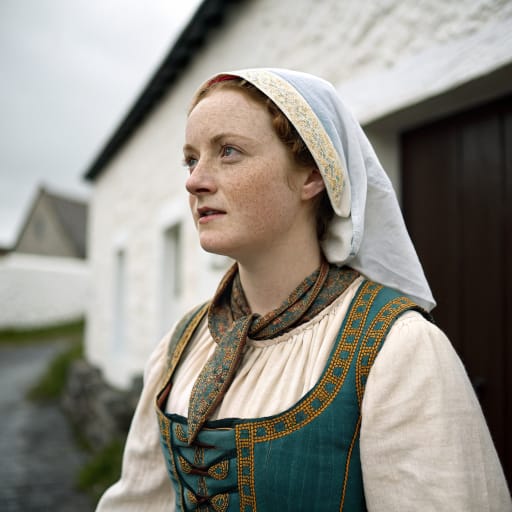
Irish
same region (Northern Europe)
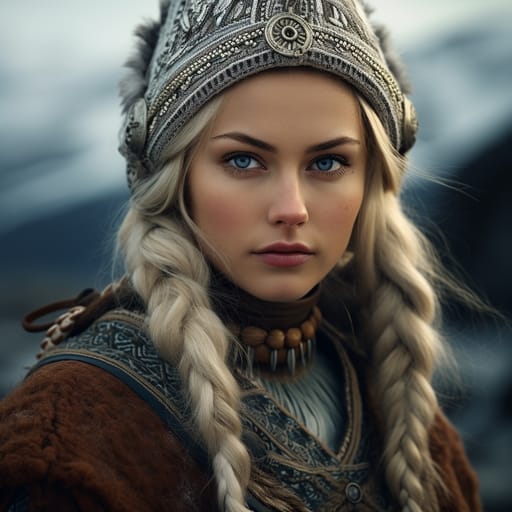
Icelanders
same region (Northern Europe)
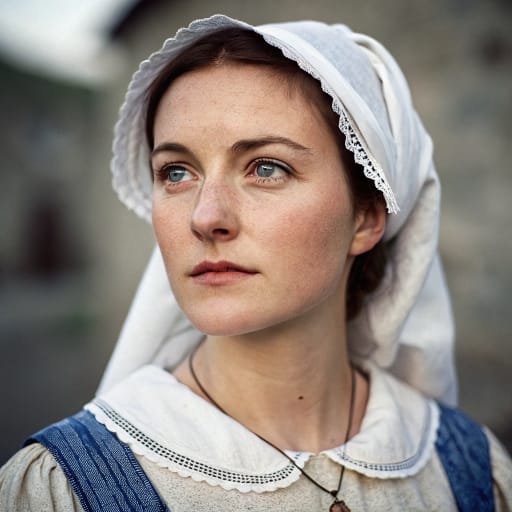
Welsh
same region (Northern Europe)
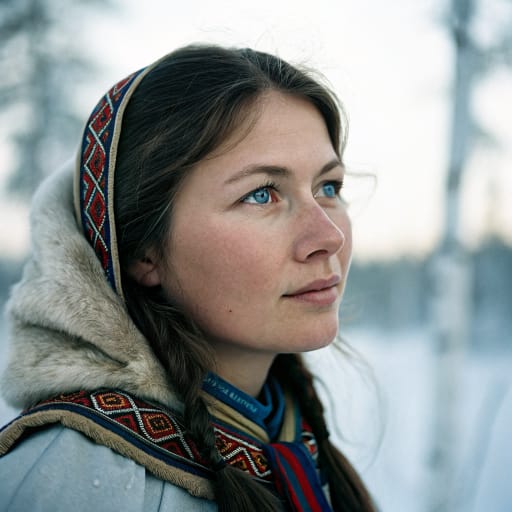
Sámi
same region (Northern Europe)
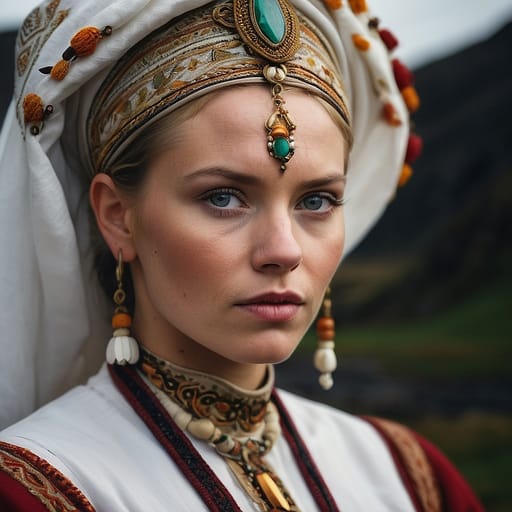
White Other Ireland
same region (Northern Europe)
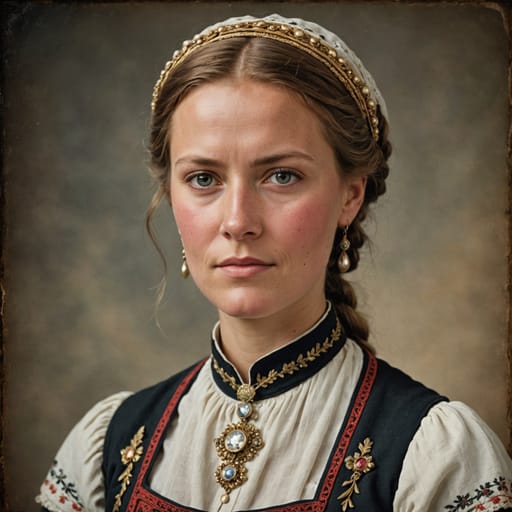
Danish Immigrant Western
same region (Northern Europe)
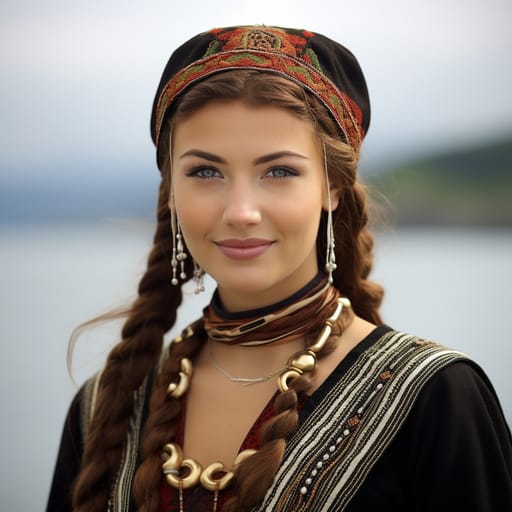
Manx
same region (Northern Europe)
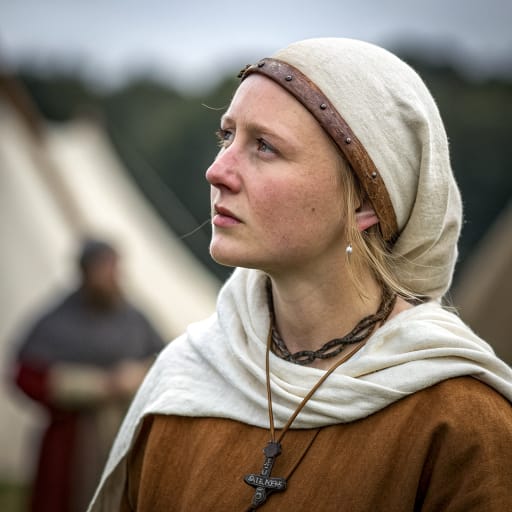
Anglo-Saxons
same region (Northern Europe)
Typical Demetae Phenotypes
Reference for AI generation: hair, eyes, skin, facial structure, build
Demetae Body & Anatomy Reference
Per-feature anatomical profile for AI nude generation: Northern European / Germanic-Scandinavian phenotype
Demetae Boobs & Breasts
The typical Demetae bust is medium-to-large cup, full, high projection, in line with the wider Northern European / Germanic-Scandinavian pattern. Areolas usually fall in the 32-48mm range, with light-pink to medium-pink areolar pigmentation against the fair skin tone. Compared with the smaller East Asian bust, Demetae breasts sit forward and are generally full and projecting, often the largest cup-size band in regional comparisons. A faithful AI render of Demetae tits keeps that shape and areola size.
Demetae Ass & Hips
Butt shape among Demetae women: medium-to-full, moderate-to-high projection, over medium-to-wide iliac crests. This follows Northern European / Germanic-Scandinavian ancestry and looks quite unlike the slim East Asian narrow-hip profile. An accurate Demetae ass in adult AI imagery keeps both the silhouette and the overall build (mesomorph with taller stature; ectomorph-to-mesomorph split) instead of a generic average.
Demetae Vagina & Pussy
Vulvar anatomy among Demetae women: light-pink to medium-pink labial pigmentation, varied labia minora projection. Pubic hair tends to be fine-to-medium wavy texture, often lighter-pigmented (blond to dark-brown), in the usual inverted-triangle pattern. Both follow Northern European / Germanic-Scandinavian pigmentation, which is why Demetae pussy renders should not fall back on a pale, sparse Western template.
Demetae Dicks & Penis
The Demetae cock profile, from Northern European / Germanic-Scandinavian anthropometric data: regional mean ~13-14cm erect; moderate-to-above-average girth; light-pink to light-brown shaft pigmentation. Pubic hair has a fine-to-medium wavy texture and forms the usual inverted-V pattern. Whether Demetae men are circumcised follows religious and cultural practice rather than phenotype.
Demetae Body, Curves & Build
Build and curves among Demetae women follow the Northern European / Germanic-Scandinavian pattern: mesomorph with taller stature; ectomorph-to-mesomorph split, mean adult female BMI 24-27. Proportions matter as much as skin tone, so Demetae figures should keep their regional height and limb ratios.
Demetae Skin Tone & Hair Texture
The Demetae skin range is fair (Fitzpatrick I-III), and hair tends to be straight-to-wavy 1A-2B, blond to medium-brown common. That combination marks the Northern European / Germanic-Scandinavian phenotype, and skin tone is the trait AI generators most often get wrong for Demetae women.
Explore phenotype categories
Structured taxonomy with peer-reviewed scales · 22 anatomical categories
Erotic Poses & Sex Positions
From the pose catalog: 219 named positions with reference skeletons
Frequently asked questions about Demetae people
Where is the Demetae homeland?
The Demetae homeland is Southwest Wales, chiefly modern Pembrokeshire and Carmarthenshire, United Kingdom. in Northern Europe.
What language do Demetae people speak?
Demetae people primarily speak Brittonic (Celtic, Indo-European), ancestral to Welsh; Primitive Irish (Goidelic) also inscribed in the same territory from the fifth century..
What religion do Demetae people practice?
The predominant religion among Demetae people is Celtic polytheism, with Roman-period syncretism in the towns; the region Christianized early and by the sixth century held major monastic centers, including Menevia, now St Davids..






Make your own Demetae images
Five a day, free, no credits to buy. The studio starts from this group's phenotype data, so you can set body type, pose and style and keep the traits accurate.
Start with Demetae