Help us get this right
Does this portrait look right for Borana?
Nobody has judged this one yet. You would be the first.
Borana Erotic
The Borana plateau of southern Oromia, Ethiopia, and northern Kenya, chiefly Marsabit and Isiolo counties, with Moyale sitting on the border between them.
Borana dialect of Oromo, Afaan Oromoo (Afroasiatic, Cushitic, Lowland East Cushitic)
Traditional Waaqeffanna (belief in Waaqa, the sky god), with Islam the majority faith among Kenyan Borana and Christianity and Islam both growing in Ethiopia.
A southern branch of the Oromo, divided into the Sabbo and Gona halves and their clans. The Borana-speaking Gabra and Sakuye are close allies.
About Borana People
The Borana are cattle herders of the dry plateau that runs across the border between southern Ethiopia and northern Kenya. Of all the Oromo branches, they are the one most often held up as the keepers of the old order. That reputation rests on Gadaa, the generation-grade system that still shapes Borana public life. Men pass through a fixed sequence of grades in eight-year steps, five named classes take turns holding authority, and an elected Abbaa Gadaa leads each term before handing power to the next. Every eight years the Borana gather for the Gumii Gaayoo, an assembly where elders review and amend customary law in open debate. Among other Oromo the system weakened under imperial rule and religious conversion. The Borana kept it running, so when UNESCO listed Gadaa as intangible heritage in 2016, it was naming something they had never stopped doing.
Society divides into two halves, Sabbo and Gona, which set clan membership and shape who may marry whom. Water is the constant problem on the rangeland, and the Borana answer is the tulaa: deep wells cut into rock, where herders stand in a line down the shaft and pass buckets up by hand, singing to keep the rhythm. Clan rules settled by elders decide who uses them. The humped Boran cattle breed came out of these herds and is now raised on ranches as far away as Australia and South Africa. The Borana speak a dialect of Oromo, a Cushitic language. The Gabra and Sakuye, camel herders in Kenya, speak it as their own, while neighboring Somali is a related language in the same Lowland East Cushitic branch rather than a shared one. The older faith centers on Waaqa, the sky god, with hereditary ritual leaders called Qaalluu and calendar specialists who work out lucky days from the moon and stars. In Kenya, Islam is now the majority faith. In Ethiopia, Christianity and Islam have spread without ending the old ritual cycle. In the late nineteenth century the expanding Ethiopian state of Menelik II conquered the Borana, and the border later drawn with British East Africa split their country between two governments. Recent years have been harder still: repeated failed rains after 2020 killed a large share of the herds and pushed more families into towns such as Moyale, Yabelo and Isiolo.
Related ethnic groups
Groups that share Borana's homeland, region, language, or religious tradition. These are likely candidates for comparative phenotype reference.
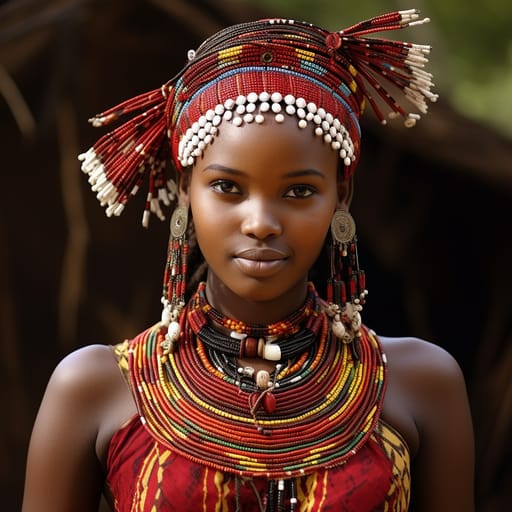
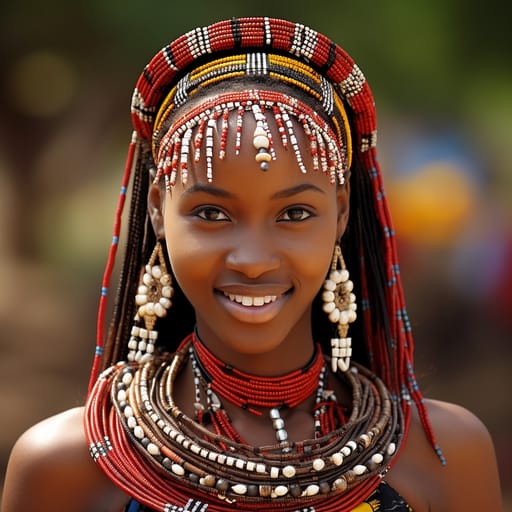
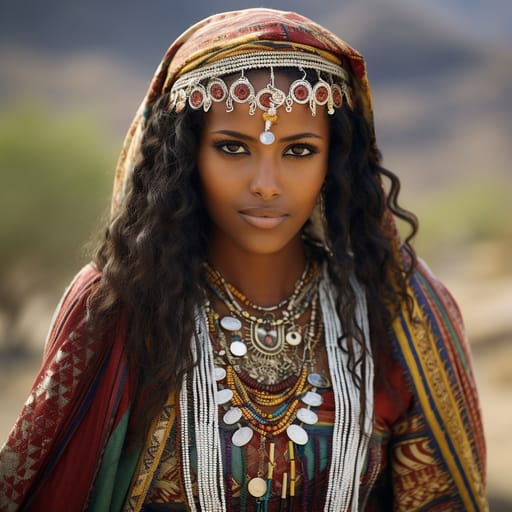
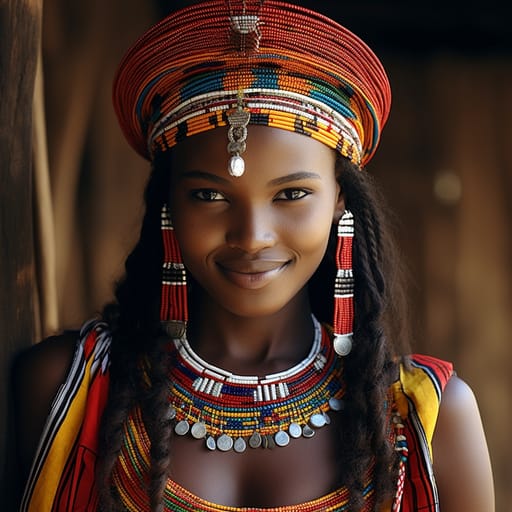
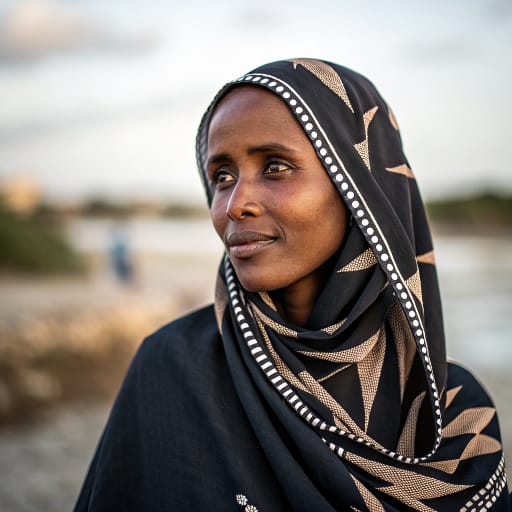
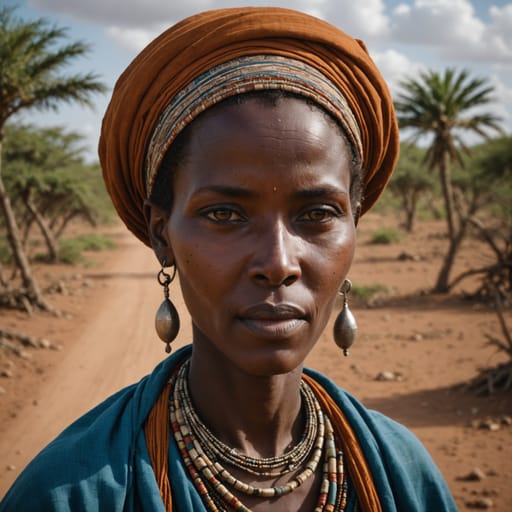
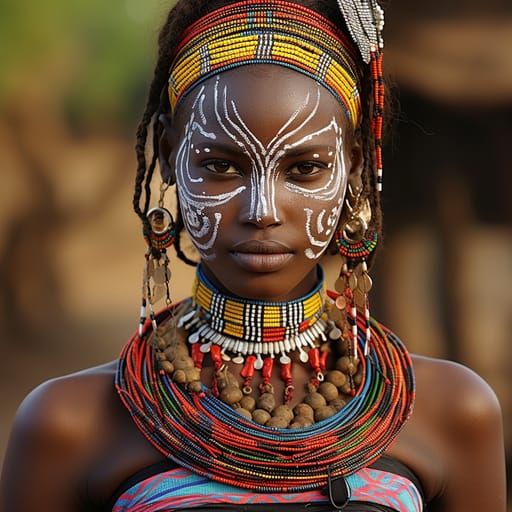
Typical Borana Phenotypes
Reference for AI generation: hair, eyes, skin, facial structure, build
Borana Body & Anatomy Reference
Anatomy by feature, Cushitic / Nilo-Cushitic East African phenotype
Borana Boobs & Breasts
The typical Borana bust is small-to-medium-cup, high-set, conical, in line with the wider Cushitic / Nilo-Cushitic East African pattern. Areolas usually fall in the 28-38mm range, with moderate-to-high areolar pigmentation against the brown-to-deep-brown skin tone. Compared with the lateral spread of the West African phenotype, Borana breasts sit forward and are generally firmer and less projecting than the African-American or West African norm. A faithful AI render of Borana tits keeps that shape and areola size.
Borana Ass & Hips
Butt shape among Borana women: small-to-medium, high-set, rounded, over narrow-to-medium iliac crests, longer torso-to-leg ratio. This follows Cushitic / Nilo-Cushitic East African ancestry and looks quite unlike the wide-set heavy-projection West African or African-American norm. An accurate Borana ass in adult AI imagery keeps both the silhouette and the overall build (lean ectomorph-to-mesomorph) instead of a generic average.
Borana Vagina & Pussy
Vulvar anatomy among Borana women: brown-to-deep-brown labial pigmentation, narrow-to-medium labia minora projection. Pubic hair tends to be tightly-coiled coarse texture, densely distributed, in the usual inverted-triangle pattern. Both follow Cushitic / Nilo-Cushitic East African pigmentation, which is why Borana pussy renders should not fall back on a pale, sparse Western template.
Borana Dicks & Penis
The Borana cock profile, from Cushitic / Nilo-Cushitic East African anthropometric data: regional mean ~13.5cm erect; moderate girth, ~12cm circumference; deeper-pigmented than the West African norm. Pubic hair has a tightly-coiled coarse texture and forms the usual inverted-V pattern. Whether Borana men are circumcised follows religious and cultural practice rather than phenotype.
Borana Body, Curves & Build
Build and curves among Borana women follow the Cushitic / Nilo-Cushitic East African pattern: lean ectomorph-to-mesomorph, mean adult female BMI 19-22. Proportions matter as much as skin tone, so Borana figures should keep their regional height and limb ratios.
Borana Skin Tone & Hair Texture
The Borana skin range is brown to deep brown (Fitzpatrick V-VI), and hair tends to be tight 4A-4C coil, often worn natural or in braided/twisted protective styles. That combination marks the Cushitic / Nilo-Cushitic East African phenotype, and skin tone is the trait AI generators most often get wrong for Borana women.
Explore phenotype categories
Structured taxonomy with peer-reviewed scales · 22 anatomical categories
Erotic Poses & Sex Positions
From the pose catalog: 219 named positions with reference skeletons
Frequently asked questions about Borana people
Where is the Borana homeland?
The Borana homeland is The Borana plateau of southern Oromia, Ethiopia, and northern Kenya, chiefly Marsabit and Isiolo counties, with Moyale sitting on the border between them. in Eastern Africa.
What language do Borana people speak?
Borana people primarily speak Borana dialect of Oromo, Afaan Oromoo (Afroasiatic, Cushitic, Lowland East Cushitic).
What religion do Borana people practice?
The predominant religion among Borana people is Traditional Waaqeffanna (belief in Waaqa, the sky god), with Islam the majority faith among Kenyan Borana and Christianity and Islam both growing in Ethiopia..






Make your own Borana images
Five a day, free, no credits to buy. The studio starts from this group's phenotype data, so you can set body type, pose and style and keep the traits accurate.
Start with Borana