Help us get this right
Does this portrait look right for Bokota?
Nobody has judged this one yet. You would be the first.
Bokota Erotic
Caribbean slopes of western Panama, in Bocas del Toro and northern Veraguas, partly within the Comarca Ngäbe-Buglé
Bokota, closely related to or a dialect of Buglere (Chibchan, Guaymiic branch); Spanish widely spoken
Christian, Catholic and evangelical, with Indigenous traditions persisting in some communities
Guaymiic-speaking peoples of western Panama; closely linked to the Buglé and historically grouped with the Ngäbe under the colonial name Guaymí
About Bokota People
The Bokota are one of the smallest Indigenous peoples in Panama, and much of their recent history is about staying visible. They live on the wet, forested Caribbean slopes of western Panama, in Bocas del Toro and northern Veraguas. Part of that land lies inside the Comarca Ngäbe-Buglé, the semi-autonomous Indigenous territory created in 1997. The comarca is named for two larger peoples, and for centuries outsiders did not bother to tell the Bokota apart from either one. Spanish colonial writers and later Panamanian officials put the Chibchan-speaking peoples of the region under a single label, Guaymí, and the Bokota disappeared into it. Being counted as a separate people in the national census matters. A community that has its own name on the form shows up when the state plans schools and clinics and decides who gets represented.
Language is the clearest dividing line. Bokota belongs to the Chibchan family, which reaches from Honduras down into Colombia, and to that family's Guaymiic branch, alongside Ngäbere. It is so close to Buglere that linguists disagree about whether the two are separate languages or dialects of one, and reference works often mix up the names. Spanish is the language of school, government and paid work, so most Bokota are bilingual, and the home language is under steady pressure.
In the villages, people farm small plots cleared from the forest, growing rice, maize, plantains, beans and root crops, and they hunt and fish the rivers for the rest of their food. Cash is scarce. Like their Ngäbe and Buglé neighbors, many families send members away for seasonal work on the banana plantations of Bocas del Toro or the coffee farms of the highlands. Most people are Catholic or evangelical Christians, and older Indigenous practices continue alongside the churches in some communities.
The heaviest pressures fall on everyone in the comarca: poverty rates among the highest in Panama, few roads, thin health services, and repeated outside interest in the land for mining and hydroelectric dams. What sets the Bokota apart is their size. A people numbering in the low thousands has to protect its language and its name from more than a Spanish-speaking nation. It also has to do so inside a territory where the Ngäbe alone number in the hundreds of thousands.
Related ethnic groups
Groups that share Bokota's homeland, region, language, or religious tradition. These are likely candidates for comparative phenotype reference.
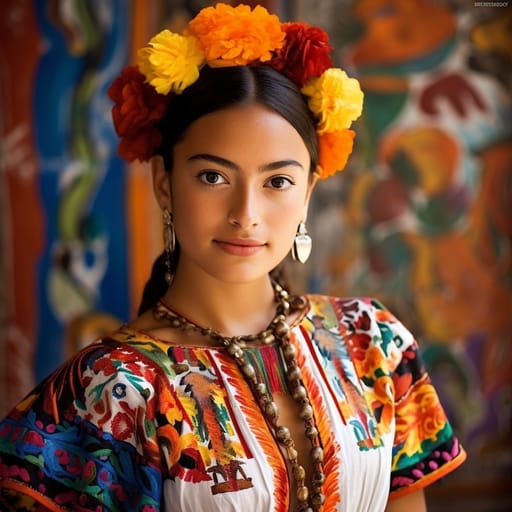
Otomi
same region (Central America)
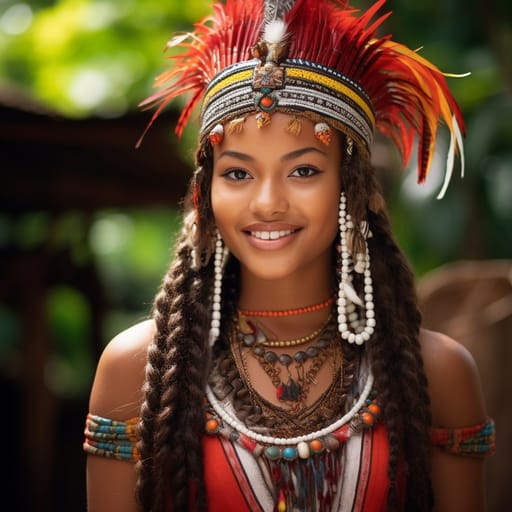
Kalinago
same region (Central America)
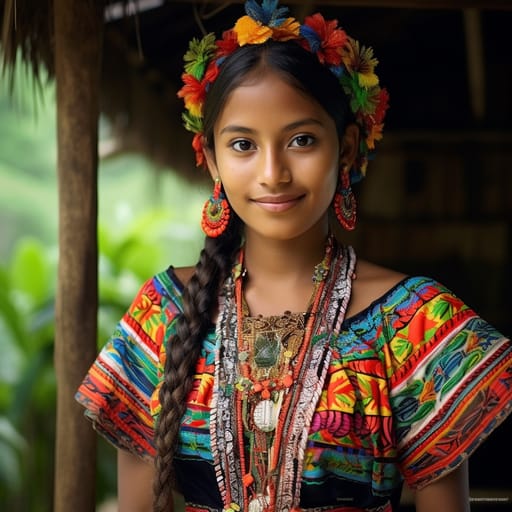
Miskito
same region (Central America)
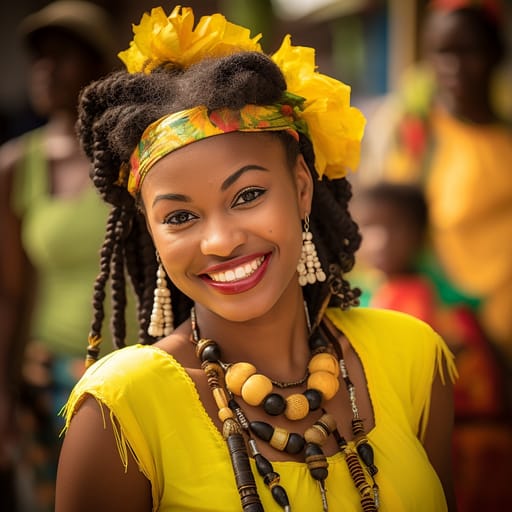
Garifuna
same region (Central America)
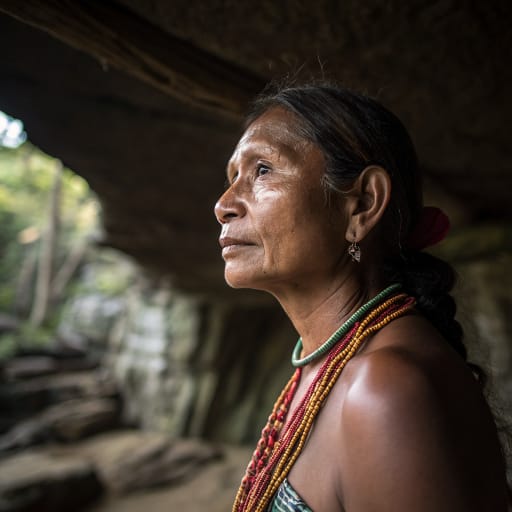
Cueva
same region (Central America)
Pima Bajo
same region (Central America)
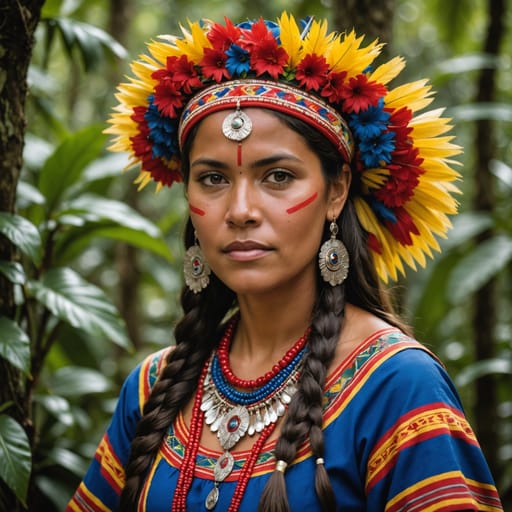
Indigenous Costa Rican
same region (Central America)
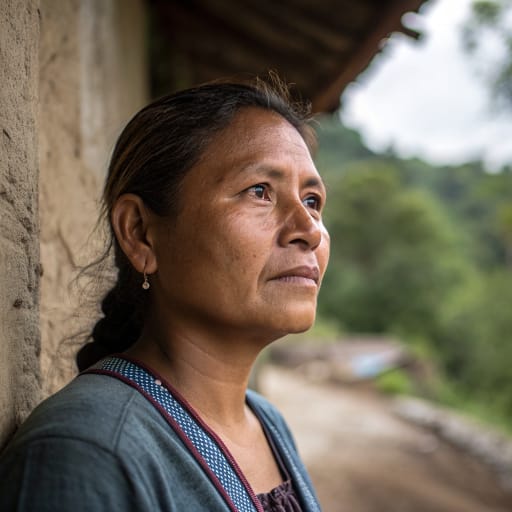
Chatino
same region (Central America)
Typical Bokota Phenotypes
Reference for AI generation: hair, eyes, skin, facial structure, build
Bokota Body & Anatomy Reference
Anatomy by feature, Mesoamerican Indigenous / Mestizo phenotype
Bokota Boobs & Breasts
Bokota tits and boobs run medium-to-large cup, full, moderate-to-high projection, the classic Mesoamerican Indigenous / Mestizo bust profile. Bokota nipples and areolas show medium-brown to dark-brown areolar pigmentation against the tan-to-medium-brown skin tone, with areolar diameter typically in the 32-46mm range and forward-set positioning rather than the smaller East Asian bust. Bokota breasts trend full and projecting, classic Latina curvy bust profile, a function of the endomorph-to-mesomorph with strong hip-and-bust deposition body habitus and the mean adult female BMI 26-29. For anatomically accurate AI-generated Bokota nudes the render preserves the medium-to-large cup, full, moderate-to-high projection shape, 32-46mm areolas with medium-brown to dark-brown pigmentation, and the torso proportions of the Mesoamerican Indigenous / Mestizo phenotype.
Bokota Ass & Hips
Bokota hips and butt usually read as medium-to-full, high projection, classic Latina curvy hip profile. The skeletal base is wide iliac crests, full gluteal-femoral fat deposition, the Mesoamerican Indigenous / Mestizo pattern. Set against the slim narrow-hip East Asian profile, the difference is easy to see, and the hip-to-waist ratio is often what identifies Bokota women in photos.
Bokota Vagina & Pussy
Expect medium-brown to dark-brown labial pigmentation, fuller labia minora on Bokota women, in keeping with Mesoamerican Indigenous / Mestizo ancestry. The pubic hair is straight-to-wavy coarse dark texture, dense distribution. Coloring should run evenly from the tan to medium-brown skin of the thighs to the labia, and Bokota nude imagery should keep the hair's straight-to-wavy coarse dark texture.
Bokota Dicks & Penis
Bokota dick and penile anatomy in adult AI generation should anchor on the regional reference data: regional mean ~13cm erect, moderate girth, and medium-brown shaft pigmentation. The Bokota cock profile reflects the Mesoamerican Indigenous / Mestizo population's anthropometric measurements. The shaft pigmentation should track the surrounding tan to medium-brown skin tone, and the pubic hair should keep its straight-to-wavy coarse dark texture in the typical inverted-V escutcheon.
Bokota Body, Curves & Build
Bokota body type: endomorph-to-mesomorph with strong hip-and-bust deposition, with mean adult female BMI 26-29. This is the typical Mesoamerican Indigenous / Mestizo build. Height range, shoulder-to-hip ratio and fat distribution all follow from it, which is what an accurate Bokota nude body should show.
Bokota Skin Tone & Hair Texture
Bokota skin tone falls in the tan to medium-brown (Fitzpatrick III-V) band, the surface signal most often miscalibrated by generic AI nude generators. Bokota hair texture is typically straight-to-wavy 1A-2B, dense dark-brown to black, characteristic of the Mesoamerican Indigenous / Mestizo phenotype. In Bokota nude renders the skin should hold that band consistently across the body.
Explore phenotype categories
Structured taxonomy with peer-reviewed scales · 22 anatomical categories
Erotic Poses & Sex Positions
From the pose catalog: 219 named positions with reference skeletons
Frequently asked questions about Bokota people
Where is the Bokota homeland?
The Bokota homeland is Caribbean slopes of western Panama, in Bocas del Toro and northern Veraguas, partly within the Comarca Ngäbe-Buglé in Central America.
What language do Bokota people speak?
Bokota people primarily speak Bokota, closely related to or a dialect of Buglere (Chibchan, Guaymiic branch); Spanish widely spoken.
What religion do Bokota people practice?
The predominant religion among Bokota people is Christian, Catholic and evangelical, with Indigenous traditions persisting in some communities.






Make your own Bokota images
Five a day, free, no credits to buy. The studio starts from this group's phenotype data, so you can set body type, pose and style and keep the traits accurate.
Start with Bokota