Help us get this right
Does this portrait look right for Biak?
Nobody has judged this one yet. You would be the first.
Biak Erotic
Biak, Supiori and Numfor islands in Cenderawasih Bay, Papua, Indonesia, with long-established settlements along the Bird's Head coast, in the Raja Ampat Islands and in towns across Indonesian New Guinea
Biak, also called Biak-Numfor (Austronesian, Eastern Malayo-Polynesian); Indonesian and Papuan Malay widely spoken
Predominantly Protestant Christian; the pre-Christian Koreri myth of Manarmakeri remains culturally significant
Austronesian peoples of Cenderawasih Bay; island communities of Biak, Supiori and Numfor plus migrant Biak of Raja Ampat and the Bird's Head coast; organized in patrilineal clans (keret)
About Biak People
The Biak are the seafarers of Cenderawasih Bay, the broad gulf cut into the northern coast of New Guinea. Their home islands, Biak, Supiori and Numfor, sit near the mouth of the bay. For centuries Biak canoes carried raiders, traders and settlers well beyond those islands: west along the Bird's Head coast, into the Raja Ampat Islands and on toward the Moluccan sultanate of Tidore, which took tribute from Biak and gave titles to Biak leaders in return. That outward reach still defines them. Biak communities live in coastal towns across Indonesian Papua, and Biak families have long supplied the region with teachers, pastors, civil servants and political figures.
Biak is an Austronesian language. It is related to other island and coastal languages of the bay and to those of South Halmahera, not to the Papuan languages spoken inland on the mainland. It has many local dialects and spread along the north coast with Biak migrants and early mission work. Today nearly everyone also speaks Indonesian, and the home language is losing ground among the young. Social life turns on the keret, clans traced through the father's line that anchor land claims and marriage alliances. Bride wealth is serious business. It was traditionally paid in antique porcelain plates and cloth and delivered with public ceremony. Wor, a tradition of sung poetry, has long marked births, initiations, weddings and deaths.
Protestant missions reached the bay in the mid-nineteenth century, and Christianity is now close to universal among the Biak. It did not erase an older idea that remains part of Biak identity: Koreri, a promised age without death, hunger or toil. It belongs to the story of Manarmakeri, a scorned old man covered in sores who won its secret from the morning star and sailed away, vowing to return. Koreri movements broke out repeatedly under Dutch rule. The largest came during the Japanese occupation of the early 1940s and ended in armed confrontation and heavy losses. Biak itself became a major battlefield in 1944. Since then the island has stood at the center of Papuan politics from both directions. Frans Kaisiepo, a Biak who backed joining Indonesia, appears on the 10,000 rupiah note, while in 1998 security forces opened fire on people raising the Morning Star flag in Biak town.
Related ethnic groups
Groups that share Biak's homeland, region, language, or religious tradition. These are likely candidates for comparative phenotype reference.
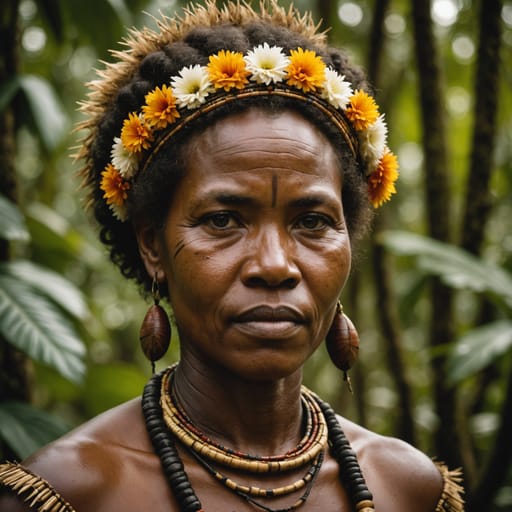
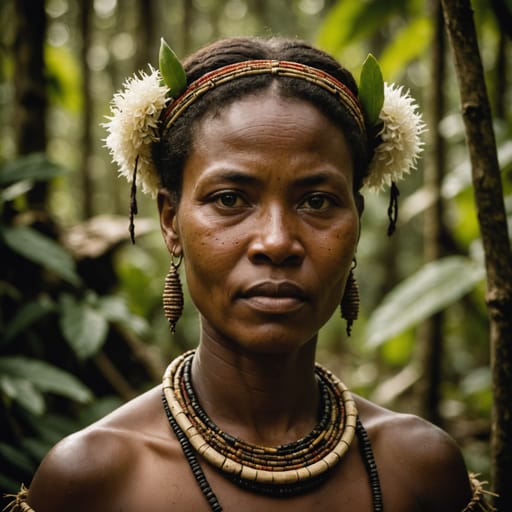
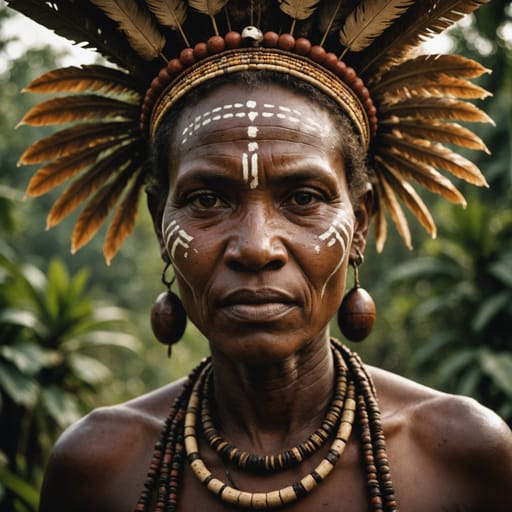
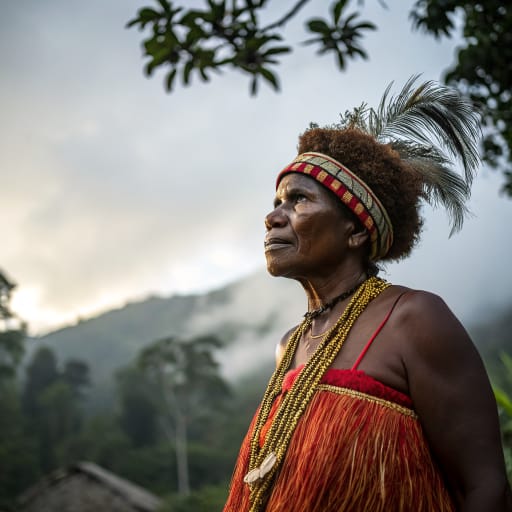
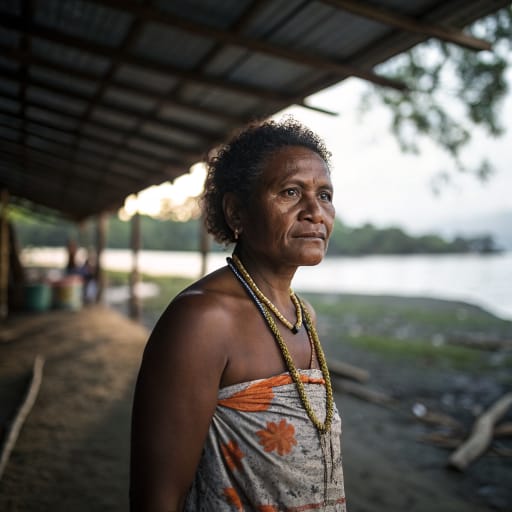
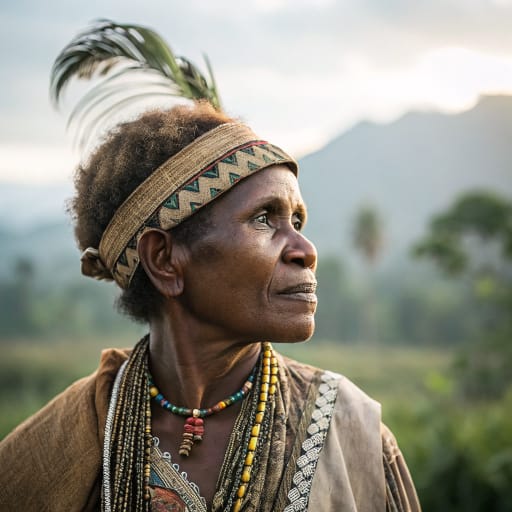
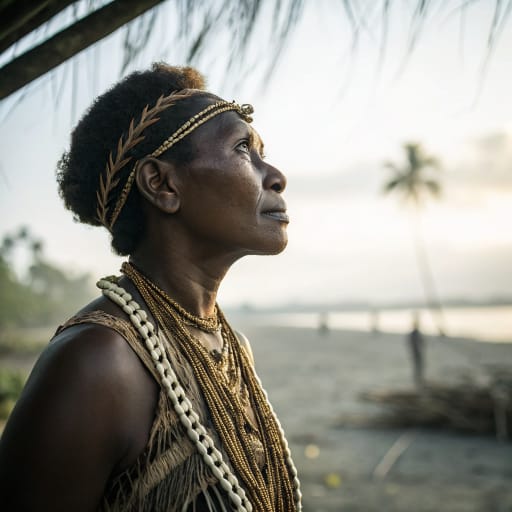
Typical Biak Phenotypes
Reference for AI generation: hair, eyes, skin, facial structure, build
Biak Body & Anatomy Reference
Per-feature anatomical profile for AI nude generation: Melanesian / Papuan phenotype
Biak Boobs & Breasts
Bust reference for Biak women: medium-to-large cup, full, moderate projection, which is typical of Melanesian / Papuan ancestry. Areolas measure about 32-46mm across, with deep-brown to near-black pigmentation. Body type (mesomorph) shapes the bust as well, so Biak tits are usually full, moderate projection. In AI imagery, keep the forward-set shape rather than drifting toward the smaller Aboriginal Australian bust.
Biak Ass & Hips
The Biak ass is typically medium-to-full, moderate-to-high projection, which sets it apart from the slim Aboriginal Australian narrow-hip profile. Underneath, the pelvis shows medium-to-wide iliac crests, full gluteal-femoral fat deposition, part of the Melanesian / Papuan skeletal pattern. For Biak butt pics and AI renders, match that silhouette and the overall build (mesomorph).
Biak Vagina & Pussy
Biak pussy and vulvar anatomy presents deep-brown labial pigmentation, consistent with the Melanesian / Papuan phenotype's pigmentation pattern. Biak pubic hair is typically tightly-coiled coarse texture, dense distribution, in the inverted-triangle pattern. For anatomically accurate Biak pussy renders the labial coloration should match the surrounding deep-brown skin tone with a continuous gradient, and the hair should keep its tightly-coiled coarse texture.
Biak Dicks & Penis
Biak dicks follow the Melanesian / Papuan reference data: regional mean ~13cm erect; moderate-to-above-average girth; deep-brown shaft pigmentation. Shaft color should track the deep-brown skin tone with a smooth change toward the glans, and Biak pubic hair keeps its tightly-coiled coarse texture.
Biak Body, Curves & Build
Biak body type and overall build presents as mesomorph, with mean adult female BMI 25-28: the characteristic Melanesian / Papuan habitus. Biak curves and proportions should keep the regional skeletal frame (height, shoulder-to-hip ratio, limb proportions) rather than a generic mesomorph default.
Biak Skin Tone & Hair Texture
Biak skin sits in the deep-brown (Fitzpatrick V-VI); the distinctive blond-hair-on-dark-skin trait widely documented in Solomon Islands populations band. Hair is typically tight 4A-4C coil; the blond-on-dark trait is a TYRP1 variant unique to Melanesia, in keeping with the Melanesian / Papuan phenotype. In nude renders the skin should stay one even tone from face to body, and body, pubic and head hair should match.
Explore phenotype categories
Structured taxonomy with peer-reviewed scales · 22 anatomical categories
Erotic Poses & Sex Positions
From the pose catalog: 219 named positions with reference skeletons
Frequently asked questions about Biak people
Where is the Biak homeland?
The Biak homeland is Biak, Supiori and Numfor islands in Cenderawasih Bay, Papua, Indonesia, with long-established settlements along the Bird's Head coast, in the Raja Ampat Islands and in towns across Indonesian New Guinea in Melanesia.
What language do Biak people speak?
Biak people primarily speak Biak, also called Biak-Numfor (Austronesian, Eastern Malayo-Polynesian); Indonesian and Papuan Malay widely spoken.
What religion do Biak people practice?
The predominant religion among Biak people is Predominantly Protestant Christian; the pre-Christian Koreri myth of Manarmakeri remains culturally significant.






Make your own Biak images
Five a day, free, no credits to buy. The studio starts from this group's phenotype data, so you can set body type, pose and style and keep the traits accurate.
Start with Biak