Help us get this right
Does this portrait look right for Asho?
Nobody has judged this one yet. You would be the first.
Asho Erotic
Lowlands and foothills on both sides of the Arakan Yoma in Myanmar (Magway, Bago and Ayeyarwady regions, Rakhine State), with a small Khyang community in the Chittagong Hill Tracts of Bangladesh
Asho Chin (Kuki-Chin, Sino-Tibetan); Burmese widely spoken as a second language, and Bengali among the Khyang of Bangladesh
Theravada Buddhism and Christianity (largely Baptist), with traditional spirit observances persisting
Chin; one of the Chin subgroups on Myanmar's official list of national races, grouped with the Southern Chin peoples; known as Khyang in Bangladesh
About Asho People
The Asho are the Chin of the plains. Most outsiders picture the Chin as a mountain people on Myanmar's western border. The Asho live in the lowlands and foothills on both sides of the Arakan Yoma, in farming villages across Magway, Bago and Ayeyarwady regions and parts of Rakhine State. A smaller community over the border in Bangladesh's Chittagong Hill Tracts goes by Khyang, an older form of the name that English now spells Chin. What holds them together is a language, a firm sense of being Chin, and generations of village life as a minority among Burmese and Rakhine neighbors. Their language, Asho Chin, belongs to the Kuki-Chin branch of Sino-Tibetan and sits with the southern Chin languages. That puts it a long way from the Hakha and Falam speech of the Chin Hills, and it shifts noticeably from one district to the next. Living beside Burmese speakers has made most Asho bilingual, and in towns Burmese is the language of school, market and office. Faith comes in layers. Many Asho are Theravada Buddhists who keep the same monastery calendar as their Burmese neighbors. Others are Christians, many of them Baptist, a legacy of missionary work in colonial Lower Burma. Older observances for household and village spirits have not disappeared under either faith. Among the Khyang in Bangladesh, too, both Buddhists and Christians are found.
Geography shaped Asho history as much as belief did. The country around Thayetmyo and Minbu, long home to Asho villages, came under British rule in two stages: Thayetmyo after the war of 1852, and Minbu when the Burmese kingdom fell in 1885. The British ran these lowlands as ordinary Burma, not under the separate frontier rules they set up for the Chin Hills, and that division outlasted them. Today the Asho appear among the Chin subgroups on Myanmar's official list of national races, yet most live outside Chin State, as a minority inside Burmese-majority regions. That position explains a lot about them. They are Chin enough to be counted as Chin, but far enough from the hills that outsiders often mistake them for Burmese. Day to day, an Asho village can look much like any other in central Myanmar: paddy fields, longyi, Burmese on the radio. The difference shows at weddings, funerals and community gatherings, when Chin weaving comes out and Asho is the language people speak.
Related ethnic groups
Groups that share Asho's homeland, region, language, or religious tradition. These are likely candidates for comparative phenotype reference.
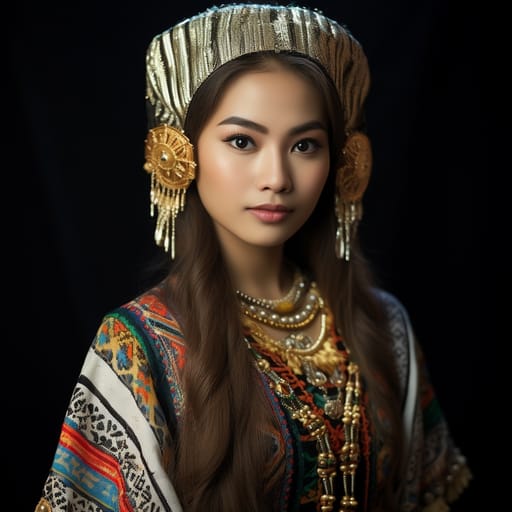
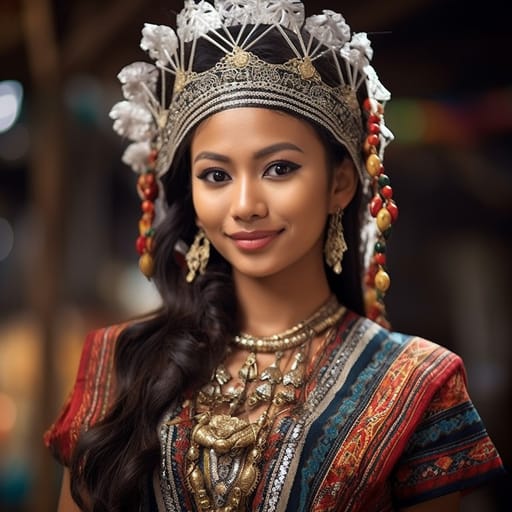
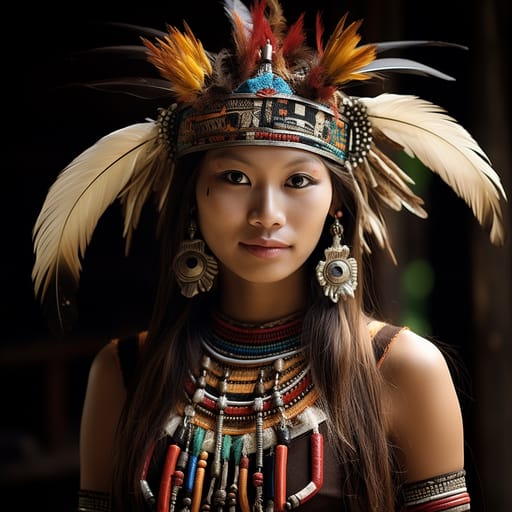
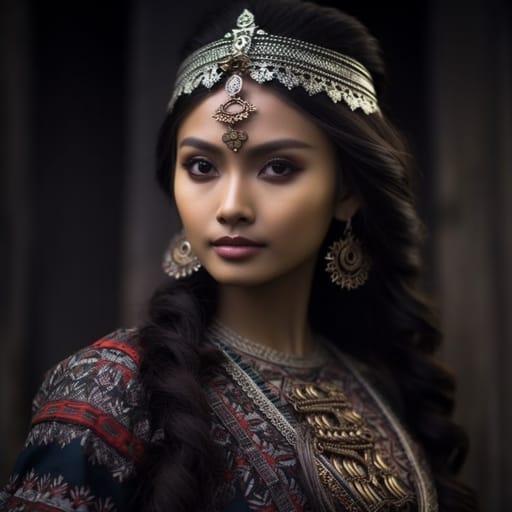
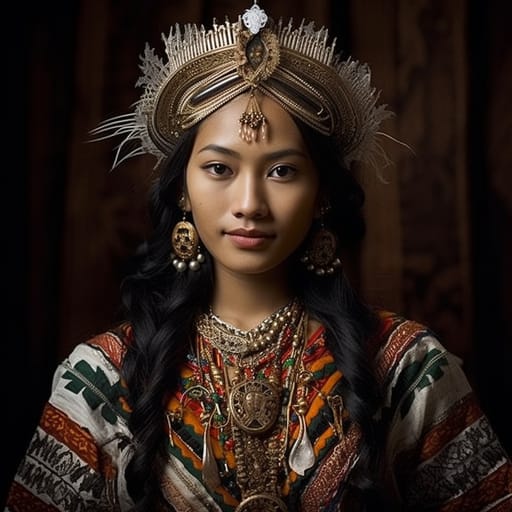
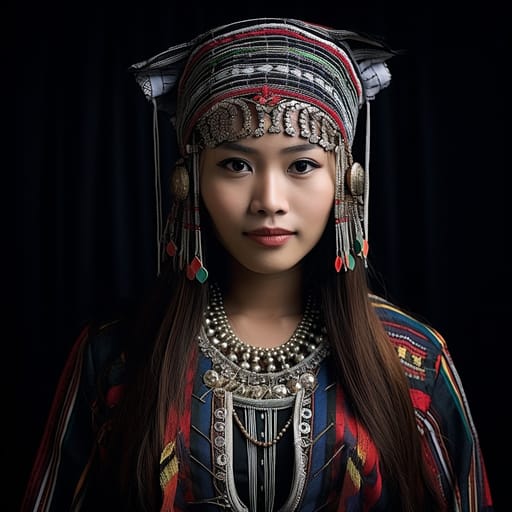
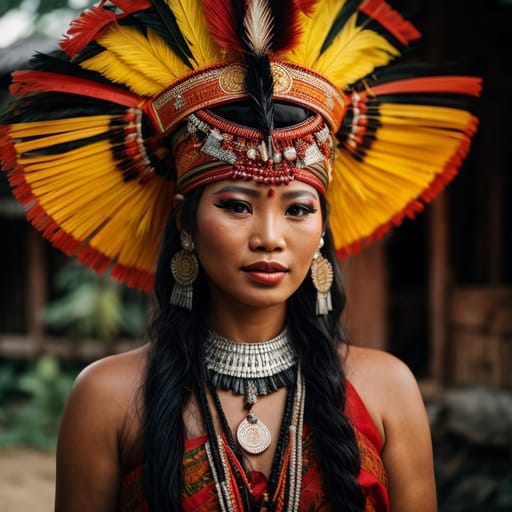
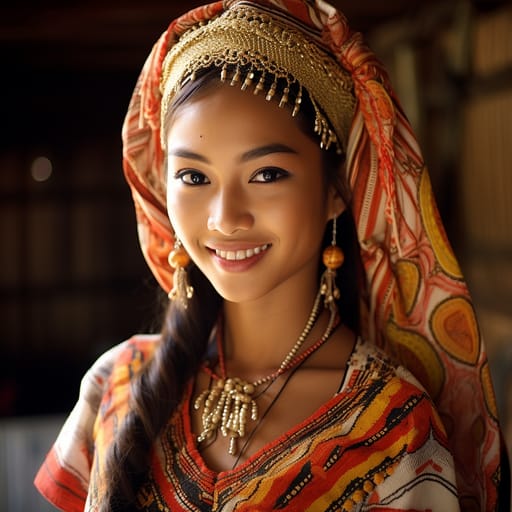
Typical Asho Phenotypes
Reference for AI generation: hair, eyes, skin, facial structure, build
Asho Body & Anatomy Reference
Southeast Asian Austronesian / Austroasiatic phenotype: anatomy reference for AI nude generation
Asho Boobs & Breasts
Bust reference for Asho women: small-to-medium cup, modest projection, which is typical of Southeast Asian Austronesian / Austroasiatic ancestry. Areolas measure about 26-38mm across, with medium-brown to dark-brown pigmentation. Body type (ectomorph, petite frame) shapes the bust as well, so Asho tits are usually firm, modest projection. In AI imagery, keep the forward-set shape rather than drifting toward the fuller South Asian or Polynesian bust.
Asho Ass & Hips
The Asho ass is typically small-to-medium, modest projection, narrower hip profile, which sets it apart from the fuller glutes of the Pacific Islander phenotype. Underneath, the pelvis shows narrow-to-medium iliac crests, part of the Southeast Asian Austronesian / Austroasiatic skeletal pattern. For Asho butt pics and AI renders, match that silhouette and the overall build (ectomorph, petite frame).
Asho Vagina & Pussy
Asho pussy and vulvar anatomy presents medium-brown to dark-brown labial pigmentation, consistent with the Southeast Asian Austronesian / Austroasiatic phenotype's pigmentation pattern. Asho pubic hair is typically straight-to-wavy fine-to-medium texture, in the inverted-triangle pattern. For anatomically accurate Asho pussy renders the labial coloration should match the surrounding tan to medium-brown skin tone with a continuous gradient, and the hair should keep its straight-to-wavy fine-to-medium texture.
Asho Dicks & Penis
Asho dicks follow the Southeast Asian Austronesian / Austroasiatic reference data: regional mean ~11cm erect; moderate girth; medium-brown shaft pigmentation. Shaft color should track the tan to medium-brown skin tone with a smooth change toward the glans, and Asho pubic hair keeps its straight-to-wavy fine-to-medium texture.
Asho Body, Curves & Build
Asho body type and overall build presents as ectomorph, petite frame, with mean adult female BMI 20-23: the characteristic Southeast Asian Austronesian / Austroasiatic habitus. Asho curves and proportions should keep the regional skeletal frame (height, shoulder-to-hip ratio, limb proportions) rather than a generic mesomorph default.
Asho Skin Tone & Hair Texture
Asho skin sits in the tan to medium-brown (Fitzpatrick III-V) band. Hair is typically straight-to-wavy 1A-2A, dark-brown to black, in keeping with the Southeast Asian Austronesian / Austroasiatic phenotype. In nude renders the skin should stay one even tone from face to body, and body, pubic and head hair should match.
Explore phenotype categories
Structured taxonomy with peer-reviewed scales · 22 anatomical categories
Erotic Poses & Sex Positions
From the pose catalog: 219 named positions with reference skeletons
Frequently asked questions about Asho people
Where is the Asho homeland?
The Asho homeland is Lowlands and foothills on both sides of the Arakan Yoma in Myanmar (Magway, Bago and Ayeyarwady regions, Rakhine State), with a small Khyang community in the Chittagong Hill Tracts of Bangladesh in Southeast Asia.
What language do Asho people speak?
Asho people primarily speak Asho Chin (Kuki-Chin, Sino-Tibetan); Burmese widely spoken as a second language, and Bengali among the Khyang of Bangladesh.
What religion do Asho people practice?
The predominant religion among Asho people is Theravada Buddhism and Christianity (largely Baptist), with traditional spirit observances persisting.






Make your own Asho images
Five a day, free, no credits to buy. The studio starts from this group's phenotype data, so you can set body type, pose and style and keep the traits accurate.
Start with Asho