Help us get this right
Does this portrait look right for Aboriginal Tasmanians?
Nobody has judged this one yet. You would be the first.
Aboriginal Tasmanians Erotic
Tasmania (lutruwita) and its Bass Strait islands, notably the Furneaux Group, in Australia.
English today, with palawa kani, a revived language built from records; historically several Tasmanian languages (unclassified, links to mainland languages unresolved).
Traditional beliefs tied to country and ancestral beings; today mostly Christian or nonreligious, with renewed cultural and spiritual practice.
Historically about nine nations, including Oyster Bay, Big River, North Midlands and South East, each made up of smaller bands; today includes the Furneaux Islands community. Part of Aboriginal Australians.
About Aboriginal Tasmanians People
Aboriginal Tasmanians are defined first by an island and by roughly eight thousand years of isolation. When rising seas flooded Bass Strait, the communities already living there were cut off from mainland Australia, and they carried on alone, developing their own languages and ways of living. Many now call themselves palawa or pakana, and call the island lutruwita. Before British settlement in 1803, Tasmania held several distinct nations, usually counted as about nine, each made up of smaller bands with their own country. People moved with the seasons between the coast and inland valleys, used fire to keep grassland open for game, and crossed to offshore islands in canoes of bundled bark. Their languages survive only in scattered word lists taken down by Europeans. How many there were, and whether they connect to any mainland language family, is still unresolved.
The break came quickly. Frontier violence between settlers and Aboriginal people grew through the 1820s into the Black War, and martial law was declared in 1828. In the early 1830s the government agent George Augustus Robinson gathered most of the survivors and moved them to Wybalenna on Flinders Island, where many died. The colony later cast Truganini, who died in 1876, as the last of her people, and her skeleton was put on public display in Hobart. Her remains were not cremated and scattered on the water until 1976. The claim was false. Fanny Cochrane Smith lived until 1905 and sang into wax cylinders, making the only known recordings of Tasmanian Aboriginal song. On the Bass Strait islands, families descended from Aboriginal women and European sealers built a lasting community around Cape Barren Island. Some practices there never stopped: women still string maireener necklaces from tiny iridescent shells, and families still go muttonbirding each autumn to harvest young shearwaters. Today Aboriginal Tasmanians live across the state and beyond, in Hobart, Launceston and the north west as much as on the islands. They have won back land, including Cape Barren Island in 2005, pushed museums abroad to return ancestral remains, and rebuilt a shared language, palawa kani, from the surviving records. Its names now sit beside English ones on the map, as with kunanyi for Mount Wellington.
Related ethnic groups
Groups that share Aboriginal Tasmanians's homeland, region, language, or religious tradition. These are likely candidates for comparative phenotype reference.
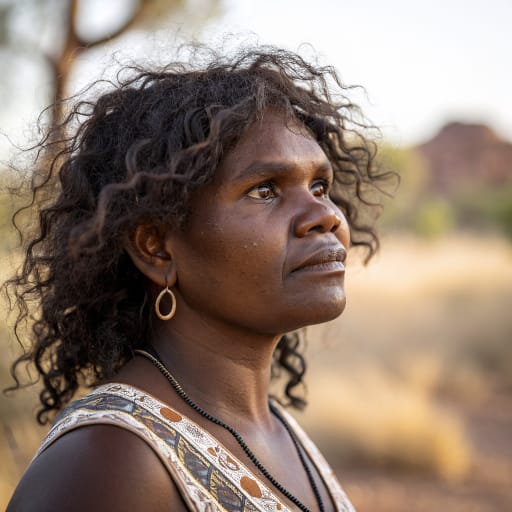
Arrernte
same region (Australia / New Zealand)
Noongar
same region (Australia / New Zealand)
Yolngu
same region (Australia / New Zealand)
Tiwi
same region (Australia / New Zealand)
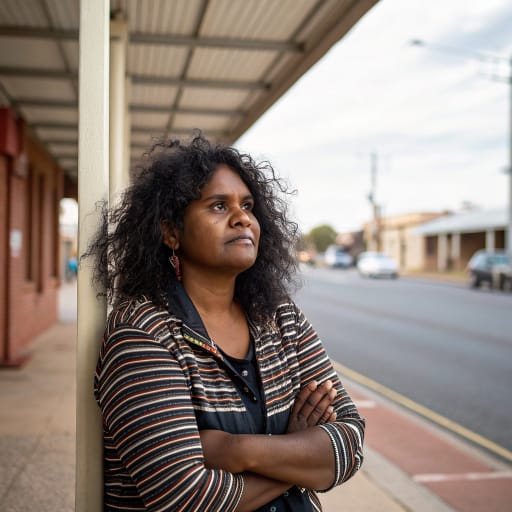
Adnyamathanha
same region (Australia / New Zealand)
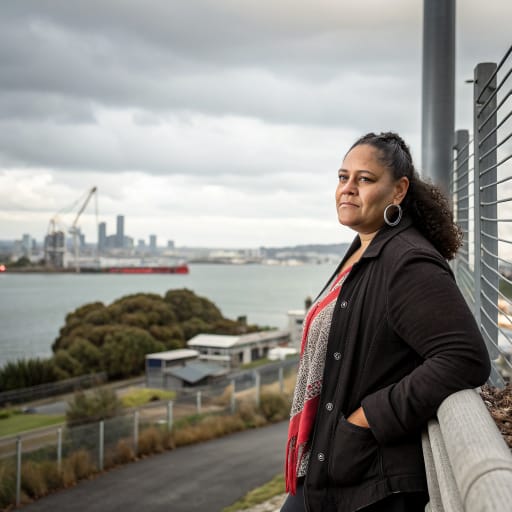
Gunditjmara
same region (Australia / New Zealand)
Ngunnawal
same region (Australia / New Zealand)
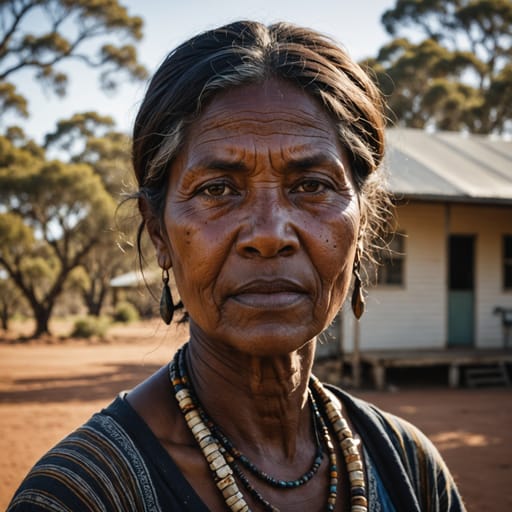
Ngadjuri
same region (Australia / New Zealand)
Typical Aboriginal Tasmanians Phenotypes
Reference for AI generation: hair, eyes, skin, facial structure, build
Aboriginal Tasmanians Body & Anatomy Reference
Aboriginal Australian phenotype: anatomy reference for AI nude generation
Aboriginal Tasmanians Boobs & Breasts
The typical Aboriginal Tasmanians bust is small-to-medium cup, modest-to-moderate projection, in line with the wider Aboriginal Australian pattern. Areolas usually fall in the 28-42mm range, with deep-brown to near-black areolar pigmentation against the deep-brown skin tone. Compared with the fuller Polynesian or West African bust, Aboriginal Tasmanians breasts sit forward and are generally modest projection, firm. A faithful AI render of Aboriginal Tasmanians tits keeps that shape and areola size.
Aboriginal Tasmanians Ass & Hips
Butt shape among Aboriginal Tasmanians women: small-to-medium, modest projection, narrower hip profile, over narrow-to-medium iliac crests, longer torso and limb proportions. This follows Aboriginal Australian ancestry and looks quite unlike the very full Polynesian gluteal projection. An accurate Aboriginal Tasmanians ass in adult AI imagery keeps both the silhouette and the overall build (ectomorph-to-mesomorph, lean elongated frame adapted to arid environment) instead of a generic average.
Aboriginal Tasmanians Vagina & Pussy
Vulvar anatomy among Aboriginal Tasmanians women: deep-brown labial pigmentation. Pubic hair tends to be wavy-to-coiled coarse texture, in the usual inverted-triangle pattern. Both follow Aboriginal Australian pigmentation, which is why Aboriginal Tasmanians pussy renders should not fall back on a pale, sparse Western template.
Aboriginal Tasmanians Dicks & Penis
The Aboriginal Tasmanians cock profile, from Aboriginal Australian anthropometric data: regional mean ~13cm erect; moderate girth; deep-brown shaft pigmentation. Pubic hair has a wavy-to-coiled coarse texture and forms the usual inverted-V pattern. Whether Aboriginal Tasmanians men are circumcised follows religious and cultural practice rather than phenotype.
Aboriginal Tasmanians Body, Curves & Build
Build and curves among Aboriginal Tasmanians women follow the Aboriginal Australian pattern: ectomorph-to-mesomorph, lean elongated frame adapted to arid environment, mean adult female BMI 23-26. Proportions matter as much as skin tone, so Aboriginal Tasmanians figures should keep their regional height and limb ratios.
Aboriginal Tasmanians Skin Tone & Hair Texture
The Aboriginal Tasmanians skin range is deep-brown (Fitzpatrick V-VI), and hair tends to be wavy-to-curly 2C-3B, dark-brown to black; the distinctive blond-haired Aboriginal sub-population in Central Australia is documented and pigmentation-independent. That combination marks the Aboriginal Australian phenotype, and skin tone is the trait AI generators most often get wrong for Aboriginal Tasmanians women.
Explore phenotype categories
Structured taxonomy with peer-reviewed scales · 22 anatomical categories
Erotic Poses & Sex Positions
From the pose catalog: 219 named positions with reference skeletons
Frequently asked questions about Aboriginal Tasmanians people
Where is the Aboriginal Tasmanians homeland?
The Aboriginal Tasmanians homeland is Tasmania (lutruwita) and its Bass Strait islands, notably the Furneaux Group, in Australia. in Australia / New Zealand.
What language do Aboriginal Tasmanians people speak?
Aboriginal Tasmanians people primarily speak English today, with palawa kani, a revived language built from records; historically several Tasmanian languages (unclassified, links to mainland languages unresolved)..
What religion do Aboriginal Tasmanians people practice?
The predominant religion among Aboriginal Tasmanians people is Traditional beliefs tied to country and ancestral beings; today mostly Christian or nonreligious, with renewed cultural and spiritual practice..






Make your own Aboriginal Tasmanians images
Five a day, free, no credits to buy. The studio starts from this group's phenotype data, so you can set body type, pose and style and keep the traits accurate.
Start with Aboriginal Tasmanians