Help us get this right
Does this portrait look right for Miskito?
Nobody has judged this one yet. You would be the first.
Miskito Erotic
Mosquito Coast (Nicaragua, Honduras)
Misumalpan / Miskito
Christianity / Protestantism
About Miskito People
The Miskito are a Caribbean-coast people of eastern Nicaragua and northeastern Honduras, settled along the lagoons, river mouths, and pine savannas of what outsiders still call the Mosquito Coast. The name predates the insect joke; it likely derives from the muskets the Miskito acquired through early contact with English and Dutch traders, weapons that gave a small coastal population outsized leverage over its inland neighbors for nearly two centuries. That trading relationship became something stranger: a Miskito Kingdom, recognized by the British crown, whose kings were sometimes crowned in Jamaica or Belize and whose authority the Spanish never fully broke. The kingdom is gone, but the orientation it produced — facing the Caribbean, wary of the Pacific-side capitals that govern them on paper — has not.
Miskito belongs to the small Misumalpan family, alongside Sumo and the now-extinct Matagalpa, and it sits in a region otherwise dominated by Spanish and by Mesoamerican languages further north. The vocabulary carries the trade history openly: English loanwords for tools, vessels, and goods are stitched into everyday speech, and many Miskito communities are functionally trilingual in Miskito, Creole English, and Spanish depending on who they are talking to. Identity itself has always been porous. The historical Miskito absorbed shipwrecked and escaped Africans early enough that the distinction between "Miskito" and the related Sambo or Zambo Miskito communities is one of degree rather than kind, and skin tone within a single family can vary widely without anyone treating it as remarkable.
Religion on the coast is overwhelmingly Protestant, and specifically Moravian — a legacy of nineteenth-century German missionaries from Herrnhut whose churches still anchor most villages. Moravian pastors carry weight in disputes that elsewhere in Latin America would go to the Catholic priest or the municipal office, and the church runs much of the rural school and clinic network. Older spiritual practice has not disappeared so much as gone quiet beside it: the figure of the sukya, a healer who deals with sickness understood as spiritual trespass, still operates, and the sea and certain rivers retain a moral weight that Moravian doctrine accommodates rather than argues with.
Subsistence is fishing, lobster diving, small-plot agriculture, and increasingly remittances; the lobster economy has been brutal on divers' bodies and is a continuous source of friction with the central governments. Land-titling battles with Managua and Tegucigalpa, dating back decades and sharpened during the Sandinista–Contra war that cut directly through Miskito territory in the 1980s, remain the defining political issue.
Related ethnic groups
Groups that share Miskito's homeland, region, language, or religious tradition. These are likely candidates for comparative phenotype reference.
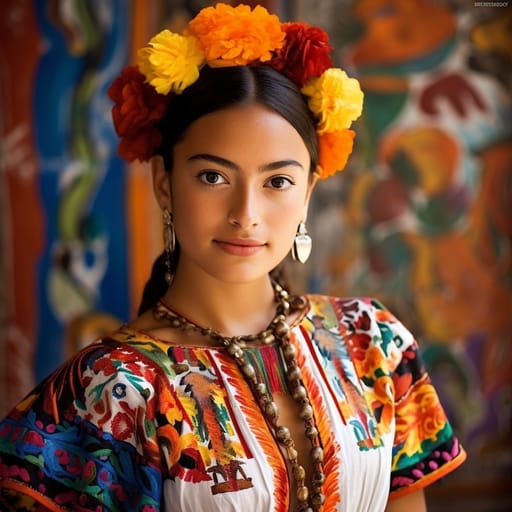
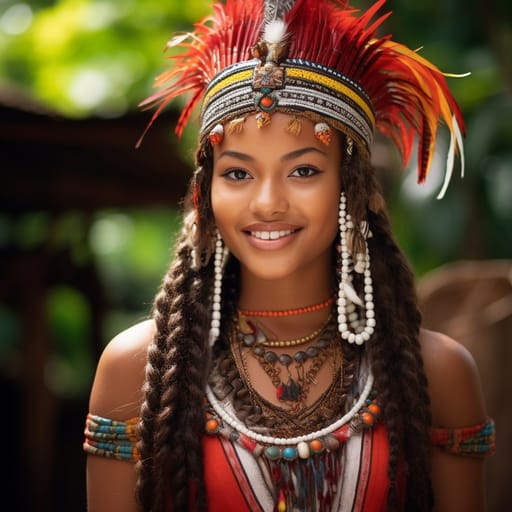
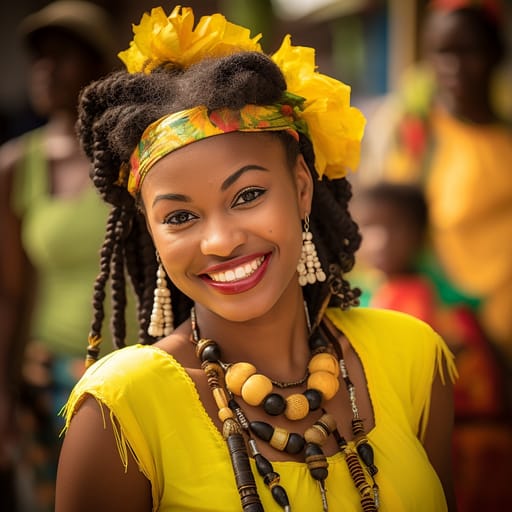
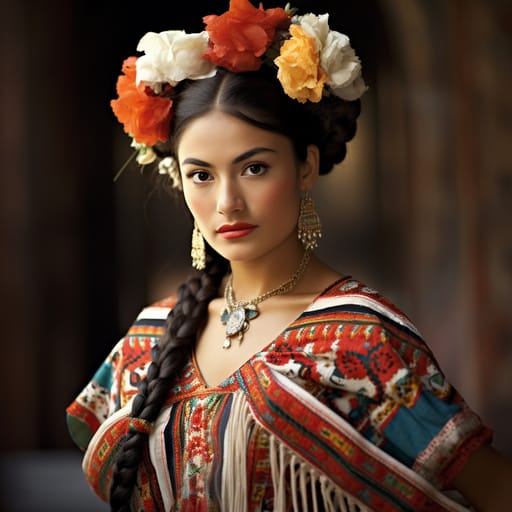
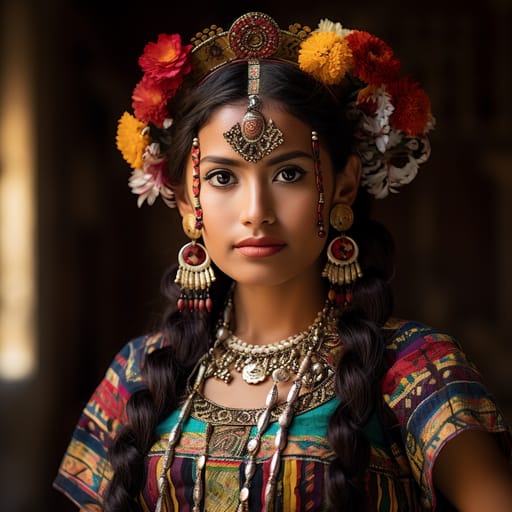
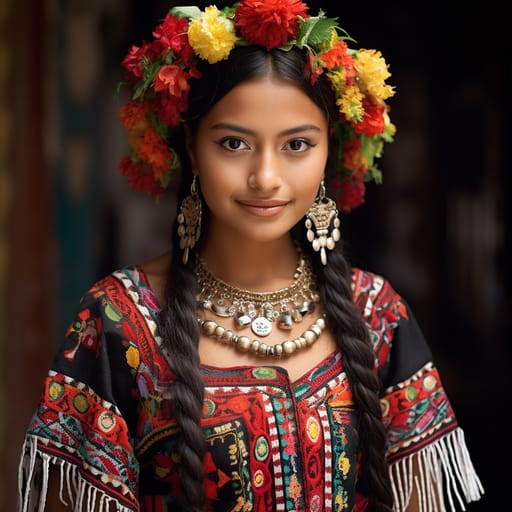
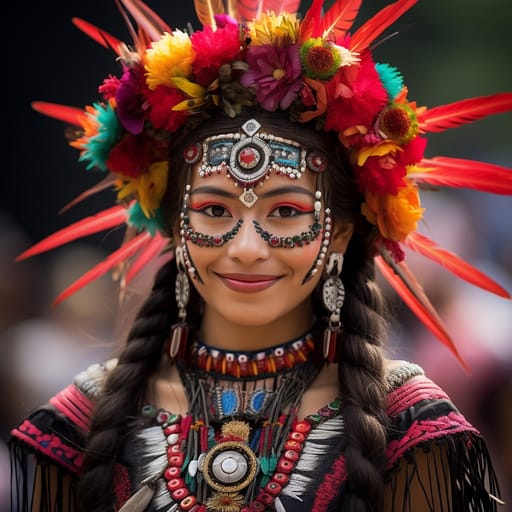
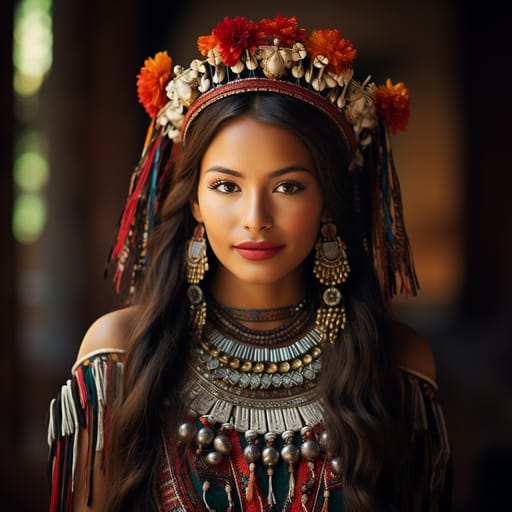
Geographic Distribution: Miskito populations across 2 countries
Each row is ranked by the group's share of that country's population, with the source citation drawn from published census and demographic surveys. Click through for the full per-country phenotype profile.
| Country | Share | Source |
|---|---|---|
| Nicaragua | 3.0% | INIDE 2005 Census, self-identified Miskito (~3.0%, ~150,000+ in 2005, growing to ~200,000+ by 2020); concentrated in the North Caribbean Coast Autonomous Region (RACCN, formerly RAAN), particularly the Río Coco basin and coastal communities |
| Honduras | 1.2% | INE 2013 Census, self-identified Miskito (~1.2%, ~80,000); concentrated in the Mosquitia region (Gracias a Dios Department) on the Caribbean coast bordering Nicaragua, with cross-border population shared with Nicaragua |
Typical Miskito Phenotypes
Reference for AI generation: hair, eyes, skin, facial structure, build
The Miskito phenotype is shaped by a centuries-old admixture that sets it apart from neighboring Mesoamerican Indigenous populations. Core ancestry is Chibchan-related Indigenous, layered with substantial West and Central African input from shipwrecked and escaped enslaved people absorbed into coastal communities from the 17th century onward, plus a thinner stratum of British, Dutch, and Jamaican Creole ancestry tied to the old Mosquito Coast protectorate. The result is a population that visibly spans a wider phenotypic range than most single Central American Indigenous groups.
Hair is most often black and ranges from straight or loosely wavy in individuals with dominant Indigenous ancestry to dense waves, soft curls, and tighter coils (Type 3 to Type 4) in those with stronger Afro-Miskito heritage; mid-brown shades appear but blond and red are essentially absent. Eyes are predominantly dark brown to near-black, occasionally lighter brown; epicanthic folds are common but softer and less universal than in East Asian populations, and the eye shape tends to be moderately almond with a slight downward outer canthus. Skin tone covers a broad range — Fitzpatrick III through VI — with warm copper and olive-brown undertones in more Indigenous-leaning individuals and deeper brown to dark brown tones in Afro-Miskito families along the coastal lagoons. Sun exposure on a tropical, humid coast pushes most adults toward the deeper end of their genetic range.
Facial structure typically features broad-to-medium nasal bridges with moderately wide alae, full but not heavy lips, rounded malar prominence rather than the sharp cheekbone shelf seen in Andean populations, and a relatively short, square jaw. Build runs short to mid-stature — men commonly 5'4" to 5'7", women 4'11" to 5'3" — with compact, muscular proportions, sturdy shoulders, and a tendency toward solid lower-body mass. The most distinctive marker is the visible Indigenous–African gradient within a single small population, more pronounced in the Tawira and Sambu (Zambo-Miskito) lineages along the coast than in inland Indigenous-dominant communities.
Miskito Body & Anatomy Reference
Anatomy by feature, Mesoamerican Indigenous / Mestizo phenotype
Miskito Boobs & Breasts
Miskito boobs follow the Mesoamerican Indigenous / Mestizo profile: medium-to-large cup, full, moderate-to-high projection. Areolar diameter is usually 32-46mm, and the coloring is medium-brown to dark-brown areolar pigmentation against the tan-to-medium-brown skin tone. Breast shape tracks body composition (endomorph-to-mesomorph with strong hip-and-bust deposition, mean adult female BMI 26-29), so Miskito breasts tend to be full and projecting, classic Latina curvy bust profile. Expect a forward-set shape, not the smaller East Asian bust.
Miskito Ass & Hips
Miskito ass and hip morphology presents as medium-to-full, high projection, classic Latina curvy hip profile, distinctly different from the slim narrow-hip East Asian profile. The Miskito pelvic profile shows wide iliac crests, full gluteal-femoral fat deposition, anchored in the Mesoamerican Indigenous / Mestizo skeletal pattern. Miskito butt shots in adult AI imagery should render the medium-to-full, high projection, classic Latina curvy hip profile silhouette with the overall build (endomorph-to-mesomorph with strong hip-and-bust deposition) and the fat distribution typical of the Mesoamerican Indigenous / Mestizo phenotype.
Miskito Vagina & Pussy
Miskito pussy anatomy typically shows medium-brown to dark-brown labial pigmentation, fuller labia minora. Pubic hair is usually straight-to-wavy coarse dark texture, dense distribution. In AI-generated Miskito nudes, labial color should blend into the tan to medium-brown skin with a gradual transition, and the hair should keep its straight-to-wavy coarse dark texture.
Miskito Dicks & Penis
Penis reference for Miskito men: regional mean ~13cm erect, moderate girth. Coloring: medium-brown shaft pigmentation. An accurate Miskito cock in AI imagery matches the surrounding tan to medium-brown skin rather than a generic porn default. Circumcision depends on religion and custom, not ancestry.
Miskito Body, Curves & Build
The Miskito figure is generally endomorph-to-mesomorph with strong hip-and-bust deposition, with mean adult female BMI 26-29, characteristic of Mesoamerican Indigenous / Mestizo ancestry. AI image tools tend to flatten regional body types into a few stock shapes; here the Miskito build is kept as its own reference.
Miskito Skin Tone & Hair Texture
Skin: tan to medium-brown (Fitzpatrick III-V). Hair: straight-to-wavy 1A-2B, dense dark-brown to black. Both are typical of Mesoamerican Indigenous / Mestizo ancestry. The most common mistake in AI nudes of Miskito women is a body rendered lighter than the face.
Data depth
28/100Coverage of image-grounded phenotype observations · drives AI generation diversity
- Sample size
- 17/40· 8 images
- Image quality
- 6/30· 13% high
- Confidence
- 5/20· mean 0.55
- Source diversity
- 0/10· wikipedia
- ·Small sample (n<10)
- ·Low overall confidence
- ·Mostly low-quality source images
- ·Wikipedia-only source, not population-representative
Observed Distribution: Image Sample
Empirical observations from analyzed photographs · supplementary signal, not population truth
Sample: 8 images analyzed (8 wikipedia). Quality: 1 high, 1 medium, 6 low, 0 very_low. Avg analyzer confidence: 0.55.
Skin tone (Fitzpatrick): II (38%), IV (38%), V (25%)
Hair color: black (88%), gray/white (13%)
Hair texture: straight (25%), wavy (25%), curly (13%), coily (25%), shaved (13%)
Eye color: dark brown (63%), hazel (13%), unclear (25%)
Epicanthic fold: 13% present, 63% absent, 25% unclear
Caveats: Sample size 8 is small, so the observed distribution should be treated as suggestive, not definitive. Quality skews toward older or low-resolution photos; phenotype detail may be lossy. Low average analyzer confidence: many photos partially obscured or historical. Sample is 100% Wikipedia notable people, which skews toward male, public-life, and modern figures, not population-representative.
Last aggregated: May 7, 2026
Explore phenotype categories
Structured taxonomy with peer-reviewed scales · 22 anatomical categories
Notable Miskito People
3 reference figures, sourced from Wikipedia
- Lottie Cunningham Wren, lawyer, environmentalist and Native American rights activist from Nicaragua
- Myrna Cunningham, politician
- Rudel Calero, footballer
Erotic Poses & Sex Positions
From the pose catalog: 219 named positions with reference skeletons
Frequently asked questions about Miskito people
Where is the Miskito homeland?
The Miskito homeland is Mosquito Coast (Nicaragua, Honduras) in Central America.
What countries do Miskito people live in?
Miskito populations are documented across 2 countries: Nicaragua, Honduras.
What language do Miskito people speak?
Miskito people primarily speak Misumalpan / Miskito.
What religion do Miskito people practice?
The predominant religion among Miskito people is Christianity / Protestantism.






Make your own Miskito images
Five a day, free, no credits to buy. The studio starts from this group's phenotype data, so you can set body type, pose and style and keep the traits accurate.
Start with Miskito