Help us get this right
Does this portrait look right for Ilocano?
One tap. It takes a second and it is recorded.
3 say it looks right, 2 say it looks off.
Ilocano Erotic
Ilocos Region (Philippines)
Christianity / Catholicism
About Ilocano People
The Ilocano are the people of the narrow coastal strip in the northwestern Philippines, wedged between the Cordillera mountains and the South China Sea. That geography did most of the cultural work. The Ilocos plain is thin, the soil is not generous, and the rains arrive unevenly — so Ilocano life developed around frugality, calculation, and a willingness to leave. The reputation for thrift that other Filipinos tease them about is not a stereotype Ilocanos resent; it is closer to a self-description, and it shows up in the cuisine, which leans hard on bitter vegetables, fermented fish paste (bagoong), and dishes built from whatever the kitchen garden produced that week. Pinakbet — a stew of squash, eggplant, bitter gourd and okra bound with bagoong — is the canonical Ilocano dish, and it is essentially an argument about how to cook well from very little.
Their language belongs to the Cordilleran branch of the Philippine subgroup of Austronesian, distinct from Tagalog and from the Igorot languages of the highlands directly inland. Ilocano spread well beyond its homeland because the Ilocanos themselves did. From the late nineteenth century onward they migrated south into the Cagayan Valley and Central Luzon, then outward to Hawaii's sugar plantations, the canneries of the American Pacific Northwest, and the farms of California's Central Valley — making Ilocano one of the most widely spoken Philippine languages in the United States, sometimes more audible in Honolulu or Stockton than in Manila. Within the Philippines it functions as the lingua franca of the entire northern Luzon region, picked up as a second language by neighboring groups who do business in Ilocos towns.
Catholicism arrived with Spanish missionaries in the sixteenth century and took deep root, but the Ilocos has its own religious texture: the Aglipayan Church (Iglesia Filipina Independiente), founded in 1902 as a nationalist breakaway from Rome, drew much of its early strength from Ilocano clergy and parishes, and remains visible in the region's church towers. Pre-Christian practice survives at the edges — herbalists, the residual figure of the mangkukulam, pilgrimage habits attached to local saints. The colonial period also left the Ilocos with the burley-tobacco economy that triggered the 1807 Basi Revolt, one of the more pointed early uprisings against Spanish monopoly rule, and a long memory of resistance that Ilocano writers have returned to ever since.
Related ethnic groups
Groups that share Ilocano's homeland, region, language, or religious tradition. These are likely candidates for comparative phenotype reference.
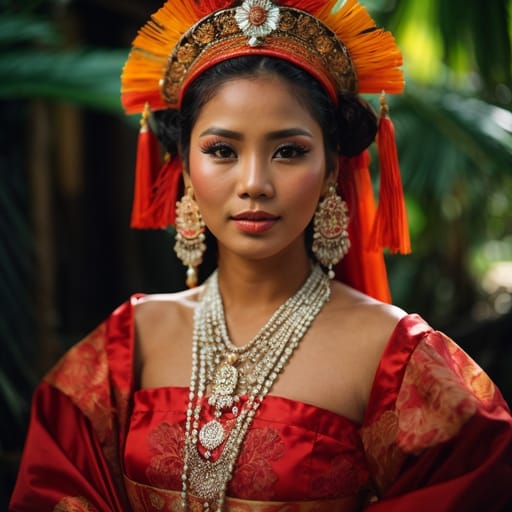
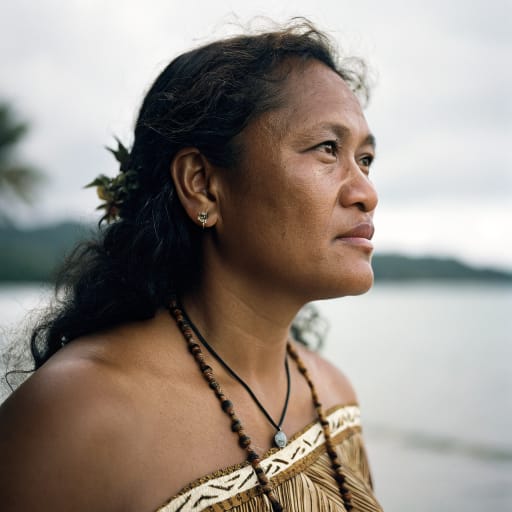
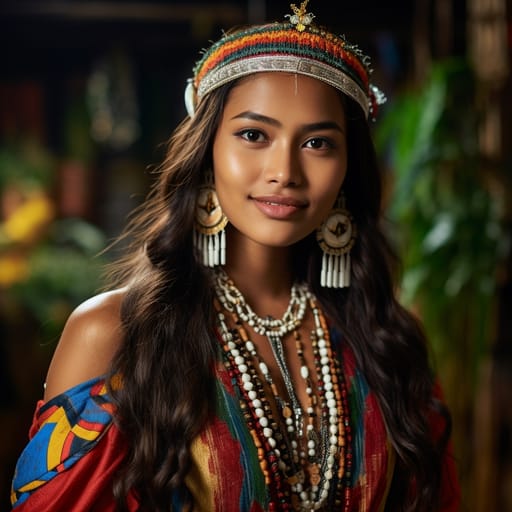
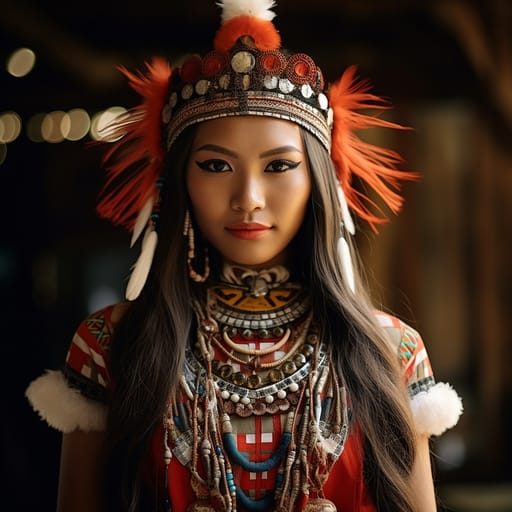
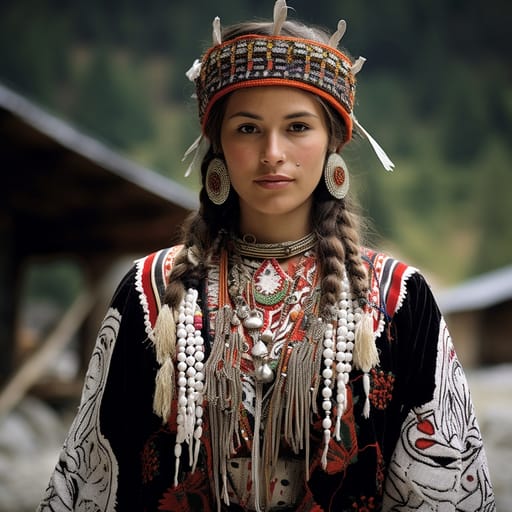
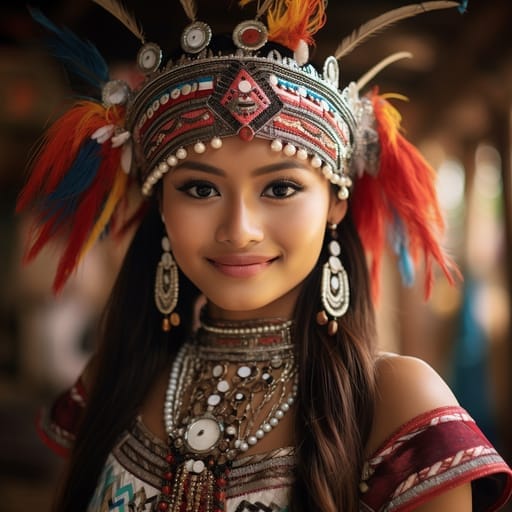
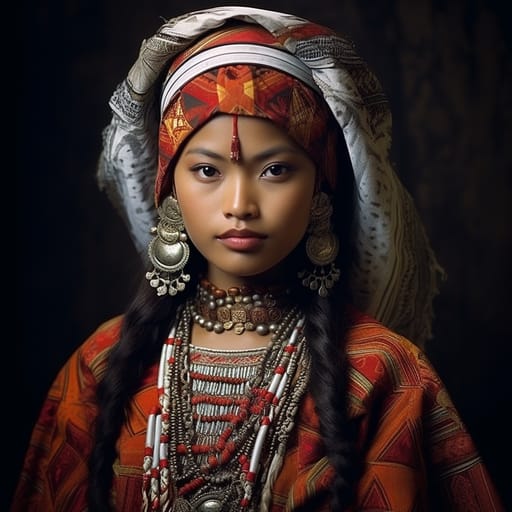
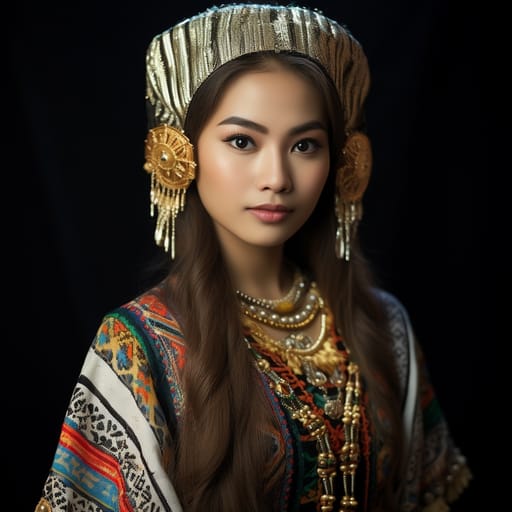
Geographic Distribution: Ilocano populations across 1 country
Each row is ranked by the group's share of that country's population, with the source citation drawn from published census and demographic surveys. Click through for the full per-country phenotype profile.
| Country | Share | Source |
|---|---|---|
| Philippines | 9.2% | PSA 2020 Census, Ilocano (~9.2%, ~10M+); concentrated in Northern Luzon (Ilocos Norte, Ilocos Sur, La Union, Pangasinan, plus Cagayan Valley). The Ilocano language community has substantial diaspora populations in Hawaii (~25% of Hawaii's Filipino-American population is of Ilocano descent), the US mainland, Saudi Arabia, and elsewhere |
Typical Ilocano Phenotypes
Reference for AI generation: hair, eyes, skin, facial structure, build
The Ilocano phenotype reflects an Austronesian baseline shaped by long settlement of the narrow coastal-and-mountain strip of northwestern Luzon, with measurable Cordilleran highland influence at the eastern margins and lighter southern Chinese admixture in port towns like Vigan and Laoag. Hair is uniformly dark — black to very dark brown, occasionally with a sun-bleached reddish-brown cast in fishermen and farmers. Texture skews straight to gently wavy; the tight curl seen in some southern Filipino populations is uncommon here. Coverage is thick, and graying tends to come late and even rather than patchy.
Eyes are dark brown to near-black. The epicanthic fold is near-universal but typically softer and less pronounced than in northern East Asian populations — the palpebral fissure reads as moderately almond-shaped rather than narrow. Double eyelids occur but are less common than single or low-set folds. Skin sits in Fitzpatrick III to IV, with warm golden to olive-brown undertones; the agricultural and fishing economy of the region produces strong sun-tanning gradients, so working populations often present significantly darker than the genetic baseline. A subtler yellow undertone distinguishes Ilocanos from the redder warmth common in Visayan populations further south.
Facial structure runs to a medium-broad face with moderately high, rounded cheekbones and a relatively short, low-bridged nose with a wider alar base — flatter in profile than southern Chinese phenotypes but less broad than Malay-Indonesian averages. Lips are medium-full and well-defined; jawlines are typically soft rather than angular, with women like Gloria Diaz exemplifying the rounded oval face common in the lowland Ilocos. Build is compact and short — adult male stature averages around 163 cm, female around 151 cm — with wiry, lean musculature in laborers and a tendency toward central adiposity with age. The Ilocos-Cordilleran border populations show a slightly taller, more angular variant, with sharper cheekbones, deeper-set eyes, and a darker, more reddish-brown skin tone reflecting Igorot highland admixture.
Ilocano Body & Anatomy Reference
Anatomy by feature, Southeast Asian Austronesian / Austroasiatic phenotype
Ilocano Boobs & Breasts
The typical Ilocano bust is small-to-medium cup, modest projection, in line with the wider Southeast Asian Austronesian / Austroasiatic pattern. Areolas usually fall in the 26-38mm range, with medium-brown to dark-brown areolar pigmentation against the tan-to-medium-brown skin tone. Compared with the fuller South Asian or Polynesian bust, Ilocano breasts sit forward and are generally firm, modest projection. A faithful AI render of Ilocano tits keeps that shape and areola size.
Ilocano Ass & Hips
Butt shape among Ilocano women: small-to-medium, modest projection, narrower hip profile, over narrow-to-medium iliac crests. This follows Southeast Asian Austronesian / Austroasiatic ancestry and looks quite unlike the fuller glutes of the Pacific Islander phenotype. An accurate Ilocano ass in adult AI imagery keeps both the silhouette and the overall build (ectomorph, petite frame) instead of a generic average.
Ilocano Vagina & Pussy
Vulvar anatomy among Ilocano women: medium-brown to dark-brown labial pigmentation. Pubic hair tends to be straight-to-wavy fine-to-medium texture, in the usual inverted-triangle pattern. Both follow Southeast Asian Austronesian / Austroasiatic pigmentation, which is why Ilocano pussy renders should not fall back on a pale, sparse Western template.
Ilocano Dicks & Penis
The Ilocano cock profile, from Southeast Asian Austronesian / Austroasiatic anthropometric data: regional mean ~11cm erect; moderate girth; medium-brown shaft pigmentation. Pubic hair has a straight-to-wavy fine-to-medium texture and forms the usual inverted-V pattern. Whether Ilocano men are circumcised follows religious and cultural practice rather than phenotype.
Ilocano Body, Curves & Build
Build and curves among Ilocano women follow the Southeast Asian Austronesian / Austroasiatic pattern: ectomorph, petite frame, mean adult female BMI 20-23. Proportions matter as much as skin tone, so Ilocano figures should keep their regional height and limb ratios.
Ilocano Skin Tone & Hair Texture
The Ilocano skin range is tan to medium-brown (Fitzpatrick III-V), and hair tends to be straight-to-wavy 1A-2A, dark-brown to black. That combination marks the Southeast Asian Austronesian / Austroasiatic phenotype, and skin tone is the trait AI generators most often get wrong for Ilocano women.
Data depth
76/100Coverage of image-grounded phenotype observations · drives AI generation diversity
- Sample size
- 40/40· 77 images
- Image quality
- 21/30· 42% high
- Confidence
- 15/20· mean 0.74
- Source diversity
- 0/10· wikipedia
- ·Wikipedia-only source, not population-representative
Observed Distribution: Image Sample
Empirical observations from analyzed photographs · supplementary signal, not population truth
Sample: 77 images analyzed (77 wikipedia). Quality: 32 high, 31 medium, 13 low, 1 very_low. Avg analyzer confidence: 0.74.
Skin tone (Fitzpatrick): III (26%), IV (68%), V (3%), unclear (4%)
Hair color: black (49%), gray/white (35%), dark brown (8%), red/auburn (1%), brown (1%), blonde (1%), other (1%), unclear (3%)
Hair texture: straight (74%), wavy (17%), coily (1%), shaved (4%), covered (1%), unclear (3%)
Eye color: dark brown (90%), unclear (10%)
Epicanthic fold: 74% present, 16% absent, 10% unclear
Caveats: Sample is 100% Wikipedia notable people, which skews toward male, public-life, and modern figures, not population-representative.
Last aggregated: May 7, 2026
Explore phenotype categories
Structured taxonomy with peer-reviewed scales · 22 anatomical categories
Notable Ilocano People
100 reference figures, sourced from Wikipedia
- Archbishop Emeritus Edmundo M. Abaya, During his active years in the ministry, Abaya served as chairman of the CBCP…
- Zacarias "Apo Kari" Agatep, parish priest of Our Lady of Hope Parish in Caoayan, Ilocos Sur; jailed for f…
- Gregorio Aglipay, first Supreme Bishop of the Aglipayan Church
- Jeremias Aquino, priest of the Iglesia Filipina Independiente; jailed in 1979 as a political p…
- José Burgos, Filipino priest and martyr
- Isabelo de los Reyes, founder of the Aglipayan Church and prominent writer and politician
- Antonio Mabutas, first Bishop of the Diocese of Laoag and the second Archbishop of the Archdio…
- Pedro Almazan, leader from Laoag; proclaimed and crowned King of Ilocos; led the First Iloco…
- Magnolia Antonino, senator of the Philippines; married to Gaudencio Antonino, also a senator
- Rodolfo "Pong" Gaspar Biazon, former General and Chief of Staff of the Armed Forces of the Philippines, Phi…
- Conchita Carpio-Morales, former Ombudsman of the Philippines and Associate Justice of the Supreme Cour…
- Erlinda Fadera-Basilio, ambassador and permanent representative of the Philippines to the United Nati…
- General Antonio Luna, general of Emilio Aguinaldo's era
- Ferdinand Marcos, 10th President of the Philippines, known for amassing wealth and for the huma…
- Bongbong Marcos, 17th president of the Philippines and the only son of former president and di…
- Maria Imelda Josefa Romualdez Marcos, daughter of former president Ferdinand Marcos, is a former representative of …
- Mariano Marcos, lawyer and a politician; father of Ferdinand Marcos
- Ernesto Maceda, Filipino politician, lawyer, and columnist who first gained national prominen…
- Quintín Paredes, a Filipino lawyer, politician, and statesman
- Juan Ponce Enrile, a former senator who served as Senate President from 2008 to 2013
- Camilo Osías, Filipino politician and twice briefly President of the Senate of the Philippines
- Elpidio Quirino, 6th President of the Philippines (1948-1953) and native of Caoayan, Ilocos Sur
- Artemio Ricarte, Filipino general during the Philippine Revolution and the Philippine-American…
- Fabian Ver, former General and Chief of the Armed Forces of the Philippines
- David Bueno, Filipino human rights lawyer and radio show host from Ilocos Norte during the…
- Niña Corpuz, indigenous textiles advocate, businesswoman, and former Filipino journalist f…
- Armando "Mandrake" Ducusin Palabay, Filipino student leader and activist; honored at the Bantayog ng mga Bayani m…
- Josefa Llanes Escoda, women's rights activist, founder of the Girl Scouts of the Philippines
- Leona Florentino, Ilokano foundational poet, dramatist, satirist, and playwright who is also kn…
- Manuel Arguilla, Ilokano writer, resistance fighter, and martyr. Widely recognized as a leadin…
- Sonny Cabatu, semi-retired Filipino professional basketball player in the Philippine Basket…
- Marcelino Crisologo, writer, playwright, and first governor of Ilocos Sur
- Lilia Cuntapay, Filipina horror actress
- Gloria Diaz, Miss Universe 1969 from Aringay, La Union
- Francisco Sionil José, prominent English-language novelist
- Japoy Lizardo, Filipino actor and athlete
- Juan Luna, famous Filipino painter, older brother of Antonio Luna
- Guji Lorenzana, Filipino actor and singer
- Lucrecia Kasilag, National Artist of the Philippines for Music as a composer and pianist; known…
- Jimboy Martin, Filipino actor originally from Nueva Vizcaya
- Bienvenido Nebres, longest-serving university president of Ateneo de Manila University; member o…
- Jane Oineza, Filipina actress
- Robin Padilla, Filipino actor and politician, from Nueva Ecija
- Markus Paterson, Filipino actor
- Glennifer Perido, beauty pageant titleholder from Tabuk, Kalinga
- Jericho Rosales, Filipino actor
- Maja Salvador, Filipina actress
- Gabriela Silang, leader of the Ilocano independence movement from Spain after death of her hus…
- Luis "Chavit" Singson, Filipino politician from Vigan City and former governor of Ilocos Sur. He is …
- Jessica Soho, Filipino broadcast journalist, documentarian, and news director who received …
- Martha Vanessa Antonio del Moral, Filipina actress better known by her screen name 'Vaness del Moral', and a ta…
- Máximo Villaflor Solivén, prominent Filipino journalist and newspaper publisher; co-founder and publish…
- Nova Villa, Filipino actress
- Teófilo Yldefonso, Filipino swimmer known as "the Ilocano Shark" who specialized in the breastst…
- Anne Curtis, Filipina actress whose mother is Ilocano from Pangasinan
- Jasmine Curtis-Smith, Filipina actress, younger sister of Anne Curtis
- Jhong Hilario, Filipino actor, host, and dancer
- Danny Ildefonso, professional basketball player who played in San Miguel Beerman, now Petron B…
- Marc Pingris, Filipino basketball player from Sison.
- Fidel V. Ramos, 12th President of the Philippines (1992-1998) from Lingayen, Pangasinan
- Carmen Rosales, actress from Pangasinan
- F. Sionil José, novelist
- Gregorio C. Brillantes, a multi-award-winning fiction writer and magazine editor, is one of the Phili…
- Onofre Corpuz, writer and former secretary of the Department of Education; 13th president of…
- Ramon Magsaysay, 7th President of the Philippines
- JB Magsaysay, actor, housemate on Pinoy Big Brother (season 1), and grandson of former Pres…
- Nicanor Reyes Sr., founder and first president of the Far Eastern University in Manila. He envis…
- Ruby Rodriguez, Filipina actress and a co-host of the television variety show Eat Bulaga! in …
- Paulino Santos, former chief of staff of the Philippine Army during the time of Philippine Pr…
- Alden Richards, actor; his paternal grandmother is Ilokana from Sinait, Ilocos Sur
- Alma Moreno, Filipina actress born in Cervantes, Ilocos Sur
- Kurt Barbosa, Sea Games taekwondo championship, whose ancestors were natives from Abra
- Antonio Carpio, Associate Justice; his father is Ilocano
- Delfin Lorenzana, Retired major general, former secretary of National Defense from 2016 to 2022…
- Bela Padilla, actress from Nueva Ecija
- Bianca King, Filipina actress; her mother is Ilokana
- Bryan Termulo, singer; her mother is Ilocana from La Union
- Carlos P. Garcia, 8th President of the Philippines (1957-1961); his parents were natives from B…
- Ces Drilon, Filipina news anchor; her father is Ilocano
- Coleen Garcia, Filipina actress; her mother is Ilokana from La Union
- Darren Espanto, Filipino singer; his parents are Ilocano From Nueva Vizcaya
- Daniel Padilla, actor; his paternal grandmother is Ilokana and the sister of Bela Padilla's m…
- Doug Kramer, Filipino basketball player; his mother is from La Union
- Emmylou "Lala" Taliño-Mendoza, Governor of Cotabato (2010-2019, 2022-present) of Ilocano descent
- Gloria Macapagal-Arroyo, daughter of Eva Macapagal from Pangasinan
- Isabelle Daza, daughter of Gloria Diaz
- Jake Cuenca, Filipino American actor, From Ilocos Norte
- Joseph Emilio Abaya, DOTC secretary from Candon, Ilocos Sur; he is a descendant of Isabelo Abaya o…
- Jessy Mendiola, Filipina actress; her mother Didith Garvida is from Bangui, Ilocos Norte
- Jonha Richman, Filipino-businesswoman; her mother is from Bangued, Abra
- Kylie Padilla, Filipina actress; her father, Robin Padilla, is an Ilocano from Nueva Ecija
- Marilou Diaz-Abaya, Filipina director and National Artist of the Philippines for Film and Broadca…
- Jim Paredes, musician; his father is Ilocano from Abra
- Liza Soberano, Filipino-American model and actress; her father and ancestors are Ilocanos fr…
- Mac Alejandre, Filipino director
- Orlando Quevedo, a Filipino cardinal of Roman Catholic Church, served as an Archbishop Emeritu…
- Vice Ganda, Filipino comedian; his mother is Ilokana from La Union.
- Yassi Pressman, actress; her mother is from Isabela
- Aquilino "Nene" Pimentel Jr., a Filipino politician and human rights lawyer during the Martial Law under Ma…
- Lawrence Fortun, Filipino politician, mayor of Butuan (2022-present), former Agusan del Norte …
Erotic Poses & Sex Positions
From the pose catalog: 219 named positions with reference skeletons
Frequently asked questions about Ilocano people
Where is the Ilocano homeland?
The Ilocano homeland is Ilocos Region (Philippines) in Southeast Asia.
What countries do Ilocano people live in?
Ilocano populations are documented across 1 country: Philippines.
What language do Ilocano people speak?
Ilocano people primarily speak Austronesian / Philippine / Cordilleran / Ilocano.
What religion do Ilocano people practice?
The predominant religion among Ilocano people is Christianity / Catholicism.






Make your own Ilocano images
Five a day, free, no credits to buy. The studio starts from this group's phenotype data, so you can set body type, pose and style and keep the traits accurate.
Start with Ilocano