No portrait yet
Yancai Erotic
Steppes northwest of Kangju, near the Aral Sea and the northern Caspian, in present-day Kazakhstan, Uzbekistan and southern Russia
Unrecorded; probably a Sarmatian or early Alanic language (Eastern Iranian, Indo-European), related to Scythian and to modern Ossetian
Iranian steppe nomads of the Sarmatian period; often identified with the Aorsi of Greek sources, later called Alanliao and absorbed into the Alans
About Yancai People
The Yancai were a nomadic people of the steppe near the Aral Sea and the northern Caspian. Chinese records from the 2nd century BCE to the 3rd century CE describe them, and later sources count them among the Alans, whose surviving descendants are the Ossetians of the North Caucasus. The Yancai never wrote about themselves. What we know comes from Han diplomats and historians looking west from the far end of the Silk Road, so the picture is sketched from a great distance, though in some places it is sharper than you would expect.
The first account came from Zhang Qian's reports, kept in Sima Qian's Shiji. It placed the Yancai about 2,000 li northwest of Kangju, the steppe power on the middle Syr Darya, and called them a xingguo, a moving state: a country that went wherever its herds went. They had more than 100,000 archers and lived beside a huge body of water with no visible shore, which the historian guessed might be the Northern Sea. Scholars still argue over whether that meant the Aral or the Caspian. Later sources add detail. The Weilüe says the Yancai had once been weak and subject to Kangju but no longer were, that they moved with water and pasture, and that their land was famous for sables. The Hou Hanshu reports that they had renamed their state Alanliao, lived in towns, dressed and lived much like the people of Kangju and fell under its authority. It also notes a mild climate with plenty of pines and white grass.
Scholars who reconstruct the older pronunciation of the name have long linked the Yancai to the Aorsi. The Aorsi were a Sarmatian confederation that Strabo placed between the Don and the Caspian. He described them as rich enough to wear gold and said they traded Indian and Babylonian goods carried by camel. Most scholars accept the link, but it is not proven. If it holds, the Yancai spoke an Eastern Iranian language related to Scythian. The new name would then mean they joined a larger and more aggressive steppe alliance, not that they disappeared.
That alliance traveled far. Alans raided Parthia and Armenia and settled across the North Caucasus, and some went on into Gaul, Iberia and North Africa alongside the Vandals. Ossetian, still spoken in Russia and Georgia, is the living remnant of that line. The Yancai stand out because they are one of the few peoples described by both Chinese and Greco-Roman geographers, each writing without knowledge of the other from opposite ends of Eurasia.
Related ethnic groups
Groups that share Yancai's homeland, region, language, or religious tradition. These are likely candidates for comparative phenotype reference.
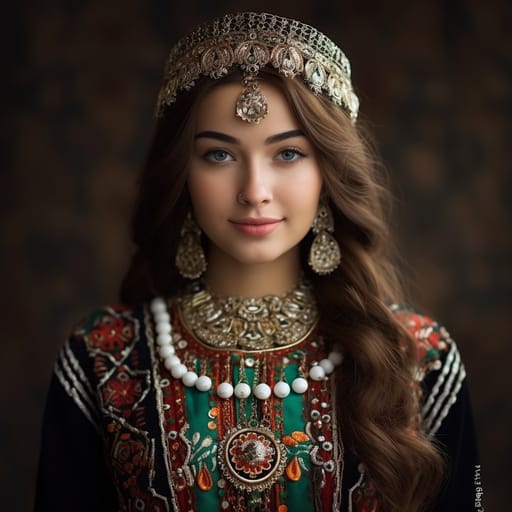
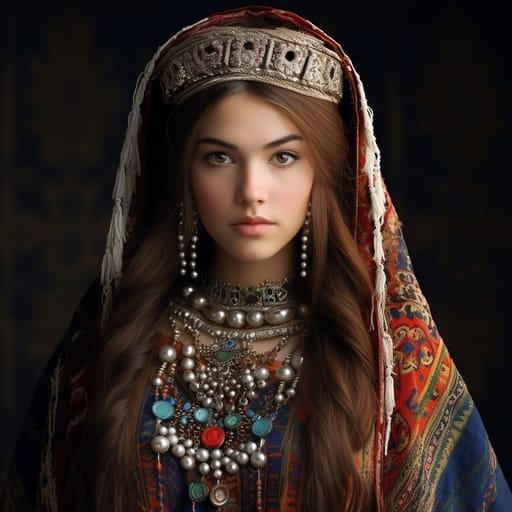
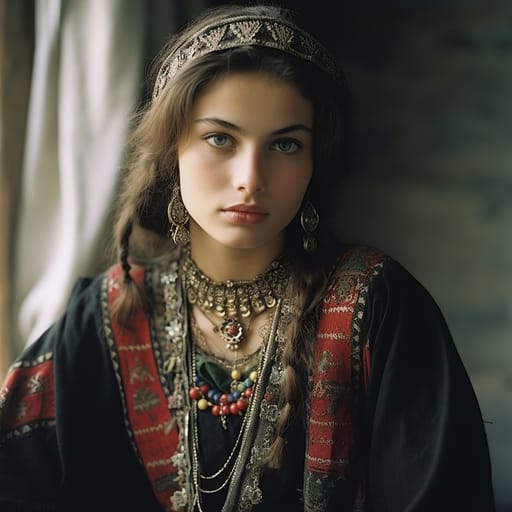
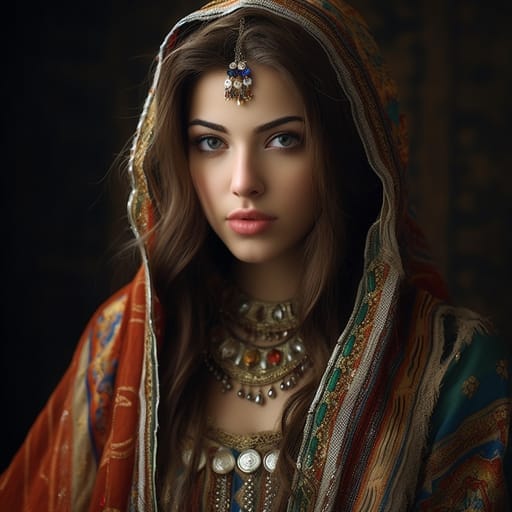
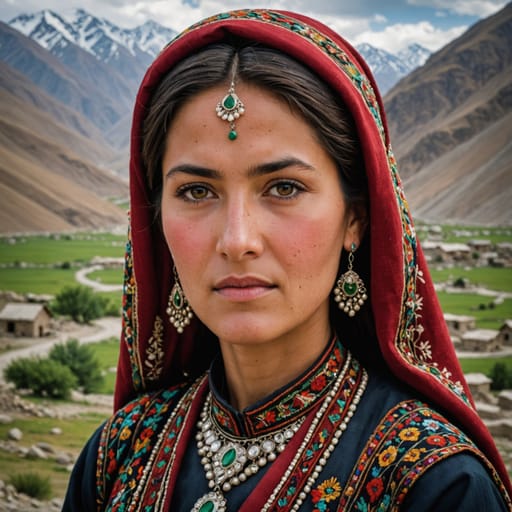
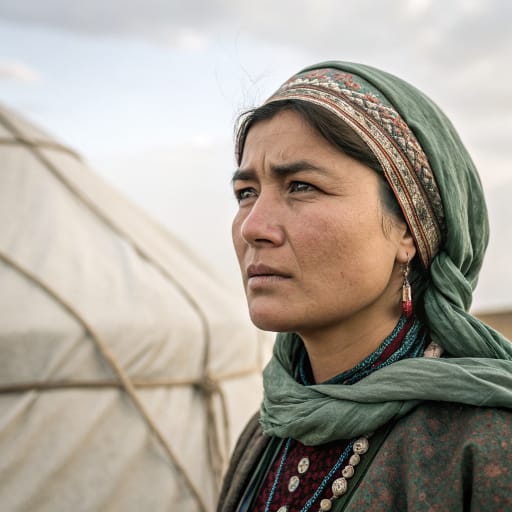
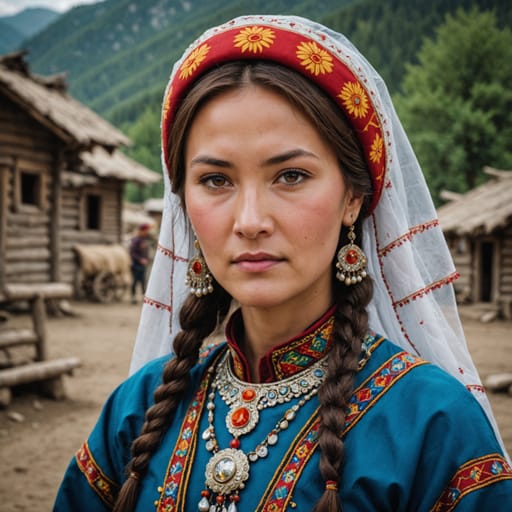
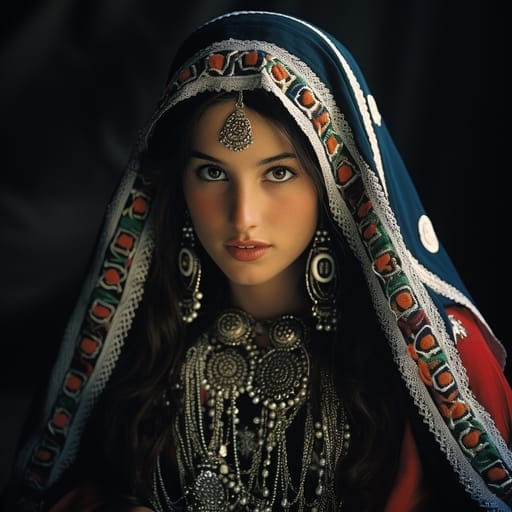
Typical Yancai Phenotypes
Reference for AI generation: hair, eyes, skin, facial structure, build
Yancai Body & Anatomy Reference
Anatomy by feature, Central Asian Turkic-Mongolic phenotype
Yancai Boobs & Breasts
The typical Yancai bust is medium cup, moderate projection, in line with the wider Central Asian Turkic-Mongolic pattern. Areolas usually fall in the 30-42mm range, with medium-brown areolar pigmentation against the tan-to-light-brown skin tone. Compared with the smaller East Asian bust, Yancai breasts sit forward and are generally full and modestly projecting. A faithful AI render of Yancai tits keeps that shape and areola size.
Yancai Ass & Hips
Butt shape among Yancai women: medium, moderate projection, broader hip profile than the East Asian norm, over medium iliac crests, moderate gluteal-femoral fat deposition. This follows Central Asian Turkic-Mongolic ancestry and looks quite unlike the slim East Asian narrow-hip profile. An accurate Yancai ass in adult AI imagery keeps both the silhouette and the overall build (mesomorph, broader frame than the East Asian norm) instead of a generic average.
Yancai Vagina & Pussy
Vulvar anatomy among Yancai women: medium-brown labial pigmentation. Pubic hair tends to be straight-to-wavy medium-coarse texture, in the usual inverted-triangle pattern. Both follow Central Asian Turkic-Mongolic pigmentation, which is why Yancai pussy renders should not fall back on a pale, sparse Western template.
Yancai Dicks & Penis
The Yancai cock profile, from Central Asian Turkic-Mongolic anthropometric data: regional mean ~13cm erect; moderate girth; medium-brown shaft pigmentation. Pubic hair has a straight-to-wavy medium-coarse texture and forms the usual inverted-V pattern. Whether Yancai men are circumcised follows religious and cultural practice rather than phenotype.
Yancai Body, Curves & Build
Build and curves among Yancai women follow the Central Asian Turkic-Mongolic pattern: mesomorph, broader frame than the East Asian norm, mean adult female BMI 23-26. Proportions matter as much as skin tone, so Yancai figures should keep their regional height and limb ratios.
Yancai Skin Tone & Hair Texture
The Yancai skin range is tan to light-brown (Fitzpatrick III-IV), and hair tends to be straight 1A-1B, dark-brown to black. That combination marks the Central Asian Turkic-Mongolic phenotype, and skin tone is the trait AI generators most often get wrong for Yancai women.
Explore phenotype categories
Structured taxonomy with peer-reviewed scales · 22 anatomical categories
Erotic Poses & Sex Positions
From the pose catalog: 219 named positions with reference skeletons
Frequently asked questions about Yancai people
Where is the Yancai homeland?
The Yancai homeland is Steppes northwest of Kangju, near the Aral Sea and the northern Caspian, in present-day Kazakhstan, Uzbekistan and southern Russia in Central Asia.
What language do Yancai people speak?
Yancai people primarily speak Unrecorded; probably a Sarmatian or early Alanic language (Eastern Iranian, Indo-European), related to Scythian and to modern Ossetian.






Make your own Yancai images
Five a day, free, no credits to buy. The studio starts from this group's phenotype data, so you can set body type, pose and style and keep the traits accurate.
Start with Yancai