No portrait yet
Xambioá Erotic
Terra Indígena Xambioá on the Araguaia River, municipality of Santa Fé do Araguaia, northern Tocantins, Brazil
Portuguese (Indo-European) in daily use; Xambioá dialect of Karajá (Macro-Jê), now spoken mainly by elders
Christianity alongside traditional Karajá beliefs in spirits and shamans
Northern branch of the Karajá (Iny), alongside the Karajá of Bananal Island and the Javaé
About Xambioá People
The Xambioá are the northernmost branch of the Karajá, a people whose sense of self has always been tied to the Araguaia River. Like the Karajá of Bananal Island and the Javaé, they call themselves Iny. Other Brazilians have long called them the Karajá do Norte. Their land lies on the Tocantins bank of the Araguaia, in the municipality of Santa Fé do Araguaia, where the savanna of central Brazil starts to give way to Amazon forest. The nearby town of Xambioá still carries their name. Life here has followed the water. Karajá tradition says the ancestors once lived beneath the river before climbing up into the world above, and daily life matched the story: fishing, travel by canoe, and dry season camps on the sandbanks the falling river leaves behind. Their speech is a distinct dialect of Karajá. The language is usually placed in the broad Macro-Jê family, but it stands well apart from the Jê languages of neighbors such as the Apinajé and Krahô. Karajá is known for having separate ways of speaking for men and women: women pronounce sounds that men drop, so the same word sounds different depending on who says it.
For the Xambioá, that inheritance is fragile. Missions, settlers moving up the Araguaia and new diseases cut the northern Karajá down to a small community over the nineteenth and twentieth centuries, and their survival as a distinct people was never certain. Portuguese is now the language of daily life. Fluent speakers of the old dialect are few and mostly elderly, which makes any effort to record and teach it urgent. What held on is a firm sense of being Iny. The community lives on its own recognized land, the Terra Indígena Xambioá. Christianity is part of village life, but it sits beside an older Karajá view of a world shared with spirits and looked after by shamans. Two markers of that shared Karajá heritage are the small circle traditionally marked on each cheekbone and body painting in black genipapo and red urucum. They belong to a people who came close to vanishing and are still here.
Related ethnic groups
Groups that share Xambioá's homeland, region, language, or religious tradition. These are likely candidates for comparative phenotype reference.
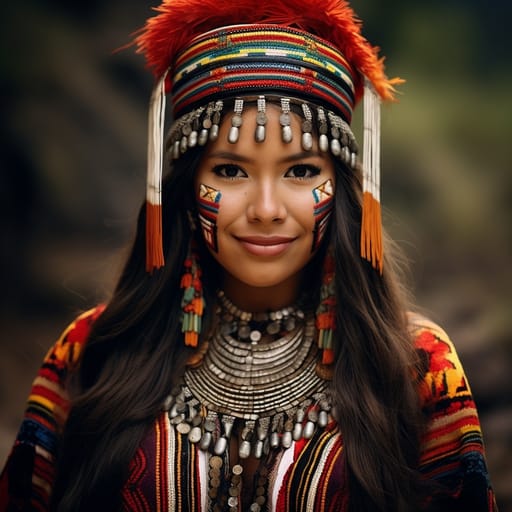
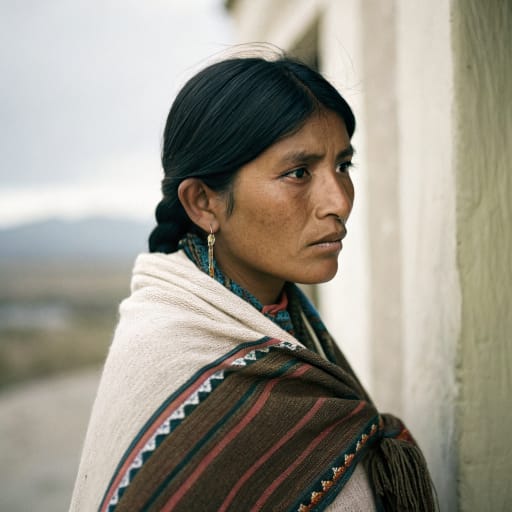
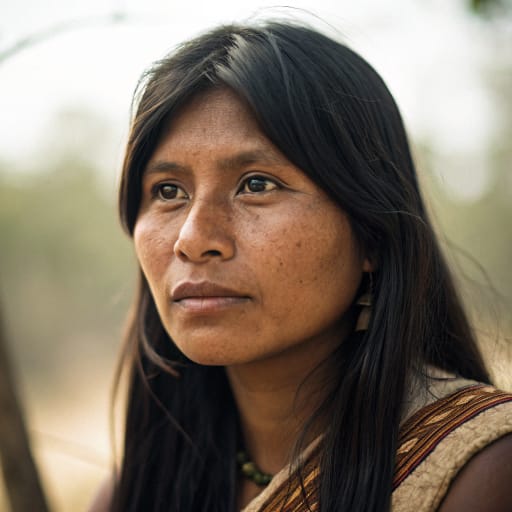
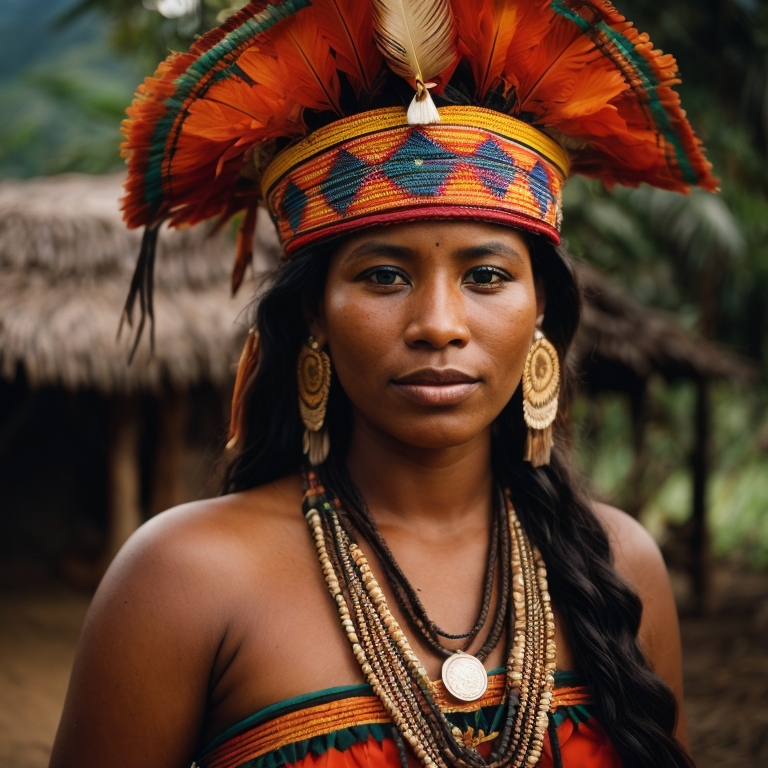
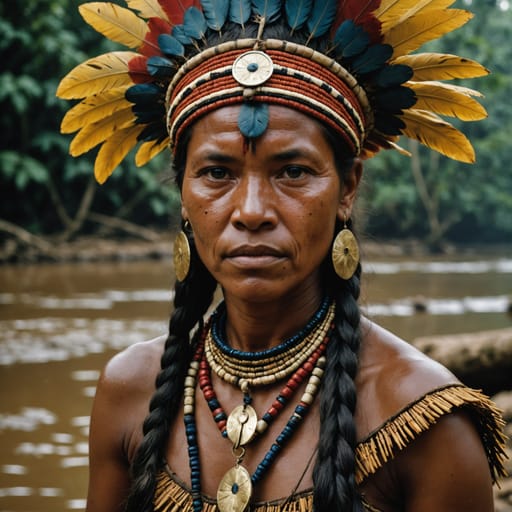
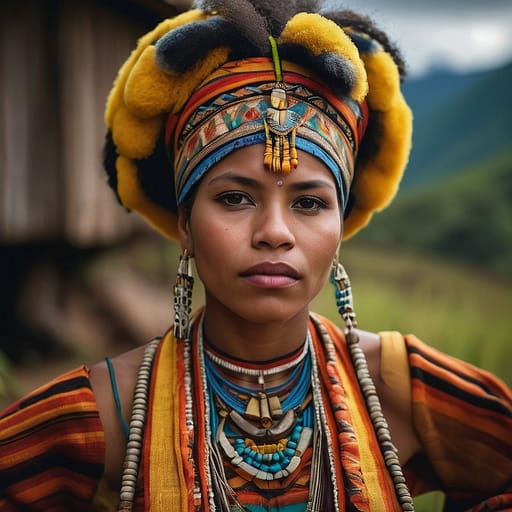
Typical Xambioá Phenotypes
Reference for AI generation: hair, eyes, skin, facial structure, build
Xambioá Body & Anatomy Reference
South American Indigenous / European-Mestizo / Afro-Latino mix phenotype: anatomy reference for AI nude generation
Xambioá Boobs & Breasts
Bust reference for Xambioá women: medium-to-large cup, full, high projection, which is typical of South American Indigenous / European-Mestizo / Afro-Latino mix ancestry. Areolas measure about 32-46mm across, with medium-brown to dark-brown pigmentation. Body type (endomorph-to-mesomorph with high gluteal-femoral deposition) shapes the bust as well, so Xambioá tits are usually the classic Brazilian / Latina curvy bust profile in lowland populations; smaller and shorter-set in Andean Indigenous populations. In AI imagery, keep the forward-set shape rather than drifting toward the smaller bust profile of Andean Indigenous sub-populations.
Xambioá Ass & Hips
The Xambioá ass is typically full, high projection, the famous Brazilian / Latina bunda profile, which sets it apart from the slim narrow-hip East Asian profile. Underneath, the pelvis shows wide iliac crests, very full gluteal-femoral fat deposition (the hallmark Brazilian / Latina hip-to-waist ratio), part of the South American Indigenous / European-Mestizo / Afro-Latino mix skeletal pattern. For Xambioá butt pics and AI renders, match that silhouette and the overall build (endomorph-to-mesomorph with high gluteal-femoral deposition).
Xambioá Vagina & Pussy
Xambioá pussy and vulvar anatomy presents medium-brown to dark-brown labial pigmentation, fuller labia minora, consistent with the South American Indigenous / European-Mestizo / Afro-Latino mix phenotype's pigmentation pattern. Xambioá pubic hair is typically wavy-to-curly coarse dark texture, dense distribution, in the inverted-triangle pattern. For anatomically accurate Xambioá pussy renders the labial coloration should match the surrounding tan to deep-brown skin tone with a continuous gradient, and the hair should keep its wavy-to-curly coarse dark texture.
Xambioá Dicks & Penis
Xambioá dicks follow the South American Indigenous / European-Mestizo / Afro-Latino mix reference data: regional mean ~13cm erect; moderate-to-above-average girth; medium-brown shaft pigmentation. Shaft color should track the tan to deep-brown skin tone with a smooth change toward the glans, and Xambioá pubic hair keeps its wavy-to-curly coarse dark texture.
Xambioá Body, Curves & Build
Xambioá body type and overall build presents as endomorph-to-mesomorph with high gluteal-femoral deposition, with mean adult female BMI 25-28: the characteristic South American Indigenous / European-Mestizo / Afro-Latino mix habitus. Xambioá curves and proportions should keep the regional skeletal frame (height, shoulder-to-hip ratio, limb proportions) rather than a generic mesomorph default.
Xambioá Skin Tone & Hair Texture
Xambioá skin sits in the tan to deep-brown (Fitzpatrick III-VI) band. Hair is typically straight-to-curly 1A-3C, varies widely by ancestral composition, in keeping with the South American Indigenous / European-Mestizo / Afro-Latino mix phenotype. In nude renders the skin should stay one even tone from face to body, and body, pubic and head hair should match.
Explore phenotype categories
Structured taxonomy with peer-reviewed scales · 22 anatomical categories
Erotic Poses & Sex Positions
From the pose catalog: 219 named positions with reference skeletons
Frequently asked questions about Xambioá people
Where is the Xambioá homeland?
The Xambioá homeland is Terra Indígena Xambioá on the Araguaia River, municipality of Santa Fé do Araguaia, northern Tocantins, Brazil in South America.
What language do Xambioá people speak?
Xambioá people primarily speak Portuguese (Indo-European) in daily use; Xambioá dialect of Karajá (Macro-Jê), now spoken mainly by elders.
What religion do Xambioá people practice?
The predominant religion among Xambioá people is Christianity alongside traditional Karajá beliefs in spirits and shamans.






Make your own Xambioá images
Five a day, free, no credits to buy. The studio starts from this group's phenotype data, so you can set body type, pose and style and keep the traits accurate.
Start with Xambioá