No portrait yet
Triballi Erotic
Central Balkans between the Morava and Iskar rivers, south of the Danube: central and eastern Serbia and northwestern Bulgaria
Unattested Paleo-Balkan language, usually linked to Thracian or Illyrian (Indo-European)
Unrecorded Paleo-Balkan polytheism
Paleo-Balkan peoples, classed as either Thracian or Illyrian by ancient writers, neighbors of the Autariatae, Dardanians and Moesi
About Triballi People
The Triballi were an Iron Age people of the central Balkans, attested from the fifth century BC to the early Roman era, who held the Morava valley and the plain south of the Danube in today's Serbia and northwestern Bulgaria until Celtic and Dardanian pressure wore them down and Rome absorbed the remnant into the province of Moesia. No Triballian wrote a line that survives. Everything known about them comes from Greeks and Romans who met them as raiders, as enemies of Macedon, or as a name on a provincial map, and those writers could not agree whether they were Thracians, Illyrians, or something of their own. Modern scholarship tends to treat them as a distinct Paleo-Balkan people wedged between Illyrian country to the west and Thracian country to the east, speaking a language that left no inscriptions. What made them identifiable to the ancients was a reputation for violence. Athenians used them as a byword for the uncouth in 414 BC, when Aristophanes put a gibberish-spouting Triballian god on stage in The Birds, a decade after the Odrysian king Sitalces died campaigning against them. In 376 BC a Triballian host said to number 30,000 pushed through Thrace to the Aegean coast at Abdera. In 339 BC they ambushed Philip II of Macedon on his way home from the Scythian steppe, took his loot, and put a spear through his thigh that left him lame.
Alexander opened his reign in 335 BC by settling that account. He beat the Triballi on the Lyginus river, chased their king Syrmus onto an island in the Danube, then crossed the river to make the point to the Getae as well. The Triballi submitted, and within a year several thousand of them were marching into Asia among his light infantry, which says something about how fast a beaten enemy became a useful one. The third century BC was less kind. Celtic Scordisci settled around the Sava and Danube confluence, the Dardanians pressed from the south, and the Triballi shrank eastward toward the Timok and Iskar rivers, where Rome found them and folded them into Moesia. After the third century AD the name goes quiet. Archaeology adds a little: tumulus burials in the Morava basin holding weapons, gold, amber, and imported Greek pottery point to a warrior aristocracy that traded south long before it raided there. A thousand years after they vanished, Byzantine writers, who liked antique names for new nations, revived Triballoi as their learned word for the Serbs and used it into the fifteenth century. The Triballi have no demonstrable descendants, and it is in that borrowed name, not in any living community, that they persist.
Related ethnic groups
Groups that share Triballi's homeland, region, language, or religious tradition. These are likely candidates for comparative phenotype reference.
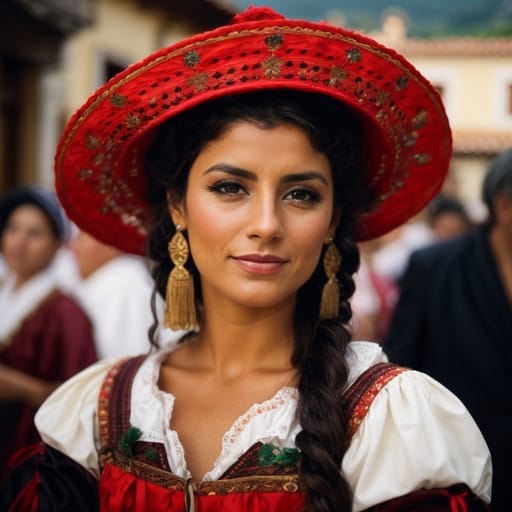
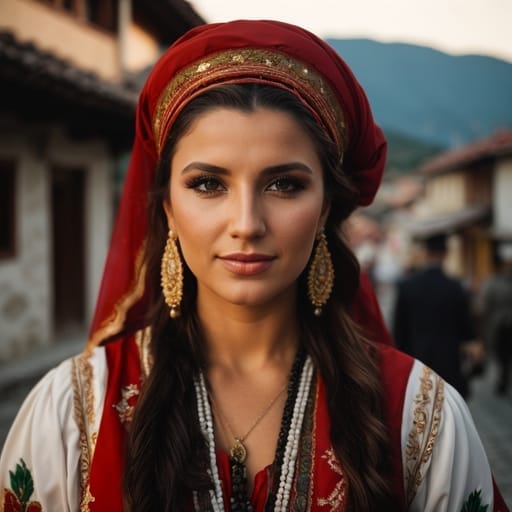
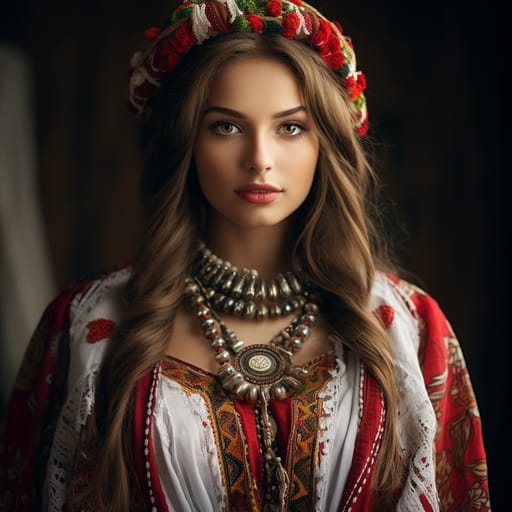
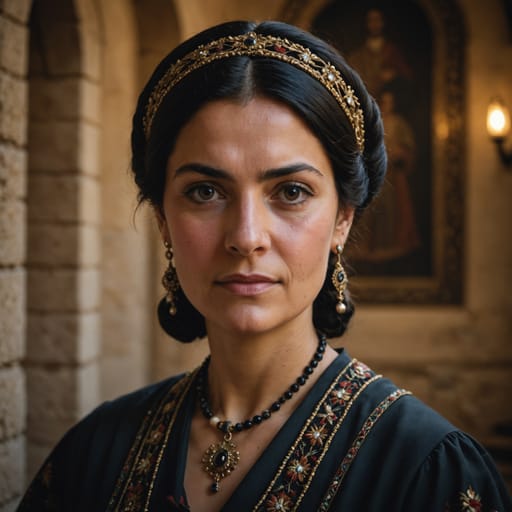
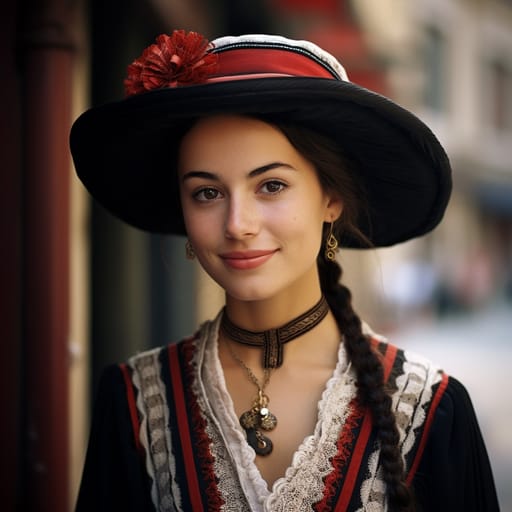

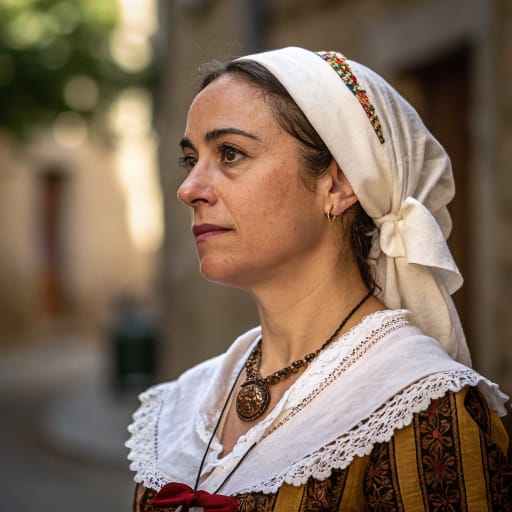
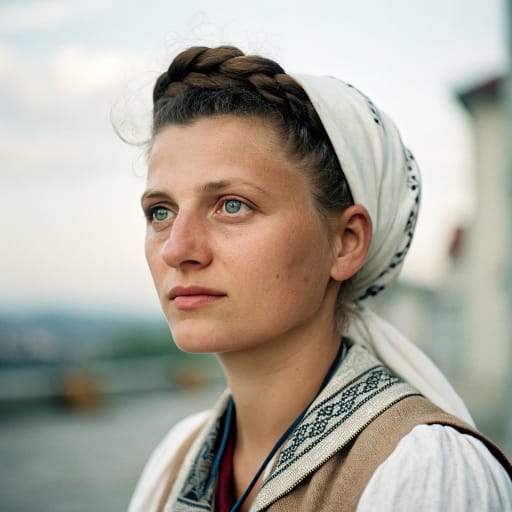
Typical Triballi Phenotypes
Reference for AI generation: hair, eyes, skin, facial structure, build
Triballi Body & Anatomy Reference
Anatomy by feature, Southern European / Mediterranean phenotype
Triballi Boobs & Breasts
The typical Triballi bust is medium-to-large cup, full, moderate-to-high projection, in line with the wider Southern European / Mediterranean pattern. Areolas usually fall in the 32-46mm range, with medium-brown to dark-brown areolar pigmentation against the olive-to-light-brown skin tone. Compared with the lighter pigmentation of the Northern European bust, Triballi breasts sit forward and are generally full and projecting, generally the classic Mediterranean curvy bust profile. A faithful AI render of Triballi tits keeps that shape and areola size.
Triballi Ass & Hips
Butt shape among Triballi women: medium-to-full, moderate-to-high projection, broader hip profile, over medium-to-wide iliac crests, full gluteal-femoral fat distribution. This follows Southern European / Mediterranean ancestry and looks quite unlike the slim Northern European narrow-hip pattern. An accurate Triballi ass in adult AI imagery keeps both the silhouette and the overall build (mesomorph with full hip-and-bust deposition) instead of a generic average.
Triballi Vagina & Pussy
Vulvar anatomy among Triballi women: medium-brown to dark-brown labial pigmentation, fuller labia minora. Pubic hair tends to be wavy-to-curly medium-coarse dark texture, dense distribution, in the usual inverted-triangle pattern. Both follow Southern European / Mediterranean pigmentation, which is why Triballi pussy renders should not fall back on a pale, sparse Western template.
Triballi Dicks & Penis
The Triballi cock profile, from Southern European / Mediterranean anthropometric data: regional mean ~13-14cm erect; moderate girth; medium-brown shaft pigmentation. Pubic hair has a wavy-to-curly medium-coarse dark texture and forms the usual inverted-V pattern. Whether Triballi men are circumcised follows religious and cultural practice rather than phenotype.
Triballi Body, Curves & Build
Build and curves among Triballi women follow the Southern European / Mediterranean pattern: mesomorph with full hip-and-bust deposition, mean adult female BMI 24-28. Proportions matter as much as skin tone, so Triballi figures should keep their regional height and limb ratios.
Triballi Skin Tone & Hair Texture
The Triballi skin range is olive to medium (Fitzpatrick III-IV), and hair tends to be wavy-to-curly 2B-3B, dark-brown to black. That combination marks the Southern European / Mediterranean phenotype, and skin tone is the trait AI generators most often get wrong for Triballi women.
Explore phenotype categories
Structured taxonomy with peer-reviewed scales · 22 anatomical categories
Erotic Poses & Sex Positions
From the pose catalog: 219 named positions with reference skeletons
Frequently asked questions about Triballi people
Where is the Triballi homeland?
The Triballi homeland is Central Balkans between the Morava and Iskar rivers, south of the Danube: central and eastern Serbia and northwestern Bulgaria in Southern Europe.
What language do Triballi people speak?
Triballi people primarily speak Unattested Paleo-Balkan language, usually linked to Thracian or Illyrian (Indo-European).
What religion do Triballi people practice?
The predominant religion among Triballi people is Unrecorded Paleo-Balkan polytheism.






Make your own Triballi images
Five a day, free, no credits to buy. The studio starts from this group's phenotype data, so you can set body type, pose and style and keep the traits accurate.
Start with Triballi