No portrait yet
Thổ Erotic
Hill and midland areas of western Nghệ An and southern Thanh Hóa provinces in north-central Vietnam, including Nghĩa Đàn, Tân Kỳ, Như Xuân and the Pù Mát forest near Con Cuông
Thổ, a cluster of local varieties (Vietic branch of Austroasiatic); Vietnamese widely spoken
Ancestor veneration and worship of village guardian spirits, within Vietnamese folk religion with some Buddhist influence
Local groups include the Kẹo, Mọn, Cuối, Họ, Đan Lai, Ly Hà and Tày Poọng; part of the wider Vietic family with the Kinh, Mường and Chứt
About Thổ People
The Thổ are easy to overlook, and that is part of their story. Their name is the Sino-Vietnamese word for earth or native soil. Older French and Vietnamese writing used it for more than one people, most often the Tày of the far northern borderlands, who are a different group entirely. The Thổ recognized today number roughly ninety thousand and live in the hill and midland country of western Nghệ An and southern Thanh Hóa, where the north-central coastal plain gives way to ranges running toward Laos. They are one of Vietnam's 54 official ethnic groups. They sit so close to the national majority in language and history that the difference is easy to miss from outside.
Thổ speech belongs to the Vietic branch of the Austroasiatic family, alongside Vietnamese and Mường, and a Vietnamese speaker hears familiar roots in it. It is really a cluster of local varieties, and most speakers are fluent in Vietnamese as well. That looseness matches the group itself. Several communities with their own names and origins sit under the one official name, among them the Kẹo, Mọn, Cuối, Đan Lai, Ly Hà and Tày Poọng. Some trace their ancestors to Việt and Mường settlers who moved into the hills generations ago. Others were small forest communities that were folded into the category when the state drew up its list of peoples in 1979. The Đan Lai live along streams in and around the Pù Mát forest near Con Cuông. They are known for an old custom of sleeping while sitting up by the hearth, which they explain as a habit from ancestors who had to be ready to run from wild animals and from pursuers.
Daily life turns on rice, grown in valley paddies and in upland fields on the slopes, along with gardens, livestock and what the forest still yields. Older villages built houses on stilts; many families now live in ground-level homes much like those of their Kinh neighbors. Religious practice centers on the household and the village. Ancestors are honored at the family altar, guardian spirits receive offerings, and the ritual year follows both the farming cycle and the lunar festivals kept across Vietnam. The twentieth century remade the Thổ heartland. The red basalt soils of the Phủ Quỳ plateau, around today's Nghĩa Đàn and Thái Hòa, drew French plantations and then large state farms. Those farms brought in lowland settlers by the thousands, and Thổ villages ended up surrounded by newcomers growing coffee, rubber and fruit. What remains is an identity that does not need to look different to be real.
Related ethnic groups
Groups that share Thổ's homeland, region, language, or religious tradition. These are likely candidates for comparative phenotype reference.
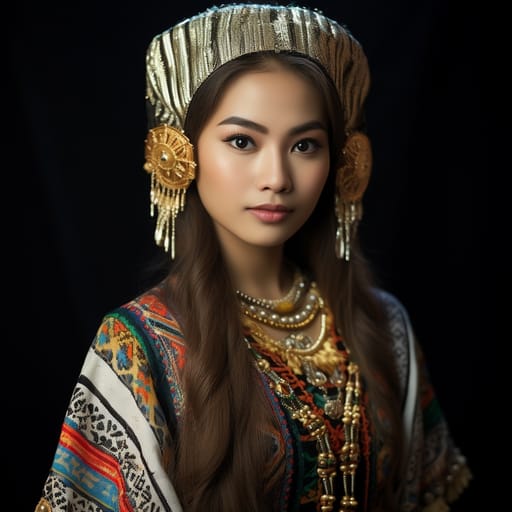
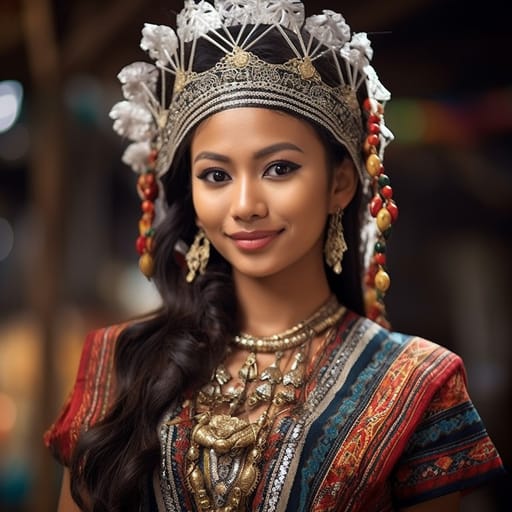
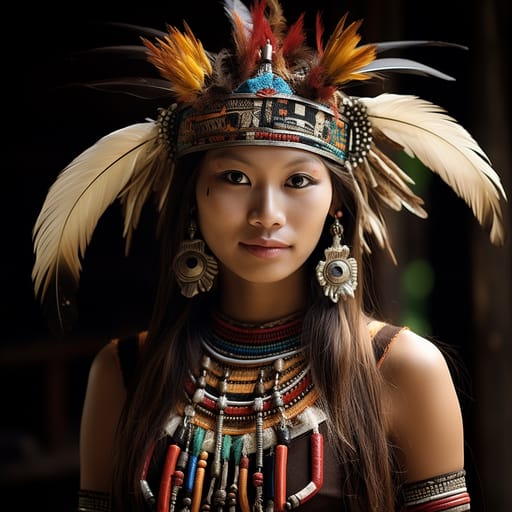
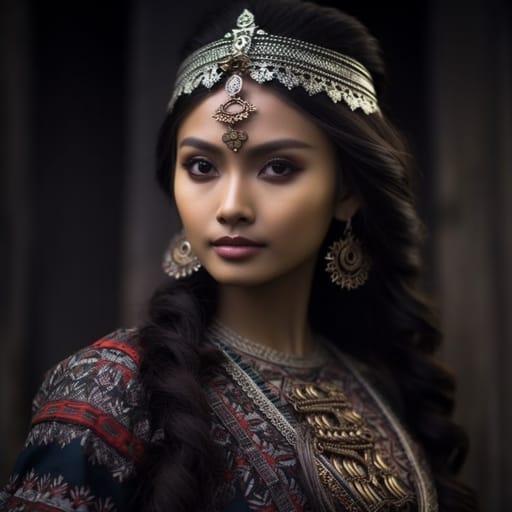
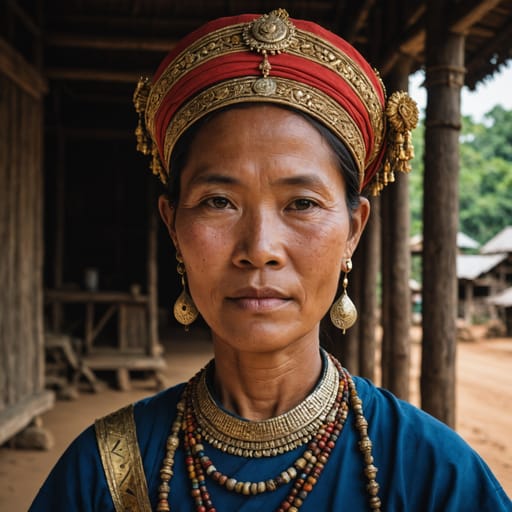
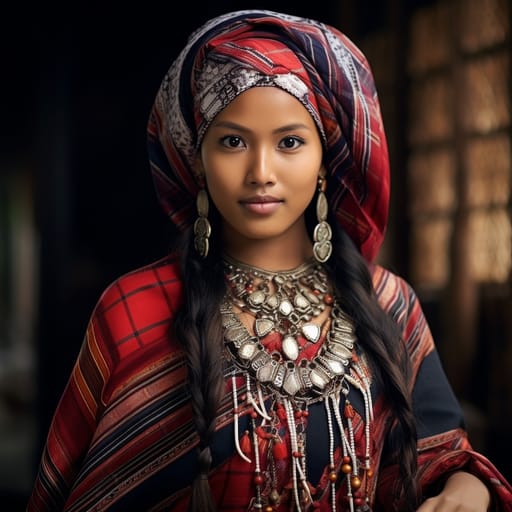
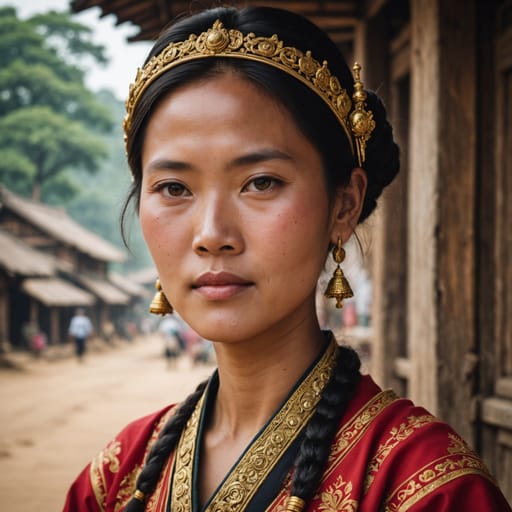
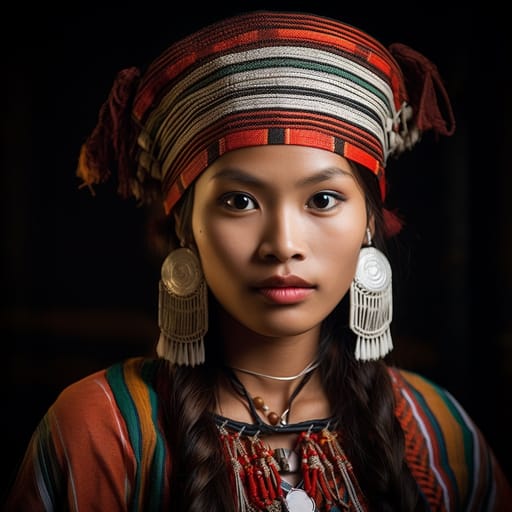
Typical Thổ Phenotypes
Reference for AI generation: hair, eyes, skin, facial structure, build
Thổ Body & Anatomy Reference
Per-feature anatomical profile for AI nude generation: Southeast Asian Austronesian / Austroasiatic phenotype
Thổ Boobs & Breasts
Bust reference for Thổ women: small-to-medium cup, modest projection, which is typical of Southeast Asian Austronesian / Austroasiatic ancestry. Areolas measure about 26-38mm across, with medium-brown to dark-brown pigmentation. Body type (ectomorph, petite frame) shapes the bust as well, so Thổ tits are usually firm, modest projection. In AI imagery, keep the forward-set shape rather than drifting toward the fuller South Asian or Polynesian bust.
Thổ Ass & Hips
The Thổ ass is typically small-to-medium, modest projection, narrower hip profile, which sets it apart from the fuller glutes of the Pacific Islander phenotype. Underneath, the pelvis shows narrow-to-medium iliac crests, part of the Southeast Asian Austronesian / Austroasiatic skeletal pattern. For Thổ butt pics and AI renders, match that silhouette and the overall build (ectomorph, petite frame).
Thổ Vagina & Pussy
Thổ pussy and vulvar anatomy presents medium-brown to dark-brown labial pigmentation, consistent with the Southeast Asian Austronesian / Austroasiatic phenotype's pigmentation pattern. Thổ pubic hair is typically straight-to-wavy fine-to-medium texture, in the inverted-triangle pattern. For anatomically accurate Thổ pussy renders the labial coloration should match the surrounding tan to medium-brown skin tone with a continuous gradient, and the hair should keep its straight-to-wavy fine-to-medium texture.
Thổ Dicks & Penis
Thổ dicks follow the Southeast Asian Austronesian / Austroasiatic reference data: regional mean ~11cm erect; moderate girth; medium-brown shaft pigmentation. Shaft color should track the tan to medium-brown skin tone with a smooth change toward the glans, and Thổ pubic hair keeps its straight-to-wavy fine-to-medium texture.
Thổ Body, Curves & Build
Thổ body type and overall build presents as ectomorph, petite frame, with mean adult female BMI 20-23: the characteristic Southeast Asian Austronesian / Austroasiatic habitus. Thổ curves and proportions should keep the regional skeletal frame (height, shoulder-to-hip ratio, limb proportions) rather than a generic mesomorph default.
Thổ Skin Tone & Hair Texture
Thổ skin sits in the tan to medium-brown (Fitzpatrick III-V) band. Hair is typically straight-to-wavy 1A-2A, dark-brown to black, in keeping with the Southeast Asian Austronesian / Austroasiatic phenotype. In nude renders the skin should stay one even tone from face to body, and body, pubic and head hair should match.
Explore phenotype categories
Structured taxonomy with peer-reviewed scales · 22 anatomical categories
Erotic Poses & Sex Positions
From the pose catalog: 219 named positions with reference skeletons
Frequently asked questions about Thổ people
Where is the Thổ homeland?
The Thổ homeland is Hill and midland areas of western Nghệ An and southern Thanh Hóa provinces in north-central Vietnam, including Nghĩa Đàn, Tân Kỳ, Như Xuân and the Pù Mát forest near Con Cuông in Southeast Asia.
What language do Thổ people speak?
Thổ people primarily speak Thổ, a cluster of local varieties (Vietic branch of Austroasiatic); Vietnamese widely spoken.
What religion do Thổ people practice?
The predominant religion among Thổ people is Ancestor veneration and worship of village guardian spirits, within Vietnamese folk religion with some Buddhist influence.






Make your own Thổ images
Five a day, free, no credits to buy. The studio starts from this group's phenotype data, so you can set body type, pose and style and keep the traits accurate.
Start with Thổ