Help us get this right
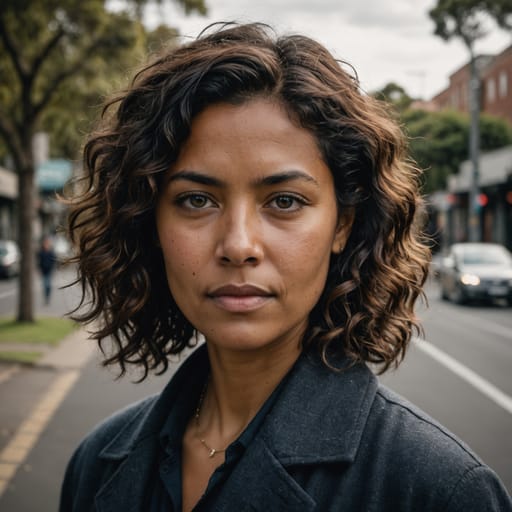
Does this portrait look right for Tauranga Moana?
Nobody has judged this one yet. You would be the first.
Tauranga Moana Erotic
Tauranga harbor (Te Awanui) and the surrounding western Bay of Plenty, from Mauao and Matakana Island inland toward the Kaimai Range, North Island, New Zealand
Māori (Austronesian, Eastern Polynesian); English (Indo-European, Germanic) now predominant
Mostly Christian across several denominations, practiced alongside Māori customary protocol (tikanga) on the marae; many are nonreligious
A grouping of three iwi, Ngāi Te Rangi, Ngāti Ranginui and Ngāti Pūkenga, each made up of hapū (sub-tribes); part of the wider Māori people
About Tauranga Moana People
Tauranga Moana names a harbor first and a people second. The long tidal basin sheltered by Matakana Island on New Zealand's Bay of Plenty coast lends its name to the three iwi who share it: Ngāi Te Rangi, Ngāti Ranginui and Ngāti Pūkenga. Each keeps its own ancestry, its own marae and its own dealings with the Crown. On the harbor, the mountain and the land taken in the 1860s, though, they tend to speak together. That shared voice is what the term means when it refers to people rather than water.
The three iwi descend from different canoes. Ngāti Ranginui trace their line to the Tākitimu voyagers. Ngāi Te Rangi, of Mātaatua descent, came from further east along the coast and took the harbor mouth and islands by conquest. Ngāti Pūkenga, also Mātaatua in ancestry, have interests reaching north to Manaia on the Coromandel Peninsula. All three are bound by Mauao, the volcanic cone at the harbor entrance that most visitors know as Mount Maunganui. Ownership of the mountain was returned to the three iwi in 2008, and they now govern it jointly with the city.
The date people here still come back to is 1864. At Pukehinahina, the Gate Pā, the defenders had drawn up rules forbidding harm to the wounded. They threw back a British assault and dealt the British one of their worst defeats of the New Zealand Wars. One woman among them is remembered for carrying water to a dying British officer. Weeks later at Te Ranga, troops caught the defenders in unfinished trenches, and that loss opened the way to the confiscation of much of the district. The grievance has shaped negotiations with the Crown ever since.
The language is Māori, an Eastern Polynesian language that local speakers share easily with neighboring Te Arawa and Mātaatua iwi. English is now the first language for most people, while immersion schooling and marae life carry te reo forward. Most people who practice a religion are Christian, spread across several churches, but the marae is where obligations are actually met: tangihanga (funeral gatherings) that last for days, formal welcomes onto the marae grounds, and speeches in which a person names mountain, harbor and ancestor before giving their own name.
Daily life now unfolds in one of the country's fastest growing cities. The Port of Tauranga, New Zealand's busiest export port, operates inside the harbor. Dredging, land reclamation and the 2011 grounding of the container ship Rena on Otāiti reef have all pulled the iwi into disputes over the water. On Matakana Island and along the shore, digging for pipi and cockles is still an ordinary family errand, not a heritage display.
Related ethnic groups
Groups that share Tauranga Moana's homeland, region, language, or religious tradition. These are likely candidates for comparative phenotype reference.
Arrernte
same region (Australia / New Zealand)
Noongar
same region (Australia / New Zealand)
Yolngu
same region (Australia / New Zealand)
Tiwi
same region (Australia / New Zealand)
Eora
same region (Australia / New Zealand)
Wurundjeri
same region (Australia / New Zealand)
Aboriginal Tasmanians
same region (Australia / New Zealand)
Pitjantjatjara
same region (Australia / New Zealand)
Typical Tauranga Moana Phenotypes
Reference for AI generation: hair, eyes, skin, facial structure, build
Tauranga Moana Body & Anatomy Reference
Aboriginal Australian phenotype: anatomy reference for AI nude generation
Tauranga Moana Boobs & Breasts
Bust reference for Tauranga Moana women: small-to-medium cup, modest-to-moderate projection, which is typical of Aboriginal Australian ancestry. Areolas measure about 28-42mm across, with deep-brown to near-black pigmentation. Body type (ectomorph-to-mesomorph, lean elongated frame adapted to arid environment) shapes the bust as well, so Tauranga Moana tits are usually modest projection, firm. In AI imagery, keep the forward-set shape rather than drifting toward the fuller Polynesian or West African bust.
Tauranga Moana Ass & Hips
The Tauranga Moana ass is typically small-to-medium, modest projection, narrower hip profile, which sets it apart from the very full Polynesian gluteal projection. Underneath, the pelvis shows narrow-to-medium iliac crests, longer torso and limb proportions, part of the Aboriginal Australian skeletal pattern. For Tauranga Moana butt pics and AI renders, match that silhouette and the overall build (ectomorph-to-mesomorph, lean elongated frame adapted to arid environment).
Tauranga Moana Vagina & Pussy
Tauranga Moana pussy and vulvar anatomy presents deep-brown labial pigmentation, consistent with the Aboriginal Australian phenotype's pigmentation pattern. Tauranga Moana pubic hair is typically wavy-to-coiled coarse texture, in the inverted-triangle pattern. For anatomically accurate Tauranga Moana pussy renders the labial coloration should match the surrounding deep-brown skin tone with a continuous gradient, and the hair should keep its wavy-to-coiled coarse texture.
Tauranga Moana Dicks & Penis
Tauranga Moana dicks follow the Aboriginal Australian reference data: regional mean ~13cm erect; moderate girth; deep-brown shaft pigmentation. Shaft color should track the deep-brown skin tone with a smooth change toward the glans, and Tauranga Moana pubic hair keeps its wavy-to-coiled coarse texture.
Tauranga Moana Body, Curves & Build
Tauranga Moana body type and overall build presents as ectomorph-to-mesomorph, lean elongated frame adapted to arid environment, with mean adult female BMI 23-26: the characteristic Aboriginal Australian habitus. Tauranga Moana curves and proportions should keep the regional skeletal frame (height, shoulder-to-hip ratio, limb proportions) rather than a generic mesomorph default.
Tauranga Moana Skin Tone & Hair Texture
Tauranga Moana skin sits in the deep-brown (Fitzpatrick V-VI) band. Hair is typically wavy-to-curly 2C-3B, dark-brown to black; the distinctive blond-haired Aboriginal sub-population in Central Australia is documented and pigmentation-independent, in keeping with the Aboriginal Australian phenotype. In nude renders the skin should stay one even tone from face to body, and body, pubic and head hair should match.
Explore phenotype categories
Structured taxonomy with peer-reviewed scales · 22 anatomical categories
Erotic Poses & Sex Positions
From the pose catalog: 219 named positions with reference skeletons
Frequently asked questions about Tauranga Moana people
Where is the Tauranga Moana homeland?
The Tauranga Moana homeland is Tauranga harbor (Te Awanui) and the surrounding western Bay of Plenty, from Mauao and Matakana Island inland toward the Kaimai Range, North Island, New Zealand in Australia / New Zealand.
What language do Tauranga Moana people speak?
Tauranga Moana people primarily speak Māori (Austronesian, Eastern Polynesian); English (Indo-European, Germanic) now predominant.
What religion do Tauranga Moana people practice?
The predominant religion among Tauranga Moana people is Mostly Christian across several denominations, practiced alongside Māori customary protocol (tikanga) on the marae; many are nonreligious.






Make your own Tauranga Moana images
Five a day, free, no credits to buy. The studio starts from this group's phenotype data, so you can set body type, pose and style and keep the traits accurate.
Start with Tauranga Moana