No portrait yet
Sinti Erotic
Germany, Austria, Switzerland, the Netherlands, northern Italy and eastern France, with smaller communities across Central Europe
Sinte Romani, also called Romanes or Sintitikes (Indo-Aryan, Indo-European), alongside German, Italian, French or Dutch
Mostly Roman Catholic, with Protestant communities in northern Germany and a growing Pentecostal movement since the postwar years
Subgroup of the Romani people. Branches include the German Gadschkene, the Bohemian Lalleri, the Austrian Estraxarja, the Italian Sinti Piemontesi, Lombardi, Veneti and Emiliani, and the closely related Manouches of France
About Sinti People
Ask a Sinti family in Cologne or Turin whether they are Roma and you will probably get a correction. The Sinti are a Romani people, sharing the Indo-Aryan roots that reach back to northwestern India, but they have been in German-speaking Europe since the early fifteenth century, long enough to become a distinct nation with its own dialect, its own reading of history and a firm sense of who belongs. Their heartland runs through Germany, Austria, Switzerland, the Netherlands and northern Italy, with the closely related Manouches in France and Belgium. Their language, Sinte Romani, keeps the grammar and core vocabulary of Romani but carries centuries of German borrowing, enough that a Roma speaker from the Balkans would struggle to follow it. Most Sinti treat the language as family property. Community leaders have resisted having it written down, taught in schools or catalogued by outsiders, arguing that it is one of the few things the majority society never managed to take.
That guardedness has a history. Under the Nazis, Sinti were measured and registered by racial hygienists, then deported from early 1943 into the so-called Gypsy camp at Auschwitz-Birkenau, which was liquidated on the night of August 2, 1944. Most of the German and Austrian Sinti communities were destroyed. West Germany did not recognize the killings as a racially motivated genocide until 1982, after a hunger strike by survivors at the former Dachau camp two years earlier forced the question. The Central Council of German Sinti and Roma grew out of that fight. Religion is mostly Catholic, Protestant in the north, with a strong Pentecostal current since the postwar years, but the extended family, not the parish, is the working unit of Sinti life, and weddings, funerals and pilgrimages pull kin together across borders. Traditional trades were mobile: horse dealing, fairground work, instrument making, scrap, and above all music. Django Reinhardt, a Manouche, founded what is now called jazz manouche, and German Sinti guitarists such as Schnuckenack Reinhardt and Häns'che Weiss carried a swing tradition through the postwar decades. Less remembered is Johann "Rukeli" Trollmann, the Sinto who won the German light-heavyweight boxing title in 1933, was stripped of it within days, and was murdered in a concentration camp in 1944. Today nearly all Sinti live in houses or apartments, speak German, Italian or French in public, and pass unnoticed in the street, which is an outcome many of them have chosen.
Related ethnic groups
Groups that share Sinti's homeland, region, language, or religious tradition. These are likely candidates for comparative phenotype reference.
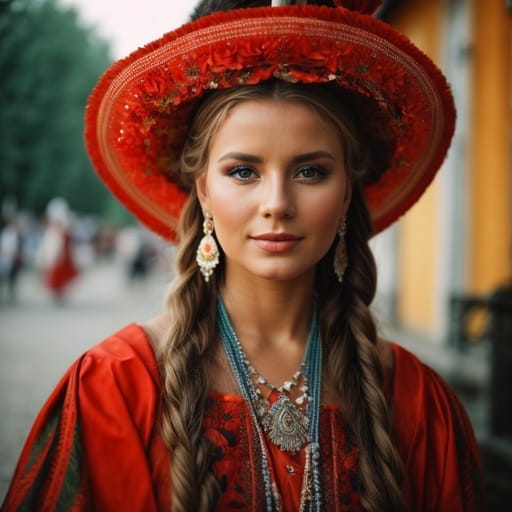
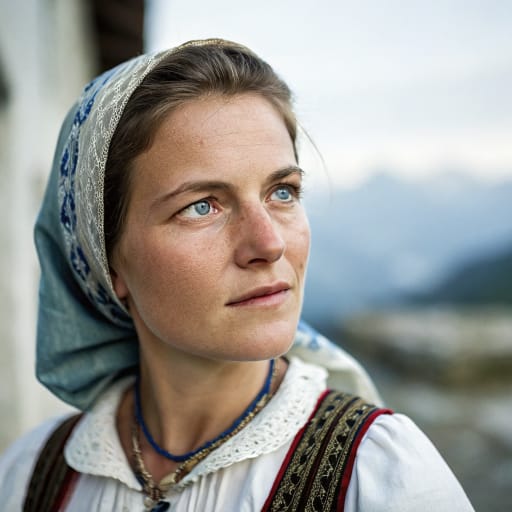
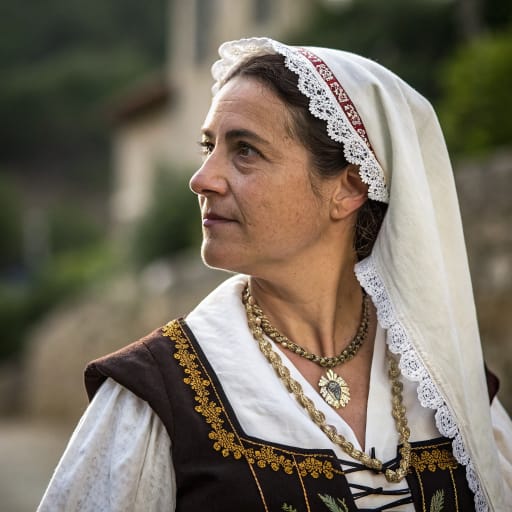
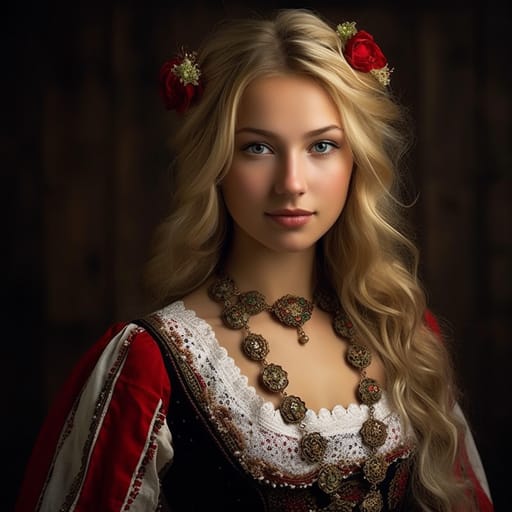
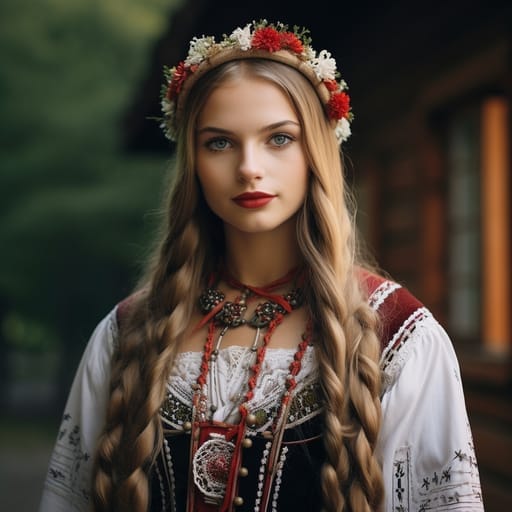

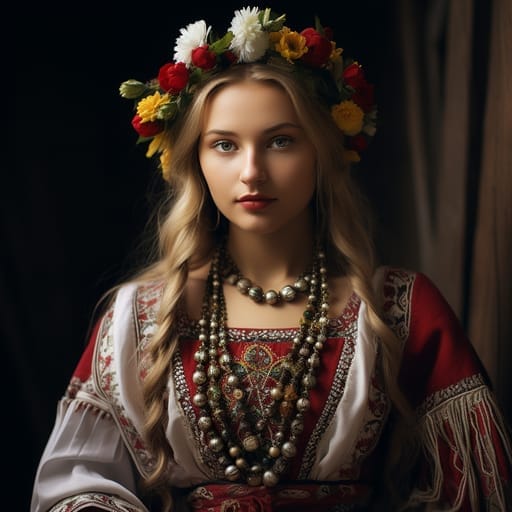
Typical Sinti Phenotypes
Reference for AI generation: hair, eyes, skin, facial structure, build
Sinti Body & Anatomy Reference
Per-feature anatomical profile for AI nude generation: Western European / Celtic-Germanic phenotype
Sinti Boobs & Breasts
The typical Sinti bust is medium-to-large cup, full, moderate-to-high projection, in line with the wider Western European / Celtic-Germanic pattern. Areolas usually fall in the 30-46mm range, with light-pink to medium-pink areolar pigmentation against the fair-to-light skin tone. Compared with the smaller East Asian bust, Sinti breasts sit forward and are generally full and projecting. A faithful AI render of Sinti tits keeps that shape and areola size.
Sinti Ass & Hips
Butt shape among Sinti women: medium, moderate projection, over medium iliac crests. This follows Western European / Celtic-Germanic ancestry and looks quite unlike the broader hip profile of Mediterranean phenotypes. An accurate Sinti ass in adult AI imagery keeps both the silhouette and the overall build (ectomorph-to-mesomorph) instead of a generic average.
Sinti Vagina & Pussy
Vulvar anatomy among Sinti women: light-pink labial pigmentation, varied labia minora. Pubic hair tends to be wavy fine-to-medium texture, blond to dark-brown, in the usual inverted-triangle pattern. Both follow Western European / Celtic-Germanic pigmentation, which is why Sinti pussy renders should not fall back on a pale, sparse Western template.
Sinti Dicks & Penis
The Sinti cock profile, from Western European / Celtic-Germanic anthropometric data: regional mean ~13-14cm erect; moderate girth; light-pink to light-brown shaft pigmentation. Pubic hair has a wavy fine-to-medium texture and forms the usual inverted-V pattern. Whether Sinti men are circumcised follows religious and cultural practice rather than phenotype.
Sinti Body, Curves & Build
Build and curves among Sinti women follow the Western European / Celtic-Germanic pattern: ectomorph-to-mesomorph, mean adult female BMI 24-27. Proportions matter as much as skin tone, so Sinti figures should keep their regional height and limb ratios.
Sinti Skin Tone & Hair Texture
The Sinti skin range is fair to light (Fitzpatrick I-III), and hair tends to be straight-to-wavy 1A-2B, blond to dark-brown. That combination marks the Western European / Celtic-Germanic phenotype, and skin tone is the trait AI generators most often get wrong for Sinti women.
Explore phenotype categories
Structured taxonomy with peer-reviewed scales · 22 anatomical categories
Erotic Poses & Sex Positions
From the pose catalog: 219 named positions with reference skeletons
Frequently asked questions about Sinti people
Where is the Sinti homeland?
The Sinti homeland is Germany, Austria, Switzerland, the Netherlands, northern Italy and eastern France, with smaller communities across Central Europe in Western Europe.
What language do Sinti people speak?
Sinti people primarily speak Sinte Romani, also called Romanes or Sintitikes (Indo-Aryan, Indo-European), alongside German, Italian, French or Dutch.
What religion do Sinti people practice?
The predominant religion among Sinti people is Mostly Roman Catholic, with Protestant communities in northern Germany and a growing Pentecostal movement since the postwar years.






Make your own Sinti images
Five a day, free, no credits to buy. The studio starts from this group's phenotype data, so you can set body type, pose and style and keep the traits accurate.
Start with Sinti