Help us get this right
Does this portrait look right for Carantanians?
Nobody has judged this one yet. You would be the first.
Carantanians Erotic
Eastern Alps, centered on the Klagenfurt basin and Zollfeld in Carinthia, Austria, reaching into Styria, East Tyrol and northern Slovenia
Alpine Slavic, an early form of Slovene (South Slavic, Slavic, Indo-European)
Slavic paganism, then Christianity from the mid-8th century through missions from Salzburg and Aquileia
Alpine Slavs; ancestors of the Slovenes, with the related Carniolans as their neighbors to the south
About Carantanians People
The Carantanians were an Alpine Slavic people who lived in the Eastern Alps from roughly the 7th to the 10th century. Their center was the Klagenfurt basin in what is now Carinthia, Austria, and they are counted among the direct ancestors of the Slovenes. Other Slavs also moved into the region after the Lombards left for Italy in 568. What set the Carantanians apart was a state of their own. Carantania was one of the earliest Slavic principalities on record, with its seat at Karnburg. Its name is older than the Slavs' arrival there and lives on in the word Carinthia.
They spoke an early form of Alpine Slavic, a South Slavic language that later became Slovene. Its descendants are still spoken by Carinthia's Slovene minority. For most of the 7th century they lived under the shadow of the Avars, and little is known about them from that time. A Slavic duke named Valuk, mentioned around 631, may have ruled them. The clear turning point came in the 740s, when Duke Borut asked Bavaria for help against the Avars. The help worked, but the price was Bavarian overlordship and handing over hostages. Borut's son Gorazd and his nephew Hotimir were raised as Christians in Bavaria and then came home to rule, and missionaries from Salzburg followed them. The old religion did not go quietly. Pagan revolts broke out more than once before Duke Valtunk put down the last of them around 772. When Charlemagne took over Bavaria in 788, Carantania came with it, and by the late 820s Frankish counts had replaced its native princes.
What outlasted them was a ritual. Long after the Carantanians had been absorbed into the Duchy of Carinthia, each new duke was installed at the Prince's Stone, a reused Roman column base. The duke arrived dressed as a peasant. A free peasant sitting on the stone questioned him in Slovene: would he judge fairly and defend the faith? Only then did the peasant give up the seat. The last full ceremony took place in 1414. Today the stone sits in Klagenfurt and appears on Slovenia's 2 cent euro coin. The main written source on the Carantanians is a Salzburg text from around 870, the Conversio Bagoariorum et Carantanorum.
Related ethnic groups
Groups that share Carantanians's homeland, region, language, or religious tradition. These are likely candidates for comparative phenotype reference.
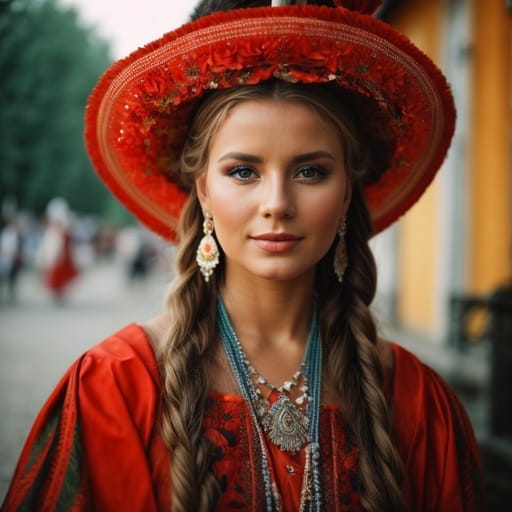
Estonians
same region (Western Europe)
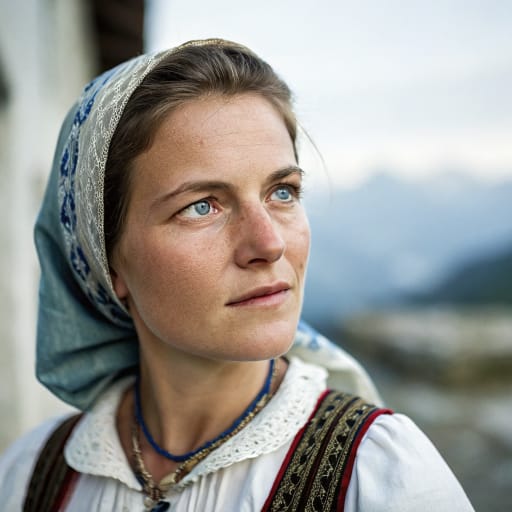
Austrians
same region (Western Europe)
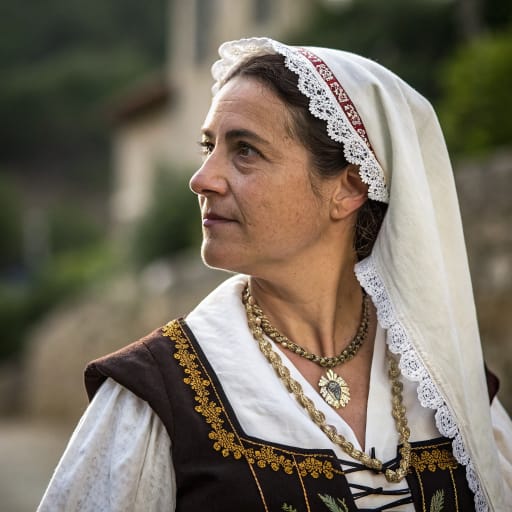
Corsicans
same region (Western Europe)
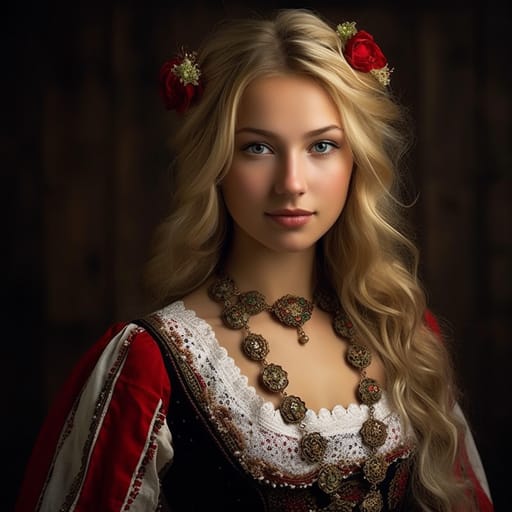
Frisians
same region (Western Europe)
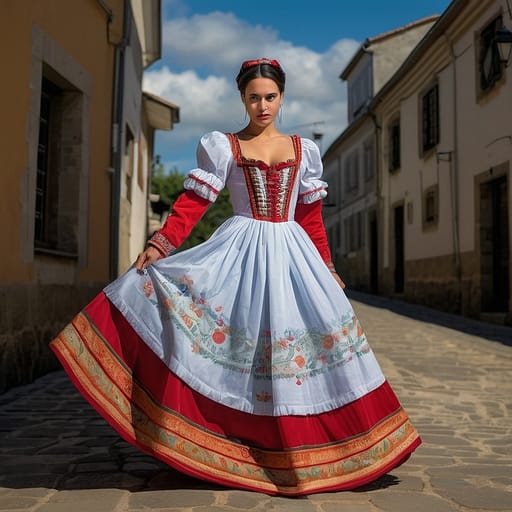
Portuguese Luxembourg
same region (Western Europe)
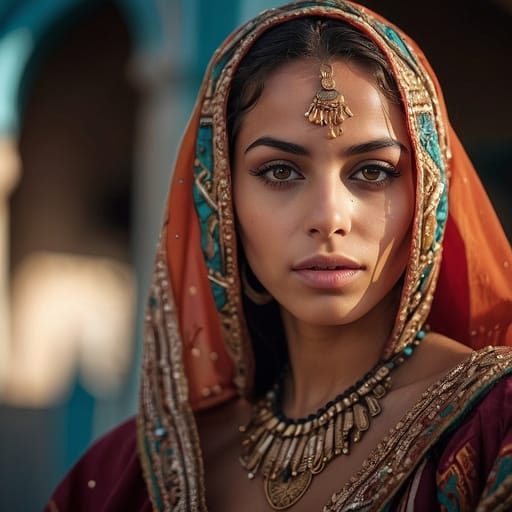
French Maghrebi
same region (Western Europe)
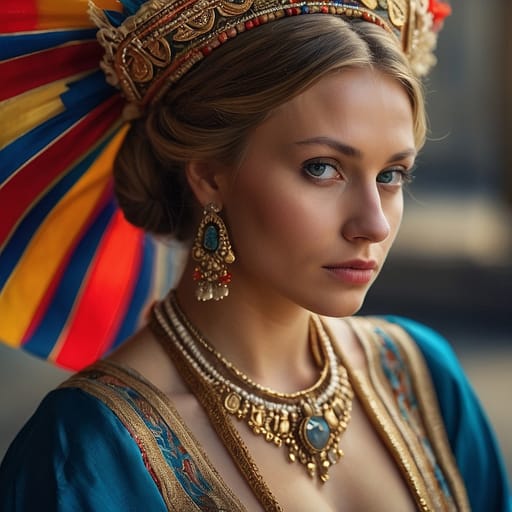
Luxembourg Other
same region (Western Europe)
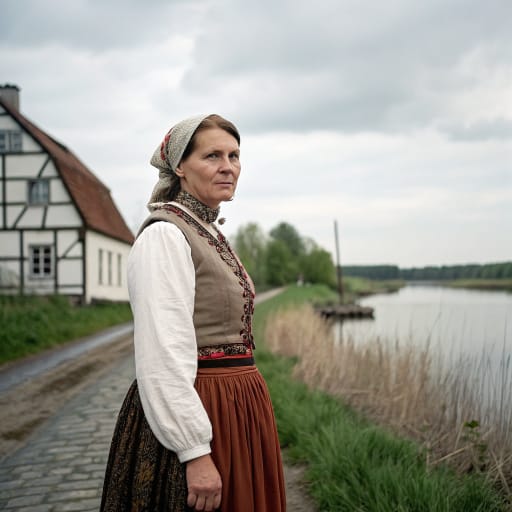
Lusici
same region (Western Europe)
Typical Carantanians Phenotypes
Reference for AI generation: hair, eyes, skin, facial structure, build
Carantanians Body & Anatomy Reference
Per-feature anatomical profile for AI nude generation: Western European / Celtic-Germanic phenotype
Carantanians Boobs & Breasts
Bust reference for Carantanians women: medium-to-large cup, full, moderate-to-high projection, which is typical of Western European / Celtic-Germanic ancestry. Areolas measure about 30-46mm across, with light-pink to medium-pink pigmentation. Body type (ectomorph-to-mesomorph) shapes the bust as well, so Carantanians tits are usually full and projecting. In AI imagery, keep the forward-set shape rather than drifting toward the smaller East Asian bust.
Carantanians Ass & Hips
The Carantanians ass is typically medium, moderate projection, which sets it apart from the broader hip profile of Mediterranean phenotypes. Underneath, the pelvis shows medium iliac crests, part of the Western European / Celtic-Germanic skeletal pattern. For Carantanians butt pics and AI renders, match that silhouette and the overall build (ectomorph-to-mesomorph).
Carantanians Vagina & Pussy
Carantanians pussy and vulvar anatomy presents light-pink labial pigmentation, varied labia minora, consistent with the Western European / Celtic-Germanic phenotype's pigmentation pattern. Carantanians pubic hair is typically wavy fine-to-medium texture, blond to dark-brown, in the inverted-triangle pattern. For anatomically accurate Carantanians pussy renders the labial coloration should match the surrounding fair to light skin tone with a continuous gradient, and the hair should keep its wavy fine-to-medium texture.
Carantanians Dicks & Penis
Carantanians dicks follow the Western European / Celtic-Germanic reference data: regional mean ~13-14cm erect; moderate girth; light-pink to light-brown shaft pigmentation. Shaft color should track the fair to light skin tone with a smooth change toward the glans, and Carantanians pubic hair keeps its wavy fine-to-medium texture.
Carantanians Body, Curves & Build
Carantanians body type and overall build presents as ectomorph-to-mesomorph, with mean adult female BMI 24-27: the characteristic Western European / Celtic-Germanic habitus. Carantanians curves and proportions should keep the regional skeletal frame (height, shoulder-to-hip ratio, limb proportions) rather than a generic mesomorph default.
Carantanians Skin Tone & Hair Texture
Carantanians skin sits in the fair to light (Fitzpatrick I-III) band. Hair is typically straight-to-wavy 1A-2B, blond to dark-brown, in keeping with the Western European / Celtic-Germanic phenotype. In nude renders the skin should stay one even tone from face to body, and body, pubic and head hair should match.
Explore phenotype categories
Structured taxonomy with peer-reviewed scales · 22 anatomical categories
Erotic Poses & Sex Positions
From the pose catalog: 219 named positions with reference skeletons
Frequently asked questions about Carantanians people
Where is the Carantanians homeland?
The Carantanians homeland is Eastern Alps, centered on the Klagenfurt basin and Zollfeld in Carinthia, Austria, reaching into Styria, East Tyrol and northern Slovenia in Western Europe.
What language do Carantanians people speak?
Carantanians people primarily speak Alpine Slavic, an early form of Slovene (South Slavic, Slavic, Indo-European).
What religion do Carantanians people practice?
The predominant religion among Carantanians people is Slavic paganism, then Christianity from the mid-8th century through missions from Salzburg and Aquileia.






Make your own Carantanians images
Five a day, free, no credits to buy. The studio starts from this group's phenotype data, so you can set body type, pose and style and keep the traits accurate.
Start with Carantanians