Help us get this right
Does this portrait look right for Lusici?
Nobody has judged this one yet. You would be the first.
Lusici Erotic
Lower Lusatia, between the Black Elster and the Neisse along the Spree, in present-day Brandenburg and Saxony, Germany, with a fringe in western Poland
Early Sorbian, ancestral to modern Lower Sorbian (Indo-European, West Slavic)
Slavic paganism, giving way to Latin Christianity after the Saxon conquest of the 10th century
A tribe of the Sorbian union of Polabian Slavs, alongside the Milceni, Daleminzi, Nisani and Siusli; among the ancestors of the Lower Sorbs
About Lusici People
The Lusici were a West Slavic tribe who lived in the marshy lowlands of Lower Lusatia, in what is now eastern Germany, from the early Middle Ages until the Saxons conquered them in the tenth century. The Lower Sorbs around Cottbus are among their descendants. The place name is their most lasting mark. Lusatia, called Lausitz in German and Łužyca in Lower Sorbian, was named for them, and the name is usually traced to a Slavic word for marsh or pool. That suits a country of wet meadows, alder thickets and slow rivers. Their land ran from the Black Elster east toward the Neisse, with the Spree and the maze of channels now called the Spreewald running through it. They were one tribe in the Sorbian union, one of the three large groups of Slavs living between the Elbe and the Oder. The Milceni lived to their south, and the Daleminzi, Nisani and Siusli lived farther west. The Lusici spoke an early form of Sorbian, a West Slavic language closely related to Polish and Czech, and Lower Sorbian is its closest living descendant. The Bavarian Geographer, a ninth-century list of peoples east of the Frankish realm, credits the Lunsizi with thirty strongholds. Archaeology backs this up: Lower Lusatia is dotted with the remains of round forts built of timber and earth, and the one at Raddusch has been rebuilt at full size. They followed the old Slavic religion, but almost nothing about their own gods or rites was written down.
Their independence ended under pressure from Saxony. King Henry I campaigned against them in 932, and in 963 Margrave Gero forced them to submit, which brought their land into the empire's eastern marches, with tribute and missionaries to follow. After that, Lusatia was fought over. Bolesław I of Poland seized it in 1002 and kept it under the Peace of Bautzen in 1018, and the empire took it back in 1031. German settlers arrived in the twelfth and thirteenth centuries and pushed Slavic speech out to the villages, where it survived long after the tribe itself had faded from the records. The name Lusatia later spread south to cover the old Milceni lands, which is why there is an Upper Lusatia today. The Lower Sorbs, mostly Lutheran since the Reformation, still keep their language going around Cottbus, which they call Chóśebuz. That region has bilingual signs and a Lower Sorbian secondary school, though the language is now seriously endangered.
Related ethnic groups
Groups that share Lusici's homeland, region, language, or religious tradition. These are likely candidates for comparative phenotype reference.
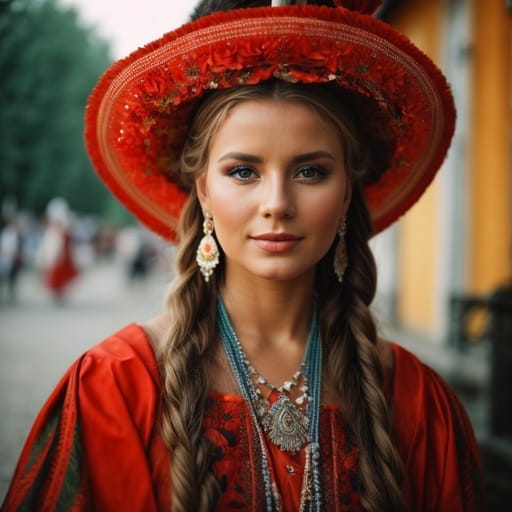
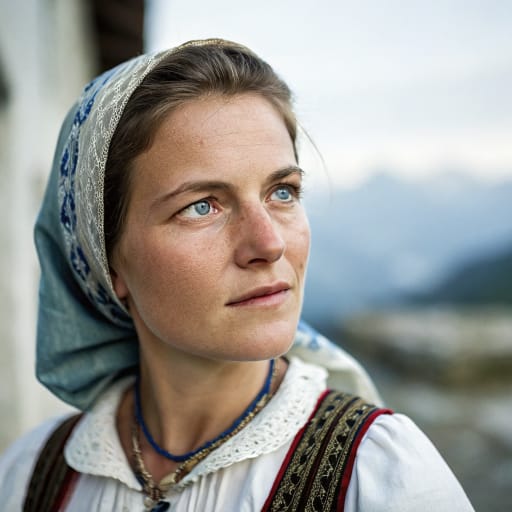
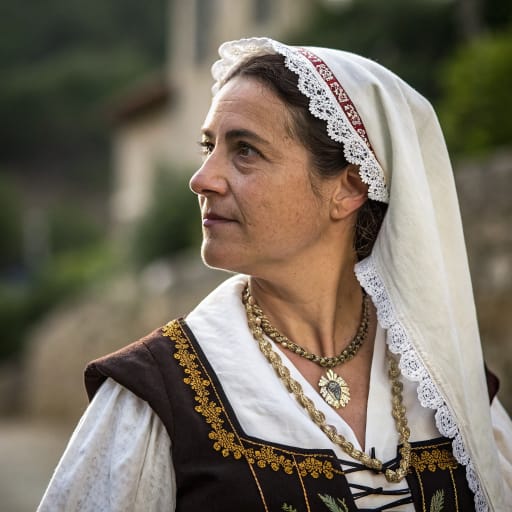
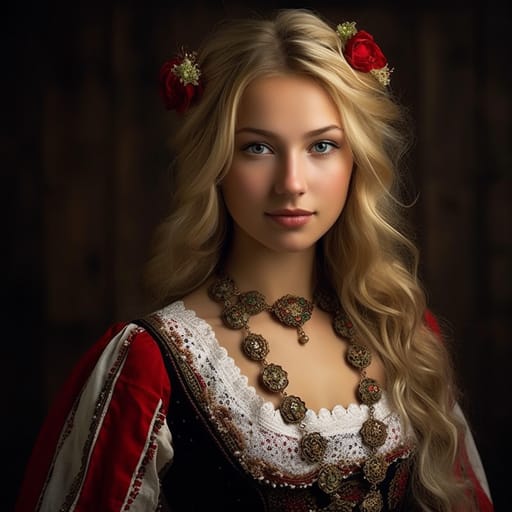
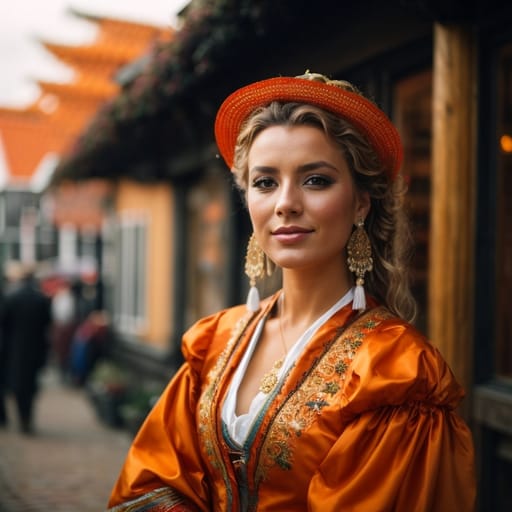

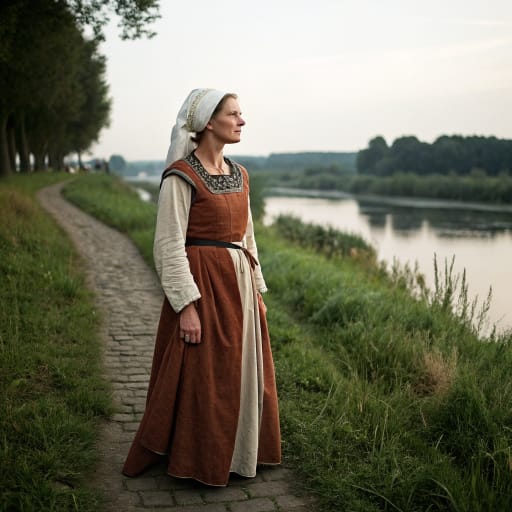
Typical Lusici Phenotypes
Reference for AI generation: hair, eyes, skin, facial structure, build
Lusici Body & Anatomy Reference
Anatomy by feature, Western European / Celtic-Germanic phenotype
Lusici Boobs & Breasts
The typical Lusici bust is medium-to-large cup, full, moderate-to-high projection, in line with the wider Western European / Celtic-Germanic pattern. Areolas usually fall in the 30-46mm range, with light-pink to medium-pink areolar pigmentation against the fair-to-light skin tone. Compared with the smaller East Asian bust, Lusici breasts sit forward and are generally full and projecting. A faithful AI render of Lusici tits keeps that shape and areola size.
Lusici Ass & Hips
Butt shape among Lusici women: medium, moderate projection, over medium iliac crests. This follows Western European / Celtic-Germanic ancestry and looks quite unlike the broader hip profile of Mediterranean phenotypes. An accurate Lusici ass in adult AI imagery keeps both the silhouette and the overall build (ectomorph-to-mesomorph) instead of a generic average.
Lusici Vagina & Pussy
Vulvar anatomy among Lusici women: light-pink labial pigmentation, varied labia minora. Pubic hair tends to be wavy fine-to-medium texture, blond to dark-brown, in the usual inverted-triangle pattern. Both follow Western European / Celtic-Germanic pigmentation, which is why Lusici pussy renders should not fall back on a pale, sparse Western template.
Lusici Dicks & Penis
The Lusici cock profile, from Western European / Celtic-Germanic anthropometric data: regional mean ~13-14cm erect; moderate girth; light-pink to light-brown shaft pigmentation. Pubic hair has a wavy fine-to-medium texture and forms the usual inverted-V pattern. Whether Lusici men are circumcised follows religious and cultural practice rather than phenotype.
Lusici Body, Curves & Build
Build and curves among Lusici women follow the Western European / Celtic-Germanic pattern: ectomorph-to-mesomorph, mean adult female BMI 24-27. Proportions matter as much as skin tone, so Lusici figures should keep their regional height and limb ratios.
Lusici Skin Tone & Hair Texture
The Lusici skin range is fair to light (Fitzpatrick I-III), and hair tends to be straight-to-wavy 1A-2B, blond to dark-brown. That combination marks the Western European / Celtic-Germanic phenotype, and skin tone is the trait AI generators most often get wrong for Lusici women.
Explore phenotype categories
Structured taxonomy with peer-reviewed scales · 22 anatomical categories
Erotic Poses & Sex Positions
From the pose catalog: 219 named positions with reference skeletons
Frequently asked questions about Lusici people
Where is the Lusici homeland?
The Lusici homeland is Lower Lusatia, between the Black Elster and the Neisse along the Spree, in present-day Brandenburg and Saxony, Germany, with a fringe in western Poland in Western Europe.
What language do Lusici people speak?
Lusici people primarily speak Early Sorbian, ancestral to modern Lower Sorbian (Indo-European, West Slavic).
What religion do Lusici people practice?
The predominant religion among Lusici people is Slavic paganism, giving way to Latin Christianity after the Saxon conquest of the 10th century.






Make your own Lusici images
Five a day, free, no credits to buy. The studio starts from this group's phenotype data, so you can set body type, pose and style and keep the traits accurate.
Start with Lusici