No portrait yet
Saramaka Erotic
Upper Suriname River and Brokopondo area in the interior of Suriname, with large communities in Paramaribo, French Guiana and the Netherlands.
Saramaccan (English-based creole with heavy Portuguese and West/Central African input); Sranan Tongo, Dutch and French also used.
Saramaka traditional religion (ancestors, forest and snake spirits, oracles) alongside Moravian and Catholic Christianity.
One of the Suriname Maroon peoples, alongside the Ndyuka, Matawai, Aluku, Paamaka and Kwinti; organized into matrilineal clans (lo).
About Saramaka People
The Saramaka exist as a people because their ancestors refused to stay enslaved. In the late 1600s and early 1700s, Africans held on the coastal plantations of Dutch Suriname fled into the rainforest, regrouped along the upper Suriname River, and spent decades raiding plantations and beating back the military expeditions sent after them. In 1762 the colony gave up and signed a peace treaty recognizing their freedom, a full century before slavery ended in Suriname. That history is not background. It underwrites clan identity, land rights and political authority, and it is handled with care: accounts of the escape era, known as First-Time, are considered powerful enough that elders pass them on slowly and selectively. Their language, Saramaccan, is a creole built on English and Portuguese vocabulary, with grammar and sound patterns shaped by West and Central African languages. It is tonal and not mutually intelligible with Sranan Tongo, the coastal lingua franca, which many Saramaka also speak. Society is organized into matrilineal clans, each tracing its origin to a particular band of runaways and holding rights to its own stretch of river and forest. A paramount chief, the Gaama, sits above village captains, and disputes over land, marriage or insult are worked out in long public council meetings called kuutu.
Religion is part of ordinary decision-making. Ancestors, forest spirits, snake gods and the avenging spirits of people wronged generations ago are consulted through oracles and spirit mediums before a move, a marriage or the treatment of an illness. Moravian missionaries arrived within a few years of the treaty, with Catholic missions following later, and a sizable share of Saramaka are now Christian, though the older practices remain widespread. Art carries social weight as well: men carve paddles, combs, stools and food stirrers as gifts for their wives, and women sew and embroider cloth for men, an exchange that runs through Saramaka marriage. The twentieth century brought hard shocks. The Afobaka Dam, built in the 1960s to power an aluminum smelter, flooded a large part of Saramaka territory and pushed thousands out of their villages. Later, the government granted logging and mining concessions on Saramaka land without consulting them. The Saramaka took Suriname to the Inter-American Court of Human Rights, which ruled in 2007 that the state had to recognize their collective title. Many now live in Paramaribo, French Guiana or the Netherlands, but the river villages remain the center of gravity, the place people return to for clan business and for funeral rites that unfold over months.
Related ethnic groups
Groups that share Saramaka's homeland, region, language, or religious tradition. These are likely candidates for comparative phenotype reference.
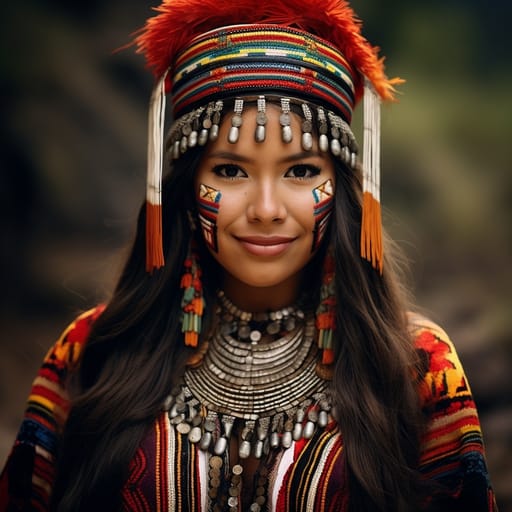
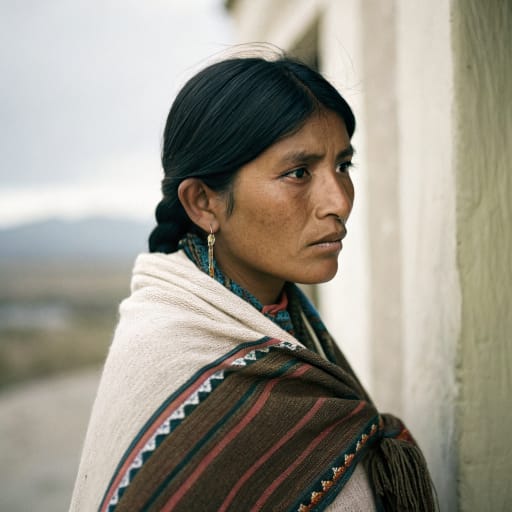
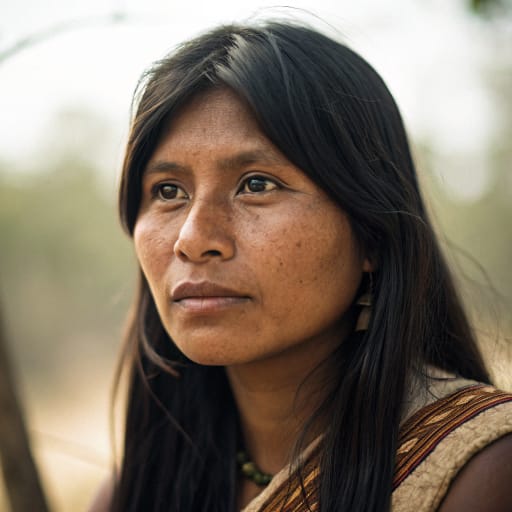
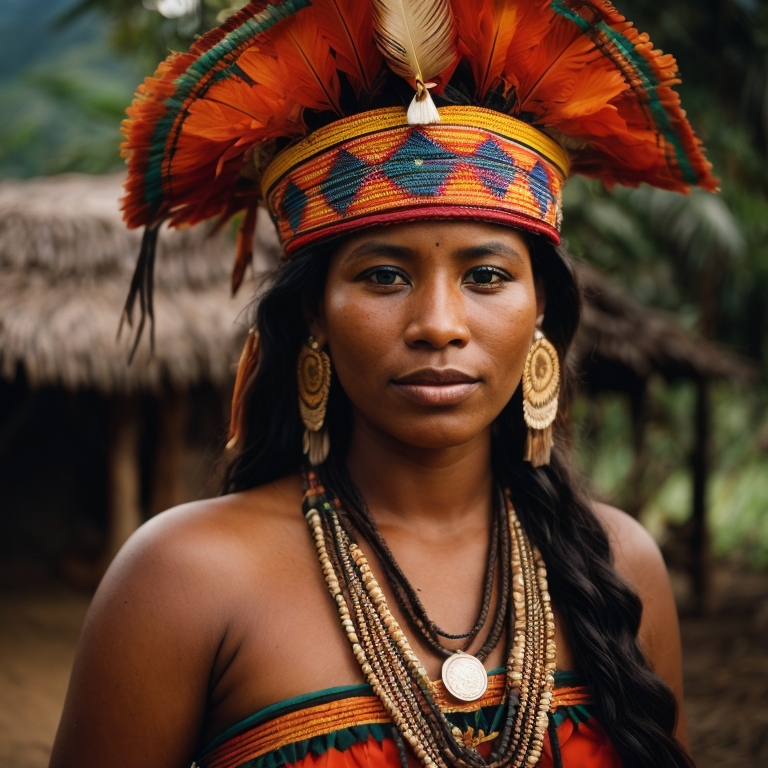
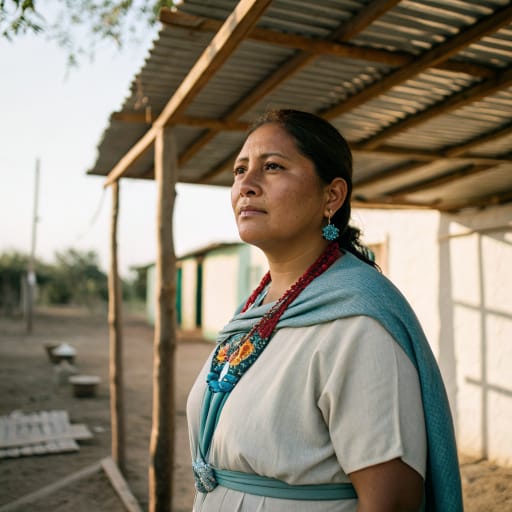
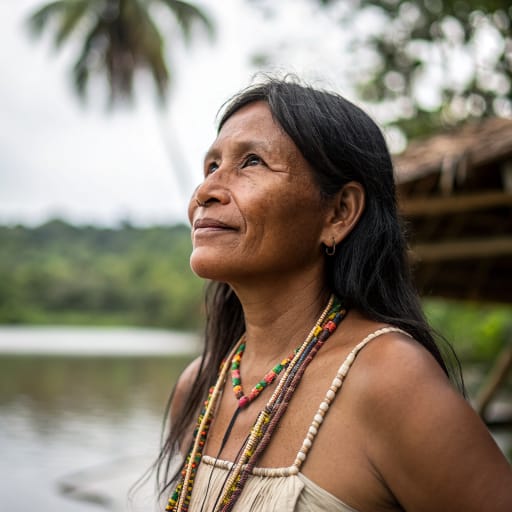
Typical Saramaka Phenotypes
Reference for AI generation: hair, eyes, skin, facial structure, build
Saramaka Body & Anatomy Reference
Per-feature anatomical profile for AI nude generation: South American Indigenous / European-Mestizo / Afro-Latino mix phenotype
Saramaka Boobs & Breasts
The typical Saramaka bust is medium-to-large cup, full, high projection, in line with the wider South American Indigenous / European-Mestizo / Afro-Latino mix pattern. Areolas usually fall in the 32-46mm range, with medium-brown to dark-brown areolar pigmentation against the tan-to-deep-brown skin tone. Compared with the smaller bust profile of Andean Indigenous sub-populations, Saramaka breasts sit forward and are generally the classic Brazilian / Latina curvy bust profile in lowland populations; smaller and shorter-set in Andean Indigenous populations. A faithful AI render of Saramaka tits keeps that shape and areola size.
Saramaka Ass & Hips
Butt shape among Saramaka women: full, high projection, the famous Brazilian / Latina bunda profile, over wide iliac crests, very full gluteal-femoral fat deposition (the hallmark Brazilian / Latina hip-to-waist ratio). This follows South American Indigenous / European-Mestizo / Afro-Latino mix ancestry and looks quite unlike the slim narrow-hip East Asian profile. An accurate Saramaka ass in adult AI imagery keeps both the silhouette and the overall build (endomorph-to-mesomorph with high gluteal-femoral deposition) instead of a generic average.
Saramaka Vagina & Pussy
Vulvar anatomy among Saramaka women: medium-brown to dark-brown labial pigmentation, fuller labia minora. Pubic hair tends to be wavy-to-curly coarse dark texture, dense distribution, in the usual inverted-triangle pattern. Both follow South American Indigenous / European-Mestizo / Afro-Latino mix pigmentation, which is why Saramaka pussy renders should not fall back on a pale, sparse Western template.
Saramaka Dicks & Penis
The Saramaka cock profile, from South American Indigenous / European-Mestizo / Afro-Latino mix anthropometric data: regional mean ~13cm erect; moderate-to-above-average girth; medium-brown shaft pigmentation. Pubic hair has a wavy-to-curly coarse dark texture and forms the usual inverted-V pattern. Whether Saramaka men are circumcised follows religious and cultural practice rather than phenotype.
Saramaka Body, Curves & Build
Build and curves among Saramaka women follow the South American Indigenous / European-Mestizo / Afro-Latino mix pattern: endomorph-to-mesomorph with high gluteal-femoral deposition, mean adult female BMI 25-28. Proportions matter as much as skin tone, so Saramaka figures should keep their regional height and limb ratios.
Saramaka Skin Tone & Hair Texture
The Saramaka skin range is tan to deep-brown (Fitzpatrick III-VI), and hair tends to be straight-to-curly 1A-3C, varies widely by ancestral composition. That combination marks the South American Indigenous / European-Mestizo / Afro-Latino mix phenotype, and skin tone is the trait AI generators most often get wrong for Saramaka women.
Explore phenotype categories
Structured taxonomy with peer-reviewed scales · 22 anatomical categories
Erotic Poses & Sex Positions
From the pose catalog: 219 named positions with reference skeletons
Frequently asked questions about Saramaka people
Where is the Saramaka homeland?
The Saramaka homeland is Upper Suriname River and Brokopondo area in the interior of Suriname, with large communities in Paramaribo, French Guiana and the Netherlands. in South America.
What language do Saramaka people speak?
Saramaka people primarily speak Saramaccan (English-based creole with heavy Portuguese and West/Central African input); Sranan Tongo, Dutch and French also used..
What religion do Saramaka people practice?
The predominant religion among Saramaka people is Saramaka traditional religion (ancestors, forest and snake spirits, oracles) alongside Moravian and Catholic Christianity..






Make your own Saramaka images
Five a day, free, no credits to buy. The studio starts from this group's phenotype data, so you can set body type, pose and style and keep the traits accurate.
Start with Saramaka